In 1940s China, British ex-pat child James Graham (Christian Bale) is a spoiled, entitled little brat, until World War II arrives with an invasion from Japan, separating him from his parents and leaving him to fend for himself in his abandoned home before eventually becoming interned in a prisoner-of-war camp.

When it comes to my Spielberg blind spots, there’s typically a reason why I haven’t watched them yet. Some are rarely discussed (Sugarland Express, Always, Amistad), some have a terrible reputation (1941), and others just sound like a big old misery pit, as is the case with Empire of the Sun. I went in relatively blind, knowing little more than it starred a young Christian Bale trying to survive in war-torn China, and excuse me if that doesn’t sound like the thrill of a lifetime, especially given my general dislike for films starring children. I’m happy to report that whilst yes, this film is often a bit of a drag, it’s also a far easier watch than I was expecting.
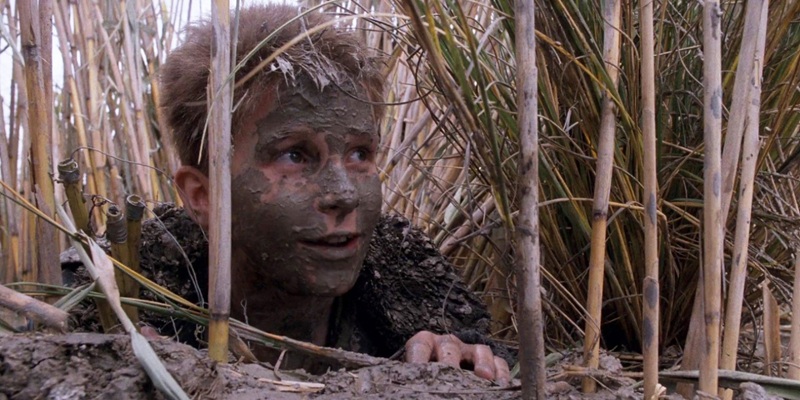
Across his career Spielberg has made many war films, but it’s a testament to his craft that they all feel distinct and unique, and if anything this might be the most stereotypically Spielberg, given that its viewpoint is through the eyes of a child. Bale’s James starts out awful, demanding of his family’s staff and happily playing with toy planes whilst there’s a war occurring not too far away, but from his perspective, as a lonely child in a foreign land, he truly doesn’t understand any better. These pre-war sequences are a little heavy-handed – upper class Brits are chauffeured to a costume party through riots in poorer districts whilst literally dressed as clowns – but they help to set up how distant James’ life is from the world he’s about to plunged into.
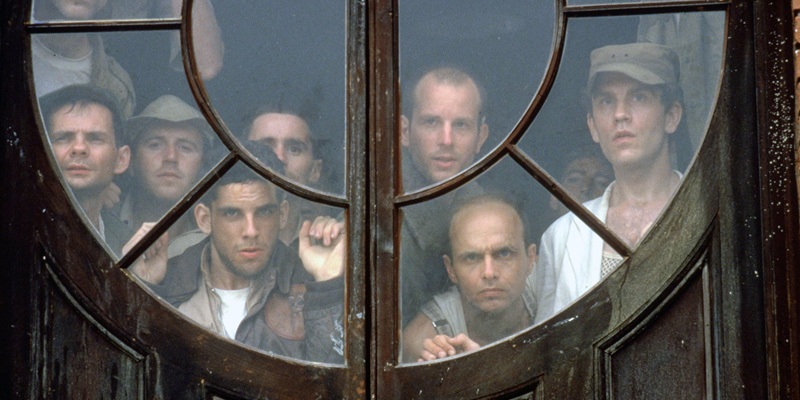
Once the war hits, the scenes of James and his parents are typically harrowing, but not half as much as James’ life of isolation afterwards. Abandoned in his ransacked childhood home, scraping empty cans for the last meagre scrap of food, literally sucking water drops from the tap and trying to surrender to mocking Japanese soldiers, this is a far more upsetting version of Home Alone, with nary a Michael Jordan cut-out or aftershave face slap in sight. James even befriends a couple of semi-bumbling would-be house burglars in Basie and Frank (John Malkovich and Joe Pantoliano). I’m always thrilled when actors I love pop up unexpectedly, and I was delighted by their appearance here. Malkovich gets quite an entrance, all sunglasses and obscured face, but there’s no mistaking that voice, whilst Pantoliano is very much the Smee to Malkovich’s Hook, a little petulant and jealous of this newcomer to the group.
I had no idea where this plot was going, especially once James was semi-inducted into Malkovich’s gang, but when James eventually found himself in a prison of war camp I was overjoyed. That’s probably the wrong word to use when describing seeing a child be thrown into a prison camp, but if you loved The Great Escape as much as I do and you were watching a film whose second half unexpectedly turned into a version of The Great Escape, you’d probably be thrilled too. As a leather-jacketed scrounger, it’s clear Spielberg is making James into an amalgamation of Steve McQueen’s Hilts and James Garner’s Hendley, and given they’re two of the cooler characters from that film that makes a lot of sense to me. This half of the film turns out to be somewhat less entertaining than The Great Escape is, but given all the possible directions a war film could take, this could’ve gone a lot worse.
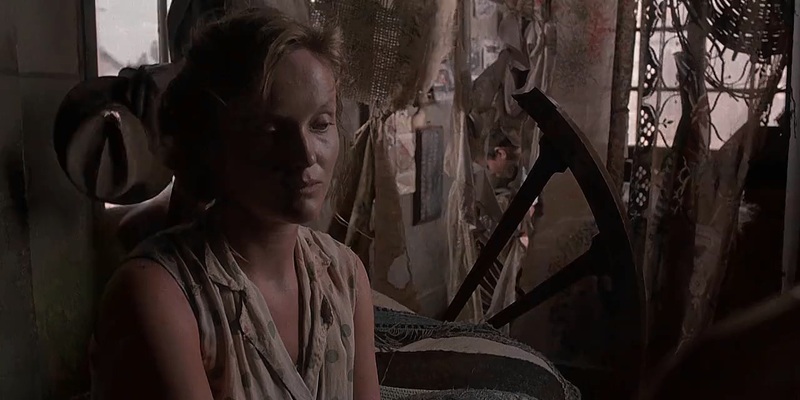
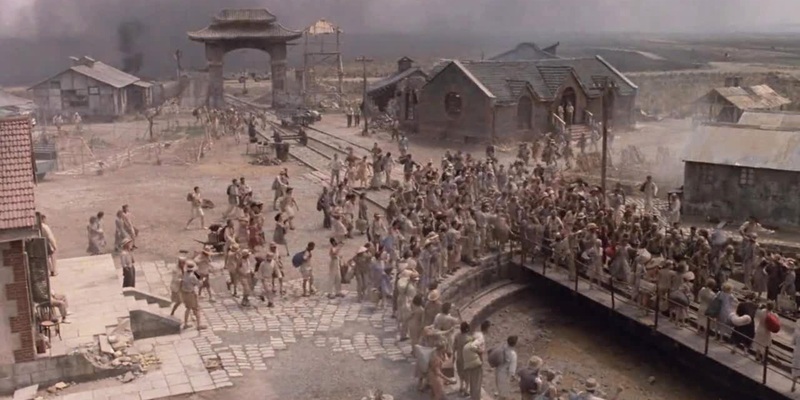
Once in the camp we meet some more supporting players including Nigel Havers (the most British man ever filmed), Miranda Richardson (perfectly encapsulating the “Don’t you know who we are?” stance) and a young Ben Stiller, clearly already making mental (and dental) notes for Tropic Thunder twenty years later. As for Spielberg’s direction, there are some incredibly huge shots on an immense scale, with hundreds of extras and very impressive use of timing. As always there were some echoes of his other films; throngs of people panicking and rushing on foot whilst we follow the only ones getting swarmed in a car is very reminiscent of War of the Worlds, discussions of not remembering family faces or being recognised by relatives post-war are direct links to Saving Private Ryan, and a child wearing a dark red school uniform whilst all around him are in more muted tones is eerily reminiscent of Schindler’s List. Having watched this post-Fabelmans also made me link James recreating action scenes featuring planes in war movies to Sammy Fabelman after watching The Greatest Show on Earth.
If, like me, you’d dismissed Empire of the Sun, give it a watch. It’s not a laugh riot and there are some tough sequences, but there’s also plenty to enjoy. I’d like to find out just how any places in the world wandering around yelling “Help me, I’m British!” will get you very far, and why everyone was desperate for a Hershey’s bar when they’re already surrounded by similar-tasting dirt I’ll never know.
Choose Film 7/10
 Life Vs Film
Pingback: 2025: What Kind of Year Has It Been? | Life Vs Film