
Jeffrey Beaumont (Kyle MacLachlan) returns from university to his smalltown home of Lumberton to look after the family hardware store when his father is hospitalised from a heart attack. After visiting the hospital, Jeffrey discovers a severed human ear in the woods, and begins investigating into its origin, leading him to team up with policeman’s daughter Sandy (Laura Dern) and lounge singer Dorothy Vallens (Isabella Rossellini) who seems connected in some way. Also connected is local gas-huffing psychopath crime lord Frank Booth (Dennis Hopper) and his crew of cronies, but how deep is Jeffrey going to delve into the seedy world beneath the perfect veneer of suburbia?
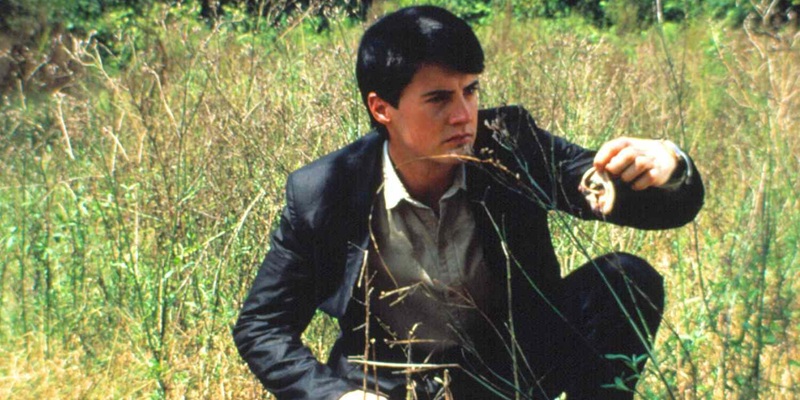
My quest to fill in my David Lynch blind spots begins with what I’m told is the most quintessentially Lynchian film, Blue Velvet. I set out on this challenge before Lynch sadly passed away earlier this year, and if anything his passing has made me more determined to explore his filmography. I’d seen Blue Velvet once before, but remembered literally nothing except for Dennis Hopper yelling about Pabst Blue Ribbon being superior to Heineken but, given they are both beer, I can only assume they’re both awful. If Blue Velvet is setting a template for things to come in his filmography I can’t say I’m thrilled, as I was left more bemused than entertained after this viewing, reminiscent of my first time watching Mulholland Drive, which required a lengthy podcast discussion with the French Toast Sunday crew before I was able to look on that film at all fondly (and I’ll hopefully be re-watching it again soon too).
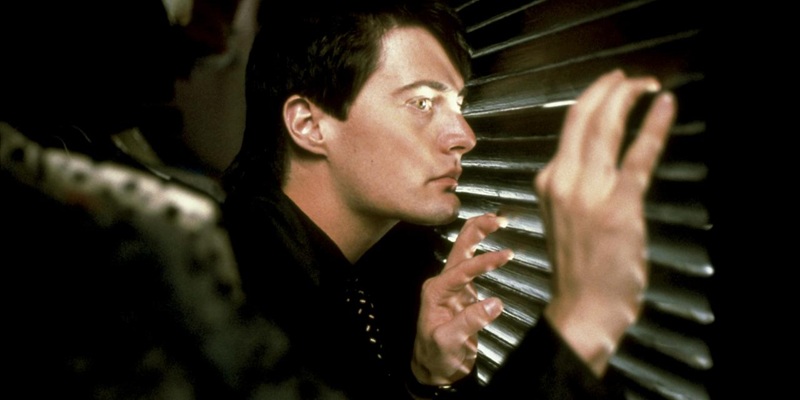
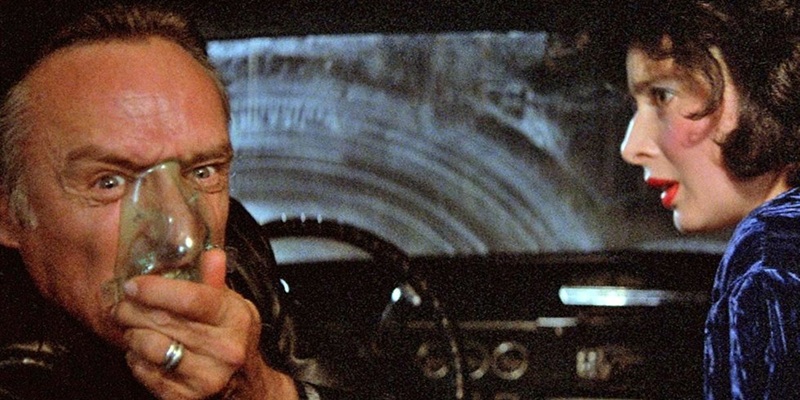
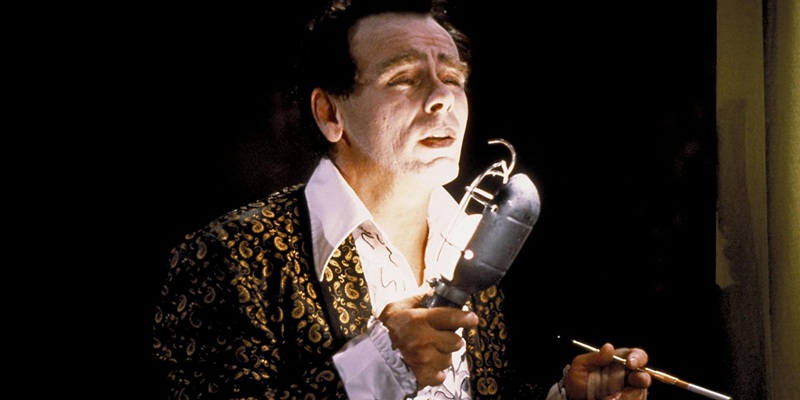
I enjoyed the detective story aspect – Jeffrey investigating Dorothy’s apartment but not hearing Sandy’s warning car due to having to pee after drinking too much Heineken is great – but the film started to lose me at the point where I imagine it finds a lot of its fans, when Frank Booth rocks up. Dennis Hopper is excellent in the role – apparently he approached Lynch demanding to play Booth because he essentially is the character in real life, a discomforting claim to make about oneself – and everything he does throughout the entire film is intentionally unsettling and upsetting. I see why he’s considered one of cinema’s great villains, and whilst he lights up the screen every time he’s on it, his presence made me feel dirty and distraught. Booth’s depravity just kept on coming, taking Jeffrey on a downwards spiral beyond the world he thought he knew and into the lip-syncing suave Ben’s apartment and being assaulted multiple times in multiple ways. My expression remained similar to Kyle MacLachlan’s, passive acceptance as the film unfolded before me, powerless to my control (yes I could’ve stopped watching, but I’m on a mission here).
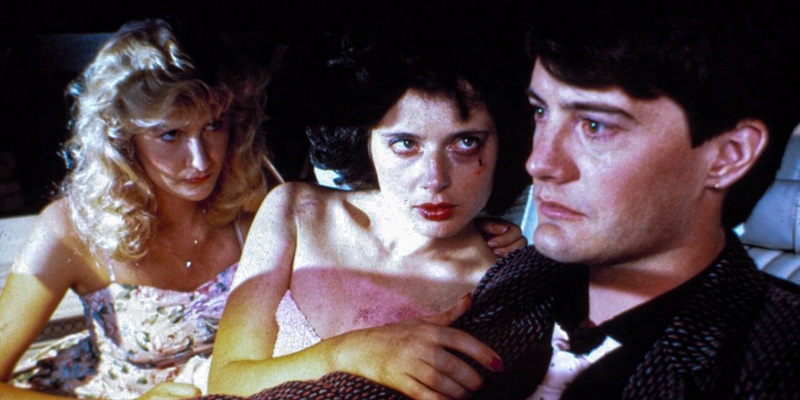
Jeffrey’s passiveness comes with his character, or lack thereof. He’s very much a blank slate – we don’t know much about him beyond he comes from this town. He has no friends, spends little time with his family (or in the store he’s supposed to be running), we don’t even know what he’s studying (I think, if I missed this I’m sorry). I wasn’t even sure how old he was supposed to be, which is often the problem when everyone refers to every level of education as simply “school”. Had I known he was back from university and spending a lot of time hanging around outside what I’d call college but what Americans refer to as high school, I’d have looked at the relationship between Jeffrey and Sandy very differently. It’s a relatively early role for Dern (I’d completely forgotten she was in this) but she’s great, bringing her customary mouth grimace as needed, and whilst I’m fairly unfamiliar with the work of Isabella Rossellini outside of Conclave, Death Becomes Her and an episode of Friends, she gave a very memorable and committed performance here.
It’s clear that the main message of Blue Velvet is that whilst everything may seem all peachy-keen and nifty on the surface (this also takes place in a kind of anytime year), if you start to dig around you’ll find not everything is as it seems and there’s stuff you should probably do your best to keep out of. However, I understood all that from the opening montage of overly pristine Pleasantville-esque Americana, all fake-smiled creepily waving firemen and emotionless children crossing a road. The subsequent familiar image of a man watering his garden, only to suffer a heart attack and for the camera to zoom in past him (and the dog eagerly attacking the water from the hose) and keep on zooming way too far, finding the beetles swarming in the dirt sealed the deal, and from then on it was simply a case of seeing what Lynch’s vision of a hidden small town underbelly was going to be.
I appreciated how the regular small town melodrama plot kept trying to resurface – Sandy’s age appropriate boyfriend attempts to confront the cradle-robbing Jeffrey – only for weirdo mystery elements to elbow the melodrama back out of the way in the form of a naked Dorothy showing up in the front garden. I didn’t dislike Blue Velvet, far from it, and I’m sure it’s the kind of film that would reward repeat viewings, but it’s not the kind of detective story I enjoy. I predict I’ll have this problem a lot across Lynch’s work, in that I prefer a good strong narrative where everything is mostly wrapped up at the end, and that just doesn’t seem to be Lynch’s style. I’m hoping somewhere in the three seasons and a film of Twin Peaks I’ll come around to it all, I guess we’ll find out.
Choose Film 7/10


Blue Velvet is a tough watch. It’s a good movie but I didn’t enjoy watching it necessarily because it really makes you sit in discomfort. There’s lots of stunning moments though.
I’m surprised I didn’t remember more of it from my first watch, but then again I’ve forgotten some pretty spectacular films over the years.
Pingback: 2025: What Kind of Year Has It Been? | Life Vs Film