North By Northwest

This is the last review I’ve got left unposted from the recent reviewing competition at the Lamb, I hope you enjoy it.Is it really possible for North by Northwest to live up to its hype? It’s rare to find a Top Films list deprived of its inclusion, it features scenes that have become the stuff of legend, that also tend to top Best Scene lists, and it’s one of the greatest movies ever made by one of the greatest directors who ever lived.

If you haven’t seen it yet, then I strongly advise you to stop reading anything about it and go and watch it now, for North by Northwest is truly a tremendous film that is best enjoyed with as little outside knowledge as possible. When Cary Grant’s Roger O. Thornhill quips shortly after being kidnapped into the back of a car, “Don’t tell me where we’re going, surprise me,” this is not merely Hitchcock’s intentions for Thornhill, but for all of us watching as well.

There’s really no weak link in the film. From the opening Saul Bass title sequence, utilising the receding parallel lines of a Madison Avenue skyscraper’s windows to perch the credits atop as they rush off into the distance, down to the ever so cheeky closing train tunnel metaphor, every second oozes entertainment. Alfred Hitchcock’s longest film, and his fourth and final with fellow English-born collaborator Cary Grant, is also his most unashamedly fun. There are many people who have an issue with some of the more fantastical elements of the plot – to be fair, a cropduster is hardly the most effective method of assassination – but these people are preventing themselves from what is a truly thrilling experience. And after all, who is watching Hitchcock for realism? The master has always admitted that, whilst some films are a slice of life, his tend to be a slice of cake, and this one has the richest, creamiest filling, not to mention icing, a cherry and some rainbow-coloured sprinkles to boot.
Cary Grant is on his finest, suavest form as New York ad man Roger O. Thornhill, stepping straight from Mad Men into a classic Hitchcock mistaken identity caper. Thornhill is an egotistical chauvinist, totally in control of his superficial advertising world, yet within Grant’s capable hands he remains not simply likable, but enviable. Who wouldn’t want to fill out a suit like that, and have such a wide and successful array of quips and zingers at their disposal? For though he is constantly befuddled and bemused by the adventure he has innocently become swept along in, there is no circumstance that leaves him wanting for a one-liner. Here, Grant perfects the art of the stern expression and the furrowed brow, eternally caught between confusion and frustration, with merely a hint of excitement as his journey takes him across America in the effort to clear his name of a wrongfully accused murder. The role was originally offered to Hitch’s other great collaborator, James Stewart, after the two did such sterling work on Vertigo together, but as soon as Grant became available Stewart was dropped, in favour of a man Hitch believed would not be dwarfed by the extraordinary events going on around him. Whilst Stewart has often been remarkable in his everyman roles, it’s fair to say that Thornhill would not have been the right fit for him.
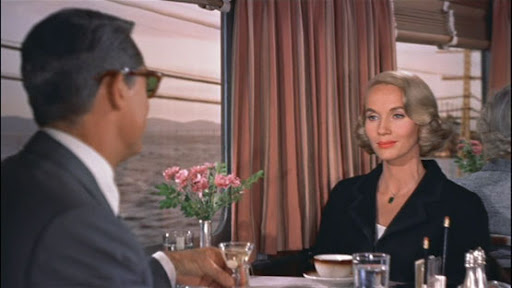
Such a masculine protagonist would be lost without a suitably feminine love interest, and Eva Marie Saint fits that job nicely as Eve Kendall, a typically beautiful Hitchcock blonde whose porcelain doll exterior hides her ability to use sex like some people do a flyswatter, and she holds her own against the likes of Psycho’s Janet Leigh, Rear Window’s Grace Kelly and Vertigo’s Kim Novak as she dabbles in some of the most forward repartee since Bacall taught Bogart how to whistle. Hitch always preferred the more beautiful but subtly sexy female leads, as he took great pleasure in uncovering their more alluring qualities than he would have with the more self-promoting individuals like Monroe. As with all of Hitchcock’s birds (pun intended) Saint is meticulously and beautifully dressed in every scene. Legend has it that the great director paid her wardrobe so much attention that Grant petulantly demanded advice on what he should be wearing, and was simply told to “Dress like Cary Grant.”
Released three years before Dr. No, this film clearly set the template for almost every Bond movie. With its dashing, smooth talking hero with an easily recognisable voice, the woman who falls for him within seconds of meeting, a villain’s lair in an impressive yet remote location (here James Mason’s Vandamm lives in a condo atop Mount Rushmore), an evil sidekick (Martin Landau, with a severe case of Henchman’s Eyebrow) and a fast-paced, stunt-riddled adventure taking in major cities around the world (or at least central and north-east USA). Thornhill even has the ability to make perfect strangers throw themselves at him; just wait for the reaction from the woman in his neighbouring hospital room. It’s no surprise to learn that Grant himself was an original candidate for what was to eventually become Sean Connery’s Bond.
Even from the trailer, this is one of the most comical of Hitchcock’s endeavours. Speaking directly to the audience, Hitch himself appears, advising the viewers on how to take the perfect vacation without leaving the cinema, keeping his tongue firmly planted in his cheek throughout (“You don’t find a tasteful murder on every guided tour, do you?”). It’s on Youtube, go check it out. Ernest Lehman’s Oscar-nominated script (tragically losing out to Pillow Talk) is full of far too many quotable lines to give justice to here, but it contains more than enough for even three films. My personal favourite? Saint declaring she’s a big girl, followed by Grant’s perfectly timed, effortless rebuttal of “and in all the right places.” The police station phone call is yet another example of solid gold. Occasionally the steady slew of insinuations and double entendres becomes a little cringeworthy, especially when Grant tells Saint he likes her flavour, but that’s a rare misstep for a script that otherwise never puts a foot wrong. There’s far too much excellence on hand to make you forget these, and the film will never fail to raise a smile with every viewing.
It isn’t just the dialogue though; the scenes without any discussions are often just as amazing, if not more so. Early on, after being forcibly imbibed with the best part of a bottle of bourbon, Thornhill is unleashed behind the wheel of a car, in an attempt to instigate his demise. Upon realising what’s going on he awakes in a drunken stupor and does his utmost to keep his car on the increasingly blurred and merging roads in front of him. Grant makes for an amusingly intense drunk, persistently blinking, squinting and staring bug-eyed at the cars he races past, made all the more dramatic by Bernard Herrmann’s  stupendously engaging score. Of course, there’s also the hallowed cropduster chase, as Thornhill, having been lured to the middle of nowhere to meet the man he’s been accused of being, finds himself battling the more painful end of a plane’s propeller. One of the few scenes not set to music – to better emphasise the relentless whirring of the plane and the lack of assistance Thornhill is likely to receive with the matter at hand – the scene is worth watching as a standalone segment. Equal parts exhilarating, terrifying and fun, it’s made all the more hilarious for the entire time Grant dives through dirt and hides amongst crops he is wearing his increasingly worn yet perfectly tailored grey flannel suit, clean shaven and with immaculate hair.
Hitchcock’s regular cinematographer, Robert Burks, excels himself in a manner that by this film is surely only to be expected. The shot of Thornhill fleeing the UN building to a waiting cab is stunning, captured from high above and angled down the side of a skyscraper, a shot I’d happily have framed on my wall, and the revealing shot of a gun hidden in a purse is sly enough to almost go unnoticed, but is sure to pay off later. Hitch ticks off almost all of his standard tropes – a wrongfully accused man on the run, maternal issues (Jessie Royce Landis, who plays Thornhill’s mother, was in real life only 8 years older than Grant), spies, deception, train journeys, height-based peril, an all-but-unnecessary MacGuffin (a statue full of microfilm), bumbling policemen, a tense finale set atop a famous landmark and, of course, an icy blonde. All that’s missing is a self-deprecating scene in a cinema.
When compared to modern day blockbusters, this picture more than holds up. Its unstoppable, kinetic nature will keep fans of both classic cinema and present day fare glued to the screen and on the edge of their seats for the entire 136 minute runtime. Filled with glamour, wit, excitement and big scenes on a large canvas, there’s something here to please everyone, as long as they like really great films. Does it live up to the hype? Yes, and more so.
Choose film 10/10

Top Gun

There are some films out there that seem to be universally adored, so much so that were someone to come along and start slagging them off they’d automatically be written off as hipsterring, pretending not to like something incredibly popular to appear cool or ironic. Now, I’m fairly sure I’m not a hipster, even though I ride a bike and own a scarf (that I very rarely wear, and even then when its freezing), but I just can’t get behind Top Gun, a film that as far as I can tell everyone else seems to generally love.
It does have some very enjoyable aspects, most notably the score, with Kenny Loggins’ Danger Zone being a clear favourite, the script is full of zingers (“Your ego is writing cheques your body can’t cash.”) and a brilliant cast all on top form, but it can’t get around just how boring most of the film is. Now, this may have something to do with my opinion on aircraft. Every year for at least the past four years, Bournemouth (the town I live in) has held an air festival down on the beach. I live less than ten minutes walk away from said beach, yet I do not join the literally thousands of people who flock to this event on an annual basis. That doesn’t sound too surprising, until you discover that other patrons to this event include many of my close friends, colleagues, and of course my parents. This year was the second time I’ve actually headed away from the city during the long weekend, just to escape the planes and their incessant noise. I’m fine flying in planes, and generally find the flights to be one of the more enjoyable aspects of holidays (I get to sit and watch films for six hours straight!?!?!?!), but I really don’t care about watching planes fly, how they work, what model they are etc. And unfortunately, that plays a large part in Top Gun, a film about the top 1% of Navy pilots being trained to be the best that they can be.
It’s clear during the making of the film that two different markets were established – men and women – and a very broad sense of their tastes was estimated. Two different films were then thrown together to attempt to please both groups, and so it is that we have a film about jet fighter pilots in which half the time is spent on an insipid romance plot between Tom Cruise’s cocky pilot Lt. Pete ‘Maverick’ Mitchell and one of his civilian teachers, Kelly McGillis’ Charlie. It doesn’t really help that both halves of the film don’t fit together well, and are for the most part dull. The flying scenes, especially the training exercises, are devoid of either tension or excitement, and the romance is surprisingly more cheesey than the half-naked, oiled up volleyball scene set to Playing With The Boys. Each scene type goes on far too long as well. I can’t imagine the plane-heads remaining fully engaged through the love scenes, and likewise the romance junkies are unlikely to really care about the flying bits.

So why does it have such a reputation? Well, there’s enough to keep your attention on a Friday night post-pub outing, full of kebabs and an impending hangover, and of course there’s Tom Cruise. After sliding across the floor in a shirt and socks in Risky Business, this is probably the early defining movie for Cruise, and none more so than his seducing of Charlie by serenading her, with the help of an entire bar, to The Righteous Brothers’ You’ve Lost That Lovin’ Feeling. I’ve always questioned the choice of this song, as it’s supposed to be a song everyone in the bar knows the words to, yet I’ve never heard it outside of this film. Maybe it’s more popular in the States. This could also be the film that turned a lot of the public opinion against Cruise (not me personally, I’ve got no issues with the guy), as Maverick is an immensely arrogant, cocky dick, but he plays it so well. Anthony Edwards is also great as Maverick’s married-with-kids partner Goose (he’s married to Meg Ryan?!?), but the film is completely stolen by Val Kilmer, who manages to out-cockiness Cruise as rival pilot Iceman.

This is one of the few films that I think could be possibly improved with the use of 3D, normally something I’m deeply opposed to, but I think an added sense of depth perception could help clarify and enliven the aerial combat scenes, which otherwise feel flat and lifeless. I hate to say it, but this feels almost more like a Michael Bay film than a Tony Scott one, and if it wasn’t for the acting and the soundtrack, there’d be no reason to watch it whatsoever.

Choose life 5/10

Blackmail

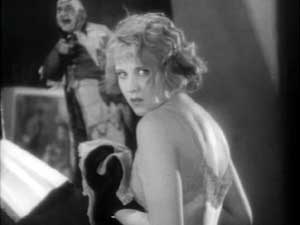
Hitchcock, now with added sound! Yes, we’ve moved on from Hitch’s silent pictures (until I can find the ones I’ve had to skip) and onto his first to use audible dialogue, as well as the first I’ve seen that doesn’t appear to have been filmed entirely on a set, although knowing the director built the entire apartment block set of Rear Window inside a studio, you never can tell with Hitchcock.

Blackmail focuses on a young couple, John Longden’s Frank, a Scotland Yard detective, and Anny Ondra (yep, her again) as Alice, the daughter of a shop owner. Alice has become bored of Frank’s obsession with his career, and has eyes for another man, the irrationally posh artist Mr. Crewe (Cyril Ritchard). Crewe invites Alice back to his studio apartment one evening, and things don’t necessarily plan out how either of them would have expected, so Frank gets involved to try and help Alice out of the sticky situation she finds herself in.
Continue reading

Clueless

Is this the most 90s movie ever? If not, it must certainly crack the top 10, for though it is based on a novel written 180 years earlier, everything about Clueless, from the slang, the opinions and most vehemently the fashions positively scream 1990s. Upon release, this may have been topical and timely, but now it severely dates the film, and is mostly comical. Although saying that, there is a chance that it may have been funny at the time (I can’t remember, I was 8 in 1995), as I can’t imagine any time period in which a two-piece yellow plaid suit jacket and skirt were ever in fashion, even amongst teenage girls.

Clueless sees Cher (Alicia Silverstone) as one of the most popular girls in her high school, who seems to have no problems of her own so sets about fixing those of everyone around her, focusing primarily on matchmaking her friends. When new girl Tai (Brittany Murphy) arrives, Cher sees the uncoordinated outcast as a project, and decides to transform Tai into a clone of herself. Meanwhile, Cher’ philosophical environmentalist step-brother Josh (Paul Rudd, effortlessly likable) is helping out Cher’s widowed father (Dan Hedaya) at his law firm.

It’s becoming almost a tradition for me to be reviewing films based on famous literature without ever really knowing much about the source material, and this is no exception, for I’m still yet to read any of Jane Austen’s work, including Emma. That being said, apparently it is only a loose adaptation (I can’t imagine Austen pre-empting Cher’s computerised wardrobe selector), so not having read Emma shouldn’t have affected my viewing anyway, especially seeing as it took so long for people to realise the connection when the film came out anyway.

Silverstone is a delight in this film, playing someone who could so easily be almost detestable, living a life of luxury she’s done nothing to deserve but still feeling the need to whine incessantly in a piercing, nasally tone, yet in Silverstone’s hands you can not only empathise, but occasionally pity her poor-little-rish-girl ways. The film is led by her narration, and contains some of the least self-aware yet funniest lines of the film: “Getting off the freeway makes you realise how important love is.” For Cher is just that kind of person, oblivious. As an 18-year old she assumes she knows everything about everything, there is no problem she cannot solve and no situation that cannot be argued out of, but her journey through this film causes her to re-evaluate her opinions of not only herself, but her friends and family too.

The slang and colloquialisms are brilliant too. Good looking guys are ‘Baldwins’, women are ‘Bettys’ and Cher’s house, built in 1972, is somehow deemed ‘classic.’ Every offhand comment or snide remark is so topical that I found the film to be educational by googling what they said – apparently there was a guy called Paulie Shore who made terrible films, and Mark Wahlberg used to be in a band. Who knew?

I can’t help thinking there’s something missing from Clueless. Although it has the morals and meanings of traditional rom-coms, and has enough rom and com to keep most people entertained, including me, I’m left empty and wanting more. It’s a perfectly serviceable slice of light entertainment, but there are better examples, both prior and since, so I’m not entirely sure why it’s on the 1001 List. It’s one of the few films that I genuinely challenge it’s presence – as far as I can tell it’s of no significant cultural importance, isn’t phenomenally good and didn’t win any awards, generally the three criteria for a List position. As mentioned, the acting is good, the story and characters are engaging and the soundtrack is phenomenal, but there’s an endless number of films you could say that about that aren’t present.

As modern day high school set classic adaptations go, I still prefer 10 Things I Hate About You, If only for the one-two combo of Joseph ‘Joggle’ Gordon-Levitt and Heath Ledger, along with the adults featuring Alison Janney, Daryl Mitchell and Larry Miller (although Clueless does have Wallace Shawn, which goes a long way too). Clueless isn’t bad, and at times it’s funny, poignant and captivating, but afterwards I didn’t feel like my life had been improved in any way, so make of that what you will.

Choose film 6/10

Top 5… Movies That Should Be In 1001 (2012 Edition)

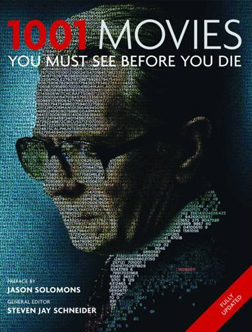
Monday sees the release of the next edition of the 1001 Movies You Must See Before You Die book, which sees my recently reviewed Tinker Tailor Soldier Spy on the cover. This release got me thinking, what films would I most like to be added in this edition? As usual, my first instinct regarded efficiency and time-saving, so of course the films I’d post want to be added would be ones that I’d already reviewed, so I wouldn’t have to review them again. But then I thought no, that’s not really what I want. I want to watch new films, experience new things and write about them, that’s why I’m writing a blog in the first place; to discuss movies. Why would I want an excuse to do that less? So as well as my already-reviewed list there’s another for films that not only have I not reviewed, but that I haven’t even seen, and I think should probably be on the List. Thirdly, because it’s a super-bumper-bonus day, there’s a final top 5 for the films that haven’t appeared on either list, but will most likely be on the actual list, for which I haven’t been consulted. What films do you all think will be on there?

Continue reading

Tinker Tailor Soldier Spy

Seeing as the cover of the next edition of the 1001 Movies You Must See Before You Die has been announced (the book is due to be released next month), I thought it’d be a good time to review the film on said cover, as it’s a certainty to become a member of the hallowed list in the imminent future. So, without further ado, I present Tinker Tailor Soldier Spy, a film that I was very surprised to see on the cover, as personally I don’t think I’d have included it in the book at all, giving the cover space instead to probably The Artist, even if the Tinker Tailor poster is better.


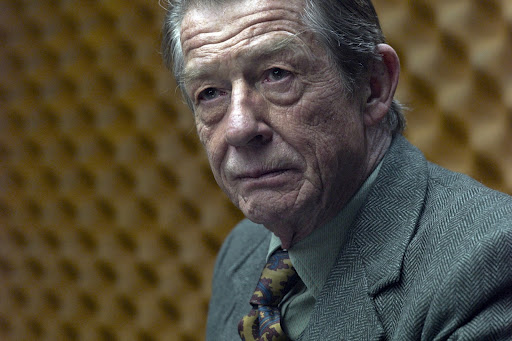
It’s only fitting that such a muddled up film should have a relatively incoherent review, so I’m going to jump in randomly and start with the cast. It’s pretty goddamn incredible that such a stellar cast, comprising of some of the best British actors from varying generations working today, could be assembled for one film. You’ve got the likes of John Hurt amongst the more senior players, Toby Jones, Colin Firth, Mark Strong, Ciarin Hinds and Kathy Burke as the seasoned actors as well as up-and-comers like Benedict Cumberbatch and Tom Hardy, not to mention bit roles for Stephen Graham, Roger Lloyd-Pack and Christian McKay. And, of course, Gary Oldman. It just goes to show the strength of the source material that such a great cast, and director Tomas Alfredson, straight from his similarly bravura Let The Right One In, would flock to it. Even Colin Firth was willing to take what is essentially a tangential role after just having won a Best Acting Oscar for The King’s Speech.

It takes a brilliant actor to not only attempt to replace the likes of Alec Guinness, James Mason and Dunholm Elliot – all of whom have played the character of George Smiley before – but to in fact outshine them as arguably the definitive screen version of Smiley. Oldman is magnificent in a pared down, stripped back performance almost entirely devoid of movement, yet the cogs behind his eyes are just about audibly whirring away as he sits and watched, drinking everything in and analysing the situation. Smiley rarely utters a word or makes an extraneous movement – his first utterance is a good 16 minutes in, after having appeared in several scenes already. He shines even beneath the massive glasses and dour overcoat that would envelop a lesser actor.

Remarkably, Tinker Tailor marks Oldman’s first ever Oscar nomination, for Best Actor, naturally, which he justifiably lost to Jean Dujardin for the aforementioned The Artist, but I believe Oldman came a close second. I myself was shocked to find he’s never even be nominated, but when you look back through his body of work there aren’t many roles that you could argue he should have been awarded for. Perhaps Sid and Nancy, but that wasn’t terribly well received I think, and doesn’t really fit in with the kinds of films that the Oscar board tend to take notice of, and in everything else he’s either been the bad guy – rarely awarded by the academy (at least until The Dark Knight) – or performs well in a small role, lost amongst an ensemble cast of similar abilities to himself – see True Romance, Harry Potter and Batman. You’ve also got to take into account some of the more questionable roles in his career – playing a dwarf in Tiptoes anyone? So it’s nice to think that, with so many outlandish, extravagant roles under his belt – The Fifth Element, Leon – it is Oldman’s most quiet, restrained and subdued performance that earned him the Oscar nod.

 I’m not even going to try and explain the plot of this film as, after having watched it and read John Le Carre’s book upon which it is rigidly based I could still only pin point the major issues. Basically, Smiley has been brought back into The Circus – the nickname for the British Intelligence – to try and find a mole from within a small group of higher ups – a group that used to contain him. His boss is/was John Hurt’s Control, and the suspects are the shifty Toby Estergase (David Dencik, a Swedish actor I’ve not come across before, but who played different roles in the two versions of The Girl with the Dragon Tattoo, and is suitably engaging here), the suave, womanising Bill Haydon (Colin Firth), “poison dwarf” head honcho Percy Alleline (Toby Jones) and his right-hand man Roy Bland (Ciarin Hinds). We are also shown, in parallel, the story of field agent Jim Prideaux (Mark Strong, in a rare and disorientating non-bad-guy role), whose shooting on assignment may have caused the suspicion back at headquarters. Assisting Smiley is Peter Guillam (Benedict Cumberbatch), a trustworthy up-and-comer with a way with the ladies, and Tom Hardy plays Ricki Tarr, the unreliable young firebrand whom Smiley introduced to the industry, and who may hold the key to the mystery.

Everyone is perfectly cast, and there isn’t a weak link amongst them. Similarly, the mood of the film is spot-on, and there is never so much as a red or a green on screen at any point, everything is in varying shades of grey, brown and taupe, from the sky to the clothes, the walls to the cars. The entire thing may as well have been shot in sepia, as it’s apparently been set in a time before colour was invented. The many conversations throughout mostly take places in dusty, dingy rooms yellowing with tobacco. It’s unusual for a film that some of the flashback sequences are actually more vibrant and brightly lit than those set in the film’s present, which could be read as an indication that perhaps those sunnier days were better for everyone involved, with less conspiracies and deception. Or at least, less in the current direction.

So, why did I have such a problem with this film? Well, mainly it’s because it’s so damn confusing. I understand that that’s entirely the point, and that some elements of the plot – when which bits are set in relation to others – are only roughly clarified towards the end to aide this sense of confuddlement, but even having read the book I still couldn’t tell what everyone was doing and why. This could also be because I didn’t really care. None of the characters are particularly likable, with the possible exception of Guillam and Prideaux at times, and even knowing who the final reveals didn’t help me very much. That’s something to praise, I suppose, that knowing the ending doesn’t lessen my appreciation for the film, but that’s a little bit of damning with faint praise if you ask me.

The most fun thing I found about this film is playing ‘Spot the Harry Potter Actor’ during it (Can anyone beat my six?). Though the performances are all impeccable and the atmosphere is both what was aimed for and what it should be, I cannot recommend this film on the basis that I didn’t enjoy it, and I’m still not sure what it was about – yet I don’t really mind.

Choose life 8/10

Winchester ’73

The first things I have to say about this film are that it features one of the earliest credits for Tony Curtis, and that Rock Hudson is buried in the cast, and he plays an Indian. Right, now that’s out of the way, let’s talk about the film.

I like this kind of film. Now, that statement’s not much good to you without knowing what kind of film it is, but regardless of that I like it anyway. It’s the kind of film where several smaller stories are all tied together through coincidence, or an object being passed from one to another, as is the case here. There are some exceptions – I wasn’t wild about Au Hasard Balthazar or Babel – but these types of collective narratives, like Magnolia, Short Cuts, Crash and Traffic, usually appeal to me, and having a great ensemble cast never hurts either. Here, the element that ties the stories together is a rifle.

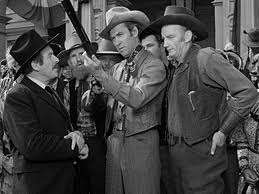
Our introduction to the eponymous weapon is through James Stewart’s Lin McAdam, a cowboy on the trail of Dutch Henry Brown (Stephen McNally), a dangerous man with whom the two share a bitter past. When Lin rocks up in the town of Dodge City, presided over by Will Geer’s Wyatt Earp, he finds Dutch has entered into a shooting competition to win the rifle, so enters as well, mainly to stop his foe from winning the gun that won the West. After the competition, which also sees lookalikes of Davy Crockett and Colonel Sanders, so feels a bit like a western parody, the gun is passed from one person to the next, either by honest trade or dishonest force, and not always with it’s ammunition present. We follow the gun through the film until a fairly obvious and clearly signposted finale, where Lin eventually catches up to the on-the-run Dutch.

This film felt incredibly stagey and unnatural, so I rarely felt engrossed with the movie. For example, there’s an indoor scuffle early on that in which, mid-fight, someone draws the blinds to make the fight look more dramatic. Granted, this was also to try and hide the fisticuffs from those outside the window, but seeing as they were on the first storey I don’t think there was too much danger of that, and it’s clear it was done entirely to increase the dramatic tension. Also, a moment where Shelley Winters, who is great as the film’s predominant female presence, is sat tossing a coin up and down is just waiting for someone to come along and catch it mid-throw, and it just appears as if that’s the very reason shes sat there throwing it in the first place, which is just silly.

Stewart is good in the lead role, and he must have gotten on well with director Anthony Mann, as this is the first of 8 collaborations the pair shared, including The Naked Spur and The Man From Laramie, both of which also appear on the List. Some of the supporting cast are terrible though, particularly every bartender in the film, and there’s a moment where a man tries to hit on the girl whose fiance he just shot, which is bad form in my books.

If, like me, you love the sound of a bullet’s ricochet, then you’ll adore the final showdown, however I feel that there isn’t much here to hold the attention of people who don’t really like westerns. Now, I quite like them, so I thought the film was pretty good, though more could definitely have been done with the central premise, and the film peaks too early with the opening shooting competition. 

Choose film 6/10

Mother and Son

This is another of those films that I knew absolutely nothing about before watching – even the language or year it was made (Russian, 1997). Sometimes, this strategy works – see Silver Lode – but other times, like now for example, I wind up confused and ill at ease with my surroundings. I think this is the kind of film you need to be in a specific mood for watching, where you’re more open and receptive to what is a deeply emotional and solemn journey taken by two people who barely speak to one another because there’s just nothing to say, and when they do it doesn’t always make a lot of sense. Not, as was the case with me, fitting it in early on a Saturday morning before heading out for a picnic and a day of shopping.


Mother and Son, somewhat bluntly, is about a mother and, you guessed it, her son (Gudrun Geyer and Aleksei Ananishnov). She is evidently not well, and he spends his days looking after her in a secluded, ramshackle cottage. They are the only two people who appear on the screen throughout the film (other than a distant hiker walking up a hill at one point that I’m fairly sure was missed in the edit), and it is clear that they are the only person in each others life. The story doesn’t have much of a plot, although there is an ending, it simply details  the son caring for, and carrying around, his mother, and the hardships they go through. She is unable to walk, with even being carried for a short period wearing her out enough to fall asleep on a park bench. The most energetic action available to her is straining to raise a handle to tousle her son’s hair whilst he reads postcards to her.

The cinematography choices in the film are bold, in that the picture is often skewed, stretched and distorted, which often makes the backgrounds difficult to establish. A storm that builds whilst the mother’s condition worsens is clearly a smudge on the camera lens, and the soundtrack is predominantly howling winds and inaudible whispers, with the occasional quiet hymn or subtle orchestra to fill the void. On several occasions I though the DVD had stopped, as the actors will freeze in place, not making a sound for what seems like hours (but is probably only a few seconds). One such example is the aforementioned park nap, when the son heads back to the house to retrieve the postcards, the camera remains with the mother, in real time, whilst she lays there sleeping, for a good few minutes. It felt very much like an experimental student film where they hadn’t quite worked out how to use the camera or edit properly, let alone use a script.

A couple of moments lost me completely in terms of making sense. At one point, the mother’s pain becomes too much for her and she feebly repeats “Get me out” to her son, who replies with the mantra “Yourself” over and over again, until she finally announces “You got me out.” Later, when the mother is particularly depressed, the son simply tells her “Don’t die then. Who’s making you die?” Her reply? A passionate “You! You!” This made me think that, seeing as the son is the predominant instigator in all the travelling that occurs in the movie (“Well, let’s go” he says at least twice), that perhaps he was trying to aid his mother in her shuffle from the mortal coil, so he could be free of the burden and move on with his life, though I fear this gives a deeper insight into my own relationship than perhaps I intended.

 The reversal of the parent/child characters and relationship was an interesting dynamic, up to the point where when he prepared a drink for her I was expecting him to test the liquid’s temperature on his forearm before giving it to her. The notion that the son will have to go through all the hardship the mother has, as we discover late into the film (I don’t mind giving spoilers for films where nothing much really happens) leads me to believe that whatever it is that ails her is most likely to be genetic, but that perhaps the son will have no-one to care for him as he does for his mother.

Don’t get me wrong, I’m sure that director Aleksandr Sokurov was not aiming to make a film that could be described as entertaining, but those are the kinds of films I prefer watching, so I can’t really recommend watching this film. Even at a scant 68 minutes long I found myself willing the mother to pass away – peacefully, of course, I don’t want any further suffering – and if possible could she find a way to take her son with her? 

Choose life 3/10

Raising Arizona

It’s hard to imagine a sharper left turn taken by a director than from the Coen brother’s debut, Blood Simple, to their sophomore picture, Raising Arizona. Where Blood Simple was dark and mostly serious, Arizona is the closest a film has ever come to capturing a Tex Avery cartoon in live action – with the possible exception of some parts of The Mask.

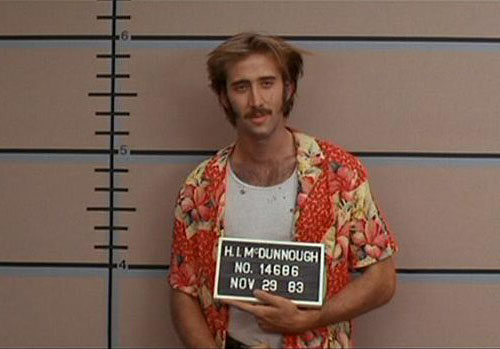
in the role that possibly best combines his often underrated acting ability, comedic potential and trademark brand of insanity, Nicolas Cage gives one of my favourite performances of his as H. I. McDunnough (‘Hi’ for short), a serial petty convict whose ineptitude at evading the law is only matched by his love for police photographer Ed (Holly Hunter). On at least the third time Hi is released from the prison where Ed works he proposes, and the two settle down for a life of happiness in a trailer park in Arizona. But all is not well in the McDunnough household. When Ed discovers she is unable to have children she falls apart, not helped by Hi’s criminal background leaving them unsuitable for adoption, so the only logical solution is, of course, to kidnap one of a famous batch of quintuplets born to a local unpainted furniture magnet, Nathan Arizona. To add to Hi’s woes, two of his former cellmates, Gale and Evelle Snoats (John Goodman and William Forsythe) escape from prison and attempt to crash on the couple’s sofa, Hi’s boss at the metalworks attempts to entice him into swinging, and there’s Leonard Smalls (Randall ‘Tex’ Cobb), a bounty hunter from Hell, on the path of the stolen baby.

This is a film with no intentions of meandering along at a gentle pace. The opening ten minutes or so, setting up the couple’s initial meetings, Hi’s triple incarcerations, their engagement and marriage, runs along at such a breakneck pace you’re liable to get whiplash once the credits roll and a more sedate step is taken. The change in speed is almost jarring, but is helped along with ample amounts of comedy and terrific, perfectly pitched performances, especially from Cage. His Hi, sporting a now standard ridiculous feathered hairdo, is a manic, OTT oddball with more Hawaiian shirts than sense. Hunter’s performance is good, but Ed doesn’t really get to do an awful lot other than reprimand Hi at every turn.


If the characters feel like exaggerated caricatures, then this is exactly the point. This film doesn’t take place in any kind of recognisable reality as much as it does in the heightened, prison-crazed mind of the lead. At times though I felt it went a little too far. The two escaped convicts are maybe a little too stupid – though often to hilarious results, as in their ill-planned bank robbery – and their incessant screaming throughout the entire film became beyond grating. No-one can yell like John Goodman. Leonard Smalls, on the other hand, wasn’t enough of a badass. I couldn’t quite put my finger on it, but I always felt that he was a guy pretending, Cobb never inhabited the role quite as fully as I’d have liked, so his presence was very much under felt. It’s a shame, as the Coens can do great work with the right actors in the antagonist roles – check out Javier Bardem as Anton Chigurh in No Country For Old Men, or Paul Newman’s Sidney J. Mussburger in The Hudsucker Proxy. Smalls should have been larger than life, and could have been the best part of the film, but remains sadly forgettable. Which in itself is impressive seeing as he is a guy who will happily grenade a fluffy bunny just for being alive.

The fight scenes are tremendously enjoyable, and really cement home the cartoonish nature of the film. Most of the characters involved would have received serious, possibly fatal injuries several times throughout the film – particularly Hi – yet they mostly just walk it off with little more than a plaster stuck to their face. And the film’s solitary death scene is so ridiculously over the top and insane that it is very much a moment of explosive comedy, regardless of whether you can see it coming or not.

I think that one of the overall messages from the film is that Hi and Ed, though they seem incredibly unsuitable to take on the task, are possibly the best parents of all the film’s characters. Of the various people who assume the role of the kidnapped baby’s guardian throughout the story, Hi and Ed are the only ones to not immediately name the baby after themselves. Granted, they name him after each  other instead, but at least they’re thinking about someone else, not just themselves.

Whilst this is in no way one of the best Coen brothers film, it is still hugely entertaining and definitely worth a watch, if only to see some classic comic Cage before he went off the rails.

Choose film 8/10