The Usual Suspects

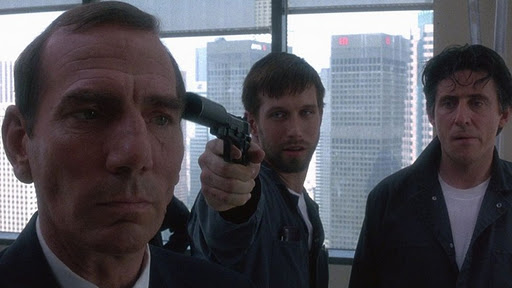
 Is it OK to ruin the Usual Suspects yet? Doesn’t anyone who cares who the ending already? Its 16 years old! Is it not another Sixth Sense or Empire Strikes Back, where the big reveal has either been witnessed firsthand or spoiled by someone else? Miraculously, my film watching companion had not seen or heard the ending to Bryan Singer’s sophomore film, and he’d have throttled me had I revealed it (Marcos hates spoilers, and will punch you in the head) so no, it would seem there are some out there yet to discover the fate of the five criminals bought in for a line-up, nor do they know the identity of their tormentor, the mythical Keyser Soze, so I’ll try and tread carefully. The cons in question – Stephen Baldwin, Kevin Pollak, Gabriel Byrne, Benicio del Toro and a career-launching, Oscar winning Kevin Spacey – have been brought together on a bogus line-up, and use their time in incarceration to plan a robbery, bus is it all a part of a bigger plan?
Told in flashback by Spacey’s weaselly over talkative ‘Verbal’ Kint, the tale begins with the death of Byrne’s Keaton, a crooked cop gone straight and the closest the gang has to a leader, after what appears to be a drug deal gone wrong. Chazz Palminteri, the cop to whom Kint tells his story, has his own theories as to what went wrong, but his opinions, and those of the viewer, get in the way of seeing the truth, ably assisted by Christopher McQuarrie’s deservedly Oscar winning ever twisting screenplay.
The cast are exceptional, particularly the scene stealing del Toro and Pete Postlethwaite at stoic lawyer Kobayashi, but it is the fine balance between tightly plotted twists and turns and sporadic bursts of action and violence that plants this firmly on the choose film list, regardless of whether you know the ending.
Choose film 9/10

The Thing

Arguably surpassing Howard Hawk’s 50s sci-fi classic the Thing from Another World (a feat unlikely to be achieved by the imminent Mary Elizabeth Winstead starring prequel, confusingly also named ‘The Thing’), John Carpenter’s Thing deserves its place on the list for Rob Bottin’s effects work, occasionally assisted by the legend that is Stan Winston.
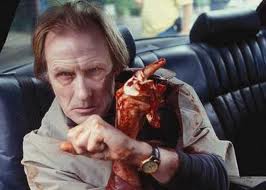
Defiantly demanding that the titular creature – a life form able to imitate any living thing it comes across – not just be a man in a suit, we are treated to all manner of beasties, from an arm-munching human torso to spider-legged scuttling heads with eyeballs on stalks, as well as the nightmare inducing stages in their transformations. In a post CGI era these effects still hold ground with today’s effects houses, showing at times animatronic models can be better and more memorable than a bunch of pixels.
Carpenter has always been a master of cranking up tension through the roof, and the secluded Antarctic research base here provides the perfect scenario, with its all-male inhabitants already at each other’s throats from cabin fever. Usually with these kind of monster attacks a small group thrillers it can be easy to see who at least a few of the early victims will be, but here the equal screen time, characterisation and importance to the plot, as well as a few well-placed red herrings, mean that anyone trying to second guess the script will pursue a fruitless endeavour.
Ennio Morricone’s atmospheric score and some sharp dialogue add to the sense of claustrophobia and breakdown of relationships, and there’s an interesting spoiler if you speak Norwegian, when the basic plot is outlined at the initial meeting of some researchers at the beginning of the film.
Choose film 10/10

Shaun of the Dead/Hot Fuzz

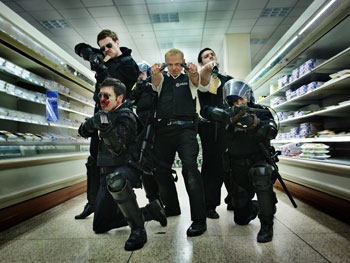
How does one create two of the best loved British comedies of recent years? Initially it seemed purely to involve director Edgar Wright and stars Simon Pegg and Nick Frost, but recently Wright’s foray across the pond, Scott Pilgrim vs. the World, was well reviewed but barely seen, whereas the Pegg/Frost scripted Paul drew huge crowds but lacklustre reviews. No, the secret it would seem is to keep this trio together, with Wright and Pegg on scripting duties, Pegg in the lead role and Frost as his incompetent sidekick. Pepper the rest of the cast with the cream of British acting and comedy, including Jim Broadbent, Timothy Dalton, Peter Serafinowicz and Dylan Moran, with Bill Nighy and Martin Freeman appearing in both films. Also, there must be cameos you can miss even without blinking – in Hot Fuzz, Cate Blanchett plays Pegg’s ex-girlfriend behind a decontamination mask and Lord of the Rings director Peter Jackson is the Santa who stabs him through the hand- but crucially, the film must remain thoroughly British.
For this is the true secret of these films. Whereas other great British filmmakers seem to shy away from their country of origin (Danny Boyle, Ridley Scott, Alfred Hitchcock) opting instead to embrace the more commercial stylings of Hollywood, Wright and co. make sure that if you cut the film in half, it reads Made in England all the way through. From the settings – the zombie-infested streets of London or the sleepy rural village of Sandford, to the cast, sense of humour and the solution to any problem (“I dunno… pub?”) there have never been comedies this British since Kind Hearts and Coronets.
 It is also difficult to pin down what kind of a comedy the films are, as they feature equal quantities of character driven sitcom (Shaun’s vying affections for girlfriend Liz and best mate Ed), genre pastiche (there are more references in both films than could ever be listed), social commentary (upon discovering a zombie, Ed and Shaun first assume she is drunk), outlandish set pieces (battering a zombie with pool cues to Queen’s Don’t Stop Me Now) and subtle farce (The foam housing of twin pistols either side of a thermos in a pensioners bag). This cornucopia of comedic styles means that, if you didn’t like the last joke, it’s OK as another will be along shortly.
The most important aspect though seems to be to make sure there are repeated, quotable lines, whose meanings change throughout the course of the film (“He’s not my Dad,” “You’ve got red on you.”) or off-hand or unintentional predictions that inevitably come true. Of the two films, Fuzz rates a little lower due to a bout of Return of the King syndrome, with more explosive endings than are strictly necessary. Shaun also offers more rewarding repeat viewings, with many lines not landing their full impact without prior knowledge of the rest of the film.
Shaun of the Dead Choose film 9/10
Hot Fuzz Choose film 8/10

Annie Hall

Woody Allen famously has a tendency to write himself into most, if not all, of his scripts. It is usually difficult to distinguish where Allen ends and his characters begin, and this is none more so than with Alvy Singer, Allen’s neurotic obsessive from this, arguably his greatest and funniest film. It is this ability to use himself, or at least a variation of himself, as his protagonist that has allowed Allen to create such a well rounded, nuanced persona. One wonders if he hasn’t been living life as this character since birth, honing the pessimism, the paranoia and awkwardness, so now all he needs to do is put the ‘character’ into a slightly heightened situation, and a natural comedy will emerge.
Not that character is the only weaponry in Allen’s arsenal. The script is hysterical yet droll enough to quote in everyday life (“we can walk to the curb from here”), the performances perfect, particularly Diane Keaton as the eponymous Hall, both Singer’s ideal partner and greatest foe, and the film is peppered with fourth wall breaking with moments of originality, from a narration that admits it may be exaggerating to direct-to-camera conversations and asides.
Thee almost sketch-like format of the film, flitting backwards and forwards in Hall and Singer’s relationship, suits Allen well, as he is a filmmaker of varying styles and techniques, so he is able to showcase this without jarring the rest of the film, such as when he used split-screen to compare different family meals, or stopping random people in the street for relationship advice.
Oh, and the woman waiting with Singer at the end of the film, out of focus and silent in the distance for a matter of seconds? None other than Sigourney Weaver.
Choose film 8/10

Heat

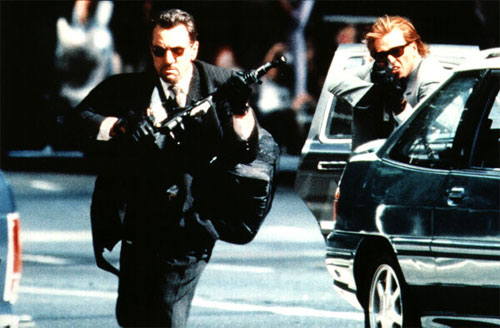
Most crime films tend to pick a side early on, focusing on a ‘means to an end’ band of criminals thieving because they have to, or a team of patriotic, all-American supercops able to match their never-ending machine gun clips with a limitless supply of one liners, but Michael Mann’s Heat, a remake of his own 1989 made for TV movie L.A. Takedown, takes a different path, giving Robert De Niro’s gang of seasoned thieved and Al Pacino’s police squad equal screen time, equal motivation and similar levels of compassion, so you get to decide who you want to win. Though the two main characters; De Niro’s master thief Neil McCauley and Pacino’s dogged detective Vincent Hanna are sworn enemies, they are still two sides of the same coin, separated by their own opinions of the law, but brought together by a deep mutual respect. Neither one is the villain of the film, there are more than enough scumbags among the supporting player to take that role, yet neither is necessarily the hero, although in the end it’s Pacino who grabs the most heroic moments.
Surrounded by an incredible ensemble cast (deep breath: Val Kilmer, Tom Sizemore, Danny Trejo, Dennis Haysbert, Natalie Portman, Xander Berkeley, Hank Azaria, Jon Voight, Jeremy Piven, Mykelti Williamson, William Fichtner, Tom Noonan, Ted Levine, Ashley Judd), some perfectly choreographed set pieces (the opening truck heist and mid film bank robbery/street shootout) and ability to show the effect their chosen lifestyles has had on these characters and their personal lives, or lack thereof, this is a tremendous film, even if it does give in to the occasional cliché, but these can be forgiven for the fact that they use weapons that actually, from time to time, need reloading.
Choose film 9/10

The Bourne Trilogy

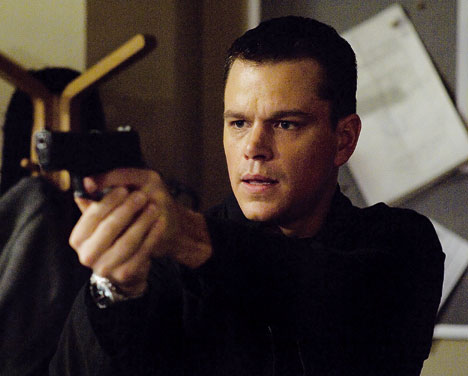
Back in 2002, the espionage genre must have felt a little like Matt Damon’s Jason Bourne at the start of this trilogy, floating unconscious in the Mediterranean Sea with a bullet in the back after the abysmal CGI tsunami of Die Another Day and the shallow, clichéd hotchpotch of Mission Impossible 2, although they may have envied Bourne’s lack of memory. Thank the heavens then for the metaphorical fishing vessel of star Damon, director Doug Liman and writer Tony Gilroy for bringing this energetic affair to the screen, both setting up Damon as a bona fide action star and throwing the gauntlet at the feet of Bond and Ethan Hunt to step it up a gear (both of whom willingly accepting the challenge with Casino Royale’s gritty realism and MI3’s intelligent action).

Batman Begins

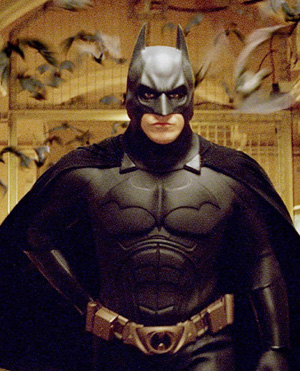
As the title suggests, this predominantly covers Batman’s origin story, from the death of his parents after he becomes scared at the theatre, through his training by Liam Neeson’s Ducard, his development of a crime-fighting persona and his confrontation with his former mentor in a city ridden with toxin-crazed criminals and madmen. This is arguably the most realistic, or at least vaguely plausible comic book movie ever made, with the only real superpowers on display being a gas that makes people insane and a ridiculously vast fortune to funs Bruce Wayne’s double lifestyle. Granted, the secret passage in Wayne Manor is operated by hitting a coded sequence of piano keys, but this can be forgiven, and is at least a variation from the classic sliding of a secret book on a shelf.
Continue reading

Spiderman 1 & 2

Never has a film been more squarely aimed at the nerds and outsiders of the world (OK, maybe Revenge of the Nerds), the guys with the smarts but not the brawn, good looks, athletic bodies and hot girlfriends. Fortunately, this description neatly encapsulates the majority of the superhero genre’s existing fanbase.
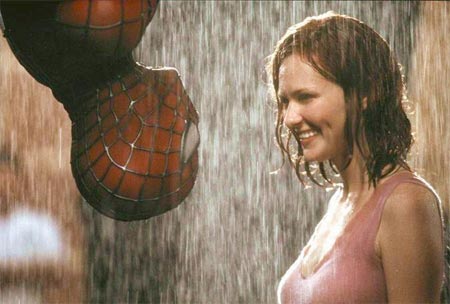
Tobey Maguire is Peter Parker, the afore-mentioned science nerd with a prolonged crush on Kirsten Dunst’s girl-next-door MJ, but lacking the confidence, wealth, strength and social standing required to do anything about it. After being bitten by a radioactive spider during a class field trip, he acquires some of the spider’s abilities, including wall crawling, mild precognition, shooting webs from his wrists, a vastly improved body and the ability to dangle from the ceiling into your mouth while you sleep. In real life, spider’s shoot the webs from an aperture closer to their posterior. This would have made for a much stranger film, I feel.  Unfortunately, Parker’s transformation occurs around the same time as Parker’s lazy rich kid best friend Harry’s businessman father trials a new super serum on himself, with predictably disastrous results, transforming him into a suped-up madman, terrorising the city in the form of fan favourite villain the Green Goblin.

The Silence of the Lambs

It’s easy to forget just how impressive Silence of the Lambs is as a film; receiving the ‘Big 5’ Oscars (Actor, Actress, Picture, Director, Screenplay) back in 1992, an accolade since rusted by the diminishing returns of the sequels/prequel. When remembered, the image brought to mind is of a motionless Anthony Hopkins stood eerily in the centre of a jail cell, awaiting Jodie Foster’s FBI student Clarice Starling, the conversations that ensue regarding Hopkins’ incarcerated Hannibal Lecter assisting the FBI with psychological analysis of an active serial killer, and certainly Hopkins’ aggressive, manic yet restricted delivery of oft-quoted and even more so parodied dialogue. Admittedly Hopkins turn, equal parts refined and ruthless, educated and insane, psycho-analytical and psychopathic, is remarkable, before Ridley Scott’s Hannibal turned him into some kind of dandy rogue (albeit one who feeds Ray Liotta his own brain), but it is so overpowering that it overshadows the rest of the film, feeling his absence whenever he’s not on screen, staring directly into the soul of the viewer. Not to diminish the rest of the production, with Jodie Foster being another highlight, her twig-like rookie about a foot shorter than all the other male recruits, all of whom have no problem checking her out as she walks by, seeing her not as an equal, but simply as a girl. Ted Levine (Monk, Heat) is also incredible as the killer Buffalo Bill, keeping his victims alive in a well before skinning them to make himself a suit. Criminally he was not even considered for a supporting actor nomination, yet his portrayal is arguably more chilling than Hopkins’, delving deep into a twisted, scarred psyche and throwing the shattered remains at the screen. The third reel reveals, both examples of fine editing and cinematography, also deserve mentioning, keeping you guessing long after you thought you knew what was happening.
Choose film 8/10

Leon

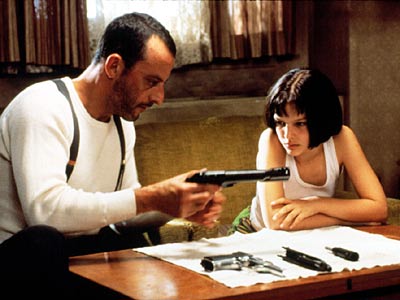
After the murder of her uncaring parents and innocent four year old brother at the hands of a pill-popping, Beethoven loving Gary Oldman, Natalie Portman’s 12-year old Matilda is taken in by her stoic, lonesome ’cleaner’ (a hitman to you and I) Leon. Leon’s skills as a contract killer are evidently impressive, shown early on by his one-man takedown of a drug dealer and his crew, disappearing into the shadows like the breath of a ninja, yet his skills as a human being and fully functioning member of society are less so, eking out a solitary existence with his milk laden fridge and beloved yucca plant. The introduction of Matilda into his life changes everything, as she requests training to avenge her brother’s death, in exchange becoming Leon’s assistant and tutor in reading and writing. Director Luc Besson shows a style and directorial flair seen previously in Nikita (where Jean Reno’s character first briefly appeared) as more recently in the decidedly more Hollywood-ised the Fifth Element (again featuring an intense, cackling turn from Oldman in villainous form).
Choose film 6/10