Top Hat

My first encounter with Fred Astaire and Ginger Rogers, this does not make me look forward to any others. The plot is paper thin and rests upon a simple, easily clarified misunderstanding – Astaire’s dancer Jerry Travers falls for Rogers’ Dale Tremont staying in the hotel room below his, but she thinks he is married to a friend of hers and rebukes his advances. Every plot point, from their initial meeting (he is dancing in his room, alone, for no reason, waking her up, so he dances on sand to not make any noise, instead of, I don’t know, just not dancing) seems to have been contrived simply to show off the dance skills of the two leads. Seeing as I’m incapable of telling good dancing from bad, or even if the dancers are in time to the music, this is entirely lost on me, the dance sequences left me bored and awaiting a scene where someone didn’t spontaneously burst into song for no apparent reason.
Choose life 5/10

Aguirre: Wrath of God

In 16th century South America, a large group of conquistadors are exploring the jungles, searching for El Dorado, the city of gold. Among this group are knights in full armour, maidens riding in slave-carried sedan chairs, monks, llamas, pigs and men dragging cannons, desperately trying to traverse knee deep mud and extremely dense rainforest. It was these images that first made me think this was a comedy, as the shots of these 100s of people blindly heading deeper and deeper into the lush undergrowth without even contemplating what could possibly be ahead is frankly hilarious, but when a smaller (but still fairly sizable, and weighed down with unnecessary items and people) is sent forward as a scouting party, they are rapidly picked off one by one by natives, illness and each other. Eventually leading this group is Klaus Kinski’s wild-eyes Aguirre, desperate to divert to mission to his own gain via any means necessary, even shooting the man currently in charge. After the initial hilarity the movie takes a dive towards bleaker, more surreal pastures, and although some shots, the final one for instance, of Aguirre finally controlling his raft, apart from the hoards of monkeys, are memorable, this film really isn’t worth the time.

Choose life 5/10

sex, lies and videotape

The first spoken word in this film is “garbage”. I wouldn’t go quite that far, but I don’t quite get the big deal of this piece. Centring around four main characters, Andie Macdowell’s prudent homemaker Ann, her promiscuous sister Cynthia (Laura San Giacomo), Ann’s lawyer husband John (Peter Gallagher) who is sleeping with both of them, and his old college friend Graham (James Spader), this plays out slowly and plainly, with plot points signposted miles in advance. Graham hasn’t seen John for 9 years, but has moved back into town and needs somewhere to stay temporarily, so crashes at theirs. He seems a little off, a little antisocial and distanced from the world, and when Ann goes to visit him in his new apartment, she discovers he has a ‘personal project’ that involves him videotaping women discussing their sexual experiences, and occasionally masturbating. It seems the only way the impotent Graham can become aroused is via a camera, hence this rather literal stockpiled wank bank. The film shows how powerful a camera can be, with the subjects being more willing to open up when staring into a lens than someone else’s face, and Spader’s performance is riveting and genuinely unsettling at times, but watching Macdowell trying to act is painful, and not enough unexpected occurs.

Choose life 5/10

The Sound of Music

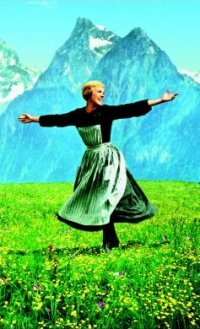
Unbelievably, not only had I reached the grand old age of 24 without seeing this film, I also had little idea as to the plot, with the only detail I could quote is that at some point Julie Andrews prances around the greenest fields in all the world. It turns out this happens almost immediately, and moments later I was asleep, for a good half an hour no less, so after several chapters were skipped back I tried again, but I stick to my guns when I say that this 3 hour musical about a singing nun looking after the seven children of a strict retired navy captain is really quite boring. Yes, the songs are catchy and have had a good run outside of the film – I know most of them and have never seen an episode of How Do You Solve a Problem like Maria? – but Andrews and the children are unbearably chirpy, Christopher Plummer’s Capt. Von Trapp too extreme in his before and after being Maria’d states and Charmian Carr as the terribly named eldest daughter Liesl is a long way from even passing for 16. Add to this the predictability of the plot, the inevitable mellowing of both the children to Maria and the stony Captain to everyone – through song of course – and the aforementioned nauseating level of happy everyone is, all you get at the end is a headache. Damn good nap though.

Choose life 5/10

Tsotsi

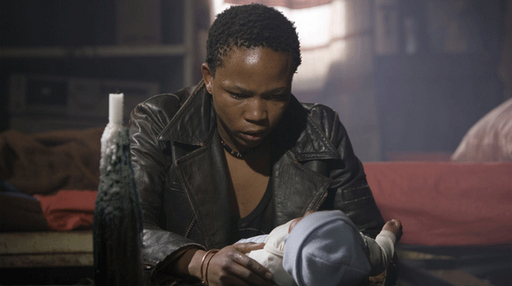
When a stoic gang leader in the slums of Johannesburg shoots a wealthy woman and steals her car, he finds himself unable to abandon the baby he finds in the back seat. Leaving the baby is unthinkable, yet returning it guarantees capture, and so begins the young hoodlum’s journey towards redemption, learning to mend his ways, asking for help instead of demanding it through threats of violence. The characters – particularly those of his gang members – are broadly drawn stereotypes – the smart one, the angry one, the fat one – but the acting is admirable from a non-professional cast, and there is little fresh ground uncovered as the standard comic misadventures occur when a man unprepared for parenthood finds himself in charge of a child; constructing a nappy from newspapers, dancing around to stop the baby from crying. The ending too seems botched, it would have been better for Tsotsi to have constructed his own destiny but this is certainly a great deal better than director Gavin Hood’s subsequent endeavour, the universally despised X-Men Origins: Wolverine.

Choose life 5/10

Shine

Though onscreen for less than half the film, Geoffrey Rush won the 1997 best actor Oscar for his portrayal of the adult David Helfgott, a real life pianist barely known outside of his native Australia.
As a child, the young Helfgott (Noah Taylor) suffered an overbearing, paradoxical father who could never be proud of his son until he was a renowned concert pianist, yet refused to allow him the tutoring to achieve it. This pressure strains David’s personal life – a promising young romance is quashed at its initial meeting by his father’s interruption – eventually causing David to develop mental illness, not helped by trying to learn a particularly tricky Rachmaninoff.
All the performances are exceptional, particularly Rush mumbling and stuttering at lightning speed, occasionally unintelligible, revelling in the small moments of joy, be they from the discovery of a vacant piano in a restaurant or trampolining wearing nothing but sunblock and a billowing overcoat. The great John Gielgud crops up as the encouraging, kindly, cravat wearing tutor David so rightly deserves, but the tale cannot escape the cliché of the tormented artist, becoming better at his craft the greater the trauma he endures. Also the ending is too uplifting and fairytale, regardless of whether it is based on fact or not.
Choose Life 5/10

Wallace and Gromit: the Curse of the Were-Rabbit

I’ve mentioned before in the review for Chicken Run that British animation company Aardman do enjoy filling their films with parodies, puns and homages, with this picture proving no exception. From faithful pooch Gromit having a degree from Dogwarts university, power tools made by Botch and scenes stolen from the likes of King Kong and An American Werewolf in London, the gags come thick and fast, unashamedly crowbarring in references to other rabbit-related movies (a shop called Harvey’s, Bright Eyes playing on the radio).
However, endless jokes are not enough, as the predictable (if enjoyably surreal) story of a man (Wallace, voiced as ever by the dependable Peter Sallis) and a rabbit swapping physicalities and personality traits after a bout of brainwashing goes wrong leaves too many loose ends and plays plot points signposted in neon letters as twists and shock reveals. A game British cast (Helena Bonham Carter as vegetable mimicking Lady Tottington, Ralph Fiennes as the blunderbuss wielding diminutive Victor) are solid, but not quite enough to warrant repeat viewings.
Choose life 5/10

Dirty Harry

Would this film have had such a cultural impact without Clint Eastwood’s performance as the eponymous San Francisco detective ‘Dirty’ Harry Callahan? Probably not, as Eastwood’s depiction of one of cinema’s most legendary and hardest badasses is the only thing worth watching in this picture. After the infamous early scene, where Harry foils a robbery using only a .44 Magnum and one of the most quoted lines in the history of people saying something someone else said first, the action peters out, leaving a fairly standard, character driven police procedural, as Callahan attempts to solve the case of the Scorpio killer, loosely based on the real life Zodiac killer recently seen in David Fincher’s film of the same name.
The film rises a little when it detracts from the central plot – the dealing with an attempted suicide is a particular highlight, but is Eastwood’s performance and a decent script enough to watch this movie? Will I choose life, or film? Can’t tell myself in all this excitement.
Choose life 5/10

Dangerous Liaisons

John Malkovich: object of desire? Talk about playing against type. As the Vicomte Sebastien de Valmont in 18th Century France, he is challenged by the Marquise Isabelle de Merteuil (Glenn Close) to deflower Uma Thurman’s virginal bride-to-be Cecile. Deeming the task too easy, he instead chooses to bed Michelle Pfeiffer’s Madame de Tourvel, a virtuous, devout, happily married woman staying with the Vicomte’s aunt. The Marquise then drafts in Keanu Reeves’ Danceny to woo Cecile instead. If the plot sounds familiar, it’s because it was adapted more recently (and poorly) in the modern-set Cruel Intentions, which succeeded in dumbing down the many deceits and allegiances in the plot, but retains the deeply unlikable protagonists, too rich for their own good and revelling in destroying the lives of those around them.
More erotic than most period dramas, with necklines set to plunging and cleavages set to stun, this sees more bedhopping than a season of Desperate Housewives. Malkovich is on excellent form as the callous, vain and calculating lothario, deemed “conspicuously charming” and Close walks the line between on/off romance and hardnosed bitch, but every time Keanu opens his mouth you get the feeling Bill and Ted got their time travelling phone booth stuck in the reign of Louis XV, so thick and distracting is the slacker dude lilt he so desperately tries to hide.
Choose life 5/10

Bad Lieutenant Port of Call

This is not a remake, nor is it a sequel or prequel to Abel Ferrara’s Harvey Keitel-starring 1992 Bad Lieutenant, although there is one key similarity, in that the titular law enforcement officer is a corrupt drug addict attempting to solve a crime, in ’92 the rape of a nun, in Port of Call, the murder of a drug dealer, using their own, unconventional methods.
In this film, the drug-fuelled lead role is not so much played as inhabited, snorted, smoked and injected by a wired, tense and almost hunched Nicolas Cage, giving his best performance since Leaving Las Vegas, alongside a cast of largely unknowns or non-actors (including Xzibit as the drug kingpin lead subject of the investigation). As is traditional with maverick cop movies, there is more than just the case plaguing Cage’s Lt. Terence McDonagh, and at one point he must also juggle looking after his father’s dog, protecting a witness to the case, his friendship/relationship with Eva Mendes’ high class hooker/partner in narcotics and an investigation into his unorthodox interrogation of the witness’ grandmother, jeopardising the life of an elderly woman in her care. The very fact that McDonagh faces the repercussions of his actions sets this aside from other films in the genre, that so usually see their protagonists commit crimes in the name of justice with no consequences.
As amazingly intense as Cage’s performance is, the film itself never quite grips the attention. There is little here that hasn’t been seen before (other than hallucinations of iguanas and the break-dancing of a recently deceased hoodlum), but director Werner Herzog should be commended for rewriting the script to set the action in New Orleans in the aftermath of hurricane Katrina in order to provide the city with jobs and income.
Choose life 5/10