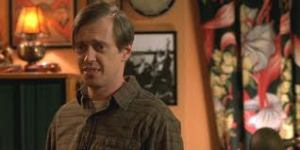
Enid and Rebecca (Thora Birch and Scarlett Johansson) have just graduated high school, and have no plans as to their future. They have no desire for college, careers or being members of society, are proud of their outcast status yet mock everyone else either for conforming to societies standards or differing from it. When they respond to a lonely guy’s missed connection in a newspaper, Birch’s Enid takes a shining to the shy, unassuming Seymour (Steve Buscemi). Enid is a destructive force, bringing down all those around her whilst she steadfastly refuses to grow up. Where consciously or not, everything she does prevents her life from progressing, be it dying her hair green before going apartment hunting with Rebecca or criticising the films at the cinema where she is hired. Understandably, everyone around her seems eager to develop their lives to a stage where she is no longer involved, be it her overly doting yet unattached father (Bob Balaban), her friends or Seymour, whom she helps to find a partner, only to be excluded from his life once three becomes a crowd. The movie fails the one-hour test; after 60 minutes I still didn’t care what happened to any of the characters, as watching Enid self-destructive cycle spin around again left me bored and disinterested. The only saving grace however is Buscemi, remaining just the right side of creepy, even with a horrendous side parting. His obsessed record collector struck a note with me, for if you replaced the music with books and DVDs, I’m fairly sure I’ll be him in 20 years should my girlfriend ever leave me.
Author Archives: jaycluitt
Great Expectations
Dickens is my favourite writer of whose work I’ve read very little, and remember even less. I’m going to put that down to his being the West Wing character Sam Seaborn’s favourite writer, and because what I can remember is exquisite. I’m attempting to correct this literary oversight by reading the complete works of Dickens, however I’ve had David Copperfield sat in my bookcase for a few months now and have yet to even slide the book from its old fashioned cardboard sleeve and leaf through the hair’s breadth pages. This is not for want of trying, it just seems that another book will jump out at me sooner, or an issue of Empire will be posted through my door (I’ve recently ended my subscription to Total Film for this very reason, for two film magazines and my girlfriends insistence that I subscribe to Esquire leaves precious little time for reading anything else before the next month’s batch comes through the letterbox). If anything, Great Expectations has inspired me to pursue my Dickensian endeavours ever further, with its rich characters, superb storytelling and above all marvellous dialogue, taken directly from the pages written 150 years ago.Badlands
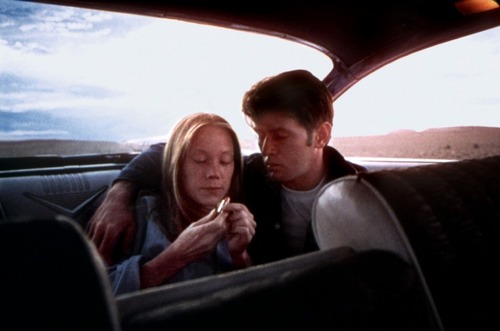
If Badlands is anything to go by, then Terrence Malick is one of the most overrated directors in cinema, having completed only five pictures, but with critical and cineaste acclaim deserved only of the likes of Scorsese, Spielberg and Hitchcock. Though I haven’t yet seen Days of Heaven, the New World or the Tree of Life (though Days is on the list, and I live in a great deal of hope that I am proved incorrect), from what I have seen of Badlands and the Thin Red Line, I’m guessing they are mostly comprised of a philosophical narration, ruminating on the nature of life, set over a thrown together, meandering plot shot almost entirely at sunset. Whilst I appreciate Line in spite of these things, it was more for the ensemble cast, wartime setting and stunning cinematography that I am willing to endure its occasional pontificating on the ways of the world. Badlands, however, has little to offer save excellent early performances from Sissy Spacek and the legendary Martin Sheen, playing characters based on 1950s killers Charles Starkweather and Carol Fugate, themselves inspired by Bonnie and Clyde. Sheen is Kit Carruthers, a garbage man with dreams of being a James Dean-lookalike outlaw. He meets Spacek’s Holly and, when her father shoots her dog when she lies to him, Kit kills him and hides him in the basement, which to be honest Holly takes rather well. This begins a killing spree as the pair run from the pursuing authorities and try to set up a life on their own, away from the world. Holly’s narration is infuriatingly sparse, as instead of detailing why they are doing what they are, we are simply told “The reasons are obvious, I don’t have time to go into them right now.” Much of the film is symbolic in a way that doesn’t hold up when you think about it – a man ringing a bell to call his deaf maid, a suicide message left on a record player next to a house fire that will undoubtedly engulf it – and I really cannot fathom why this film has garnered such a reputation as being more than a film, but a work of art. I’m not ashamed to admit that I much prefer Natural Born Killers, Oliver Stone’s take on a similar story with the same influence (also on the list), as that at least has identifiable characters, justified (if not condoned) actions and innovative style. Badlands seems just about a deluded man running away with a teenage girl, killing everyone they meet just so he can become famous and be shot down with a girl by his side to scream out his name.
Alexander Nevsky
Once again, as with Battleship Potemkin (also directed by Sergei Eisenstein), a greater understanding of Russian history probably would have made this film more appealing, and more likely to hold my interest. As it is, this tale of a 13th century Teutonic knight was lost on me, and I found the whole thing dry, dull and passionless. The titular Nevsky (Nikolai Cherkasov, a mixture of Charlton Heston and Richard Branson) is a fisherman and prince of his nation who raises an army of soldiers and peasants to fight back after his beloved homeland is attacked. In said army, two soldiers compete for the hand of a girl, with the man who shows the most valour being rewarded with her marriage, though it is not mentioned how she would make such a judgement when not present during warfare. The battle scenes are too long and stagey, with actors waiting for their opponent to take their turn as though playing Final Fantasy, and everyone on one side rides off at the shout of “We have won this day,” despite the battle being far from finished, with many soldiers on the opposing side still fighting. The good and bad guys are clearly marked – no prizes for guessing the men throwing screaming children into a fire with no morsel of remorse are going to be the villains, and there’s little to really recommend about this film, especially if you know nothing about eastern European history.
The Sound of Music
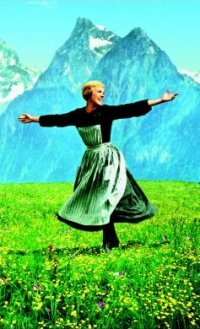
Unbelievably, not only had I reached the grand old age of 24 without seeing this film, I also had little idea as to the plot, with the only detail I could quote is that at some point Julie Andrews prances around the greenest fields in all the world. It turns out this happens almost immediately, and moments later I was asleep, for a good half an hour no less, so after several chapters were skipped back I tried again, but I stick to my guns when I say that this 3 hour musical about a singing nun looking after the seven children of a strict retired navy captain is really quite boring. Yes, the songs are catchy and have had a good run outside of the film – I know most of them and have never seen an episode of How Do You Solve a Problem like Maria? – but Andrews and the children are unbearably chirpy, Christopher Plummer’s Capt. Von Trapp too extreme in his before and after being Maria’d states and Charmian Carr as the terribly named eldest daughter Liesl is a long way from even passing for 16. Add to this the predictability of the plot, the inevitable mellowing of both the children to Maria and the stony Captain to everyone – through song of course – and the aforementioned nauseating level of happy everyone is, all you get at the end is a headache. Damn good nap though.
Saving Private Ryan
There is a drinking game, the most disrespectful and coma-inducing that I’ve ever come across, where when watching Saving Private Ryan the players all drink a shot every time someone on screen dies. If one were to play this game, which I cannot advise for medical, moral and cinematic reasons, then I would recommend having 50-100 shots per player lined up ready and waiting for the opening 25 minutes of the film, as the much celebrated D-Day landing is a veritable cornucopia of fatalities, with soldiers coming a cropper as soon as the rear doors of the landing ships open, drowning in the water struggling with heavy packs, being carried to safety and every other way available.
There are those that claim this is a long, boring film about walking, bookended by two of the greatest battle scenes in cinematic history, yet without the middle, where we truly understand the brotherly bond felt by soldiers fighting and dying together, would the closing battle – a much more personal, strategic affair than the opener, have such an impact? For my money this is Spielberg’s most cinematic film, showcasing his ability to show ordinary people in extraordinary situations, yet without losing the human touch.Dumbo
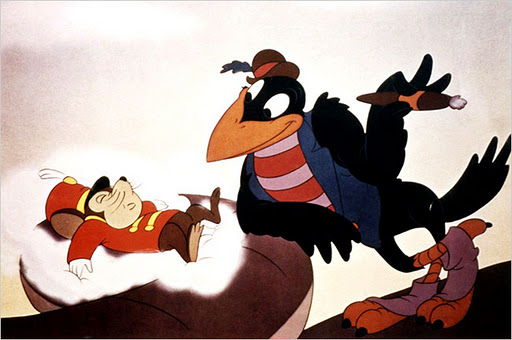
Alcohol is the solution to all life’s problems, as long as you can survive a psychedelic heffalump turbo nightmare that’s far trippier than you remember in this, Disney’s 4th feature length animation. Telling the story of Dumbo, an almost intolerable cute elephant born with ears so big they can be used as his own personal blanket, this follows him as he is ridiculed by the other elephants at the circus he’s born in, before being made a clown, befriending a mouse, getting hammered and meeting the most stereotypically racist crows ever drawn (“We’s all fixin’ to help ya’.”) Whilst much of Dumbo hasn’t aged well – the faceless black slavehands are another nod to Uncle Walt’s personal beliefs – and the plotting is far too fast for its own good, but the animation is vibrant and the characters beyond memorable. And if you can sit through Dumbo’s mother cradling her baby to sleep through the bars of the trailer she’s confined in without getting something stuck in your eye then you don’t have a soul.
The Jerk
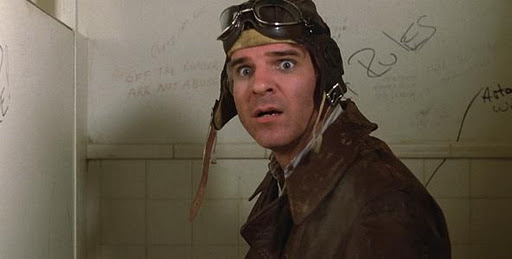
As soon as Steve Martin, in his first major movie role at the age of 34, tells us he was born a poor black child, you know you’re in for a bizarre ride, as Martin’s Navin R. Johnson, raised by a poor black family when abandoned on their doorstep as a baby, discovers he was adopted (“You mean I’m gonna stay this colour?”) and heads out into the world to find his future. Martin nails his naive, boyish role, capturing a childlike excitement at everything, and the tone retains an occasionally ludicrous but always hilarious feel, as Navin rises to greatness, then crashes down again. This was the perfect vehicle to shoot Martin into superstardom, showcasing his excellent comic timing, random sense of humour and skill with a pratfall.
Sunshine
In the not too distant future, the Sun is dying and a team of American and Japanese scientists and astronauts are dragging a bomb with a mass equivalent to Manhattan Island through space in an attempt to reignite it. The crew aboard the Icarus II, comprising of a “Hey, it’s that guy” cast including Cillian Murphy, Chris Evans, Rose Byrne, Michelle Yeoh and Mark Strong, predictably encounter setbacks on their mission to save the Earth, but everything is handles with a keen eye and a steady hand by director Danny Boyle, for the first two thirds at least, as tempers fray, fists sly and lives are lost for the sake of the mission. Alas, the final reel, when the film switches from interesting, character driven sci-fi to frenetic horror slasher, is where the charm is lost. If only Boyle and screenwriter Alex Garland had paid more attention to a fitting finale than to designing space suits that are trying far too hard to be iconic.
Tsotsi
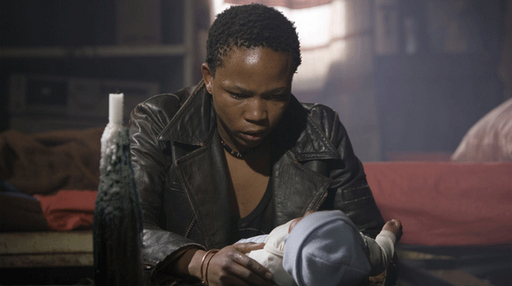
When a stoic gang leader in the slums of Johannesburg shoots a wealthy woman and steals her car, he finds himself unable to abandon the baby he finds in the back seat. Leaving the baby is unthinkable, yet returning it guarantees capture, and so begins the young hoodlum’s journey towards redemption, learning to mend his ways, asking for help instead of demanding it through threats of violence. The characters – particularly those of his gang members – are broadly drawn stereotypes – the smart one, the angry one, the fat one – but the acting is admirable from a non-professional cast, and there is little fresh ground uncovered as the standard comic misadventures occur when a man unprepared for parenthood finds himself in charge of a child; constructing a nappy from newspapers, dancing around to stop the baby from crying. The ending too seems botched, it would have been better for Tsotsi to have constructed his own destiny but this is certainly a great deal better than director Gavin Hood’s subsequent endeavour, the universally despised X-Men Origins: Wolverine.