Gimme Shelter

I was quite looking forward to this film. Although I’m not a massive Rolling Stones fan, I can often be found listening to their greatest hits, amongst which there are many songs I’m rather partial to, in particular Paint It Black, You Can’t Always Get What You Want and Honky Tonk Women, and I haven’t heard too many of their songs that I’ve particularly disliked. Also, the only music documentary I’d seen prior to this was Anvil, which is pretty good if you ask me. 

The film follows the Rolling Stones on their 1969 US tour, culminating in a massive free show at Altamont Speedway, San Fransisco. The events of that show have gone down in history, remembered as the moment the 60s ended when a concert-goer was stabbed and killed by the Hell’s Angels, who were hired as security for the event. Many other audience members were beaten or injured during the concert, which was rife with drug abuse, nudity and people giving birth, making me all the more grateful to have been born long after all that free thinking and spirituality was around.  

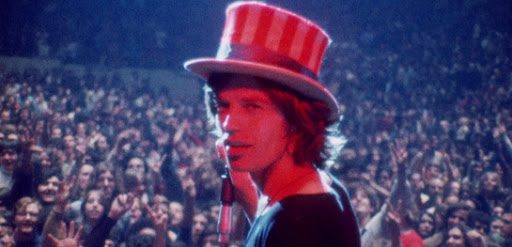
Before getting to the Altamont, we see various other performances throughout the tour, including a terrific rendition of Jumpin’ Jack Flash at Madison Square Garden, and footage of the band listening to their music in hotel rooms, and watching the editing process of this very film in the editing bay. We are given a bit of an insight into the band’s personalities (Mick Jagger comments that “It’s nice to have a chick [perform with them] occasionally” after Tina Turner belts out I’ve Been Loving You Too Long), but for the most part I was sadly bored, despite Jagger’s relatively engaging presence. He always seemed fairly unsure of where he was or what he was doing (can’t think why), and he had an air of someone who couldn’t quite understand exactly how he’d gotten to where he was, and just generally dicked about on stage whilst the other band members were concentrating on getting the job done. What I expect from music may not be the same as other people – I tend to prefer a good quality recording rather than atmosphere and ambiance, hence why I rarely go to musical events – and I imagine I’d have been severely disappointed had I attended any of the gigs on the Stones’ tour.

The only interesting segments were about the organising of the free concert, having to arrange a venue to accommodate the hundreds of thousands of audience members, but this was overshadowed by the impending on-camera death of Meredith Hunter, an audience member who attempted to mount the stage. I do not relish the opportunity to watch an actual death on screen, and I did not feel comfortable watching what is essentially a scene from a snuff film. I get the feeling that had this event not taken place on film, then this documentary would probably not appear on the 1001 list. It’s only really worth watching for the stellar soundtrack.

I get the feeling I’ll track down Martin Scorsese’s Shine A Light documentary eventually, because, y’know, it’s Scorsese; but sadly all this film left me with was an increased desire to re-watch Spinal Tap.

Choose life 5/10

Hell Is For Heroes

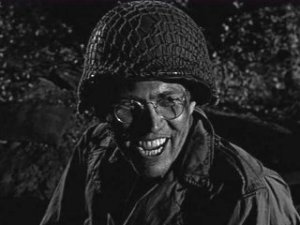
1944, Montigny, France. At a rest area near the Siegfreid Line, Sergeant Larkin (Harry Guardino) is desperately trying to find a pen amongst his small band of men. Everyone is either using theirs, sees no need for one, sells dodgy ones or are in a similar state of searching for a writing implement. This scene, which does a good job of introducing the main characters and their various skills, roles and personalities, is one of very few scenes that sets it apart from essentially every other war film ever made.
There’s Private Corby (Bobby Darin), the guy who knows how to get things, but they won’t necessarily work and will cost you a price, and Corporal Henshaw (James Coburn), the bespectacled guy who can’t help tinkering with anything that moves, even fixing a car that was just sat nearby. Private Cumberly (Bill Mullikin) is an amiable chap, but seeing as he’s devoid of too much of a personality, you can go ahead and consider him German cannon fodder, and the young Homer (Nick Adams), a Polish kid looking to get a ride to America when the troops are shipped home. Add to this bunch Steve McQueen as Private Reese, transferred to the company the day before they’re shipped not home, as they’d been led to believe, but back to the front.

The main story – the small band of American WW2 soldiers are tasked with an almost impossible mission – has since been far-bettered in Saving Private Ryan. In fact, the main story here is the defending of a post against a German pillbox, which here lasts 90 minutes, but was deftly handled by Spielberg in just one, very memorable, scene that isn’t even the best in that film. However, even without Ryan this wouldn’t be a very memorable film anyway, as for the most part it’s fairly dull, and none of the roles are given much characterisation other than being good, or bad, at a specific thing. It’s such that when any of the men are slain, the impact is only really felt because there are so few of them in the first place, rather than because we’ve grown to love them.

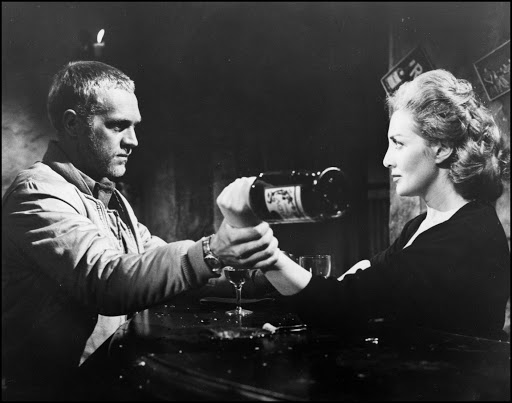
The action is widely spaced out, and when the big climactic advance takes places, it’s mostly in almost total darkness, until Coburn picks up a flamethrower and sets about with it, but even that’s not for long enough. The mine-sweeping scene is admittedly very tense, but alas the outcome is fairly predictable, and its just a matter of waiting for the inevitable to occur. There’s also a nice early scene in a bar between McQueen and a woman in a bar, but once over it’s forgotten, which is a shame as it’s probably the best scene in the film. The camera following a dying man on a stretcher as it’s bearers strive to reach safety for him was a nice touch too, but sadly was lost amidst a sea of unoriginality.

The main focus of the film was on a relatively interesting subject – a small group of men trying to convince a large unseen foe that there were far more of them than in actuality, and they used some ingenious methods to do it, but other than the actual ideas on display I was far from entertained or engrossed. There are far more, and far greater, war films in existence, and I’m hoping the remaining three on McQueen’s resume are superior (I know The Great Escape is).

Choose life 5/10

Top Gun

There are some films out there that seem to be universally adored, so much so that were someone to come along and start slagging them off they’d automatically be written off as hipsterring, pretending not to like something incredibly popular to appear cool or ironic. Now, I’m fairly sure I’m not a hipster, even though I ride a bike and own a scarf (that I very rarely wear, and even then when its freezing), but I just can’t get behind Top Gun, a film that as far as I can tell everyone else seems to generally love.
It does have some very enjoyable aspects, most notably the score, with Kenny Loggins’ Danger Zone being a clear favourite, the script is full of zingers (“Your ego is writing cheques your body can’t cash.”) and a brilliant cast all on top form, but it can’t get around just how boring most of the film is. Now, this may have something to do with my opinion on aircraft. Every year for at least the past four years, Bournemouth (the town I live in) has held an air festival down on the beach. I live less than ten minutes walk away from said beach, yet I do not join the literally thousands of people who flock to this event on an annual basis. That doesn’t sound too surprising, until you discover that other patrons to this event include many of my close friends, colleagues, and of course my parents. This year was the second time I’ve actually headed away from the city during the long weekend, just to escape the planes and their incessant noise. I’m fine flying in planes, and generally find the flights to be one of the more enjoyable aspects of holidays (I get to sit and watch films for six hours straight!?!?!?!), but I really don’t care about watching planes fly, how they work, what model they are etc. And unfortunately, that plays a large part in Top Gun, a film about the top 1% of Navy pilots being trained to be the best that they can be.
It’s clear during the making of the film that two different markets were established – men and women – and a very broad sense of their tastes was estimated. Two different films were then thrown together to attempt to please both groups, and so it is that we have a film about jet fighter pilots in which half the time is spent on an insipid romance plot between Tom Cruise’s cocky pilot Lt. Pete ‘Maverick’ Mitchell and one of his civilian teachers, Kelly McGillis’ Charlie. It doesn’t really help that both halves of the film don’t fit together well, and are for the most part dull. The flying scenes, especially the training exercises, are devoid of either tension or excitement, and the romance is surprisingly more cheesey than the half-naked, oiled up volleyball scene set to Playing With The Boys. Each scene type goes on far too long as well. I can’t imagine the plane-heads remaining fully engaged through the love scenes, and likewise the romance junkies are unlikely to really care about the flying bits.

So why does it have such a reputation? Well, there’s enough to keep your attention on a Friday night post-pub outing, full of kebabs and an impending hangover, and of course there’s Tom Cruise. After sliding across the floor in a shirt and socks in Risky Business, this is probably the early defining movie for Cruise, and none more so than his seducing of Charlie by serenading her, with the help of an entire bar, to The Righteous Brothers’ You’ve Lost That Lovin’ Feeling. I’ve always questioned the choice of this song, as it’s supposed to be a song everyone in the bar knows the words to, yet I’ve never heard it outside of this film. Maybe it’s more popular in the States. This could also be the film that turned a lot of the public opinion against Cruise (not me personally, I’ve got no issues with the guy), as Maverick is an immensely arrogant, cocky dick, but he plays it so well. Anthony Edwards is also great as Maverick’s married-with-kids partner Goose (he’s married to Meg Ryan?!?), but the film is completely stolen by Val Kilmer, who manages to out-cockiness Cruise as rival pilot Iceman.

This is one of the few films that I think could be possibly improved with the use of 3D, normally something I’m deeply opposed to, but I think an added sense of depth perception could help clarify and enliven the aerial combat scenes, which otherwise feel flat and lifeless. I hate to say it, but this feels almost more like a Michael Bay film than a Tony Scott one, and if it wasn’t for the acting and the soundtrack, there’d be no reason to watch it whatsoever.

Choose life 5/10

Never So Few

A Steve McQueen film set during World War 2 where at one point he talks about brewing his own alcohol? No, sadly I’ve not yet reached The Great Escape (one of my consistently top 5 films of all time), I’m onto Never So Few, the Frank Sinatra-starring final obstacle before I get to watch The Magnificent Seven again, when I’ll actually start to enjoy going through all of Steve McQueen’s films.

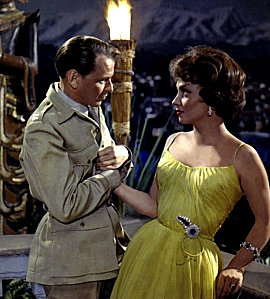
Never So Few sees Sinatra as Captain Tom Reynolds in North Burma during the Second World War. He and his band of highly trained men, including Peter Lawford’s be-monocled Captain Grey Travis and Charles Bronson’s Seargeant Danforth, are training the native Kachins to defend their land against their attackers, but the hardships of jungle warfare and the difficulties posed by his commanding officers – particularly the lack of an assigned doctor in his troop – begin to weigh on Reynolds.

Whilst on a short trip back to headquarters, followed by a two week adjourn for the two captains, Reynolds falls in love with Carla (Gina Lollobrigida), a voluptuously alluring partner to a foreign dignitary, and he also uncovers the beginnings of a plot that may or may not involve his superiors being in cahoots with their Chinese enemies. They also meet Bill Ringa (Steve McQueen), the resourceful driver for their Colonel, and soon recruit him to join their squad.

This film has some serious tone issues. Director John Sturges, yes of The Great Escape and The Magnificent Seven, cannot seem to decide whether he is making a war film – as I initially expected – a romance or a political thriller, as all three elements share roughly equal screen time, and the transition from one to another is often jarring. Styles change when Reynolds walks into a room, leaving the government corruption plot as the music swells to a bad daytime soap opera sweeping score as Carla rushes into his arms for a longing embrace. The three different elements seem only loosely tied together too – it could be justified as to having the war and conspiracy themes, as the subjects are at least related, but the romance could quite easily be lifted without affecting the other two, so tacked on is the feel. This was clearly added just to try and entice female viewers – or possibly more men with Lollobrigida’s Jessica Rabbit-like curves – but it always feels awkward and out of place with the rest of the film, just like Carla’s Spock-like eyebrows.

Speaking of tagged on, McQueen’s character is fairly superfluous too, other than adding someone engaging to watch and a mildly interesting character – plus a somewhat inventive fighting technique early on. I got the feeling that Sturges wanted to include McQueen in the film somewhere, and who can blame him? By this point McQueen had perfected the art of ‘doing something in the background’ when he wasn’t overly important in a scene, hence why he always managed to retain your focus by swatting a mosquito on his neck or playing with his gun, regardless of whether you should be looking at him or not. Sinatra’s Reynolds also has an amusing if distracting penchant for pithy one-liners that don’t necessarily make much sense (“He speaks English like he hates it.” “Inside my mouth tastes like the outside of a crocodile.”) or bizarrely successful seduction techniques in which he discusses the correct use of the word ‘hanker’. Some of the lines are great (“I’ll miss you; where I’m going nobody smells of soap”) whereas others raised a chuckle but would be worthy of a slap in real life (“I’ll be back; learn to cook.”). He also wears a cowboy hat whilst parachuting, which is only something Slim Pickens is allowed to do.

I loved Charles Bronson in the film, though his role is far too short. When his gun runs out of bullets during a Chinese attack on the camp, without hesitating he picks up a table and takes out three men with that instead. Genius. Look out for a young George Takei as a head-bandaged hospital patient complaining about the food and James Hong as a diplomat fairly late on. You may be as astounded as me to learn that Hong currently has 371 acting credits to his name, as diverse as Blade Runner to Kung Fu Panda, Airplane! to Chinatown. The guy’s been in everything.

The plot involves far too many talky scenes for a war film, with not enough actual fighting, despite a not-bad mid-film set piece involving the attack of a Chinese air base using hundreds on cans of gasoline, and a third act counterattack over the Chinese border. In spite of these, the film comes off as boring and overlong – 125 minutes – and the actual backbone of the conspiracy plot is almost impossible to fully comprehend. I’m still not entirely sure what was going on for most of it.

Choose life 5/10

Jude

I had a discussion with my girlfriend recently about The Texas Chain Saw Massacre, instigated by my viewing of the unimpressive trailer for the new remake (in 3D, of course). When I explained the basic premise – a group of kids run into a family of skin-wearing cannibals – she was appalled at A) why someone would watch such a film, B) why someone would make it, and C) what kind of depraved soul would own such a monstrosity. I then answered questions A and C (she wouldn’t have cared that Tobe Hooper made it) by pointing to the copy of the film on my DVD shelf. Why do I bring this up? Well, though I’m not a massive fan of horror (I haven’t seen The Texas Chain Saw Massacre since I bought it), I will occasionally watch a film for the same reasons I go on rollercoasters; they add a certain element of thrill and excitement – and terror – otherwise missing from my humdrum existence on this Earth. My question is, who would watch, make or own a film like Jude?
Continue reading

Broken Blossoms

“This strangely beautiful silent film from D.W. Griffith is also one of his more grim efforts; an indictment of child abuse and the violence of western society.” – So reads the LoveFilm blurb for this 1919 silent picture, and should justify why it took me a little while to get around to watching: it sounds bloody depressing. More so, in fact, than it turned out to be, as the horrendous racism, when seen from a modern perspective, overshadowed the more soul-crushing elements of the plot.
Continue reading

Transformers

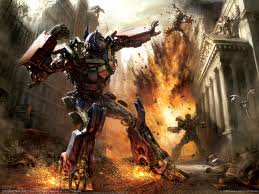
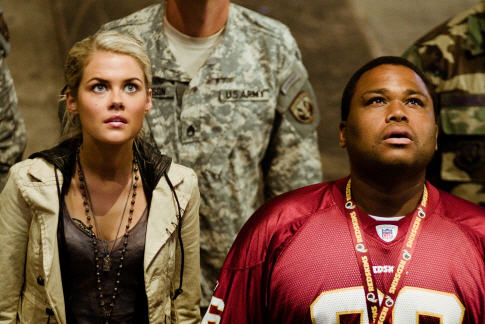
Part 2 in my Shia LaBoeuf: the Scourge of Cinema double-bill sees him taking on giant, transforming robot aliens as he attempts to save the world using a weird little cube, and cop off with Megan Fox. I’ve got no historical connection to the Tranformers franchise, as I neither saw the cartoon series or the animated feature from the 80s, and I’ve never played with any of the toys as a child. So unlike many people, I feel that so far my childhood has been unmolested by Michael Bay, something I was afraid I’d no longer be spared from with his intentions to paint his own brand of ridiculousness onto the Teenage Mutant Ninja Turtles, which I think now has been fortunately abandoned.I first saw the film in cinemas five years ago, when I was barely 20. At that point, I must have been just on the outside cusp of the film’s target audience, as I thought it was amazing. At that point in my life, Michael Bay was something of a favourite director of mine – I even liked Pearl Harbor – and a film that followed cars transforming into robots and beating the scrap out of each other, interspersed with eardrum-bursting explosions, comic cameos and gratuitous shots of Megan Fox bending over an engine at sunset was of course going to do nothing but good to my barely-older-than-teenage mind. Now, however, I see the film for the hollow, disorganised, puerile mess that it truly is.Granted, I’m no longer the film’s target audience, but this is my review, so I’m giving my opinions. This film is stupid. I’m on board for a story about robots from outer space that can somehow transform into cars, planes and, um, a stereo, but unfortunately most of this film is about Shia LaBeouf’s Sam Witwicky, a typical the-only-character-LaBeouf-can-play annoying, dumb every-kid stereotype with embarrassing parents, mediocre grades, stupid friends, a crappy car and a complete and utter lack of charm and charisma. As always, LaBeouf plays an annoying tit rather well, as you’d expect from having had so much practise. It transpires that Sam’s great-grandfather was an Arctic explorer who discovered the allspark – the movie’s maguffin that is capable of creating new transformers – and Sam holds the key to it’s whereabouts, because somehow a map has been engraved into his ancestor”s spectacles. Ludicrous. Two warring tribes of robot aliens – the human-loving Autobots, led by Optimus Prime (voiced by series original Peter Cullen), and the world-conquering Decepticons, led by Megatron (a wasted Hugo Weaving) – somehow learn that Sam has the glasses, and trace his location using eBay. Of course. Along for the ride is Megan Fox’s Mikaela, the girl of Sam’s dreams who is clearly from such a broken home that her family is unable to replace the clothes she clearly grew out of some years ago.There’s also a couple of sub-plots involving the squad of marines – a Michael Bay trademark – who initially encounter a Decepticon attack, and attempts by the government to decode a message recorded from the bots. Each of these strands involves barely fleshed out caricatures instead of actual characters – the marine who sporadically speaks in Spanish even though no-one else understands him, the immature ‘world’s greatest hacker’ with his irritating dance-gaming friend – and does anyone else remember when Jon Voight was a respected actor, and not reduced to offering dry exposition as the Secretary of Defense? The government strand featured one of my biggest pet peeves in films. The film focuses on a group of hackers. This group is predominantly made up of guys who look like hackers – they’re overweight, scruffy, and generally appear socially awkward. And of course the one who’s better than all of them is played by Rachael Taylor, who looks like a supermodel. There is no girl in the world who looks like that and knows how to hack. I’m aware that of all the things in the film that don’t make sense, this is relatively minor, but it’s something that has always annoyed me.

This kind of films lives or dies by the CGI, and I’ll be the first to admit that it’s damn impressive. There are some sequences that look absolutely bad-ass, most notably the opening Scorpiok attack, and a massive-scale battle between both sides at the end. Starscream, the Decepticon who is able to transform into a jet, has the coolest moments, especially when he transforms in mid-flight and swings on a bridge during a strike on the Hoover dam, so in those respects the film has some enjoyable moments. The problem is that in a film for which the entire draw is robots hitting each other, there’s just not enough of it. At one point, the robots are in the middle of a catastrophic fight, yet we are left watching Voight and the hackers searching for some microphones and using morse code.

There were a lot more attempts at juvenile comedy than I remembered from my earlier viewing, and very few of them were gratefully received. At one point, a diminutive robot capable of transforming into a machine attempts to walk nonchalantly passed some people looking for it, and it tries to cover it’s face whilst walking! This is not comedy, nor is it clever, it;s just stupid. There are many more scenes like this – an Autobot ‘lubricating’ (peeing) on John Turtorro’s government agent, Sam’s asinine chihuahua Mojo, everything LaBeouf does – and the only comedic scenes that really do the job are those involving Bernie Mac as a car salesman, and Kevin Dunn and Judy White as Sam’s all-too-familiar parents.

If the idea of giant metallic creatures from space beating each other up has you foaming at the mouth with excitement – and at times this is a category I’d class myself in – then you’ll probably like about half this film. If you’ve recently had a lobotomy or are a prepubescent male, then you’ll probably like the other half. If not, just leave it alone.

Choose life 5/10

Indiana Jones and the Kingdom of the Crystal Skull

Yep, the questionably necessary fourth Indiana Jones instalment is on the List. And if anyone has any problem with that (like me, for example) then the only place to point the finger of blame is at the public, as the List it appears on is the one voted for by Empire readers. Granted, the film came out in 2008, the year the poll was taken, so many readers who may have only ever seen 10 films would have been forced to put it in their top 10. This also explains the inclusion of Transformers and Juno on the same list, and it’s pretty much assured that if the poll were taken again, these films would be unlikely to retain their positions. But the important thing is that the film is on there, and I had to watch it.

When I first saw the film in the cinema, on the weekend it was released, I didn’t actually think it was that terrible. Hell, if anything I enjoyed it, and left the theatre happy and fulfilled. Granted, it was certainly no Raiders of the Lost Ark, or even The Last Crusade, but it was a damn sight more fun than The Temple of Doom. I was somewhat shocked to discover that these feelings were not necessarily shared by the rest of the world, but now, after a couple more viewings, I have realised my mistake.
For me, the film has four main problems, all of which I’m sure have been covered many times before, but not by me. Firstly, the movie seems to be completely devoid of a strong narrative path. It’s more like a bunch of scenes that the writers thought would look cool, all strung together without really flowing into one another. On their own, or within a more cohesive plot, some of them would work fine. Case in point: the opening, in which Indy (Harrison Ford) and his ally Mac (Ray Winstone) are taken to the warehouse at the end of Raiders in search of a sporadically magnetic alien skull, is in itself a pretty entertaining scene, and a great way to start off the film. The use of Indiana’s instantly recognisable profile (when he’s wearing the hat, anyway) is well implemented, and the eventual chase through the warehouse is frenetic and action-packed, even if Ford no longer looks like he’s quite as capable of offing army thugs as he used to be. After this scene, we go straight into the now infamous fridge-nuke catastrophe, a scene which has no place in any film, let alone directly after a really fun, if a little silly, opening action sequence. This problem occurs again later, when some pages from a low-budget 80s B-movie are accidentally stapled in, when out hero finds himself in quicksand, a genre staple that I’m fairly sure has been made illegal.

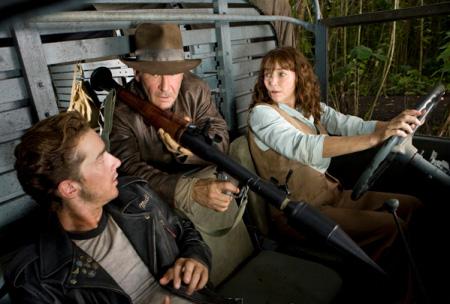
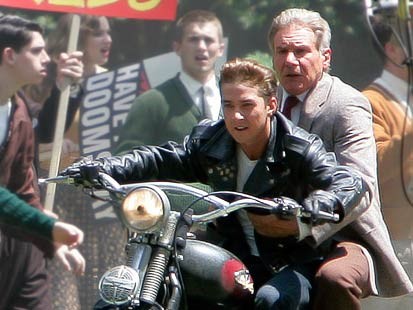
The second problem, and this is a big one, is Shia LaBoeuf. The man is a scourge to cinema. Every film he touches becomes a travesty. Seriously, look down the guy’s resume and you’ll find some of the worst reviewed films of the past few years: the Transformers sequels, Charlie’s Angels 2, Dumb and Dumberer. If he’s the sidekick or plays only a small part in the film, he’s the worst character or in the worst part (I, Robot, Constantine, Bobby) and yet, he still makes movies. In fact, he’s soon to appear in Lawless, in which I can only imagine Tom Hardy will overshadow him in every way possible as the two play brothers. Honestly, the film is going to put LaBeouf up against Gary Oldman! Though I sincerely hope that Shia’s performance in Lawless blows me away, insomuch as he wins an academy award for it, I highly doubt this will be the case, and it may even ruin that film, that I’m otherwise looking forward to, for me. In Crystal Skull, LaBeouf plays Mutt Williams. If you’re a fan of the Indy franchise, it should come as no surprise that (SPOILER) Mutt is Indy’s son, mainly because Indiana is famously named after his own father’s dog, and Mutt is of course another term for a canine. From his costume, it’s clear LaBeouf is foolishly attempting to emulate Marlon Brando from The Wild One, which he pulls off to absolutely no effect, and if anything it’s a reminder of just how terrible LaBeouf is. The fact that there were rumours suggesting this film would see the handing over of the reigns from Ford to LaBeouf to continue the saga still give me nightmares to this day. I’m almost tempted to announce Mutt as being more annoying than Short Round. Almost.

The Mutt/Indy connection brings me on to my third issue. Crystal Skull tries far too hard to be a member of the Indiana Jones family. I’ve got nothing against a sequel making subtle references to it’s predecessors, offering knowing nods and winks to fans, but here there is far too much time spent to this effect. Whilst Karen Allen, returning as Raiders’ love interest Marion Ravenwood, Mutt’s mother, is a nice touch and offers a believable romance with Indy that you are willing to at times root for, there were all too many moments and scenes that felt like the film-makers were just trying too hard to make it an Indy film. Unfortunately, they only succeeded in making it seem more like the parodies of the Indiana films that filled the gap during it’s 21-year hiatus. This felt far more like National Treasure 3 or The Mummy 4 than an Indy film.
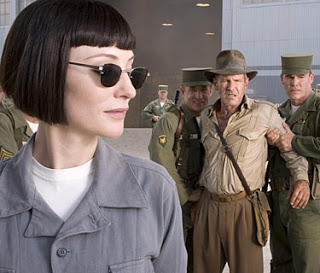
Finally, there’s just too many characters and subplots fighting for screen time. Jim Broadbent filled in for the sadly departed Denholm Elliot as Indy’s fellow university staff member, and John Hurt was a nice inclusion as a crazy old former colleague, but both felt very sidelined, as did Ray Winstone, who should have been pretty integral to the plot. Sadly, they, and Cate Blanchett’s questionably accented Ukrainian skull-hunter were at times almost forgotten in favour of Jones’ relationships with Marion and Mutt.
There were ways that the film could have been fixed. Raiders and Crusade proved that Indy doesn’t need a sidekick, and Temple proved that he shouldn’t have one, so nixing Mutt is pretty much a given. At least 2 scenes should have been cut, as the film feels like it runs at half an hour longer than it’s two hour runtime. I’d suggest the fridge and the diner scene with Mutt. Keep Marion, but make her be in love with John Hurt’s Oxley or Winstone’s Mac, to give Indy a bit of rivalry, and change that goddamn ending. About five minutes before the end of the film, when I first saw it in cinemas I burst out with raucous laughter at how ridiculous the climax was, and this time around it felt even more ludicrous.All that being said, it’s not exactly a horrible film, there are some entertaining sequences – I really enjoyed the jungle-set car chase, up until Mutt starts swinging with the CGI monkeys for no reason whatsoever – and it’s always thrilling to see Harrison Ford wearing a fedora, even if its not the only thing looking a bit dusty these days. I always used to defend the film for being good, just not when compared to the rest of the franchise, but I now know that even if you take it on it’s own, it still really isn’t worth it.

Choose life 5/10
Rabbit-Proof Fence

Three mixed race aboriginal girls – fourteen year old Molly Craig (Everlyn Sampi), her younger sister Daisy (Tianna Sansbury) and their cousing Gracie (Laura Monaghan) are taken from their home in the Australian outback and forced to train as serving staff at a settlement 1200 miles away. The three manage to escape, and set out to trek the arduous journey back home, but are being hunted by the camp’s tracker (David Gulpilil) and the government’s Chief Protector of Aboriginees, Mr. A. O. Neville (Kenneth Branagh).

This is one of those films that is supposed to make you angry and upset at the injustices and hardships endured by the protagonists. The three girls, and indeed all the other girls kidnapped and taken to the Moore River camp, have been captured in an attempt to prevent the creation of an ‘unwanted third race.’ The girls, you see, are all the product of white men sleeping with their aboriginal mothers, and the government believed that this ‘new race’ would cause problems, predominantly for those within the race. Once within the camp, the girls would only be able to breed with white males, and their offspring would in turn breed with white people, until the ‘aboriginal gene’ was all but eradicated. So yes, to this extent I felt sorry for the girls, as their capture was essentially an attempt to wipe them out. However, their escape attempt is supposed to be exceedingly difficult and deadly, yet this never really came through.
Whilst the concept of three pre-pubescent girls navigate across 1200 miles of unforgiving outback obviously sounds not only impossible, but so ridiculous its out of a comic book, the film depicts it as the girls drifting from one helping hand to the next, rarely encountering any obstacles that cannot be easily resolved. Even when, at one point, the three are separated, it is not long before they are reunited, despite the great distance that must have been covered. Even though it’s based on a true story, I still felt at times that it was either thoroughly unbelievable, or that major leaps were taken in the timeline. Granted, there’s probably only so much trudging through a bleached desert landscape that I can handle watching at any one time, but still.
The three leads perform well, especially given this was their first acting role, though only Sampi has worked since. Branagh, on the other hand, seems delighted to sink his teeth into a proper villain role (one that he would reprise again in all but name for The Boat That Rocked seven years later). Known to the girls as Mr. Devil, Neville is deeply hatable at every turn, even though he is working to what he believes to be the best intentions, doing what he things is right and indeed beneficial for the girls.
There are some nice burueacratic red-tape scenes, with the government debating who should pay for the country’s hunt for the girls, but the ending, which all the way through seemed a foregone conclusion, takes a little wind from the film’s sails with a “well what was the point of all that then” attitude. All-in-all, though I was impressed with the performances, there was a missed potential in what could have been a more harrowing and intense picture.
Choose life 5/10

Born on the Fourth of July

Does anyone else find it funny that Tom Cruise, whose birthday is the third of July, starred in a film called Born on the Fourth of July? No? Just me then.
Olive Stone is one of those film makers that I don’t really get. I’m not that much of a Platoon fan, nor can I say I have any affiliation with Wall Street. Natural Born Killers has it’s moments, and I can’t remember a single scene of Any Given Sunday, though I saw it less than 2 years ago. Other than that, I haven’t seen anything he’s made, though my hopes are up for JFK, whenever I eventually get around to seeing it. Born on the Fourth of July seems like a typical Stone movie, in that it comes deeply ingrained with a message (war is hell and will mess you up), and though at first glance it may seem patriotic, if you look a little deeper it’s really a chance for Stone to voice his own personal feelings about his country.
Tom Cruise is Ron Kovic,who growing up in 1950’s Long Island idolised the war heroes in the Independence Day parades. He looked past the wheelchair, crutches and missing limbs, seeing only the glory and patriotism of being a hero. Kovic spent his school years working hard and being committed to being the best, and after his wrestling attempts didn’t quite work out, he responded positively to a presentation from the US Marine Corps, and signs up with a few buddies, including Stephen Baldwin.The scenes of Kovic’s childhood are shot with a hazy, wholesome, rose-tinted nostalgia, and his family, especially his mother, are all very supportive of Ron’s decision to head to Vietnam and fight for his country, and die there if he has to. The era is well realised – particularly though the soundtrack, as Ron’s brother learns Bob Dylan on the guitar – and the TV broadcasts, with Kennedy’s “What you can do” speech seemingly speaking directly to Kovic.

After signing up and heading to war, the action skips straight over boot camp and the green-horn period – Stone covered all that in Platoon three years earlier – and drops us straight into the now Sergeant Kovic’s Second tour of Vietnam in 1967. These sequences are atmospheric and well-realised, but they’re less impressive than almost any other war film. It’s a good thing then that this film isn’t really aiming to show an accurate, visceral depiction of warfare, instead focusing on the disillusionment of volunteers, the effects that warfare can have on those who fight it, and the disconnect between the soldiers and the families they’ve left behind. For when Ron is discharged – in a wheelchair, with the promise that he’ll never use his legs again (though his main concern is being able to use what is between those legs) – he discovers that his brother doesn’t believe in the war, and his friends that stayed home became prosperous and affluent, whilst he had everything taken away from him.

The cats is full of familiar faces from anyone who’s watched Platoon – alongside Tom Berenger’s Marine recruiter is Willem Dafoe’s similarly paralysed veteran, and John C. McGinley turns up for a very small role (as do Wayne Knight and Tom Sizemore).

The film takes a very long time (145 minutes) to put across some fairly simple ideas. The first 90 minutes are thoroughly predictable, and there were very few surprises in the last hour either. Tom Cruise isn’t bad in the role, but as ever he always does better when he isn’t front and centre (Magnolia, Tropic Thunder), and I couldn’t shake the feeling that he was desperately pursuing an Oscar. Though he was nominated, it’s no surprise that it went instead to Daniel Day-Lewis for My Left Foot, and I’d still have been happy had it gone to fellow nominees Robin Williams or Morgan Freeman, for Dead Poet’s Society or Driving Miss Daisy, instead of Cruise.

It’s worth watching if you’re a Stone or Cruise completist, but there’s little new here, and what there is still won’t surprise, or impress you.

Choose life 5/10