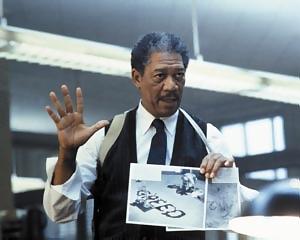
Million Dollar Baby

The second part of my Clint-Eastwood-directing-himself-and-Morgan-Freeman-in-a-supporting-role double bill see Clint take on a genre he’s never really (that I know of) looked at before, the sports movie (please feel free to let me know if he has, I’m often wrong about these things and he’s been working for an awfully long time).

If there’s two criticisms that can be lauded onto Eastwood, it’s that he doesn’t direct happy stories or portray more than one character. He’s not renowned for making lighter films with happy endings or playing people who aren’t grumpy, stoic curmudgeons with their trousers too high, and his streak continues here. I know he’s made a few lighter films (Paint Your Wagon, Every Which Way But Loose) but I haven’t seen them, and I’m guessing he plays the grumpy, stoic, possibly singing straightman to a comically messy primate who never stops annoying him. Again, please let me know if I’m wrong and recommend any films where he flashes a smile, once.

Here, Eastwood plays Frankie Dunn, a knowledgeable, best-there-is boxing trainer who can’t seem to get it together to be more than the owner of the run-down Hit Pit Gym. His latest fighter, Big Willie Little (Mike Colter) has a promising career ahead of him, with Frankie having gotten him almost to a title fight, but alas he leaves for a more prolific manager, leaving Frankie high and dry. Meanwhile, self-proclaimed white trash  Maggie Fitzgerald (Hilary Swank) has joined his gym and is looking for a trainer, though Dunn is adamant that he doesn’t train girls. Her pluck and commitment eventually wears down Dunn, assisted by persistent advice from his assistant, Morgan Freeman’s retired boxer and former recipient of Dunn’s training, Eddie ‘Scrap-Iron’ Dupris.


The story is a little corny and at times downright predictable. It’s clear that Maggie and Frankie will work together, each filling a void in the other’s life (Maggie’s father is dead, Frankie’s daughter has fled and refuses to acknowledge his efforts to contact her), and once they get going her rise through the ranks is unbelievable, especially as she never received any training until she was 31, but the delivery is spot-on. Heartstrings are at times shamelessly plucked, but justifiably so, and there’s a blindsided moment I genuinely didn’t see coming on first viewing. This isn’t your average rags-to-riches underdog sports movie, and it’s proud of this. There’s moments of humour, most noticeably from Dunn trying to talk to Maggie (“I’m going to try and forget the fact that you’re a girl”) and from Jay Baruchel’s simpleton wanna-be-but-never-gonna-be boxer ‘Danger’ Barch.


Swank is, expectedly, brilliant, earning her second Oscar as she all but becomes the downtrodden heroine. Her family has never stopped putting her down (look out for Garfunkel & Oates’ Riki Lindhome as her welfare-cheating sister!) but she retains a dogged sense of determination, saving up all her money from waitressing jobs where she has to steal half-eaten steaks to survive, just to buy a speedball for training. The outcome of her trying to do something nice for the family that’s never done anything for her is genuinely heartbreaking. Eastwood is good, but it’s well trodden ground for him, and Morgan Freeman is wonderfully understated – until he gets a chance to show off some moves later on.


There’s a lot to recommend about the film, but not a lot to bring you back. It’s certainly worth watching at least once, and I took a great deal away from it, but most of that was that I didn’t want to go through the harrowing gut-punch of an experience of watching it again any time soon.


Choose film 8/10

Unforgiven

The first part of my double bill of Clint-Eastwood-directing-himself-and-Morgan-Freeman-in-a-supporting-role sees the American icon define the genre that not only made him the prolific star he is, but that he has almost singlehandedly kept alive since it’s surge in popularity in the 60s and 70s; the western.
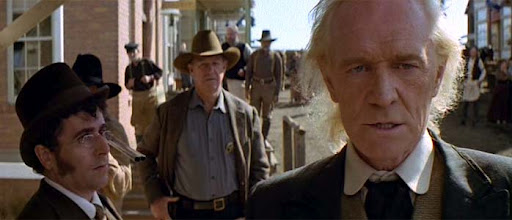
Unforgiven sees Eastwood as William Munny, a former hardened killer reformed by the love of a good women and the birth of his two children. With his wife dead and their herd of pigs stricken with fever, Munny accepts the offer from young upstart The Schofield Kid (Jaimz Woolvett) to kill two ruffians who cut up a whore after she laughed at one of them having a small penis. They team up with Munny’s former partner Ned Logan (Morgan Freeman) and head out to the town of Big Whiskey, lorded over by Gene Hackman’s occasionally violent ‘Little’ Bill Daggett, where other hired killers, including Richard Harris’ English Bob, are also heading to claim the bounty.
Eastwood’s Munny isn’t your typical western hero. In fact, no character in this can ever be truly classed as heroic. Munny has what could politely be called a sordid past, and his desperation to honour his late wife by not succumbing to his younger urges is evident. A self proclaimed no good son of a bitch, Munny is a shadow of his former self, unable to shoot straight or even mount a horse. Freeman’s Ned has a woman at home, yet has no qualms about visiting the whorehouse in town, Schofield has his own secrets and Bob is an outright liar, gambler and killer. At times it seems that Little Bill, supposedly the villain of the piece, is possibly the most moral character here, opting not to kill the prostitute abusers in favour of fining them horses instead, with the sins he commits in the present are nothing compared to those done by Munny in the past, and his intentions are only to keep his town free from guns and violence, except from his own. I found it odd though that nothing was made of Freeman’s race, as he and his partner are the only non-white characters in the film, yet there are no even passing references when the townsfolk describe him. I’ve just realised I’m annoyed that Morgan Freeman wasn’t racially abused in a film.
The script, which did the rounds in Hollywood for 20 years before Eastwood picked it up, is pocked with sharp humour and great lines (“If I see you again, I’m just gonna start shooting and consider it self defence.”) and works not just as a study and disassembly of the westerns that came before it, but as a damn good, prime example of one itself. Harris’ English Bob has his own biographer (Saul Rubinek), whose role is to take Bob’s stories and lyricise them a little; in essence creating the cowboy myths and legends that make up the staples of the genre. It’s a film about shattered dreams and fallen heroes – the actors as much as the characters – as it’s not often you see Eastwood rolling around in pig shit, Morgan Freeman asking someone if they sleep with prostitutes or just use their hand or Lex Luthor beating the crap out of Dumbledore. It’s clear that Munny could quite easily be any one of Eastwood’s previous stoic, bitter, hard as nails cowboys who’d let themselves go for a few years.
The film deals with the seriousness of death and murder, with no post-kill smart alec quips. One characters defiant “I’ll see you in Hell, Willaim Munny,” is met only with a considered, matter of fact “Yeah.” It’s almost as prolific as The Good, The Bad and The Ugly and Once Upon A Time in the West, and definitely ranks in the top 5 westerns.
Choose film 9/10

Bridesmaids

As usual, I’m a little late to the party with this review. I’ve heard a lot of good things about Bridesmaids, and as usual the great deal of hype has built up my expectations, so I’d anticipated a comedy that proved something I’ve always had my doubts about; that women could be just as funny as men. I don’t mean to be misogynistic, I’m just terribly good at it, but I’ve always preferred male comedians to female, and you’ve got to admit that there’s a hell of a lot more of them. Plus, my girlfriend (who also isn’t funny) watched this film last year and said she didn’t enjoy it, which is usually a sign that I would.
Many comparisons have been made to this being a female Hangover, which if anything lowered my expectations, as I found that film to be only mildly entertaining upon first viewing and more than a little puerile and nauseating on the second, and let’s not even discuss the sequel (word of advice, don’t make the mistake I did and watch it with your grandparents). There are similarities between the two films – they both feature a predominantly same-sex cast, are both revolved around wedding parties and at one point in Bridesmaids there’s even a trip to Vegas, and in my opinion Bridesmaids is just as good, and also just as bad.
Our heroine here is Kristen Wiig’s Annie, a baker whose life has hit several stumbling blocks, leaving her self-started career floundering as she shares an apartment with Gil (Matt Lucas) and his freeloading, dimwitted sister Brynn (Rebel Wilson). Annie’s best friend Lillian (Maya Rudolph) gets engaged, and Annie is her Maid of Honour, so cue ensuing hilarity as Annie attempts to wrangle the rest of the bridal party – Lillian’s cousin Rita, colleague Becca, future sister-in-law Megan and fiance’s boss’ wife Helen – through dress fitting, bridal shower, hen party and wedding, all while trying to stop her own life from continually spiralling downward.
The humour, and this being a comedy this should be the most important aspect, is well intentioned and has potential, but the scenes are almost always taken beyond the point at which they stopped being funny and started being awkward and uncomfortable to watch. Curb Your Enthusiasm is possibly the greatest example of humour that is almost cringeworthy but always funny, but here it never quite hits the mark. Take the speeches for example. At Lillian’s engagement party, Annie is asked to give a speech, only to be upstaged on ever account by Rose Byrne’s rich bitch Helen, who is desperate to steal the Maid of Honour title from Annie. This scene goes on for a good few rounds too many, and by the time Helen starts speaking perfect Thai, only for Annie to counter with broken Spanish I was checking my watch and rolling my eyes.
Much praise too has been lauded upon Melissa McCarthy, who plays Lillian’s future sister-in-law Megan trying too hard to do an impression of Zack Galifianakis in The Hangover. I’m still reeling from the fact she was nominated for an Oscar for her performance here and, whilst she is occasionally funny, many of her lines miss the mark.
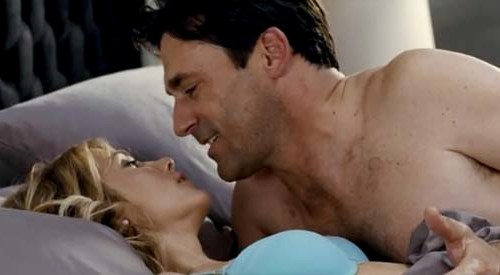
My misogyny may be seeping through again when I state that the best parts of this film are easily the men. The IT Crowd‘s Chris O’Dowd is a cop with whom Annie starts a faltering relationship, and John Hamm is the fuck-buddy she already has. Whenever these two are on screen, especially Hamm, we get some of the sweeter and downright hilarious moments from the film, with Hamm’s deliriously coarse womaniser outright telling Annie he only wants her for sex when he complains that she stayed the night. Kristen Wiig is OK, but she does a lot better in bit parts and supporting roles. She stole several scenes in the likes of Adventureland, Paul and Knocked Up, but again that was with the help of much funnier men, in the likes of Bill Hader, Simon Pegg and Alan Tudyk.
It also doesn’t help that this film can’t decide whether it wants to be a slightly off-kilter rom-com or a zany gross-out comedy, and ends up being a messy mashup of the two, so we end up with scenes involving copious amounts of bodily fluids, as well as a genuinely heart warming first-date gesture from O’Dowd’s Officer Rhodes.
The film isn’t terrible, there are some funny moments (the dress fitting is a highlight, as is Annie’s confrontation with a young girl in the jewellery shop she works for) and the core messages are true and conveyed well, but it’s nowhere near as funny as it needs to be, and those bridal shower party favours are incredible inconsiderate.
Choose life 5/10

Body Heat

In a balmy summer heatwave in the American Deep South, the not-terribly-good defense lawyer Ned Racine (William Hurt with a 70s pornstar moustache) makes a random encounter with wealthy, sultry Matty Walker (Kathleen Turner), who is unhappily married to Edmund (Richard Crenna), a good man who is always away on business. Ned and Matty begin an illicit and steamy affair, and both decide that they’d be better off financially and romantically if Edmund were no longer around, so Ned, with the help of Mickey Rourke’s criminal consultant, sets out to murder him.
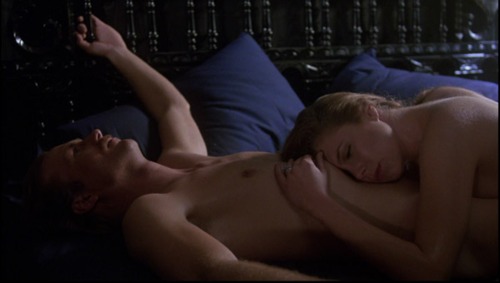
What sets this apart from the rest of the noir genre it draws obvious inspiration from is the copious nudity and sex scenes between the two leads, which are excessive even by today’s standards, as well as several shots of Richard Crenna in his underwear that I could have done without.
I was surprised that the plot didn’t contain more twists and turns, as in the end it was all fairly straightforward. For instance, I assumed early on that Matty’s husband Edmund would be in cahoots with either Ned or Matty, but in fact Edmund has very little to do in the story. In fact, his character arc is completed so early on that I was intrigued as to where the plot would go next. Also, some elements are set up with no eventual payoff – Matty’s niece catching Ned doing something he shouldn’t be doesn’t end up with her identifying him to the police – which led me to think that either we were deliberately fed loose threads to keep us guessing, or it’s just sloppy writing, though seeing as writer/director Lawrence Kasdan also wrote Star Wars Episodes V and VI, as well as Raiders of the Lost Ark and The Big Chill, it’s probably the former.
I was surprised to see just how attractive Kathleen Turner used to be, as other than her vocals in Who Framed Roger Rabbit, I’ve only ever known her as the dog trainer in Marley & Me (I have never willingly watched the film, it’s a favourite of the girlfriend) and as Chandler Bing’s drag-queen father in Friends, so I was rather confused that someone with such nice legs and skin could go on to be, well, Kathleen Turner.
There have been better noirs made before this (Double Indemnity) and after (Coen brothers’ debut Blood Simple), and if it weren’t for the aforementioned raunchiness there’s little chance of it being remembered today. The film isn’t necessarily bad, but its not revolutionary either.
Choose life 6/10

The Conformist

It’s probably not much of a recommendation to say that, only a month after having watched it and having read the notes I took at the time, I cannot remember much about this film. The plot was incomprehensible, mainly because the narrative was chopped up and flitted between with little to no acknowledgement, and if I hadn’t read that it was about a hitman I’d probably never have known.
Our protagonist is Clerici (Jean-Louis Trintignant), a fascism-supporting, recently engaged man with a sordid past, who desperately wants to fit in with society. So jumbled up is the structure of the film that I’m reluctant to say anything that happens, as I can’t be sure of the order shown during the runtime, so if there are spoilers within this review then I apologise.
We discover details of Clerici’s past from a forced confession he must make before his marriage, in which we are told that, as a lonely young schoolboy, his family driver molested him, until one day Clerici shot him in a scene where the squibs in the walls are distractingly visible long before they are used. His bride has similar stories of being raped in her youth, but the scene in which she describes the experience to Clerici is genuinely disturbing, as it seems to excite him, and he attempts to turn her on by almost enacting the molestation out upon her as she describes it.
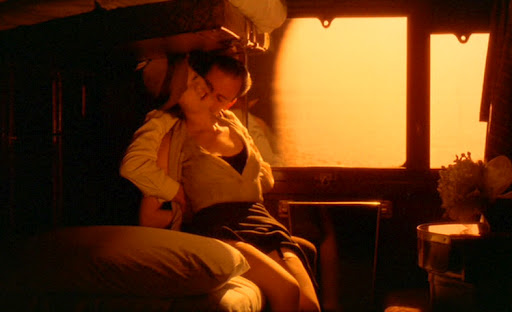
You probably won’t be surprised to find out that this film is Italian, so whilst interestingly shot – lots of angled cameras, leaves blowing at foot level and rays of sunlight through a forest of trees – there’s also a great deal of sporadic nudity and spontaneous sex scenes.
The impenetrable, David Lynch-like plot sees Clerici diverting from his Parisian honeymoon to assassinate his anti-fascist former lecturer, and also visit the man’s wife Anna, with whom Clerici probably used to know on a carnal level, but along the way many of the scenes have elements of strangeness – when Clerici buys a bouquet of flowers, the seller and her singing children proceed to follow him around, another time he manages to lead a decreasing conga spiral out from the inside. I found it incredibly difficult to commit to a film so nonsensical, as I always felt I was being left out of something.
Choose life 3/10

Seven

A buddy cop movie with a seasoned old hand so close to retirement they’re already scraping his name off the door and his hotshot, firebrand young replacement, this couldn’t be further from another Lethal Weapon. Yes, one’s a family man and the other’s a loner, one is prone to anger and the other a methodical, careful detective clearly too old for this shit, but where Richard Donner’s 80’s staple is an entertaining, action-packed romp, this is something much darker.After a disturbingly evocative opening credits sequence enriched with depth and meaning on repeated viewings, we meet Morgan Freeman’s detective Somerset, picking up his last case, a sickeningly masterful serial killer with a penchant for the seven deadly sins, the same day as Brad Pitt’s Detective Mills arrives to replace him. That’s as much setup as there is, as we follow the mismatched detectives from crime scene to crime scene, via their headquarters and areas of research, with Somerset whiling a night away poring over books in the library, whilst Mills take a brief glance at the Cliff notes.

The script is dotted with well balanced moments of humour – Somerset having dinner with Mills and his wife Tracey (Gwyneth Paltrow) – and some deep black humour: “this guy’s sat in his own piss and shit; if he wasn’t dead he’d’ve stood up by now,” plus R. Lee Ermey’s belligerent, furious Police Captain (“This is not even my desk” is one of my favourite film quotes, ever).

Crucially, we see none of the killer’s murders onscreen, merely their gruesome aftermaths. It’s not as gory as you might remember, but it evokes imagery and feelings that some may find disturbing, not least what happens to Leland Orser’s character, who probably has the worst memories of those who survive. It could be argues that this is a precursor to the Saw franchise, punishing those that seem to deserve it in creative, torturous ways, but at least here we are saved the nightmarish spectacles of witnessing the deaths.

At times the film feels a bit predictable, like a police procedural itself, but whenever this is about to happen the plot shifts direction, taking an unexpected twist to shake things up again. The colour palette of muted greys and browns, interspersed with deep reds amongst the incessant torrential downpour of the nameless city only adds to the feelings of despair.

There’s small roles for John C. McGinley and Richard Schiff in there as well, a nice surprise for me in the opening credits, but unfortunately at times the acting, especially Pitt during the final scenes, leaves something to be desired. The ending has become the stuff of legend, but I won’t reveal it just in case, save that Pitt’s gurning and crying are a bit over the top and take you out of the scene. This is another one of those films where knowing your actors may ruin the film too, as recognising a voice could cause annoyances later on, but not too badly.

Overall this is director David Fincher’s defining film (better than Fight Club in my opinion, though it’s been a while). The gritty tone is perfectly realised through every medium possible, the plot is gripping, the twists hold up and, though far from an enjoyable experience, it remains worthwhile.

Choose film 10/10

Time Regained

As much as I’d like the title of this post to actually be in reference to a blog update, whereby I’d allowed myself more time to watch these films than the allotted five years, alas it is in fact the title of a 1999 French film about the life of novelist Marcel Proust. The film is as thrilling as that sounds, and holds the position of the biography I’ve seen that, after having watched it, I know roughly the same amount about it’s subject as I did before watching, and all I knew beforehand was that at some point or other he’d written something.
Beginning with Proust (Marcello Mazzarella) on his death bed, dictating to an underling and going over old photographs with a magnifying glass, he then proceeds to remember his life, in whatever order he damn well pleases. Scenes are shown more than once, overlapping with similar yet different details, characters wander in and out freely, most with no introduction and some with several, and it’s difficult, if not impossible, to tell what is real and what isn’t. How much is memory? Is this his version of events or what really happened? With such little concrete fact to go on, nothing is learnt because nothing can be trusted.
Just as the opening credits show a stream washing over pebbles, so to did the entirety of this film wash over me. I was bored within the first 20 minutes, having nothing to affix my attention to but the sumptuous visuals and interesting uses of lighting, colour, focus and mirrors. At times it takes a meander into Bunuel territory, with rooms of upturned top hats lined on the floor, aristocratic party goers momentarily becoming mannequins and revolving audiences at a musical performance. At one point a woman visibly grows younger, then older, within a scene.
If the film was designed to be impenetrable, as I think is the case, then congratulations should go to director Raoul Ruiz, for this film is alienating if you have no knowledge of it’s central character. If you’re watching to try and discover details of the writer’s life, then flee, run full pelt in the opposite direction and head to the library instead, for there will be no assistance here. When party guests (there’s a lot of soirees in this film) complain at being confused at meeting so many new people, I can truly empathise.
Whilst the film looks astounding, it’s essentially pointless.
Choose life 3/10

Thelma and Louise

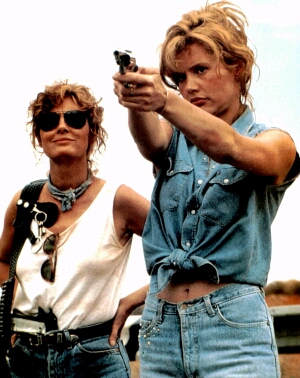
Two girls, a turquoise 1966 T-Bird convertible, a weekend vacation at a friend’s cabin up in the mountains, what could go wrong? Well, in Ridley Scott’s feminist road movie, a heck of a lot, as henpecked housewife Thelma (Geena Davis) and her world-weary waitress best friend Louise (Susan Sarandon) head out from their humdrum lives on more of an adventure than they bargained for, after a run-in with a would-be rapist at a country bar of ill repute.
The titular roles could not be more different, yet both remain well rounded characters, thanks in part to the able performances by the two leads. Though it is the men that seem to shepherd our heroines on the run, they always find a way of fighting back or turning the tables, be it on Harvey Keitel’s cop on their trail (assisted by Stephen Tobolowsky!), Michael Madsen as Louise’s boyfriend Jimmy, Brad Pitt’s first major film role as clothes-shedding hitchhiker J.D. or Christopher McDonald as Thelma’s boorish husband Darryl, eager to get his wife back so she can start making his dinner again.
There’s some great comedy – Darryl unable to watch his beloved football because the cops tapping his phone are too engrossed with Cary Grant in Penny Serenade – and though the story and ending may have been ruined by an overabundance of pop-culture spoofs and references, it is still a very good story. The accents begin to grate after a while, particularly Davis’ pronunciation of Loo-eese, but try to look beyond that at a journey that starts with an accident, and builds to become two strong female characters exploring their own limits, surprising themselves and everyone else.
Choose film 7/10

The Class

Filmed in a real school (and mostly in a real classroom) with an unprofessional cast all playing versions of themselves, Laurent Cantet’s semi-improvised near-documentary follows Mr. Marin (François Bégaudeau), a French teacher at an inner city school as he tries to connect with, further and inspire a class of 13-15 year olds. Bégaudeau co-wrote the script, and stars in his first acting role essentially playing himself, for he used to be a teacher, so it is no surpirse that his performance is wonderfully naturalistic, as are those of the multi-cultural students he presides over.
It is impossible not to feel the frustration felt by Marin, as he does his utmost to help his students, who almost seem to repell any learning, yet even when the other teachers have given up on the more problematic pupils, Marin still endeavours to find ways to reach them.
If this all sounds a little Dead Poet’s Society or Dangerous Minds, fear not. Here there are no last reel acts of defiance or obligatory contests won, life simply goes on. We see the less exciting but still interesting goings-on behind the scenes at the school – teachers debating punishment techniques and coffee machines, warning the new staff about the difficult classes – all shot in a documentarian, handheld style in amongst the desks.
The first half feels a little directionless, yet is still compelling, but the second, following the fallout of Marin saying two students behaved like “sluts” and his endeavours to help troublesome miscreant Souleymane, is much more on target. If you’ve ever been inclined to take up teaching, this film may infuriate you, with regards to how much effort Marin must fight against to even give Souleymane a chance.
Choose film 8/10

Far From Heaven

Hertford, Connecticut; 1957. Cathy Whitaker (Julianne Moore) is at the heart of her picket-fenced community, her husband Frank (Dennis Quaid) is a successful businessman and her two young children are little bundles of perfection, with her daughter wishing to one day grow up to be just like her mother, though her son is a little foul-mouthed (“Ah jeez” is not the kind of language Cathy tolerates).  But beneath the surface of floating dresses and pristine curls, all is not well. It’s clear from Cathy’s expression that, though her friends must all put up with their husbands’ occasional demands for intercourse, Cathy has no such problems, for Frank hides a secret; whenever he is ‘working late’ he tends to be frequenting a bar aimed only at male patrons that want to get to know each other a little better.
Todd Haynes’ movie lovingly recreates an idealised vision of 1950s suburban middle America (“Aw shucks” is uttered in the first four lines, and “jeepers” and “swell” aren’t too far behind) although the rampant sexism and racism would be more than frowned upon today. When Cathy shows sympathetic tendencies towards her black gardener Raymond (Dennis Haysbert, 24‘s President Palmer) she is the subject of mild ridicule and is frowned upon by the society that used to hold her dear. Haysbert is good in another of his solid, decent, all-round nice guy roles, but Dennis Quaid continues his run of being the worst thing about a film. I’m sure in his youth he must have done something to earn a reputation as an actor, but I can’t for the life of me think what it is, I’ve only ever known him as the worst thing in bad films (Flight of the Phoenix, Smart People, The Day After Tomorrow, Vantage Point).
The era is seamlessly recreated, to a point where the film could easily have been made in the 50’s – in which case it would probably be hailed today as a classic. Moore is the best thing in it, so much so that at times she barely seems to be acting, so great is the level of repression she must convey. She received an Oscar nomination for her troubles – Nicole Kidman must have been really great in the Hours to beat her.
Though at times it feels like nothing really happens, that is surely the point. This is more a study of the prejudices of the era – Frank’s grand social indiscretions can be brushed under the carpet or cured (a doctor has a 5-30% success rate for curing homosexual urges) whilst Cathy’s much lesser faux pas sees her outcast from all around her. The plot and script are a little hokey, but the performances and overall feel stay with you after watching this subtle piece.
Choose film 6/10