Christmas Carol: The Movie

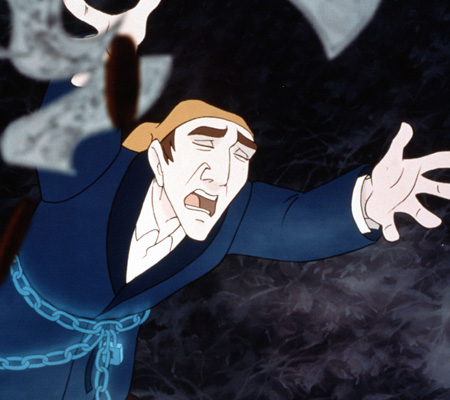
Ebenezer Scrooge, a miserly debt collector in 19th century London, is something of a git. He shuns all those around him, choosing to spend Christmas alone instead of with his nephew, his only living relative. He is cruel to his clients and staff, rude to charity collectors and has no qualms with ordering people to be locked up and their furniture repossessed on Christmas Eve. Oh, and he pours a bucket of cold water onto Tiny Tim, a sickly carol singer, who also happens to be the son of Scrooge’s secretary, Bob Cratchit. After finishing work on Christmas Eve, Scrooge is visited by the spirit of his former business partner, Jacob Marley, who warns him that he will be visited by three more ghosts before the morning, in the hope that Scrooge will change his miserly ways and live a better life, or face the same fate as Marley.
Continue reading

Enigma

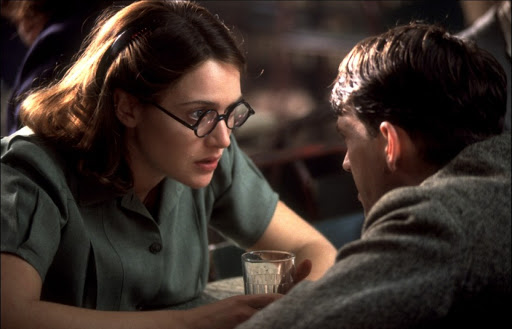
Bletchley Park, 60 miles outside London during the Second World War. The Germans have just changed the codes they use for their military communications, so the English bring in Tom Jericho (Dougray Scott), their former code breaking prodigy who was the only one able to crack the codes last time around. The problem is, Jericho went a little bit insane after some business involving his former lover Claire (Saffron Burrows), who has recently disappeared. On top of all this, there’s a rumour of a mole inside Bletchley Park, and when Tom investigates Claire’s disappearance with her room mate Hester (Kate Winslet), Tom finds incriminating evidence that could point towards Claire being the culprit, and he even finds himself under suspicion. Oh, and of course he’s working against the clock, as there’s a flotilla of US supply ships heading directly towards a cluster of German U-boats, and only his code-cracking skills can possible save them.
Continue reading

Pather Panchali

The story of a very poor family struggling to make ends meet in a Bengali village in the 1920s. Harihar (Kanu Bannerjee) must cope with looking after an elderly relative, kleptomaniacal daughter, carefree infant son and her clueless husband as he does his best to provide for a family that never seems to catch any breaks.


There are many films in the 1001 list that, when watching, I can’t really see why they’ve been included, and it isn’t until afterwards (or during, if it’s really boring) when I read up on the film a little, that I discover there is some cultural significance or historical context within which the film can usually be appreciated as an achievement, but not necessarily enjoyed. Such is the case with Pather Panchali, for as I now know it is the first film of director Satyajit Ray, who would go on to direct various other films also included within the 1001 book: The Music Room, Aparajito and The World of Apu, with the latter two completing the Apu Trilogy, begun with this film. Pather Panchali also marks the first independent Indian film to garner international acclaim, so that at least answers the question of why it was in here.

So what was wrong with it? Well, nothing really, it just didn’t really feature a great deal in terms of plot or anything to engage my attention. Its just a rather plodding depiction of an Indian family’s life, and the sporadic ups amidst mostly downs that they endure. There are some nice moments – the joy cracking across the wizened face of the elderly relative when Harihar’s daughter Durga gives her a guava stolen from the neighbour’s orchard, Durga and her younger brother Apu encountering a train – but once again I’m getting rather tired of watching depressing films. As such, I really don’t have that much to discuss about the film.

The most annoying aspect of this film is that its the start of a trilogy, all of which appear on the 1001 list (and the Empire 5-star 500 List, for reasons that will hopefully become clear once I’ve seen the rest of the trilogy). Before watching, all I knew about Pather Panchali was that it was the start of this trilogy, titled the Apu Trilogy, so I was expecting it to be about someone called Apu. Therefore, once he was born, I expected him to be the central figure of the story, but was surprised when he was kept mostly to the sidelines. I’m sure he’ll become more prominent in the later films, but I’ll try not to anticipate that, just in case he doesn’t and I become even more disappointed later. Aparajito and The World of Apu are the next two films in my LoveFilm queue, so I should be getting to them fairly soon, as long as I can bring myself to actually watch them.

In short, I’m chalking this film up alongside the likes of The Jazz Singer, Battleship Potemkin and Olympia as being a historical moment in cinema, but one that I’m not keen to repeat, and definitely cannot recommend.

Choose life 5/10

Quills

The Marquis de Sade (Geoffrey Rush) has been imprisoned by Napoleon for writing sexually explicit novels Justine and Juliette. Whilst in prisoned at the Charenton Insane Asylum, de Sade uses a laundry maid (Kate Winslet) to smuggle out his scripts. The Abbe de Coulmier (Joaquin Phoenix), who runs the asylum, battles constantly with the rebellious de Sade, until eventually Dr. Royer-Collard (Michael Caine), a conditioning expert, is brought in to ‘cure’ the man.
Continue reading

3-Iron

Tae-suk (Hyun-Kyoon Lee) has no home, few belongings and leaves no mark on the world. Essentially, he has no life, but why would he need one, when he can borrow other people’s for a few days at a time? Leaving pizza menus taped to the front doors of houses and apartments, he establishes who is away for a while, breaks in and makes himself quite literally at home, making a quick exit before the inhabitants come home. But in his latest domestic intrusion, Tae-suk neglected to ensure the house was empty, as abused housewife Sun-hwa (Seung-yeon Lee) is still home, and when she discovers him he flees, but he returns to find her husband not being overly kind to her. Tae-suk lures him outside and pelts him with golf balls, prompting Sun-hwa to run away with Tae-suk, joining him on his adventures.

I’m guessing that the main reason this film was included amongst the hallowed ranks of the 1001 Movies book is due to it’s sense of poetry, and the fact that the two leads barely even utter a sound for the entirety of the film, but the main reason that the film is no longer a part of the book is because it’s all inherently stupid, with far too many plot issues than I can justifiably overlook, and which ruined the film for me.

Let’s start with the obvious. Tae-suk’s plan is to stick takeaway menus to people’s front doors in the morning, and then come back in the evening to see which one’s have been removed. If a menu is still in place, he assumes that the occupant’s are away for a while. Has he never heard of anyone working late? Or popping out for a drink after work, maybe going for a meal, nipping to the shops or even seeing a film at the cinema? And even if the inhabitants are on holiday, he has no idea how far into it they are, other than on the rare occasion that someone’s outgoing voicemail message announces their return date. For all he knows, they’re due back that evening. It’s not the most well thought out of schemes. Also, he puts an enormous amount of faith in sticky tape. I don’t know about you, but I find the stuff to be wildly ineffective in terms of it’s adhesive power, even when not exposed to the elements. And what’s with the woman who was terrified of the missing photo in an apartment she’s never been in before? The ending, too, is ludicrous, and though the final shot is beautiful and pignant, it doesn’t hold up when even the slightest amount of logic is applied, for example, are there no mirrors in the house? But even though the resolution is downright silly, it was still oddly poetic and smile-inducing, in spite of just how ridiculous it was.

Basically, for the most part I found this film infuriating, so much so that it’s quiet beauty and simplicity was almost lost on me, so great was my annoyance level. There was a real sense of inevitability to many of the scenes – I was waiting for the drilled golf ball to come loose, and for the breaking and entering to all go horribly wrong as soon as the elements were established – and even at a scant 88 minutes I was regularly checking the clock. The prison-set scenes were nice, but unless I’m really missing something blatant, I just didn’t get this film. Whilst I appreciated the unspoken romance between the two characters – some things are easier said through looks than words – and the performances cannot be criticised in either case, I just can’t get behind a film with such irritating issues.

Choose life 5/10

Gangs of New York

New York, 1846. Priest Vallon (Liam Neeson), the leader of a group of Irishmen going by the name of the Dead Rabbits, has roused other rival gangs to join together and fight Bill ‘The Butcher’ Cutting (Daniel Day-Lewis), the leader of the tyrannical New York Natives, over ownership of the Five Points. When Neeson is slain, his son escapes and leaves the city, returning sixteen years later as Leonardo DiCaprio, who understandably has a score to settle with Bill over his father’s murder.

I can see what Martin Scorsese was trying to do here, basically a mid-19th century Goodfellas, but if Henry Hill had a vendetta against Paulie, but unfortunately he was quite a way off the mark. Whilst Gangs of New York isn’t a bad film, it’s no match for Goodfellas in terms of story and generally being awesome. What Gangs does have, though, is a lot more violence, and of course Daniel Day-Lewis in full on mental mode. His Bill Cutting is easily the best and most memorable aspect of the film, with his hair plastered immobile to his scalp, with his fringe greased down and intimidating moustache twisted up. As always, Day-Lewis gives an intense, extreme yet believable performance as the film’s most rounded character, and the fact that he lost to Adrien Brody for The Pianist (one of ten Oscar nominations the film failed to pick up trophies for) is beyond me, though Brody should definitely have been nominated. Bill is, at times, downright terrifying, most notably during the knife-throwing scene, where his “Whoopsy-daisy!” sends a shiver down my spine, and waking up to see Daniel Day-Lewis, draped in the American flag, may well soon be a recurring nightmare of mine.

By comparison, DiCaprio’s Amsterdam is something of a disappointing hero, dithering about with Cameron Diaz’s petty thief Jenny, who also happens to have a connection with Bill, as he quickly rises through the ranks of New York’s gang culture. He’s a bit bland to be honest, although really who wouldn’t be when compared to Bill the Butcher? and the dance scene he and Diaz share is insipid and awkward, far more than I feel it should be. The supporting cast fares better, comprised of the likes of Jim Broadbent, John C. Reilly and Brendan Gleeson, as well as Henry Thomas (Elliot from E.T.!), Stephen Graham and Eddie Marsan making up the lower ranks, but all making their marks. 

The script is largely good and often quotable, with such gems as “You see this knife? I’m going to teach you to speak English with this f**king knife!”, “She’s a prim-looking star-gazer,” and my personal favourite, “I don’t give a tuppenny f**k about your moral conundrum you meat-headed sh*t sack!” The occasional black comedy was nice – the town has 37 individually run fire departments, who spend more time brawling over who gets to fight the fires than they do actually putting the fires out, and Broadbent’s politician’s solution to people hassling him is to hang some people – but no-one important of course. And there’s so much floor-spitting it’s a wonder everyone doesn’t have to walk around in wellington boots.

I feel I must mention the violence in this film, as there’s an awful lot more than I was expecting. At times it’s fairly comical – Neeson’s priest setting bludgeoning people about the heads with his cross – but elsewhere it’s less appreciated, for example a woman who rips off ears (she then uses them as a form of payment at the local bar), and there are far more animal carcasses than I really wanted to see. This is only to be expected – Bill is a butcher, after all, but we see more here than during a Rocky training montage. Along with the violence and dead pigs, there’s also enough racism to make even Prince Philip blush. No racial slur goes uncussed.

My main problem with this film is the lack of subtlety. There’s a pretty blatant metaphor spelled out in the opening scene, as Neeson recounts to his son the tale of St. Michael, who cast Satan out of paradise. It becomes pretty clear than in this parable, DiCaprio is to play the part of the saint, Cutting is Satan (his main office is referred to as Satan’s Circus) and paradise is New York, more specifically Paradise Square, the centre of the Five Points. This metaphor is handled pretty heavily, and flashing back to this opening scene every time Amsterdam encounters someone from his childhood really doesn’t help. I approved of the parallels between the two warring sides – they both pray to the same God, as do the law enforcement out to stop them, all believing they are on the side of justice and their Lord. The politics wasn’t bad either, though again it was less subtle than it could have been, with conscripts to the civil war boarding onto a boat as coffins are simultaneously unloaded from it directly in front of them.

The scale of the scenes is very impressive, with hundreds of extras across multiple storeys of buildings and far into the distance, occasionally pyrotechnics and a hell of a lot going on. This, along with Daniel Day-Lewis, is the only part of the film really worth watching for, so I can’t recommend it all that much.

Choose life 6/10

Murder!

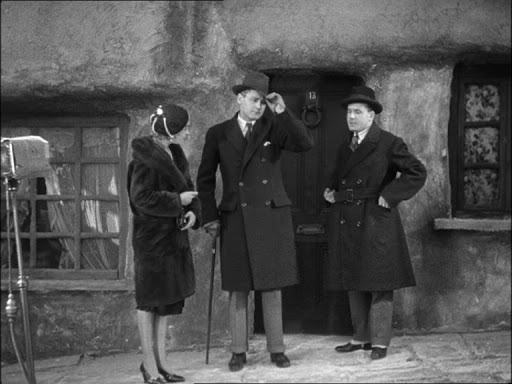
A member of a travelling theatre company has been murdered in the lounge of the guesthouse in which she is staying, with only a fellow company-member, a discarded poker and an absence of brandy nearby. The trial is quickly over, with the jury swung by the overwhelming evidence pointing towards the defendant’s guilt, but after the verdict has been cast and death has been sentenced, one of the jury members begins to have doubts over their decision.

12 Angry Men is one of my favourite films, and Alfred Hitchcock is one of my favourite directors, so when I discovered this film, I was half expecting to find Hitchcock’s version of 12 Angry Men would rapidly be topping my favourite films list. Alas, this is not the film I’d hoped for, as in fact the jury and trial scenes take up a very small portion of this film, with most of the focus instead going to the investigation held by Sir John Menier (Herbert Marshall), one of the jury members who also has strong connections to the theatre business, in which both the deceased and defendant were employed. Once I was past my initial disappointment, I settled down to watch what turned out to be a fairly standard, by-the-numbers procedural picture, whose only difference from the norm was the general lack of police, detectives or journalists doing the crime-solving.

Before the trial the film has quite a comedic tone, which is odd, seeing as it’s immediately after a murder. The very opening involves two of the theatre company’s members, Mr. and Mrs. Markham (Edward Chapman and Phyllis Konstam) attempting to uncover the source of the recent scream from down the road, only to be prevented from doing so by a window refusing to remain open whilst their heads are protruding from it. A policeman trying to ascertain the events of the evening finds his work cut out for him when he attempts to question the theatre company during a performance, so must fit his interrogations between the sound effects and actors heading on and off stage. Once the trial begins the comedy is still around, but it’s much sparser and broader, for example the dim-witted juror.

The main problem with this film is the story, which although having been based on the play Enter Sir John by Clemence Dane and Helen Simpson, seems to have been written hurriedly and not thought through all that well. It may be due to the large number of whodunnits that I’ve seen, but I’d sussed the plot fairly early on after a piece of evidence the cast seemed fairly unimportant, but clearly left the whole thing wrapped up. Also, the whole thing seems to rely upon the fact that sticking one’s fingers into one’s ears and shutting one’s eyes can prevent a person from sensing absolutely anything that happens directly around them. Sir John’s method of achieving a confession from his assumed culprit is also frankly ridiculous, but does at least comply with his being a theatre producer.

The poor audio of the film didn’t increase my enjoyment of the film either, and the various scenes of characters talking over one another didn’t help either. The most egregious case of this was a fairly superfluous scene of Sir John receiving a cup of tea in bed from his landlady. Their entire conversation could have been vitally integral to the plot, however I didn’t catch a word of it due to her detestable brood of children harassing John and running around screaming. I get enough of that just listening to my neighbours two kids through the wall, thank you very much. The overzealous, unfitting score didn’t help either. What finished everything off was the final shot, which was only recently defeated for audacity and sense of ego by Tarantino in Inglourious Basterds.

Hitchcock may well have a fascination with murder and intrigue, but he also likes to focus on the aftermath of the deed, rather than the actual offence itself, as he also does in Rope and The Trouble With Harry. Unfortunately it didn’t pay off here as much of it did in those other pictures, so I’m afraid I can’t really recommend this film.

Choose life 5/10

Superman Returns

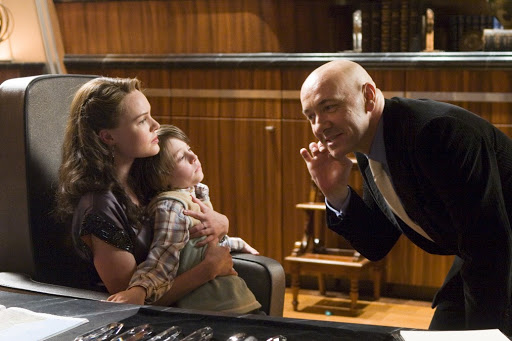
Superman, the last surviving alien from the planet Krypton with god-like powers, has left the city of Metropolis that he has protected for decades to return to the last known whereabouts of his destroyed planet. Upon discovering nothing to be found where his planet used to be, he returns back to Earth, and re-assumes his alter ego of Clark Kent, a mild-mannered journalist for The Daily Planet. He attempts to rebuild his relationship with Pulitzer-prize winning co-journo Lois Lane (Kate Bosworth), but is annoyed to discover that not only is she engaged to their boss’ nephew (James Marsden), but she has a son, Jason (Tristan Lake Leabu). Meanwhile, having recently been released from prison, Superman’s former nemesis Lex Luthor (Kevin Spacey) is busy hatching a plan involving crystals found in Supe’s mysterious Fortress of Solitude.

I’m not a fan of Superman. There, I said it. I remember half-watching the 1978 Christopher Reeve version when I was younger, but I can tell you literally nothing about it, and I remember watching Superman Returns a few years ago, but I couldn’t remember too much about that either, other than the shot of Bosworth’s Lois ascending in an elevator, Spacey’s Lex Luthor being near water at some point and the shot of Superman being shot in the eye that was in the trailers. To be fair, that viewing was overshadowed by a rather eventful mid-film pee break.
I remember the rest of the day clearly. It was pretty much the first time I’d tried Pick’n’Mix sweets (I was aged 19 I think), and all I’d consumed so far that day was strawberries with orange juice for breakfast, a couple of glasses of Coca Cola, and several fistfuls of Pick’n’Mix. My student days were not necessarily the healthiest of times. About halfway through the film, buoyed by the saccharine high of the tooth-rotting goodies  I’d consumed, I desperately need a wee. So i nipped to the loo, and mid-stream I passed out, and woke up face down on the toilet bowl. This is a very unusual place to regain consciousness, and needless to say, once I re-entered the lounge and joined my housemates watching the film, I didn’t take too much of the rest of the film in, hence why I remembered so little. I promise that I don’t make a habit of passing out during films, although later that day something similar occurred during an advert break in The Long Kiss Goodnight, this times resulting in my collapsing face-up (again mid-urination), still clutching the 2″ thick acrylic shower rail I’d previously been using to steady myself, that had now been sheared from the wall. Don’t worry, other than my recent Looper adventures, the only other time I’ve passed out was last year, again during a period of relieving myself, but was not halfway through a film. It did require the purchasing of a new toilet brush holder, as apparently the one we used to own wasn’t designed to withstand 15 stone of unconscious man falling onto it. 

Anyway, me fainting halfway through the first time I watched the film has nothing to do with whether I like it or not, I just enjoy retelling overly personal stories from my life that are at best tangentially related to the film I’m reviewing. No, what I don’t really like about Superman is that he’s just too powerful. His powers are seemingly beyond limit, with the only things he cannot do being the ones he hasn’t tried yet. He has flight, x-ray vision, super speed, strength, laser-eyes, time-travel, advanced hearing, super-whistling, fucking everything. And he only really has one weakness; Kryptonite; an extremely rare green rock. Which basically means that if people don’t know about this weakness, or there isn’t any of the super-scarce emerald stone around, there’s pretty much nothing in the way of Superman saving the day. I never really got into Smallville, even though I was pretty much slap-bang in the target demographic when it came out, and I can’t even get excited about next year’s Man Of Steel, even with Zack Snyder directing and Christopher Nolan producing. Needless to say, this film was going to have it’s work cut out if I was going to be impressed by the end of the viewing.
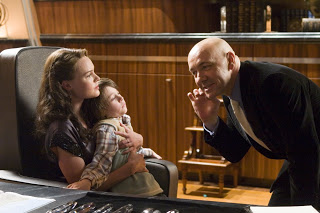
Initially I was intrigued by the film, as it has an interesting and somewhat eclectic cast. Kevin Spacey is perfect as Luthor, taking over from Gene Hackman. Spacey is his usual dependable self, and it at his best when in full-on bad guy mode, which is most certainly the case here. Elsewhere, Eva Marie Saint was a nice touch as Martha, Clarke’s adoptive mother, though disappointingly she doesn’t really get a lot to do, as is also the case with Frank Langella’s Perry White, Clarke and Lois’ boss. James Marsden once again plays a man caught on the cold side of a love triangle between the film’s hero and heroine (see also The X-Men trilogy, The Notebook, Enchanted), and Parker Posey is always a welcome addition to any cast, here playing Luthor’s sidekick/partner/main source of annoyance. Oh, and Kal Penn’s there too, but I’m fairly sure he never actually says anything, and [TINY SPOILER] is given a terrible cop out death with Luthor’s other two goons at the end [END OF TINY SPOILER].

Where the casting really falls down though is with the leads. Kate Bosworth, aged 23 when the film was released, looks far too young to play a Pulitzer Prize winning journalist, and seems dwarfed even by her own clothes. She also displays practically no likable qualities – she frequently dissolves into childish hissy-fits and strops whenever she (justifiably) doesn’t get her way. Brandon Routh, on the other hand, looks the part of both Superman and his public identity, but whenever he tries to act he appears to be made more of wood than the steel of his nickname. And in the many, many CGI shots of him flying or in danger, the film seems to become a late 90s video game, so terrible are the graphics. Most egregiously, the film’s final shot is one such diabolically bad render. Even in some of the non-CG shots Routh appears to have a plastic-like finish, possibly to make him look more similar to the computer generated bits.

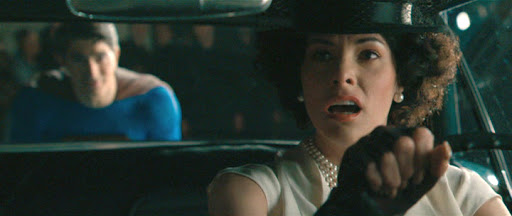
Another part that really bothered me was that the film is clearly set in modern times, with space shuttles, airplanes, videocameras etc. all being integral to the plot, but the architecture and fashions all seem to be stuck in the 1920s, up to the point of large sections seeming like they were shot in sepia. This is none more clear than in Parker Posey’s outfit in the car sequence. Adding the newspaper-room setting reminded me heavily of The Hudsucker Proxy, a film I liked a great deal more than this one, and which inspired me to suggest Jennifer Jason Leigh as Lois, although Amy Adams’ casting is possibly the only thing I approve of for the next film. I can see where director Bryan Singer was coming from with the mix of old and new styles, but it never really worked for me, and I found the whole thing very jarring. The overall plot was mostly just silly too, and various minor plotlines – the one involving Lois’ son for instance – felt unsatisfying and, at times, just plain stupid. The first 60% of the film seemed to drag too, as Lex’s plot is kept a mystery, and there doesn’t seem to be too much for Superman to really fight against. And part of the finale, in which lives hang in the balance of a fax machine’s volume, is not quite dated yet, but will be very soon. And who the hell puts a snooker table on a boat? Seriously.

There were some nice touches though. I approved of the little in-jokes for superhero fans (a news reporter mentions that they’ve received a message from Gotham), and the moment where Clarke pretends to be a bit confused and muddled to but Lois off the scent was good. The shoehorning-in of the “It’s a bird, it’s a plane…” line was clumsy, but still managed to raise a smile from me, even if it was accompanied with an eye-roll. The destruction of a model railway town may not sound like the grandest action set-piece in a film, but for me it was the highlight here, with it being shot in a similar fashion to a Roland Emmerich film. That one short sequence was more entertaining than the entirety of 2012, I can tell you.Elsewhere, some camerawork really disappointed me – a shot heading over a balcony and down, to focus on Lex reading a newspaper felt clunky and jerky – but this was more than made up for by the visually stunning space-set opening.

The viewing of the film was worth it to finally discover the origin of two Adam Carolla Show sound effects (“Wrong!” and “You’re losing your hair,” for fellow regular listeners), but sadly other than this point I was thoroughly underwhelmed by the whole thing. All being well, my low hopes for the upcoming Man of Steel may result in me being pleasantly surprise. Here’s hoping.

Choose life 4/10

Gimme Shelter

I was quite looking forward to this film. Although I’m not a massive Rolling Stones fan, I can often be found listening to their greatest hits, amongst which there are many songs I’m rather partial to, in particular Paint It Black, You Can’t Always Get What You Want and Honky Tonk Women, and I haven’t heard too many of their songs that I’ve particularly disliked. Also, the only music documentary I’d seen prior to this was Anvil, which is pretty good if you ask me. 

The film follows the Rolling Stones on their 1969 US tour, culminating in a massive free show at Altamont Speedway, San Fransisco. The events of that show have gone down in history, remembered as the moment the 60s ended when a concert-goer was stabbed and killed by the Hell’s Angels, who were hired as security for the event. Many other audience members were beaten or injured during the concert, which was rife with drug abuse, nudity and people giving birth, making me all the more grateful to have been born long after all that free thinking and spirituality was around.  

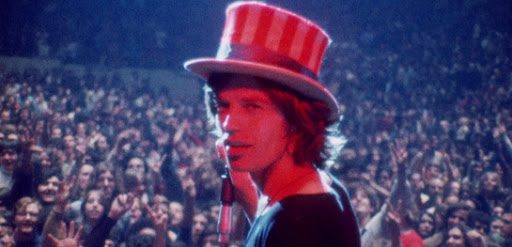
Before getting to the Altamont, we see various other performances throughout the tour, including a terrific rendition of Jumpin’ Jack Flash at Madison Square Garden, and footage of the band listening to their music in hotel rooms, and watching the editing process of this very film in the editing bay. We are given a bit of an insight into the band’s personalities (Mick Jagger comments that “It’s nice to have a chick [perform with them] occasionally” after Tina Turner belts out I’ve Been Loving You Too Long), but for the most part I was sadly bored, despite Jagger’s relatively engaging presence. He always seemed fairly unsure of where he was or what he was doing (can’t think why), and he had an air of someone who couldn’t quite understand exactly how he’d gotten to where he was, and just generally dicked about on stage whilst the other band members were concentrating on getting the job done. What I expect from music may not be the same as other people – I tend to prefer a good quality recording rather than atmosphere and ambiance, hence why I rarely go to musical events – and I imagine I’d have been severely disappointed had I attended any of the gigs on the Stones’ tour.

The only interesting segments were about the organising of the free concert, having to arrange a venue to accommodate the hundreds of thousands of audience members, but this was overshadowed by the impending on-camera death of Meredith Hunter, an audience member who attempted to mount the stage. I do not relish the opportunity to watch an actual death on screen, and I did not feel comfortable watching what is essentially a scene from a snuff film. I get the feeling that had this event not taken place on film, then this documentary would probably not appear on the 1001 list. It’s only really worth watching for the stellar soundtrack.

I get the feeling I’ll track down Martin Scorsese’s Shine A Light documentary eventually, because, y’know, it’s Scorsese; but sadly all this film left me with was an increased desire to re-watch Spinal Tap.

Choose life 5/10

Hell Is For Heroes

1944, Montigny, France. At a rest area near the Siegfreid Line, Sergeant Larkin (Harry Guardino) is desperately trying to find a pen amongst his small band of men. Everyone is either using theirs, sees no need for one, sells dodgy ones or are in a similar state of searching for a writing implement. This scene, which does a good job of introducing the main characters and their various skills, roles and personalities, is one of very few scenes that sets it apart from essentially every other war film ever made.
There’s Private Corby (Bobby Darin), the guy who knows how to get things, but they won’t necessarily work and will cost you a price, and Corporal Henshaw (James Coburn), the bespectacled guy who can’t help tinkering with anything that moves, even fixing a car that was just sat nearby. Private Cumberly (Bill Mullikin) is an amiable chap, but seeing as he’s devoid of too much of a personality, you can go ahead and consider him German cannon fodder, and the young Homer (Nick Adams), a Polish kid looking to get a ride to America when the troops are shipped home. Add to this bunch Steve McQueen as Private Reese, transferred to the company the day before they’re shipped not home, as they’d been led to believe, but back to the front.

The main story – the small band of American WW2 soldiers are tasked with an almost impossible mission – has since been far-bettered in Saving Private Ryan. In fact, the main story here is the defending of a post against a German pillbox, which here lasts 90 minutes, but was deftly handled by Spielberg in just one, very memorable, scene that isn’t even the best in that film. However, even without Ryan this wouldn’t be a very memorable film anyway, as for the most part it’s fairly dull, and none of the roles are given much characterisation other than being good, or bad, at a specific thing. It’s such that when any of the men are slain, the impact is only really felt because there are so few of them in the first place, rather than because we’ve grown to love them.

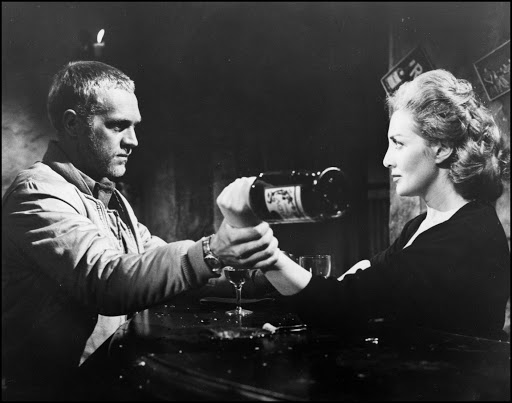
The action is widely spaced out, and when the big climactic advance takes places, it’s mostly in almost total darkness, until Coburn picks up a flamethrower and sets about with it, but even that’s not for long enough. The mine-sweeping scene is admittedly very tense, but alas the outcome is fairly predictable, and its just a matter of waiting for the inevitable to occur. There’s also a nice early scene in a bar between McQueen and a woman in a bar, but once over it’s forgotten, which is a shame as it’s probably the best scene in the film. The camera following a dying man on a stretcher as it’s bearers strive to reach safety for him was a nice touch too, but sadly was lost amidst a sea of unoriginality.

The main focus of the film was on a relatively interesting subject – a small group of men trying to convince a large unseen foe that there were far more of them than in actuality, and they used some ingenious methods to do it, but other than the actual ideas on display I was far from entertained or engrossed. There are far more, and far greater, war films in existence, and I’m hoping the remaining three on McQueen’s resume are superior (I know The Great Escape is).

Choose life 5/10