Annie Hall

Woody Allen famously has a tendency to write himself into most, if not all, of his scripts. It is usually difficult to distinguish where Allen ends and his characters begin, and this is none more so than with Alvy Singer, Allen’s neurotic obsessive from this, arguably his greatest and funniest film. It is this ability to use himself, or at least a variation of himself, as his protagonist that has allowed Allen to create such a well rounded, nuanced persona. One wonders if he hasn’t been living life as this character since birth, honing the pessimism, the paranoia and awkwardness, so now all he needs to do is put the ‘character’ into a slightly heightened situation, and a natural comedy will emerge.
Not that character is the only weaponry in Allen’s arsenal. The script is hysterical yet droll enough to quote in everyday life (“we can walk to the curb from here”), the performances perfect, particularly Diane Keaton as the eponymous Hall, both Singer’s ideal partner and greatest foe, and the film is peppered with fourth wall breaking with moments of originality, from a narration that admits it may be exaggerating to direct-to-camera conversations and asides.
Thee almost sketch-like format of the film, flitting backwards and forwards in Hall and Singer’s relationship, suits Allen well, as he is a filmmaker of varying styles and techniques, so he is able to showcase this without jarring the rest of the film, such as when he used split-screen to compare different family meals, or stopping random people in the street for relationship advice.
Oh, and the woman waiting with Singer at the end of the film, out of focus and silent in the distance for a matter of seconds? None other than Sigourney Weaver.
Choose film 8/10
Heat

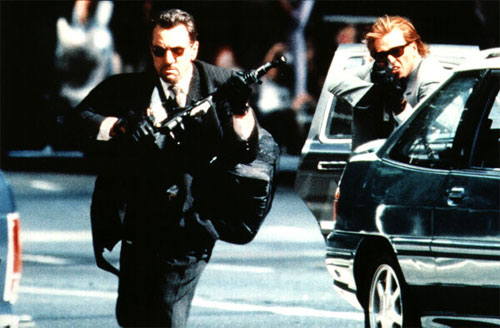
Most crime films tend to pick a side early on, focusing on a ‘means to an end’ band of criminals thieving because they have to, or a team of patriotic, all-American supercops able to match their never-ending machine gun clips with a limitless supply of one liners, but Michael Mann’s Heat, a remake of his own 1989 made for TV movie L.A. Takedown, takes a different path, giving Robert De Niro’s gang of seasoned thieved and Al Pacino’s police squad equal screen time, equal motivation and similar levels of compassion, so you get to decide who you want to win. Though the two main characters; De Niro’s master thief Neil McCauley and Pacino’s dogged detective Vincent Hanna are sworn enemies, they are still two sides of the same coin, separated by their own opinions of the law, but brought together by a deep mutual respect. Neither one is the villain of the film, there are more than enough scumbags among the supporting player to take that role, yet neither is necessarily the hero, although in the end it’s Pacino who grabs the most heroic moments.
Surrounded by an incredible ensemble cast (deep breath: Val Kilmer, Tom Sizemore, Danny Trejo, Dennis Haysbert, Natalie Portman, Xander Berkeley, Hank Azaria, Jon Voight, Jeremy Piven, Mykelti Williamson, William Fichtner, Tom Noonan, Ted Levine, Ashley Judd), some perfectly choreographed set pieces (the opening truck heist and mid film bank robbery/street shootout) and ability to show the effect their chosen lifestyles has had on these characters and their personal lives, or lack thereof, this is a tremendous film, even if it does give in to the occasional cliché, but these can be forgiven for the fact that they use weapons that actually, from time to time, need reloading.
Choose film 9/10

Tokyo Story

Unlike this film, life is nothing but disappointment. This is the discovery made by an elderly middle class Japanese couple as they visit Tokyo for the first time to see their children and grandchildren, only to find they do not have room in their busy lives to send time with their parents.
Shot with an unmoving camera set at sitting height from the floor, this largely encompasses the family’s conversations, discussing everyday life, but it is often the occasional periods without dialogue that are more moving, and say more than any could.
There is a sense of finality throughout, as though the couple know they are unlikely to see their children again, and it is difficult after watching this film not to pick up the phone and call your own parents. Surely a film that makes us want to at least try to be better people, and live up to the expectations of others cannot be a bad thing?
Choose life 9/10

Dances with Wolves

After unintentionally becoming a hero when his suicide attempt becomes a mass charge against the enemy, Lt. John J. Dunbar (a be-whiskered Kevin Costner) is given his choice of location in the Union army, opting for a small, broken down post miles from anywhere, in order to “see the frontier before it’s gone.” When he saves a white woman adopted by their tribe as a girl, the local Native Americans take a shine to him, as he attempts to educate them of a civilised world, whilst they in turn teach him of their ways.
The plotting is formulaic and the pace is stodgy. There are some good performances (Graham Greene and Rodney A. Grant as the two most forthcoming members of the Sioux tribe), but this feels too bogged down in a history and culture more important to the American people than anyone else. Unforgivably, Costner beat Scorsese to the Best Director Oscar for Goodfellas, and it is extremely difficult to understand why.
Choose life 4/10

Batman Begins

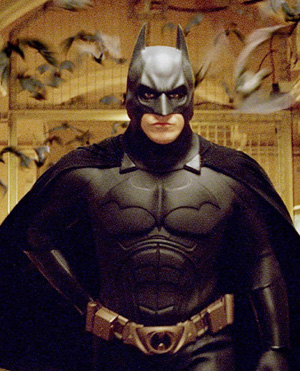
As the title suggests, this predominantly covers Batman’s origin story, from the death of his parents after he becomes scared at the theatre, through his training by Liam Neeson’s Ducard, his development of a crime-fighting persona and his confrontation with his former mentor in a city ridden with toxin-crazed criminals and madmen. This is arguably the most realistic, or at least vaguely plausible comic book movie ever made, with the only real superpowers on display being a gas that makes people insane and a ridiculously vast fortune to funs Bruce Wayne’s double lifestyle. Granted, the secret passage in Wayne Manor is operated by hitting a coded sequence of piano keys, but this can be forgiven, and is at least a variation from the classic sliding of a secret book on a shelf.
Continue reading

The Silence of the Lambs

It’s easy to forget just how impressive Silence of the Lambs is as a film; receiving the ‘Big 5’ Oscars (Actor, Actress, Picture, Director, Screenplay) back in 1992, an accolade since rusted by the diminishing returns of the sequels/prequel. When remembered, the image brought to mind is of a motionless Anthony Hopkins stood eerily in the centre of a jail cell, awaiting Jodie Foster’s FBI student Clarice Starling, the conversations that ensue regarding Hopkins’ incarcerated Hannibal Lecter assisting the FBI with psychological analysis of an active serial killer, and certainly Hopkins’ aggressive, manic yet restricted delivery of oft-quoted and even more so parodied dialogue. Admittedly Hopkins turn, equal parts refined and ruthless, educated and insane, psycho-analytical and psychopathic, is remarkable, before Ridley Scott’s Hannibal turned him into some kind of dandy rogue (albeit one who feeds Ray Liotta his own brain), but it is so overpowering that it overshadows the rest of the film, feeling his absence whenever he’s not on screen, staring directly into the soul of the viewer. Not to diminish the rest of the production, with Jodie Foster being another highlight, her twig-like rookie about a foot shorter than all the other male recruits, all of whom have no problem checking her out as she walks by, seeing her not as an equal, but simply as a girl. Ted Levine (Monk, Heat) is also incredible as the killer Buffalo Bill, keeping his victims alive in a well before skinning them to make himself a suit. Criminally he was not even considered for a supporting actor nomination, yet his portrayal is arguably more chilling than Hopkins’, delving deep into a twisted, scarred psyche and throwing the shattered remains at the screen. The third reel reveals, both examples of fine editing and cinematography, also deserve mentioning, keeping you guessing long after you thought you knew what was happening.
Choose film 8/10

Leon

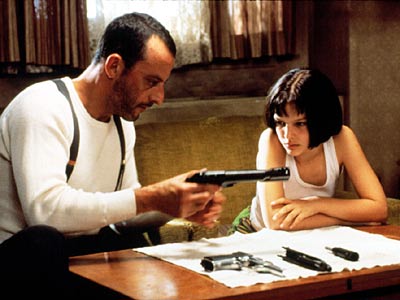
After the murder of her uncaring parents and innocent four year old brother at the hands of a pill-popping, Beethoven loving Gary Oldman, Natalie Portman’s 12-year old Matilda is taken in by her stoic, lonesome ’cleaner’ (a hitman to you and I) Leon. Leon’s skills as a contract killer are evidently impressive, shown early on by his one-man takedown of a drug dealer and his crew, disappearing into the shadows like the breath of a ninja, yet his skills as a human being and fully functioning member of society are less so, eking out a solitary existence with his milk laden fridge and beloved yucca plant. The introduction of Matilda into his life changes everything, as she requests training to avenge her brother’s death, in exchange becoming Leon’s assistant and tutor in reading and writing. Director Luc Besson shows a style and directorial flair seen previously in Nikita (where Jean Reno’s character first briefly appeared) as more recently in the decidedly more Hollywood-ised the Fifth Element (again featuring an intense, cackling turn from Oldman in villainous form).
Choose film 6/10

No Country for Old Men

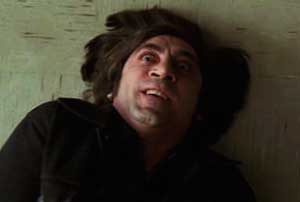
In this most bleak and convoluted offering from the Coen brothers you rarely witness a characters ultimate destiny, although they are hinted at enough to make a fair assumption. Josh Brolin’s Llewelyn Moss, a welder out hunting deer in south west Texas, stumbles upon a botched drug deal and, finding a suitcase full of money, goes immediately to the authorities before returning home to his wife and living a largely uneventful life. No, of course not, he legs it, instigating a game of cat and mouse with Javier Barden’s Anton Chigurh, a ruthless, near robotic hitman with an unusual and extreme set of morals, himself pursued by Tommy Lee Jones’ small town sheriff Ed Tom Bell. Featuring a stellar supporting cast including Woody Harrelson, Stephen Root and Kelly Macdonald, some incredible scenery, lensed by Oscar winning regular Coen cinematographer Roger Deakins and highly memorable dialogue lifted directly from Cormac McCarthy’s seminal novel of the same name, this is a truly inspirational and unique film. Bardem in particular completely embodies his character, becoming one of the most iconic villains to grace our screens in modern times. Brolin however strikes me as an actor from the ranks of Shia LaBoeuf and Sam Worthington, snapped up and promoted by big name directors without having the talent to back up the expectations, flooding the cinemas with frankly mediocre acting ability.
Choose film 8/10

One Flew Over the Cuckoo’s Nest

Jack Nicholson, in an arguably career best (so far) performance, is R.P. McMurphy, hopes to complete a short prison sentence without resorting to hard labour, and therefore pleads insanity and is transferred to a psychiatric hospital run by the steely Nurse Ratched (Louise Fletcher).  Ratched’s treatment methods, including humiliation and a mind-numbing daily routine appall McMurphy, as he realises the other patients are more focused on their fear of her than of functioning in the outside world. Although the main two performances are excellent, both winning well deserved Oscars, the film remains memorable more for the supporting cast that makes up the other inmates. Each has a specific and instantly recognisable personality, be it Brad Dourif’s stutteringly naive suicide risk Billy, Danny DeVito’s childlike Martini or Christopher Lloyd’s crazed loose cannon Taber, used whenever anyone is required to awake to a surprise situation, as Lloyd owns the greatest instant ‘what the Hell’ face on the planet.

The film is remarkable, not only for the acting but also the depths to which the story plunges, with an ending both horrific and genuinely surprising. Throughout the film it is obvious that McMurphy will be discovered as a fraud (something never actually stated during the film), and will of course be sent back to prison where he belongs (the sentence he is attempting to avoid is the statutory rape of a 15-year old girl), but the fate in store for him is far worse than could possibly be imagined. It also features possibly the most elaborate plan to have sex ever, hijacking a busload of patients, commandeering a boat and teaching said loons how to fish.

Choose film 9/10

Grease

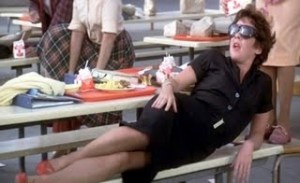
Back when high school films were about the popular kids, before the likes of American Pie and the Breakfast Club introduced the world to the less mainstream aspects of the educational sub-groups, Grease tells the story of a unexpectedly elongated summer romance threatening the street cred of a popular guy amongst his friends, themselves involved in a fairly tame turf war with a rival gang. As with most musicals, there isn’t enough plot to fill a film if you removed the musical numbers, but most of the cast are perfect (specifically Stockard Channing (Abbey Bartlet!) as bad girl Rizzo and Didi Conn as the more timid Frenchie), and the songs are pretty catchy, most notably Grease Lightning, but the overall message is incredibly dated. Apparently, the best way to keep a guy is to change everything about yourself to exactly how he wants to be, your clothes, appearance, personality, everything. Oh, and the final drive-into-the-sky shot is possibly the cheesiest moment ever committed to film.
Choose life 5/10