Top 5… Movie Grandads

Today is my Grandad’s birthday, happy birthday Grandad! If he knew what the Internet was, he still probably wouldn’t be reading this, but in tribute let’s have a look at the greatest Grandad’s on film (spoiler alert).

5. Grandpa Joe (Jack Albertson), Willy Wonka and the Chocolate Factory
On the surface, Joe seems to be a pretty decent grandparent – he never loses faith in Charlie and accompanies him to the chocolate factory upon his grandson’s finding of the last golden ticket, but there are many reasons why he isn’t higher on this list. Firstly, he’s been in bed, unmoving, with Charlie’s other three grandparents, for many years, complaining of a medical condition preventing him from working, whilst his daughter (or daughter-in-law, I’m not sure) slaves away all day, every day to provide for the entire family. Secondly, his undying faith that Charlie was going to win a ticket is only acceptable because Charlie did in fact win. The entire first half of the film depicts the chances of Charlie finding a ticket as so remote, that it’s nothing short of an astronomical miracle that he finds one. Had he not, it’s likely that his hopes had been built up so high, mainly because of his grandfather, that it’d be surprising if he didn’t end up with some kind of a complex. Thirdly, Joe’s antics within the factory almost cost Charlie and his family the life of their dreams when he coaxes Charlie into drinking the Fizzy Lifting Drink (not to mention threatening what little life he already had with that giant fan). All that being said, as a grandfather he isn’t too bad, and does seem to be a lovely man.
Continue reading →

Unforgiven

The first part of my double bill of Clint-Eastwood-directing-himself-and-Morgan-Freeman-in-a-supporting-role sees the American icon define the genre that not only made him the prolific star he is, but that he has almost singlehandedly kept alive since it’s surge in popularity in the 60s and 70s; the western.
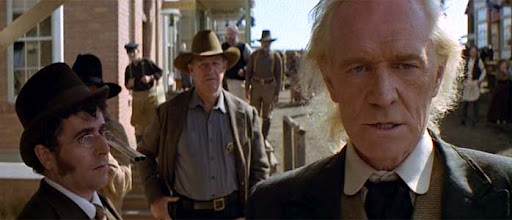
Unforgiven sees Eastwood as William Munny, a former hardened killer reformed by the love of a good women and the birth of his two children. With his wife dead and their herd of pigs stricken with fever, Munny accepts the offer from young upstart The Schofield Kid (Jaimz Woolvett) to kill two ruffians who cut up a whore after she laughed at one of them having a small penis. They team up with Munny’s former partner Ned Logan (Morgan Freeman) and head out to the town of Big Whiskey, lorded over by Gene Hackman’s occasionally violent ‘Little’ Bill Daggett, where other hired killers, including Richard Harris’ English Bob, are also heading to claim the bounty.
Eastwood’s Munny isn’t your typical western hero. In fact, no character in this can ever be truly classed as heroic. Munny has what could politely be called a sordid past, and his desperation to honour his late wife by not succumbing to his younger urges is evident. A self proclaimed no good son of a bitch, Munny is a shadow of his former self, unable to shoot straight or even mount a horse. Freeman’s Ned has a woman at home, yet has no qualms about visiting the whorehouse in town, Schofield has his own secrets and Bob is an outright liar, gambler and killer. At times it seems that Little Bill, supposedly the villain of the piece, is possibly the most moral character here, opting not to kill the prostitute abusers in favour of fining them horses instead, with the sins he commits in the present are nothing compared to those done by Munny in the past, and his intentions are only to keep his town free from guns and violence, except from his own. I found it odd though that nothing was made of Freeman’s race, as he and his partner are the only non-white characters in the film, yet there are no even passing references when the townsfolk describe him. I’ve just realised I’m annoyed that Morgan Freeman wasn’t racially abused in a film.
The script, which did the rounds in Hollywood for 20 years before Eastwood picked it up, is pocked with sharp humour and great lines (“If I see you again, I’m just gonna start shooting and consider it self defence.”) and works not just as a study and disassembly of the westerns that came before it, but as a damn good, prime example of one itself. Harris’ English Bob has his own biographer (Saul Rubinek), whose role is to take Bob’s stories and lyricise them a little; in essence creating the cowboy myths and legends that make up the staples of the genre. It’s a film about shattered dreams and fallen heroes – the actors as much as the characters – as it’s not often you see Eastwood rolling around in pig shit, Morgan Freeman asking someone if they sleep with prostitutes or just use their hand or Lex Luthor beating the crap out of Dumbledore. It’s clear that Munny could quite easily be any one of Eastwood’s previous stoic, bitter, hard as nails cowboys who’d let themselves go for a few years.
The film deals with the seriousness of death and murder, with no post-kill smart alec quips. One characters defiant “I’ll see you in Hell, Willaim Munny,” is met only with a considered, matter of fact “Yeah.” It’s almost as prolific as The Good, The Bad and The Ugly and Once Upon A Time in the West, and definitely ranks in the top 5 westerns.
Choose film 9/10

Bridesmaids

As usual, I’m a little late to the party with this review. I’ve heard a lot of good things about Bridesmaids, and as usual the great deal of hype has built up my expectations, so I’d anticipated a comedy that proved something I’ve always had my doubts about; that women could be just as funny as men. I don’t mean to be misogynistic, I’m just terribly good at it, but I’ve always preferred male comedians to female, and you’ve got to admit that there’s a hell of a lot more of them. Plus, my girlfriend (who also isn’t funny) watched this film last year and said she didn’t enjoy it, which is usually a sign that I would.
Many comparisons have been made to this being a female Hangover, which if anything lowered my expectations, as I found that film to be only mildly entertaining upon first viewing and more than a little puerile and nauseating on the second, and let’s not even discuss the sequel (word of advice, don’t make the mistake I did and watch it with your grandparents). There are similarities between the two films – they both feature a predominantly same-sex cast, are both revolved around wedding parties and at one point in Bridesmaids there’s even a trip to Vegas, and in my opinion Bridesmaids is just as good, and also just as bad.
Our heroine here is Kristen Wiig’s Annie, a baker whose life has hit several stumbling blocks, leaving her self-started career floundering as she shares an apartment with Gil (Matt Lucas) and his freeloading, dimwitted sister Brynn (Rebel Wilson). Annie’s best friend Lillian (Maya Rudolph) gets engaged, and Annie is her Maid of Honour, so cue ensuing hilarity as Annie attempts to wrangle the rest of the bridal party – Lillian’s cousin Rita, colleague Becca, future sister-in-law Megan and fiance’s boss’ wife Helen – through dress fitting, bridal shower, hen party and wedding, all while trying to stop her own life from continually spiralling downward.
The humour, and this being a comedy this should be the most important aspect, is well intentioned and has potential, but the scenes are almost always taken beyond the point at which they stopped being funny and started being awkward and uncomfortable to watch. Curb Your Enthusiasm is possibly the greatest example of humour that is almost cringeworthy but always funny, but here it never quite hits the mark. Take the speeches for example. At Lillian’s engagement party, Annie is asked to give a speech, only to be upstaged on ever account by Rose Byrne’s rich bitch Helen, who is desperate to steal the Maid of Honour title from Annie. This scene goes on for a good few rounds too many, and by the time Helen starts speaking perfect Thai, only for Annie to counter with broken Spanish I was checking my watch and rolling my eyes.
Much praise too has been lauded upon Melissa McCarthy, who plays Lillian’s future sister-in-law Megan trying too hard to do an impression of Zack Galifianakis in The Hangover. I’m still reeling from the fact she was nominated for an Oscar for her performance here and, whilst she is occasionally funny, many of her lines miss the mark.
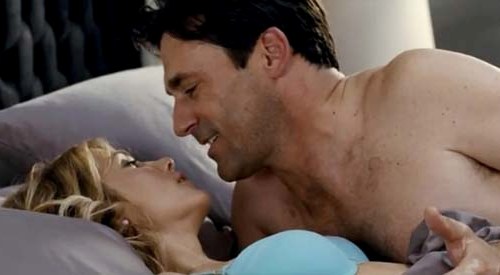
My misogyny may be seeping through again when I state that the best parts of this film are easily the men. The IT Crowd‘s Chris O’Dowd is a cop with whom Annie starts a faltering relationship, and John Hamm is the fuck-buddy she already has. Whenever these two are on screen, especially Hamm, we get some of the sweeter and downright hilarious moments from the film, with Hamm’s deliriously coarse womaniser outright telling Annie he only wants her for sex when he complains that she stayed the night. Kristen Wiig is OK, but she does a lot better in bit parts and supporting roles. She stole several scenes in the likes of Adventureland, Paul and Knocked Up, but again that was with the help of much funnier men, in the likes of Bill Hader, Simon Pegg and Alan Tudyk.
It also doesn’t help that this film can’t decide whether it wants to be a slightly off-kilter rom-com or a zany gross-out comedy, and ends up being a messy mashup of the two, so we end up with scenes involving copious amounts of bodily fluids, as well as a genuinely heart warming first-date gesture from O’Dowd’s Officer Rhodes.
The film isn’t terrible, there are some funny moments (the dress fitting is a highlight, as is Annie’s confrontation with a young girl in the jewellery shop she works for) and the core messages are true and conveyed well, but it’s nowhere near as funny as it needs to be, and those bridal shower party favours are incredible inconsiderate.
Choose life 5/10

Body Heat

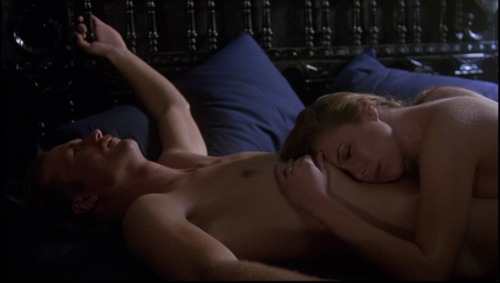
In a balmy summer heatwave in the American Deep South, the not-terribly-good defense lawyer Ned Racine (William Hurt with a 70s pornstar moustache) makes a random encounter with wealthy, sultry Matty Walker (Kathleen Turner), who is unhappily married to Edmund (Richard Crenna), a good man who is always away on business. Ned and Matty begin an illicit and steamy affair, and both decide that they’d be better off financially and romantically if Edmund were no longer around, so Ned, with the help of Mickey Rourke’s criminal consultant, sets out to murder him.
What sets this apart from the rest of the noir genre it draws obvious inspiration from is the copious nudity and sex scenes between the two leads, which are excessive even by today’s standards, as well as several shots of Richard Crenna in his underwear that I could have done without.
I was surprised that the plot didn’t contain more twists and turns, as in the end it was all fairly straightforward. For instance, I assumed early on that Matty’s husband Edmund would be in cahoots with either Ned or Matty, but in fact Edmund has very little to do in the story. In fact, his character arc is completed so early on that I was intrigued as to where the plot would go next. Also, some elements are set up with no eventual payoff – Matty’s niece catching Ned doing something he shouldn’t be doesn’t end up with her identifying him to the police – which led me to think that either we were deliberately fed loose threads to keep us guessing, or it’s just sloppy writing, though seeing as writer/director Lawrence Kasdan also wrote Star Wars Episodes V and VI, as well as Raiders of the Lost Ark and The Big Chill, it’s probably the former.
I was surprised to see just how attractive Kathleen Turner used to be, as other than her vocals in Who Framed Roger Rabbit, I’ve only ever known her as the dog trainer in Marley & Me (I have never willingly watched the film, it’s a favourite of the girlfriend) and as Chandler Bing’s drag-queen father in Friends, so I was rather confused that someone with such nice legs and skin could go on to be, well, Kathleen Turner.
There have been better noirs made before this (Double Indemnity) and after (Coen brothers’ debut Blood Simple), and if it weren’t for the aforementioned raunchiness there’s little chance of it being remembered today. The film isn’t necessarily bad, but its not revolutionary either.
Choose life 6/10

The Conformist

It’s probably not much of a recommendation to say that, only a month after having watched it and having read the notes I took at the time, I cannot remember much about this film. The plot was incomprehensible, mainly because the narrative was chopped up and flitted between with little to no acknowledgement, and if I hadn’t read that it was about a hitman I’d probably never have known.
Our protagonist is Clerici (Jean-Louis Trintignant), a fascism-supporting, recently engaged man with a sordid past, who desperately wants to fit in with society. So jumbled up is the structure of the film that I’m reluctant to say anything that happens, as I can’t be sure of the order shown during the runtime, so if there are spoilers within this review then I apologise.
We discover details of Clerici’s past from a forced confession he must make before his marriage, in which we are told that, as a lonely young schoolboy, his family driver molested him, until one day Clerici shot him in a scene where the squibs in the walls are distractingly visible long before they are used. His bride has similar stories of being raped in her youth, but the scene in which she describes the experience to Clerici is genuinely disturbing, as it seems to excite him, and he attempts to turn her on by almost enacting the molestation out upon her as she describes it.
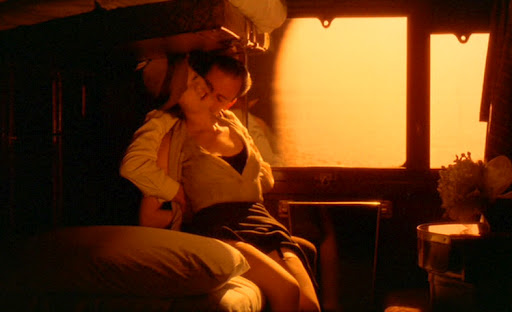
You probably won’t be surprised to find out that this film is Italian, so whilst interestingly shot – lots of angled cameras, leaves blowing at foot level and rays of sunlight through a forest of trees – there’s also a great deal of sporadic nudity and spontaneous sex scenes.
The impenetrable, David Lynch-like plot sees Clerici diverting from his Parisian honeymoon to assassinate his anti-fascist former lecturer, and also visit the man’s wife Anna, with whom Clerici probably used to know on a carnal level, but along the way many of the scenes have elements of strangeness – when Clerici buys a bouquet of flowers, the seller and her singing children proceed to follow him around, another time he manages to lead a decreasing conga spiral out from the inside. I found it incredibly difficult to commit to a film so nonsensical, as I always felt I was being left out of something.
Choose life 3/10

Top 5… Movies I Should Like Less

Last week I took a look at some of the movies of which the general consensus is they are classics, but I don’t necessarily agree. As promised, this week here’s the flip side to that coin, the films that I love, but others may think I’m a little stupid for doing so. These are basically guilty pleasures that I really should know better than to enjoy, but that doesn’t mean watching them can’t stick a goofy grin on my face and make me forget whatever other crap is invading my life.

5. Con Air
I’d argue with many people that this isn’t actually a bad film, it’s just highly implausible and tremendous fun, when a band of some of the most dangerous criminals in the world, led by John Malkovich’s Cyrus ‘The Virus’ Grissom, take over the plane transporting them to a new prison. Nic Cage is our justifiably law-breaking Navy seal hero catching a ride home with his ridiculous hair, and John Cusack the only man on the ground who believes in him. The cast is as impressively diverse as the film (Ving Rhames, Danny Trejo, Mykelti Williamson, Dave Chapelle, M. C. Gainey, Colm Meaney) and Steve Buscemi plays a cannibalistic paedophile. Who (SPOILER) gets away. As in, he’s free. In a casino, gambling, in public. We’re told he once drove around wearing a young girl’s head as a hat. Earlier in the film, he has tea with a little girl playing with a doll, and later we see a smashed tea cup, the girl nowhere to be found. So, presumably he killed her, possibly eating her? This is the oddest scene to put into an action film, especially when you consider Buscemi’s Garland Greene isn’t in the top 3 antagonists! And did I mention he gets away? And no-one seems to be looking for him?
Continue reading →

Seven

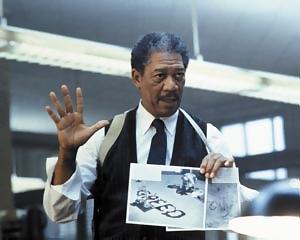
A buddy cop movie with a seasoned old hand so close to retirement they’re already scraping his name off the door and his hotshot, firebrand young replacement, this couldn’t be further from another Lethal Weapon. Yes, one’s a family man and the other’s a loner, one is prone to anger and the other a methodical, careful detective clearly too old for this shit, but where Richard Donner’s 80’s staple is an entertaining, action-packed romp, this is something much darker.After a disturbingly evocative opening credits sequence enriched with depth and meaning on repeated viewings, we meet Morgan Freeman’s detective Somerset, picking up his last case, a sickeningly masterful serial killer with a penchant for the seven deadly sins, the same day as Brad Pitt’s Detective Mills arrives to replace him. That’s as much setup as there is, as we follow the mismatched detectives from crime scene to crime scene, via their headquarters and areas of research, with Somerset whiling a night away poring over books in the library, whilst Mills take a brief glance at the Cliff notes.

The script is dotted with well balanced moments of humour – Somerset having dinner with Mills and his wife Tracey (Gwyneth Paltrow) – and some deep black humour: “this guy’s sat in his own piss and shit; if he wasn’t dead he’d’ve stood up by now,” plus R. Lee Ermey’s belligerent, furious Police Captain (“This is not even my desk” is one of my favourite film quotes, ever).

Crucially, we see none of the killer’s murders onscreen, merely their gruesome aftermaths. It’s not as gory as you might remember, but it evokes imagery and feelings that some may find disturbing, not least what happens to Leland Orser’s character, who probably has the worst memories of those who survive. It could be argues that this is a precursor to the Saw franchise, punishing those that seem to deserve it in creative, torturous ways, but at least here we are saved the nightmarish spectacles of witnessing the deaths.

At times the film feels a bit predictable, like a police procedural itself, but whenever this is about to happen the plot shifts direction, taking an unexpected twist to shake things up again. The colour palette of muted greys and browns, interspersed with deep reds amongst the incessant torrential downpour of the nameless city only adds to the feelings of despair.

There’s small roles for John C. McGinley and Richard Schiff in there as well, a nice surprise for me in the opening credits, but unfortunately at times the acting, especially Pitt during the final scenes, leaves something to be desired. The ending has become the stuff of legend, but I won’t reveal it just in case, save that Pitt’s gurning and crying are a bit over the top and take you out of the scene. This is another one of those films where knowing your actors may ruin the film too, as recognising a voice could cause annoyances later on, but not too badly.

Overall this is director David Fincher’s defining film (better than Fight Club in my opinion, though it’s been a while). The gritty tone is perfectly realised through every medium possible, the plot is gripping, the twists hold up and, though far from an enjoyable experience, it remains worthwhile.

Choose film 10/10

Avengers Assemble

Ugh, typing that name made me feel so dirty. Avengers Assemble. Ugh. There was nothing wrong with just The Avengers, no-one was going to go in expecting umbrellas, bowler hats and catsuits, and even if they had been, they’d have got something better anyway. Plus, ‘Assemble’ is possibly the least exciting word to ever appear in a movie title since The Adjustment Bureau.
Now chances are this isn’t the first Avengers review you’ve read, hell chances are this isn’t even the first Avengers review you’ve read that starts off by telling you it’s not the first Avengers review you’ve read, seeing as this is one of those movies (let’s not kid ourselves by calling it a film, this is for entertainment purposes only) seemingly designed to be discussed at length on the Internet. We’ve sat through 4 years of 5 prequels, and for literally years the Internet has been lying in wait to rip apart this inevitable car crash of a movie. Which makes it something of a surprise that not only is it not bad, it’s bloody good.
No-one saw this coming. They said it couldn’t be done. I agreed. The last few Avengers prequels hadn’t been great, especially Iron Man 2 and Captain America (I don’t know what everyone has against Thor, I thought Kenneth Branagh did a good job with a lesser-known character) and I firmly believed that throwing six superheroes at one another in the same film was going to look like something Hulk had sat on. The only things it had going for it were a stellar cast and a solid director in Joss Whedon, of whom I’m unashamedly a fanboy (other than I’ve never seen an episode of Buffy or Angel). Whedon is known for handling rambling, ensemble casts (Firefly) and has always managed to balance action with snappy dialogue, drama with romance and a hefty dollop of comedy, but I didn’t think there was a great enough female presence here to draw his attention, with Black Widow as the only main girl. So, going in, my hopes were high but my expectations primed for mediocrity, so it’s a pleasure to say that I honestly can’t think of many ways the film could have been handled better.
Essentially, this is an origin movie. What’s unusual is that most of the main characters have already had at least one movie of their own, mostly origin stories, so what we have here is the beginnings of a culmination of pre-established characters. You don’t necessarily need to have seen all of the other films before watching this one, but I think it’d help, as the plot is partially set-up within Iron Man 2, Thor and Captain America, in terms of the basis of the Avengers, the bad guy and the maguffin. I saw this with my girlfriend, who hadn’t seen Thor but had all the rest, and she didn’t need much explaining to her other than that Thor’s devious brother Loki isn’t played by Michael Fassbender, but is instead the brilliant Tom Hiddleston, who performs ably as the primarily sole lead bad guy against an entire team of heroes.

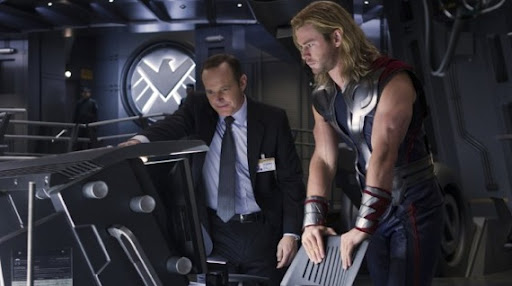
It would have been very easy, and very foolish, to have made this Iron Man & Co, seeing as Robert Downey Jr.’s Tony Stark is undoubtedly the most enigmatic and entertaining character on screen, yet wisely Whedon scaled down the potential for the Stark Show into giving him just as much time on screen as everyone else. There is no lead character here, everyone gets their moments, no-one is our entry point into the team and there appears to be no jostling for the limelight. In fact, the first people we meet are the agents of S.H.I.E.L.D., Samuel L. Jackson’s Nick Fury, Cobie Smulders’ Maria Hill and the ever dependable Clark Gregg’s Coulson (“Phil? His first name is Agent.”). These guys, along with existing Avengers members Black Widow (Scarlet Johansson) and Hawkeye (Jeremy Renner) then set about recruiting the rest of the team from across the world (and a little bit further, in Thor’s case).
Once recruited, the plot revolves around a Transformers-esque power cube known as the Tesseract that Loki has obtained, and intends to use to rule the Earth. Yadda-yadda-ya, it’s not all that important, and isn’t what you’re here to see. No, we’re here to watch some superheroes fight, bicker, argue and smash. I’ve heard arguments that there isn’t quite enough action in this 142-minute movie to satisfy, but I found the dialogue scenes to be just as entertaining. As expected, the superheroes, all previously alphas in their own movies, don’t initially gel together all that easily, and Iron Man keeps the insults flying at his comrades (Thor is referred to as “Shakespeare in the park,” Captain America is ribbed for being an old man). It’s clear this isn’t just friendly banter.
When the action scenes do come along, including one mid-way through worthy of any summer tentpole finale, they will have you marvelling at everything. And the actual finale, involving a mass brawl around New York City, features an incredible tracking shot that finds all the Avengers showing off the only way they know how, that I can only fault by being not long enough. Granted, with such a large cast there are occasional incidents of characters appearing to be forgotten or sidelined temporarily whilst the others are front and centre, but this isn’t too noticeable at the time, and doesn’t distract from the action.
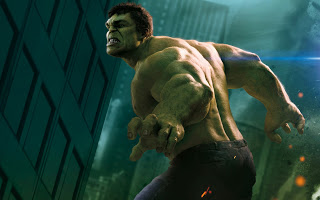
Unlike his previous films, here the Hulk is neither under nor overused, and is easily one of the best aspects of the movie. Mark Ruffalo, taking the giant green reins from Edward Norton, delivers possibly the greatest Hulk yet, portraying Dr. Bruce Banner as an amiable everyman only too aware of the situation he’s in. He’s rewarded with some of the best, and funniest moments from the film, not least his one-on-one meeting with Loki.
Whedon seems unable to let a few trademarks go, though discussing them could be delving a little too deep into spoiler territory, but look out for a couple of cameos from his other projects, as well as appearances from Gwyneth Paltrow, Paul Bettany and Stellan Skarsgard all reprising roles from the prequels. Natalie Portman, however, is conspicuous only by her absence. Bizarrely, the likes of Powers Boothe, Harry Dean Stanton and Jenny Agutter also crop up in tiny roles.
Some moments seem entirely shot for trailers, and I was a bit annoyed that my knowledge of Marvel’s upcoming slate and a couple of shots from the trailers ensured that some of the would-be tense moments were obviously going to be resolved (albeit awesomely), but that’s my fault for watching trailers. There is a scene to wait for after the credits, but unless you’re a fan of the comic books there’s really no point, as I had no idea what the scene was about when it appeared until I delved around the web once home. All-in-all, I’ve very little to fault about the film, other than the incessant use of ass-level shots as characters walks away from the camera. I’m genuinely tempted to go and watch it again at the cinema, something to this day I’ve never done before, and I’m not the least bit annoyed that talks are already being made about an Avengers sequel.
Choose film 9/10
20,000!

I’ve just reached 20,000 page views! I’m sure you don’t care, but to me this is a moment I’d like to share with you. Let’s all just take a second to bask in what this milestone truly means.
Finished? OK. The part about this that perplexes me is that, at present, over 10% of those page views have been for Billy Elliot, a review that up until recently had spelling mistakes in it. Why is it so popular? well mainly because when you do a Google image search, the picture I’ve used comes up pretty early on, but hey, a view is a view.
Thanks to everyone that’s been visiting my site, I appreciate you taking the time to read my opinions and ramblings on films. Here’s to the next 20,000 views!

Time Regained

As much as I’d like the title of this post to actually be in reference to a blog update, whereby I’d allowed myself more time to watch these films than the allotted five years, alas it is in fact the title of a 1999 French film about the life of novelist Marcel Proust. The film is as thrilling as that sounds, and holds the position of the biography I’ve seen that, after having watched it, I know roughly the same amount about it’s subject as I did before watching, and all I knew beforehand was that at some point or other he’d written something.
Beginning with Proust (Marcello Mazzarella) on his death bed, dictating to an underling and going over old photographs with a magnifying glass, he then proceeds to remember his life, in whatever order he damn well pleases. Scenes are shown more than once, overlapping with similar yet different details, characters wander in and out freely, most with no introduction and some with several, and it’s difficult, if not impossible, to tell what is real and what isn’t. How much is memory? Is this his version of events or what really happened? With such little concrete fact to go on, nothing is learnt because nothing can be trusted.
Just as the opening credits show a stream washing over pebbles, so to did the entirety of this film wash over me. I was bored within the first 20 minutes, having nothing to affix my attention to but the sumptuous visuals and interesting uses of lighting, colour, focus and mirrors. At times it takes a meander into Bunuel territory, with rooms of upturned top hats lined on the floor, aristocratic party goers momentarily becoming mannequins and revolving audiences at a musical performance. At one point a woman visibly grows younger, then older, within a scene.
If the film was designed to be impenetrable, as I think is the case, then congratulations should go to director Raoul Ruiz, for this film is alienating if you have no knowledge of it’s central character. If you’re watching to try and discover details of the writer’s life, then flee, run full pelt in the opposite direction and head to the library instead, for there will be no assistance here. When party guests (there’s a lot of soirees in this film) complain at being confused at meeting so many new people, I can truly empathise.
Whilst the film looks astounding, it’s essentially pointless.
Choose life 3/10