Combat Academy

George Clooney strikes again. Looking up his C.V., I’ve got at most four more films I have immediate access to until I get to one that’s even half decent (From Dusk Till Dawn), and that’s skipping six I can’t find yet! My god his early career was appalling. And then straight after Dusk I’ve got the one-two double punch of One Fine Day and Batman and Robin. I am really beginning to regret this decision, but its too late now.

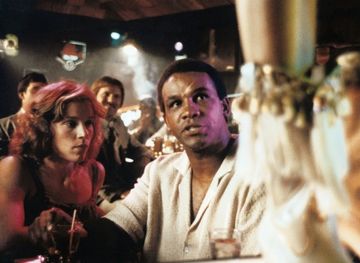
Anyway, Combat Academy. In case you hadn’t guessed from the title and the 1986 release date, this is an attempt at a rip-off of the hugely popular Police Academy, down to copying the poster style and title typography, but this time set around a military school. However, the key area they failed to take inspiration from is in the use of colourful, quirky characters, engaging yet entertaining performances, and the inclusion of actual jokes. There’s even a commanding officer with a tank-bound pet. They can’t even blame it on coincidence either, as director Neal Israel was on script duty for Police Academy.


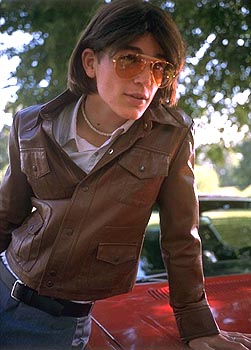
Two high school pranksters, Perry and Max (Wallace Langham and Keith Gordon) are kicked out of school on the first day back from summer vacation, and are sentenced to spending a year at Kirkwood Military Academy, due to having 238 separate acts of hijinks each on their permanent records. Two hundred and thirty eight. I’m pretty sure some point before the 50th time he found a herd of pigs in the library their headmaster would have instilled some discipline, contacted the authorities or just flat out killed the little shits. Anyway, the kids’ parents are disappointed in their kids (Perry’s dad is John Ratzenberger! Hell yes!) and don’t mind too much to see them be sent off to learn a few lessons in obedience, but the guys themselves are less than happy with the situation. However, seeing as Max at least is one of the least likable leads I’ve ever watched in a film, I had to agree with the parents. Max is a dick. Plain and simple. He incessantly causes havoc around himself purely for kicks, and doesn’t give a moment’s thought to repercussions to himself or those around him, particularly the stuttering, nervous Perry whom he drags down with him wherever he goes. And Keith Gordon is certainly no Steve Guttenberg, and his overuse of obnoxious, predictable and hokey one-liners just makes him all the more detestable. Perry on the other hand is somewhat likable, but is such a wet fish that he fails to register.

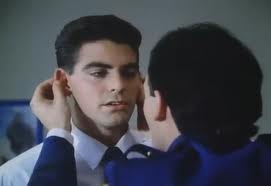
The two rub their commanding officers, George Clooney and Kevin Haley, up the wrong way early on, but by this point I’d stopped paying too much attention to the meagre plot – there’s a thief in the academy, some visiting Russian cadets, Perry falls in love and Max is trying to pull a Mahoney and get himself kicked out – and focused instead on the terrible performances on display here, particularly from Kevin Haley, who is possibly the most wooden an actor I’ve ever seen. It doesn’t help that he’s partnered up with Clooney for several scenes, but still. In fact, none of the actors seems to be in the same film as one another, at least in the sense that for the entire 96 minute runtime there isn’t a drop of chemistry between any of them, including the two leads who have apparently been best friends for over a decade.

The closest the film comes to a comical character is in the academy’s science teacher Col. Long (Richard Moll), who aims for eccentric but overshoots to certifiable. Amongst the rest of the cast, look out for Danny Nucci (Titanic‘s Fabrizzio), Elya Baskin (Spiderman‘s landlord) and Sherman Hemsley (George Jefferson). Of the leads, Keith Gordon went on to become a TV director, working on the likes of Dexter and House, whilst Wallace Langham played Kirby, the guy who signed in the Hooper family at the pageant in Little Miss Sunshine.

Elsewhere, the film suffers from an outrageous 80s soundtrack and the worst effects shot in any film, ever, when Max attempts to show off some kind of stunt during a paintball match that probably was supposed to involve him throwing his gun high in the air and catching it again, but which he clearly fumbled so they used the footage of him throwing it, then played it backwards for 2 seconds to make it look as though he caught the gun again. Did director Neal Israel, who directed the Tom Hanks classic Bachelor Party, really think he was going to get away with that? Not on my watch, bucko.

There are plenty of missed opportunities for comedy to be mined too. Firstly, the pranks the pair pull are all either incredibly tired or have no resounding effect on anything – lockers explode whilst people standing nearby remain oblivious, and switching the signs on the restrooms is just hokey, pre-teen nonsense. 
So, is there any reason at all to watch this film? If so, I can’t think of it. It is entirely devoid of anything approaching humour, features some very heavy handling of moral issues – Clooney’s Major Biff Woods (yes, that’s his name) just wants to please his Daddy – suffers from a hastily tied up resolution via an out of character rousing speech, hideous acting and completely and utterly fails to be comparable to even Police Academy 7: Mission to Moscow.

Choose life, 1/10

So You Think You Can Review Tournament

As I’m sure most of you know, there’s a wonderful website known as the LAMB (Large Assembly of Movie Blogs) over at http://www.largeassmovieblogs.com. I’m proud to be a member of this site (there’s a link to it down on the right somewhere), and they recently hosted a tournament-style reviewing competition which I and 31 of my fellow bloggers took part in. The final results were announced yesterday and, after a rollercoaster of a journey, I cam second to the great Dan Heaton of Public Transportation Snob.
Continue reading

Top 5… Michael Clarke Duncan Roles

Earlier this week, Michael Clarke Duncan sadly passed away, so in his memory here are my favourite performances from the big guy.

5. Manute, Sin City
Though at times he felt a bit lost amidst the shuffle of star wattage in Frank Miller, Robert Rodriguez and Quentin Tarantino’s comic book noir, Duncan plays the ruthless Manute well, and leaves an impression in a film full of big characters, great set pieces and lashings of style. He shall be missed if Sin City 2 ever gets off the ground.
Continue reading

Silver Lode

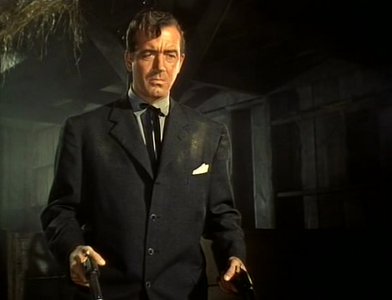
You ever have one of those mornings when you’re on holiday, you’ve woken up a few hours before your other half is likely to surface from the depths of slumber and you can’t go anywhere? Well, this happened to me recently, but fortunately I had my laptop and a copy of Silver Lode, yet I knew absolutely nothing of the film (save for it’s 81-minute runtime) so I settled down to watch it. I like watching films with o prior knowledge, and it happens less and less these days, so this was a nice surprise. In the opening credits though, I second-guessed the film completely incorrectly. You see, I could tell from the title that it was likely to be a western, and it stars a man called John Payne, who I’d previously never heard of, so I assumed it was a western spoof, and they’d tried to be funny by subbing the lead actor’s name with one comically similar to John Wayne. Nope, it turns out there’s an actor called John Payne who, according to IMDb, has 73 acting credits to his name, including this definitely-not-a-parody-or-even-a-comedy film.


Payne stars as Dan Ballard, a man who seems to only ever be referred to by his full name. On his wedding day, on the 4th of July, four U.S. Marshals, led by the greasy Ned McCarty (Dan Duryea), arrive in the town of Silver Lode and set about arresting Dan for a crime committed two years previously, just prior to his arrival in the town. Dan, who has become something of a pillar within the town’s community, initially has the support of his friend and neighbours, and especially his bride-to-be Rose (Lizabeth Scott), but it’s not long before the marshal’s story seems to make sense, and Dan is given two hours to put his affairs in order before he is to be arrested.

Surprisingly for a film released in 1954, I was bowled over by the cinematography in this movie. There is one shot in particular, which sees Ballard running for four blocks, dodging people, horses and gunshots, which has the camera following him the entire way. I’d even go so far as to call this the Children of Men of the 50s, so stunning is the shot. The actual story plays out in real time, from the moment the marshals arrive in town until the story reaches it’s conclusion, so in that way it was reminiscent of another classic western, High Noon, and in fact featured similar plot elements. Just as Gary Cooper’s Marshal Will Kane had to plead with all of his friends to help him out, so too eventually does Ballard, and with similar results. If you liked High Noon, I’m fairly sure you’ll get on well with Silver Lode.

Some of the scenes have become almost cliches today, for example the opening-a-door-on-an-innocent-man-holding-a-gun-over-a-corpse trick, yet they remain effective if only a little eye-roll-worthy. The characters have become stock western tropes too – the tart with a heart of gold, grumpy magistrate, naive farmhand etc. They do spit out some wonderful, and occasionally cringe-inducing lines, with a young man, who I could have sworn was Ron Howard but apparently isn’t, telling Dan that he’ll never trust anyone again if he’s lied.

I approved of the way that initially the audience is kept as much in the dark as the townspeople, until around the halfway mark we’re put into Ballard’s shoes and shown what is really going on. This increased my empathy towards Dan, as it wasn’t until then that I knew what he was up against. Payne plays the man well, hinting at the possibility of a shady past, even though he  could be Cary Grant’s brother – in both speech pattern and the way he fills out a suit. The portrayal of Duryea’s McCarty was a little too on the nose as being the obvious villain of the piece. He definitely comes off as evil early on and not simply an antagonist for Ballard to overcome, which made some of the later reveals a tad unsurprising, but all in all I thoroughly enjoyed this film, and would recommend it to anyone else stuck for a couple of hours with nothing else they can possibly do.

Choose film 8/10

Broken Blossoms

“This strangely beautiful silent film from D.W. Griffith is also one of his more grim efforts; an indictment of child abuse and the violence of western society.” – So reads the LoveFilm blurb for this 1919 silent picture, and should justify why it took me a little while to get around to watching: it sounds bloody depressing. More so, in fact, than it turned out to be, as the horrendous racism, when seen from a modern perspective, overshadowed the more soul-crushing elements of the plot.
Continue reading

The Farmer’s Wife

In the late 1920s, having just wedded Alma Reville, marriage was clearly at the forefront of Alfred Hitchcock’s mind as he adapted this play be Eden Phillpotts about a farmer who, after the passing of his wife and the marriage of his daughter, seeks to find a new wife within the small group of eligible women within his village. Farmer Samuel Sweetland (Jameson Thomas) is by and large a good man, though he has difficulty in expressing himself, often fails to see what is directly in front of him and has a heightened ego. Still, he means well. After his wife’s death, in which her last words are reminding the maid (Lillian Hall-Davis, returning from The Ring) to air out her master’s pants, Minta the maid takes over all of the wife’s duties as well as her own. Once the farmer’s daughter has been given away, Minta is given one more job to do, help Sweetland find a wife, so the two of them sit down and make a list of the four potential candidates.

This being a comedy, things inevitably do not go to plan, mainly due to Sweetland’s pomposity and the various faults of the women. It probably didn’t help that his first proposal attempt involved calling his prospective fiance a fat hen, and that he announces that he is getting married, before actually asking if she is OK with the situation. The script is full of mild – and not so mild – put downs, largely aimed at the women (“Her back view’s not a day over 30.” “But you have to live with her front view.” “I don’t mind pillowy women, so long as they be pillowy in the right places.”). Elsewhere, the film featured possibly my favourite title card from a silent film ever, with the completely unexpected line “You are the first man who has accepted my sex challenge,” made all the more hilarious by the frail, demure woman who utters it.

As the farmer, Jameson Thomas has mastered the art of looking flustered with wide-eyed rage and exasperation, although at times I felt he was just as likely to strangle some of the women as propose to them, not helped by his Snidely Whiplash moustache and sneer. I can’t help thinking the women who turned him down were lucky not to wake up tied to the train tracks. I felt the film seemed to lose it’s way a little later on, and the ending is clearly signposted within the first 15 minutes, but is done so sweetly that you really don’t mind, and the overall theme of the plot reminded me of Keaton’s Seven Chances, which similarly involves a largely unsuccessful attempt at finding a wife, but for different reasons entirely. The handyman, Mr. Ash (Gordon Harker) gets the short end of the stick comedically, having to endure a series of pratfalls, mostly involving oversized trousers, but this doesn’t detract from the film too much. These may have been an attempt to distance the film from the largely dialogue-based play, as is the case with a climactic fox hunt that would have been almost impossible to perform on a stage.

This was far more enjoyable, and funnier, than I was expecting. If you don’t mind silent comedies, and I’m learning that I don’t, then this isn’t a must-see, but is enjoyable if you can find it.

Choose film 7/10

A Kid in King Arthur’s Court

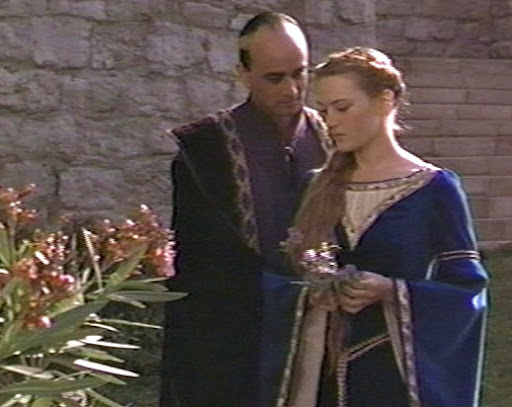
It seems I didn’t quite think through the strategy of watching the entire careers of various prestigious film-makers. Who’d have thought that, before they became renowned and laden with numerous awards, actors would take any roles going to pay the rent, regardless of the claptrap they may be. And so it is with A Kid in King Arthur’s Court, the family-friendly second entry on Kate Winslet’s CV, and what I hope will be the worst, although seeing as I’ve still got The Holiday to watch at some point, this may not be the case.
Continue reading

The Virgin Suicides

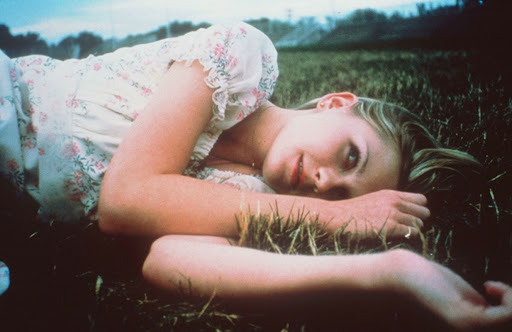
Completely unintentionally, this was the second film in a row I watched where a young girl burns her own record collection (after Heavenly Creatures), and also the second in not too long a time in which Kirsten Dunst has sex in a field (after Melancholia a few months ago). With a title like The Virgin Suicides, I wasn’t exactly looking forward to watching this film, as it seemed like it was going to be joining the ranks of those thoroughly depressing films I’d been trying to avoid lately, and the fact that it was directed by Sofia Coppola, whose Lost in Translation I wasn’t overly fond of the last time I watched it, and who I still haven’t completely forgiven for The Godfather Part III, made me even less excited. Plus, its a story of the multiple suicides of a clan of teenage sisters, which always leads to a laugh riot in my books.

The girls in question are the Lisbons, five sisters aged 13 to 17, who are kept under the watchful eyes of their strictly religious parents, Kathleen Turner and James Woods. The girls are largely kept under lock and key, only allowed out to go to school, where they are lusted over by the local boys, as that which you cannot have will always be that which you want the most. Cecilia (Hannah Hall, Forrest Gump‘s young Jenny), the youngest girl at just thirteen years old, attempts to kill herself in the bathtub. After she survives and recovers, her parents throw a party for the girls and some of the local boys, during which Cecilia excuses herself, goes upstairs and jumps out of the window, impaling herself upon the railings in their front garden. Hey, I warned you, this ain’t the happiest of films. The death of their youngest sibling seems to have little effect upon the sisters, though their parents ratchet up the levels of over-protectiveness, coming to a head when eventually the girls are taken completely out of school, never being let out of their parents’ sight.Kirsten Dunst is a revelation in this film, and I’m not normally her biggest fan. She displays a confidence on screen that’s almost otherworldly. At the time of making this film, aged just seventeen (though playing the second-youngest Lisbon, 14-year old Lux) she had appeared in no less than fourteen films, including Jumanji, Interview with the Vampire and Small Soldiers, and her level of experience is clear as she is this picture’s main focus. Even as the youngest, after Cecilia’s demise, Lux appears more world-weary and equipped with a greater level of confidence and intelligence than her oldest sisters (Chelse Swain, A. J. Cook and Leslie Hayman), so much so that the sisters all seem to merge together in a largely forgettable blur. The adults are all impressive, particularly Woods in an unusually repressed role, but be prepared to be taken out of the film when Danny DeVito pops in for one scene as the psychiatrist Cecilia is sent to after her first suicide attempt.

The film has been shot with an air of beauty and nostalgia –  opening with an upbeat yet mellow soundtrack of a bright sunny days, the light dappling through the trees of a suburban Michigan town – but this is immediately contrasted to the stark sterile blue of Cecilia lying in a bathtub, being carted away by the paramedics. This jarring emotional toggle switch occurs a couple more times throughout the picture, and each time it is effective. The narration, by one of the boys waiting outside each day just to catch a glimpse of the girls, is largely unemotional and distanced from events, as though bored of a story told many times before.

From what I know the 1970s was recreated well, particularly in the fashions and vile interior design. Every shot was reminiscent of an old photograph, saturated and hazy, almost sepia and fading at the edges. Unusually, a lot of the scenes didn’t play out as I originally expected, even more of a surprise when you consider they have such standard high school movie tropes as a prom, featuring parents enthusiastic at their daughters’ dates, fumbled first dances and peach schnappes under the podium (“Babes love it.”) The script is at times comic, and occasionally blackly so, with my favourite moment being when, after awaking in the hospital, her doctor tells Cecilia she shouldn’t have tried to kill herself because she’s “not even old enough to know how bad life gets,” which is a pretty terrible way of convincing someone not to try and kill themselves again, but her response is perfect, “You’ve never been a 13-year old girl.”

I suppose I should mention Josh Hartnett, who appears as the local dreamboat, Trip Fontaine, adored by students, parents and teachers alike, all except Dunst’s Lux, which only makes him want her more. Hartnett is his usual self, and I’m not too much of a fan (his only good films in my opinion are Sin City, The Faculty and Black Hawk Down, which surprise surprise don’t feature him all too heavily), and his abominable curtains-style haircut almost ruined the film for me. It was nice to see him playing such a prick though. Hayden Christensen is also in there somewhere, which is never a good thing.

So, whilst it’s not really going to cheer you up after a long day’s work, this is still a very well made and easily appreciated film, far better than I was expecting from Coppola. The ending in particular left me reeling for days afterwards.

Choose film 8/10

September 2012 Update

August was a pivotal month for the blog, so I’ve decided to start doing a regular update, to let you know my progress through my menagerie of film lists, and the state of my mental well-being because of them.

So why was this month so important? Well not only did I return from a brief hiatus spawned by film-exhaustion (a term I’m tempted to coin, meaning the period of blase nonchalance one feels after having seen far too many films in a short space of time), but August was also the month in which I passed the 1,000 films to go mark on my combined list of 1300+ films to get through. Granted, I’ve still got an awful lot of films to watch, and many that have been seen still haven’t been reviewed, but I’m no longer battling against a four-digit number, which pleases me no end. I’ve also just surpassed the 500 comments mark, so I’d like to give a quick thanks to everyone who’s visited and commented on my posts, even if over 40% of those were just on my Prometheus Plot Holes post. Also, thanks for mostly being complimentary, and only a couple being insulting. I don’t mind the negative ones, sometimes they’re funny, but often they’re a little disheartening too. I know I’m not the greatest reviewer in the world, but I like films and don’t have too many people to discuss them with, hence why I’m here.
List-wise, my attentions have been largely elsewhere in the past month, so I didn’t actually review that many from the List (though I saw a few that should be appearing soon). Feel free to go back and check out my posts on Rabbit Proof Fence, Indiana Jones and the Kingdom of the Crystal Skull and Transformers if you like, as well as some more recent, unlisted film in the likes of The Descendants and The Dark Knight Rises, and my first Guaranteed Happiness film, Wall-E.
Last month I also began my journey through the cinematic careers of some of my favourite film-makers. So far, I’ve caught one of Hitchcock’s early silents, The Ring, re-watched the Coens’ Blood Simple, discovered George Clooney dying in the first 10 minutes of the abominable Return to Horror High, seen Steve McQueen play a bit-part in Somebody Up There Likes Me and Kate Winslet being a mentally unstable child in Heavenly Creatures. Next up are Hitchcock’s Champagne and The Farmer’s Wife, the Coens’ Raising Arizona, Clooney in Combat Academy, McQueen in The Great St. Louis Bank Robbery and Winslet in A Kid in King Arthur’s Court.
The eagle-eyes amongst you may have noticed a new tab at the top, entitles My Top 100. This is a list of the best films, in my opinion, that I’ve reviewed so far. Or at least, the ones that I’ve reviewed to what I consider a good enough standard, hence why the likes of 12 Angry Men and Sideways aren’t on there, as both of those great films have been dealt the cruel hand of being reviewed, and I use the term loosely, very early on in my blogging career, and will I assure you be re-visited at a later date.
Outside of the world of films, I turned 25 last month, prompting the individual rebel grey hairs dotting my head to finally get themselves organised and form factions around my ears, where I can hear them plotting a pincer movement to slowly take over my entire body. And so begins the slow descent into middle age.

Blood Simple

Blood Simple, the directorial/writing debut of the Coen brothers Joel and Ethan, is a sticky, sweaty, clammy picture about deceit and confusion, set in the heart of Texas. Marty (Dan Hedaya) runs a bar, and is the boss of Ray (John Getz) and Meurice (Samm-Art Williams). Distrustful of his wife Abby (Frances McDormand), Dan has hired private investigator Loren Visser (M. Emmet Walsh) to look into what she does with her time. It transpires that Abby is sleeping with Ray, so Marty hires Loren to kill them both whilst he is away on a fishing trip. What with this being a Coen film, things don’t necessarily go to plan, but it is the direction the events took, and the motives involved that I found both interesting and compelling.

Tonally, this is probably most similar to Fargo or No Country For Old Men amongst the Coens’ oeuvre. There’s not a great deal of humour surrounding the violence and devious plotting going on, and the location of Texas adds a great deal to the setting, just as Minnesota did for Fargo and Texas again for No Country. I found this lack of comedy to be a bit jarring – there are some moments of Coen-esque quirkiness certainly, and a couple of jokes in the script, but for the most part this is played dead seriously. The brothers can do serious very well, but personally I prefer their lighter efforts.
Had I not known this was a Coen film (and had it not starred Frances McDormand) then I don’t think I’d have immediately associated it with them. If anything, the structure of the narrative felt far too linear and ordinary, with the exception of perhaps missing an opening and closing scene most directors would have felt obliged to leave in. We’re fed the plot in dribs and drabs, discovering who each of the characters is and their relationships to one another just a couple of minutes after we need to.
Though he isn’t necessarily amongst the lead trio of the film, I would class Walsh’s performance as the greatest in the movie. His Visser is the human embodiment of a lizard, a slimy, oily gumshoe with a malicious streak and a rasping laugh that still haunts my dreams. He plays the part so well that I can’t believe I haven’t come across the actor in much else. For my sins I only really know him from Wild Wild West (he was the train driver). Can anyone recommend any of his other work?
I loved the musical choices in the film, especially Ray mopping up blood to the sounds of The Four Tops’ It’s the Same Old Song, an almost Tarantino-like retro song choice. The camerawork too was at times inspired; the marriage of lighting and camera movement revealing Visser’s cigarette lighter on a table, and the oppressive close shots inside the bar intensifying the humid atmosphere.
I can’t imagine this film cost very much to make – the biggest set pieces involve a car and a shovel, and a gun, knife and a window – yet it’s easily as gripping as many other big budget blockbusters. It reminded me of the likes of Glengarry Glen Ross or Reservoir Dogs, neither one which involves a lot of spectacle, but they have great characters and dialogue, which really is in my opinion more important. I’d have liked a last shot of Meurice – one of the coolest characters in film, check out his bar-top shuffle – but other than that the ending was pretty well contained and executed. Whilst by no means the Coens’ best, this is still definitely worth a watch.
Choose film 8/10