A Fish Called Wanda

An Englishman named George Thomason (Thomas Georgeson, seriously), his American partner Wanda (Jamie Lee Curtis), her supposed brother Otto (Kevin Kline) and the stuttering animal lover Ken (Michael Palin) successfully perform a diamond heist, but an elderly witness dobs George in, and John Cleese’s henpecked lawyer Archie Leach is appointed to defend him. All of these people are liars, murderers, adulterers and thieves, most notable Curtis’ Wanda, who finds herself seducing everyone else to get her own way, with arousal via foreign languages being her only weakness. The film belongs to Palin and the Oscar winning Kline. Though the other performances are all excellent, the characters of the timid Ken and the philosophical but very, very stupid Otto are so comically rich that they deliver the most laughs, particularly when they share the screen, be it Otto declaring his undying love to Ken, or sticking ketchup-covered chips up his nose to extract information. Cleese should also be commended, if only for prancing around naked singing in Russian.

Choose film 9/10

Saving Private Ryan

There is a drinking game, the most disrespectful and coma-inducing that I’ve ever come across, where when watching Saving Private Ryan the players all drink a shot every time someone on screen dies. If one were to play this game, which I cannot advise for medical, moral and cinematic reasons, then I would recommend having 50-100 shots per player lined up ready and waiting for the opening 25 minutes of the film, as the much celebrated D-Day landing is a veritable cornucopia of fatalities, with soldiers coming a cropper as soon as the rear doors of the landing ships open, drowning in the water struggling with heavy packs, being carried to safety and every other way available.

This opening scene is a landmark in war movie history, recreating the sense of utter confusion and imminent death present at that time. With a shaking camera, dialogue lost to explosions and gunfire, men wandering around after lost limbs and a bloody tide lapping at fallen soldiers and shot fish alike, it’s almost a relief once the landing has finished and they can get on with the plot, as Tom Hank’s captain is ordered to find Private James Francis Ryan, last survivor of four brothers and location unknown after parachuting somewhere in France. With a cast positively brimming with stars and up-and-comers – Giovanni Ribisi, Matt Damon, Nathan Fillion, Jeremy Davies, Tom Sizemore, Edward Burns, Adam Goldberg, Paul Giamatti, Vin Diesel, Barry Pepper, Ted Danson, Bryan Cranston, Dennis Farina – no character is left without some characterisation, or providing an insight into a soldiers life, be it collecting dirt from every country they fight in, writing a novel about their experiences or making sure every German soldier they come across knows they have been bested by a Jew.
There are those that claim this is a long, boring film about walking, bookended by two of the greatest battle scenes in cinematic history, yet without the middle, where we truly understand the brotherly bond felt by soldiers fighting and dying together, would the closing battle – a much more personal, strategic affair than the opener, have such an impact? For my money this is Spielberg’s most cinematic film, showcasing his ability to show ordinary people in extraordinary situations, yet without losing the human touch.
Choose film 9/10

Inception

Apparently the concept of Inception began when director Chris Nolan, he of the Dark Knight, Batman Begins, Memento and the upcoming Dark Knight Rises, the most anticipated film of 2012 (tied with the Avengers and the Hobbit), wanted to make a film in which several climaxes are all occurring simultaneously. Most directors would then structure a plot in such a way as to have different characters in different locations, all partaking in various climactic events and cutting between them, but Nolan, in what I’m going to assume was an evening rife with alcohol, narcotics and some rare kinds of cheese, opted instead to make a film predominantly set within the world of dreams.

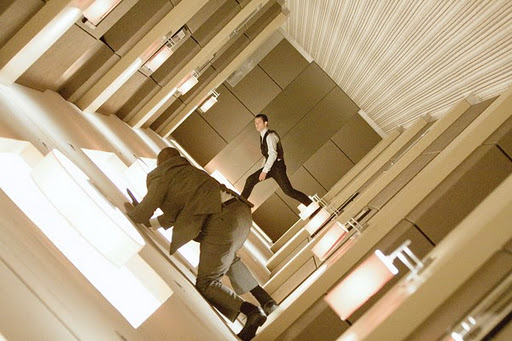
Taking an already interesting, fantastical premise – secrets can be obtained by stealing them from people’s dreams via extraction and spinning it on its head, as Leonardo DiCaprio’s master extractor Cobb and his team – Joseph Gordon Levitt, Ellen Page, Tom Hardy and Dileep Rao, are enlisted for one last job, to plant an idea in Cillian Murphy’s dream by business rival Ken Watanabe. By using this world of dreams, Nolan has released literally all limitations as to where the plot can go, and opened up the door for some thoroughly original set pieces, the standout of which is Gordon Levitt’s taciturn Arthur fighting armed goons in a corridor with an ever-changing, and disappearing, centre of gravity. This, combined with a rain-lashed chase through busy city streets and a Bond-inspired snowbound explosive finale adds up to one of the most thought provoking action movies in recent years.

The plot is sometimes lost amid the spectacle of the dream worlds and the new logic required to understand it – in a dream, time travels 12 times slower with each level you go down, your subconscious can flare up against you but you can bend the environment around your will – so at times you forget just what they are fighting to achieve. Nolan also appears to have paid attention to the naysayer accusers who believe, not unfairly, that his films lack a required heart and emotional depth, as the addition of Cobb’s deceased wife Mal (Marion Cotillard) appears in his subconscious, eager to turn the dream worlds against him, and the entire plot takes place just so Cobb can be reunited with his kids. Both these points seem tacked on and superfluous to the overall plot, other than adding a motive and antagonist that, although not asked for, do not overly deter.

Under close scrutiny some of the dream logic is inconsistent and doesn’t quite hold up, with some questions remaining unanswered – how exactly does Tom Hardy’s scene-stealing Eames transform into other people as the teams forger? – but the performance, cast (also including Michael Caine, Tom Berenger and Pete Postlethwaite), effects and sheer scale of the project make this unmissable, and my best film of 2010, although it makes my dreams look utterly pathetic in comparison.

Choose film 9/10

Evil Dead Trilogy

When five college friends go to stay in a mysterious cabin deep in the woods, it’s safe to assume they’ll be lucky to see their homes again, as they will undoubtedly encounter a clan of cannibalistic hillbillies or some centuries old curse. So when, in Sam Raimi’s schlock horror debut, the kids find the Book of the Dead, bound in human flesh, written in human blood, and play a recording of it being read, the dead become free to walk the Earth, and the kids must struggle to stay alive until morning, in the hope of finding their way back to civilisation. So far, so standard, but where the film differs from the gory also-rans is when a girl is dragged into the woods – by the woods – and raped by a tree. Plug sockets and light bulbs leak with blood, and one by one the kids become possessed by demons, with bloodied eyes, gnarled, pallid skin and faces like beaten up clowns. Raimi’s innovative camerawork and game cast – all terrible actors aside from our hero, the uber-chinned Bruce Campbell – stand this film out from its imitators and inspirations.
Evil Dead 2: Dead by Dawn is that rarest of sequels that rewrites the entire plot of its predecessor in its first 7 minutes, showing what the film could have been had a greater budget been available – a more attractive love interest, advanced effects and even a back story for the Book of the Dead. Having discovered an audience for his own brand of homemade horror and slapstick splattery, Raimi lets himself, and reprising star Campbell, off the leash, balancing the grotesque with the quirky in such classic scenes as Ash cutting off his own possessed hand and replacing it with a fully operational chainsaw. The more what the fuck moments add to the feeling of watching someone’s head explode onto a screen – the maniacally laughing moose head and bizarre neck extension are standouts, and this remains a tremendously fun, if occasionally bat-shit insane adventure.
As with Raimi’s other threequel, 2007’s Spiderman 3, the approach to Army of Darkness is to take everything and throw it at the script, see what sticks, and include it all anyway. This leads to a film with a frankly ludicrous premise – at the end of part 2 Campbell’s Ash opened a rift in time, and is now stranded in 1300AD, and stretches it past breaking point with the sheer volume of ideas piled on top. The opening death pit scene is fun, but the ensuing insanity of a two-headed Ash (beginning with a repulsive eye growing on his shoulder), Gulliver’s travel style tiny men causing havoc and a skeletal army complete with beards takes it all too far. The result is a film still endlessly enjoyable and quotable, but lacking the overall playful sense of fun from the previous entries.
The Evil Dead choose film 8/10
The Evil Dead 2: Dead by Dawn Choose film 9/10
The Evil Dead 3: Army of Darkness Choose film 6/10

Rope

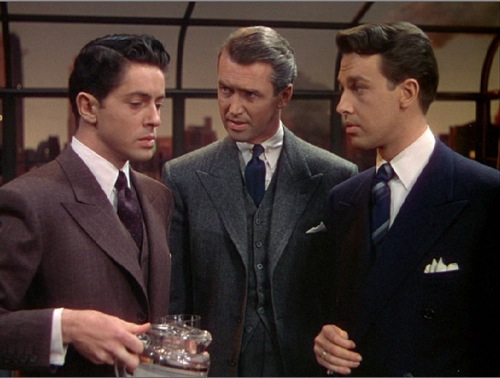
The first of many Hitchcock films on this list – probably more than any other director, and rightly so – shows the great man at his most experimental, as he attempted to shoot this film, based on a play by Patrick Hamilton, in one continuous shot. Limited only by the maximum length of a film reel at the time (10 minutes), a fact cleverly, if unsubtly hidden by editing shots of the backs of suits or a close up on an open chest lid, he pulls it off, utilising moving walls and tracking shots to accommodate the action as it pans out in the three rooms of an upmarket apartment.
The film follows two young men – the charming yet callous Brandon and his nervous, increasingly agitated friend Philip, as they attempt to cover up the perfect murder of their classmate David, whose body is hidden in the chest they use as a centrepiece for a party held for David’s family and friends. The acting is flawless, particularly from the two leads and James Stewart as their inquisitive former house master Rupert, and Hitch earns his moniker as the master of suspense, accomplishing an ever mounting level of tension with minimal music and meticulous plotting.
Choose film 9/10

The Usual Suspects

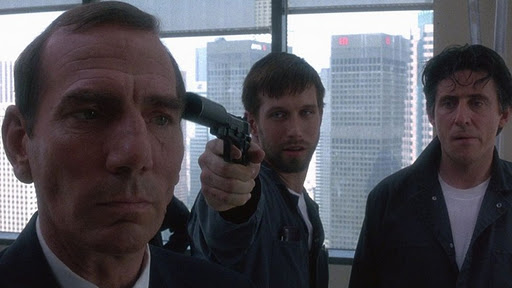
 Is it OK to ruin the Usual Suspects yet? Doesn’t anyone who cares who the ending already? Its 16 years old! Is it not another Sixth Sense or Empire Strikes Back, where the big reveal has either been witnessed firsthand or spoiled by someone else? Miraculously, my film watching companion had not seen or heard the ending to Bryan Singer’s sophomore film, and he’d have throttled me had I revealed it (Marcos hates spoilers, and will punch you in the head) so no, it would seem there are some out there yet to discover the fate of the five criminals bought in for a line-up, nor do they know the identity of their tormentor, the mythical Keyser Soze, so I’ll try and tread carefully. The cons in question – Stephen Baldwin, Kevin Pollak, Gabriel Byrne, Benicio del Toro and a career-launching, Oscar winning Kevin Spacey – have been brought together on a bogus line-up, and use their time in incarceration to plan a robbery, bus is it all a part of a bigger plan?
Told in flashback by Spacey’s weaselly over talkative ‘Verbal’ Kint, the tale begins with the death of Byrne’s Keaton, a crooked cop gone straight and the closest the gang has to a leader, after what appears to be a drug deal gone wrong. Chazz Palminteri, the cop to whom Kint tells his story, has his own theories as to what went wrong, but his opinions, and those of the viewer, get in the way of seeing the truth, ably assisted by Christopher McQuarrie’s deservedly Oscar winning ever twisting screenplay.
The cast are exceptional, particularly the scene stealing del Toro and Pete Postlethwaite at stoic lawyer Kobayashi, but it is the fine balance between tightly plotted twists and turns and sporadic bursts of action and violence that plants this firmly on the choose film list, regardless of whether you know the ending.
Choose film 9/10

The Blues Brothers

No, you’re not seeing things. Hell has not frozen over, a pig did not just fly past the window and Paul W. S. Anderson did not just make a good film, I have written a post. I honestly cannot explain why I haven’t written anything for the past 2 months (2 months? Sheesh, sorry), but rest assured I have been steadily watching films, I’ve handwritten a bunch of posts and just haven’t gotten round to typing them up, so hopefully over the next few weeks I’ll catch up with the 60-odd films you’re all dying to read about.
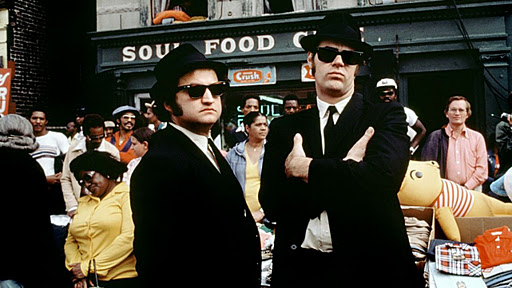
So, here we go. The Blues Brothers, a 9-piece rhythm and blues band fronted by brothers ‘Joliet’ Jake and Elwood Blues (John Belushi and Dan Aykroyd) started life as a sketch on American comedy show Saturday Night Live, who’ve had something of a chequered history with sketch to screen adaptations. For every Wayne’s World there’s an It’s Pat, Coneheads or A Night at the Roxbury, but it all kicked off with the Brothers Blue, an undeniable stone cold classic, with a supremely quotable script, dead-on performances and more cameos than Belushi’s eaten hot dinners. Everybody from Aretha Franklin, Ray Charles and John Lee Hooker shows up to belt out a number whilst Jake and Elwood set out on a mission from Gahd to get their band back together and raise the $5,000 dollars required to save the orphanage they grew up in. On the way they are hunted by the police, led by John Candy’s plaid-clad detective, rival band the Good Ol’ Boys, a group of Illinois Nazis, the army and Carrie Fisher’s flame thrower toting vengeful ex. With so much going on it would be understandable for the central stars to stick to their sketched personas, but both give it their all, especially Belushi, whose absence couldn’t be replaced by the trio of John Goodman, Joe Morton and a little kid when the ill-advised Blues Brothers 2000 rolled around. Above all, the film never loses its sense of fun, even with a two-hour plus run time unpopular with traditional comedies. A high level of farce – the brothers are remarkably blasé about the level of destruction around them, at one point strolling away unharmed from an exploding building –  helps to retain the silliness, and the soundtrack deserves a place in everyone’s music collection.
Choose film 9/10

Buster Keaton

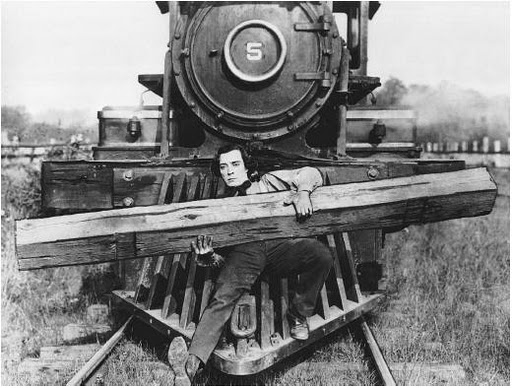
 I went on a bit of a Buster Keaton spree here, courtesy of LoveFilm’s watch online feature, allowing me to watch all of his films from the list – five in total – almost in one go. Ranging from 45 to 107 minutes in length, all are of course silent and black and white – the latest was made in 1928 after all, but to a film they are all exceptional, but I couldn’t help picking up on some recurring themes. Of the five, four involved a damsel in distress scenario, where Keaton’s diminutive heroic figure is the only one able to save her. Four predominantly feature trains, three offer a high speed pursuit, three have major plotlines revolving around an across the tracks romance, three use the theme of inheritance in some way and all five feature peril involving water, be it a dam, waterfall, water tower, boat or flood.
The best of the bunch are the General, depicting Keaton’s southern train engineer singlehandedly invading the North to rescue his girl and his beloved train, and Sherlock Jr., where a cinema employee dreams of being a famous detective. The General offers much in the way of action and physical comedy, as Keaton climbs over and sits on the front of a moving train engine. It’s Keaton’s most famous film, and rightly so, as his straight-faced fool tries so desperately and earnestly to do the right thing that he cannot help but be hilarious, staggering from one mishap to the next, rescuing the girl from the enemy only to be confronted by a bear. Throughout the films Keaton takes a cartoonish view to violence – getting limbs caught in a bear trap is less of an inconvenience than when it happens in the likes of Straw Dogs or Severance, but this only adds to the fun – it wouldn’t be very entertaining for the characters to be rushed to hospital every few minutes.
Seven Chances is at the disadvantage of having been made into the Bachelor, starring Chris O’Donnell in 1999. The remake does nothing but detract from the quality of the original film, as both use almost entirely the same plot – a man must marry before a given date, or be denied a rich relative’s vast inheritance – yet Keaton does it much more successfully with little messing around or unnecessary mucking about with now perfunctory rom-com tropes.
Our Hospitality plays on the Romeo and Juliet tale of warring families with besotted children, but takes it in an inspired new direction when Keaton’s Willie McKay attends a dinner hosted by the family of his new love, only to discover they are the Canfields, with whom the McKays have feuded for many years, and who are responsible for killing Willie’s father. The new spin is that, although the Canfields desperately want to kill Willie, their family code of honour prevents them from doing so whilst he is a guest in their house, so Willie does his best to remain there indefinitely.
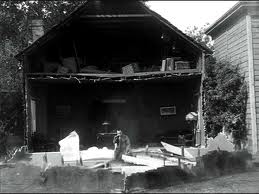
Finally, Steamboat Bill Jr. sees Keaton sent to work in Boston with his steamboat captain father, but the beret clad, ukulele playing, moustachioed diminutive Keaton is not what his father was expecting. Somewhat predictably, Keaton’s Bill Jr. is eventually required to save the day, making his father see him in a whole new light, but along the way some incredible stunts, including the infamous house front falling on Keaton during a storm that could have killed him had it gone wrong, make this a worthwhile watch all the same.
The General – Choose film – 9/10
Seven Chances – Choose film – 8/10
Our Hospitality – Choose film – 7/10
Steamboat Bill Jr. – Choose film – 6/10
Sherlock Jr. – Choose film – 9/10
Shaun of the Dead/Hot Fuzz

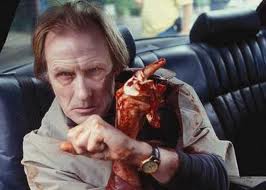
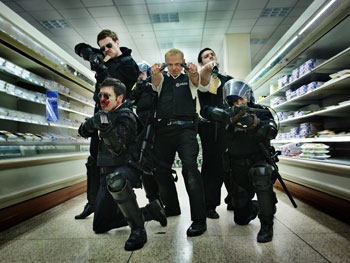
How does one create two of the best loved British comedies of recent years? Initially it seemed purely to involve director Edgar Wright and stars Simon Pegg and Nick Frost, but recently Wright’s foray across the pond, Scott Pilgrim vs. the World, was well reviewed but barely seen, whereas the Pegg/Frost scripted Paul drew huge crowds but lacklustre reviews. No, the secret it would seem is to keep this trio together, with Wright and Pegg on scripting duties, Pegg in the lead role and Frost as his incompetent sidekick. Pepper the rest of the cast with the cream of British acting and comedy, including Jim Broadbent, Timothy Dalton, Peter Serafinowicz and Dylan Moran, with Bill Nighy and Martin Freeman appearing in both films. Also, there must be cameos you can miss even without blinking – in Hot Fuzz, Cate Blanchett plays Pegg’s ex-girlfriend behind a decontamination mask and Lord of the Rings director Peter Jackson is the Santa who stabs him through the hand- but crucially, the film must remain thoroughly British.
For this is the true secret of these films. Whereas other great British filmmakers seem to shy away from their country of origin (Danny Boyle, Ridley Scott, Alfred Hitchcock) opting instead to embrace the more commercial stylings of Hollywood, Wright and co. make sure that if you cut the film in half, it reads Made in England all the way through. From the settings – the zombie-infested streets of London or the sleepy rural village of Sandford, to the cast, sense of humour and the solution to any problem (“I dunno… pub?”) there have never been comedies this British since Kind Hearts and Coronets.
 It is also difficult to pin down what kind of a comedy the films are, as they feature equal quantities of character driven sitcom (Shaun’s vying affections for girlfriend Liz and best mate Ed), genre pastiche (there are more references in both films than could ever be listed), social commentary (upon discovering a zombie, Ed and Shaun first assume she is drunk), outlandish set pieces (battering a zombie with pool cues to Queen’s Don’t Stop Me Now) and subtle farce (The foam housing of twin pistols either side of a thermos in a pensioners bag). This cornucopia of comedic styles means that, if you didn’t like the last joke, it’s OK as another will be along shortly.
The most important aspect though seems to be to make sure there are repeated, quotable lines, whose meanings change throughout the course of the film (“He’s not my Dad,” “You’ve got red on you.”) or off-hand or unintentional predictions that inevitably come true. Of the two films, Fuzz rates a little lower due to a bout of Return of the King syndrome, with more explosive endings than are strictly necessary. Shaun also offers more rewarding repeat viewings, with many lines not landing their full impact without prior knowledge of the rest of the film.
Shaun of the Dead Choose film 9/10
Hot Fuzz Choose film 8/10

The Red Balloon

A woman went out walking one day and discovered a snake’s egg on the path. She took the egg home and cared for it until it hatched, when she kept the snake as a pet. She doted on the snake for years, attending to its every need and treating it better than any snake had been treated before. Then, one day, the snake bit the woman, and with her dying breath she asked the snake “Why?” and the snake replied “Bitch, you knew I was a snake.”
It is this sense of inevitability and apprehension that fills the Red Balloon, as beautiful and well crafted as it is, that almost ruins the short about a boy who befriends a bright red balloon, but finds owning it proves problematic when all the other children want it as well. Yet however destined the ending may seem, it is the journey up to it, and indeed the repercussions that make the film so endearing, at times unexpectedly hilarious and beautifully heartwarming, especially the moment the balloon encounters an equally bright and vivid blue inflatable friend of a young girl. The ending, too, is truly uplifting.
Choose film 9/10