
The Wrestler

Has there ever been a character so seemingly written for a specific actor than Randy ‘the Ram’ Johnson, so perfect a fit for Mickey Rourke it’s impossible to imagine anyone else play him. Both were big in the 80s, Rourke at the peak of his game in Diner, 9 ½ Weeks and Barfly, Randy a top billing wrestler, but then saw their popularity wane and the roles dry up, before a comeback arrived, in the shape of Sin City for Rourke, as heavily scarred behemoth with a heart of goldie Marv, and a reunion battle with former nemesis the Ayatollah for the Ram. Rourke’s face, a battleground of botched plastic surgery and his four year stint of boxing in the early 90s looks like it’s been pummelled in the ring for years, and he nails every note of Ram’s trajectory, as a particularly brutal weapons match – in which a disabled spectator offers Randy his prosthetic leg to use as a club – causes the Ram to suffer a heart attack, and his wrestling days are over. Whilst struggling to adapt to a life without his one true love, he attempts to form a relationship with similarly aging, but still smoking at 45, stripper Cassidy (Oscar-winning Marisa Tomei) and reconnect with his estranged daughter Stephanie (Evan Rachel Wood). The flinch levels are unexpectedly high for a character piece, with incidents involving a deli-counter meat slicer and a staple gun proving the most worthy of a glance away from the screen. Director Darren Aronofsky – more known for deeper, more obscure work like Pi, the Fountain and more recently Black Swan, employs great cinematography, shooting everything on location with no sets and as many long tracking shots as he can, but this is Rourke’s game through and through, and though he wasn’t robbed of the Oscar (Sean Penn’s Milk was more deserving , in my opinion), I hope he doesn’t throw everything away with support roles in entertaining but cringeworthy fare like the Expendables and Immortals. He needs some more layered, meaty roles, I’m just not sure anything will ever be such a good fit.

Choose film 7/10

Straw Dogs (1971)

When mild mannered American mathematician David Sumner (Dustin Hoffman) moves with his wife Amy (Susan George’s nipples) to her home village in Cornwall, the last thing they find is the peace and quiet he was hoping for in order to write his book. Instead, the locals take a shine to Amy and mock David, showing contempt that such a bookish person could have the prize of the village. What follows is an escalation of abuse and provocations, brought to a head with the horrifically violent rape of Amy, the unrelenting and ambiguous portrayal of which caused problems for director Sam Peckinpah, with the film remaining unreleased on video/DVD in the UK until 2002. Hoffman is more believable as the pre-broken David than the near-psychopath he becomes post-rape, and the climax – as drunken locals lay siege to his house as he harbours the local simpleton in danger of being beaten to death plays out like an 18-rated Home Alone, with swinging paint cans, icy steps and a loose tarantula substituted with blaring bagpipe music, saucepans of boiling alcohol and a sprung bear trap.
Choose film 6/10

Inception

Apparently the concept of Inception began when director Chris Nolan, he of the Dark Knight, Batman Begins, Memento and the upcoming Dark Knight Rises, the most anticipated film of 2012 (tied with the Avengers and the Hobbit), wanted to make a film in which several climaxes are all occurring simultaneously. Most directors would then structure a plot in such a way as to have different characters in different locations, all partaking in various climactic events and cutting between them, but Nolan, in what I’m going to assume was an evening rife with alcohol, narcotics and some rare kinds of cheese, opted instead to make a film predominantly set within the world of dreams.

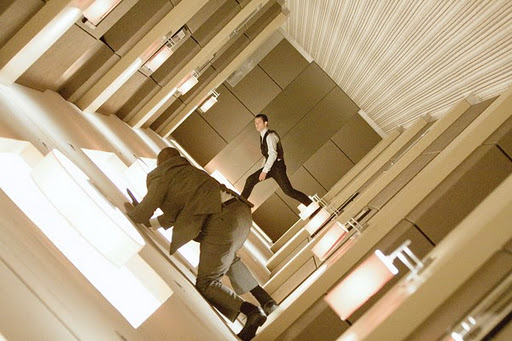
Taking an already interesting, fantastical premise – secrets can be obtained by stealing them from people’s dreams via extraction and spinning it on its head, as Leonardo DiCaprio’s master extractor Cobb and his team – Joseph Gordon Levitt, Ellen Page, Tom Hardy and Dileep Rao, are enlisted for one last job, to plant an idea in Cillian Murphy’s dream by business rival Ken Watanabe. By using this world of dreams, Nolan has released literally all limitations as to where the plot can go, and opened up the door for some thoroughly original set pieces, the standout of which is Gordon Levitt’s taciturn Arthur fighting armed goons in a corridor with an ever-changing, and disappearing, centre of gravity. This, combined with a rain-lashed chase through busy city streets and a Bond-inspired snowbound explosive finale adds up to one of the most thought provoking action movies in recent years.

The plot is sometimes lost amid the spectacle of the dream worlds and the new logic required to understand it – in a dream, time travels 12 times slower with each level you go down, your subconscious can flare up against you but you can bend the environment around your will – so at times you forget just what they are fighting to achieve. Nolan also appears to have paid attention to the naysayer accusers who believe, not unfairly, that his films lack a required heart and emotional depth, as the addition of Cobb’s deceased wife Mal (Marion Cotillard) appears in his subconscious, eager to turn the dream worlds against him, and the entire plot takes place just so Cobb can be reunited with his kids. Both these points seem tacked on and superfluous to the overall plot, other than adding a motive and antagonist that, although not asked for, do not overly deter.

Under close scrutiny some of the dream logic is inconsistent and doesn’t quite hold up, with some questions remaining unanswered – how exactly does Tom Hardy’s scene-stealing Eames transform into other people as the teams forger? – but the performance, cast (also including Michael Caine, Tom Berenger and Pete Postlethwaite), effects and sheer scale of the project make this unmissable, and my best film of 2010, although it makes my dreams look utterly pathetic in comparison.

Choose film 9/10

Evil Dead Trilogy

When five college friends go to stay in a mysterious cabin deep in the woods, it’s safe to assume they’ll be lucky to see their homes again, as they will undoubtedly encounter a clan of cannibalistic hillbillies or some centuries old curse. So when, in Sam Raimi’s schlock horror debut, the kids find the Book of the Dead, bound in human flesh, written in human blood, and play a recording of it being read, the dead become free to walk the Earth, and the kids must struggle to stay alive until morning, in the hope of finding their way back to civilisation. So far, so standard, but where the film differs from the gory also-rans is when a girl is dragged into the woods – by the woods – and raped by a tree. Plug sockets and light bulbs leak with blood, and one by one the kids become possessed by demons, with bloodied eyes, gnarled, pallid skin and faces like beaten up clowns. Raimi’s innovative camerawork and game cast – all terrible actors aside from our hero, the uber-chinned Bruce Campbell – stand this film out from its imitators and inspirations.
Evil Dead 2: Dead by Dawn is that rarest of sequels that rewrites the entire plot of its predecessor in its first 7 minutes, showing what the film could have been had a greater budget been available – a more attractive love interest, advanced effects and even a back story for the Book of the Dead. Having discovered an audience for his own brand of homemade horror and slapstick splattery, Raimi lets himself, and reprising star Campbell, off the leash, balancing the grotesque with the quirky in such classic scenes as Ash cutting off his own possessed hand and replacing it with a fully operational chainsaw. The more what the fuck moments add to the feeling of watching someone’s head explode onto a screen – the maniacally laughing moose head and bizarre neck extension are standouts, and this remains a tremendously fun, if occasionally bat-shit insane adventure.
As with Raimi’s other threequel, 2007’s Spiderman 3, the approach to Army of Darkness is to take everything and throw it at the script, see what sticks, and include it all anyway. This leads to a film with a frankly ludicrous premise – at the end of part 2 Campbell’s Ash opened a rift in time, and is now stranded in 1300AD, and stretches it past breaking point with the sheer volume of ideas piled on top. The opening death pit scene is fun, but the ensuing insanity of a two-headed Ash (beginning with a repulsive eye growing on his shoulder), Gulliver’s travel style tiny men causing havoc and a skeletal army complete with beards takes it all too far. The result is a film still endlessly enjoyable and quotable, but lacking the overall playful sense of fun from the previous entries.
The Evil Dead choose film 8/10
The Evil Dead 2: Dead by Dawn Choose film 9/10
The Evil Dead 3: Army of Darkness Choose film 6/10

Rope

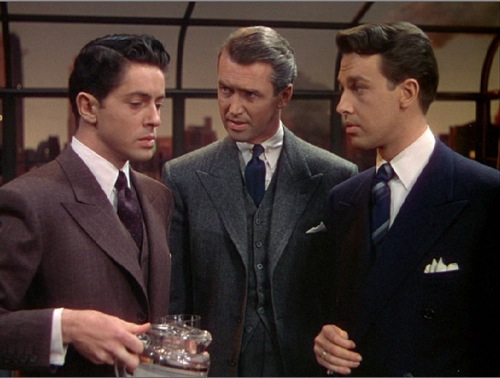
The first of many Hitchcock films on this list – probably more than any other director, and rightly so – shows the great man at his most experimental, as he attempted to shoot this film, based on a play by Patrick Hamilton, in one continuous shot. Limited only by the maximum length of a film reel at the time (10 minutes), a fact cleverly, if unsubtly hidden by editing shots of the backs of suits or a close up on an open chest lid, he pulls it off, utilising moving walls and tracking shots to accommodate the action as it pans out in the three rooms of an upmarket apartment.
The film follows two young men – the charming yet callous Brandon and his nervous, increasingly agitated friend Philip, as they attempt to cover up the perfect murder of their classmate David, whose body is hidden in the chest they use as a centrepiece for a party held for David’s family and friends. The acting is flawless, particularly from the two leads and James Stewart as their inquisitive former house master Rupert, and Hitch earns his moniker as the master of suspense, accomplishing an ever mounting level of tension with minimal music and meticulous plotting.
Choose film 9/10

Get Carter

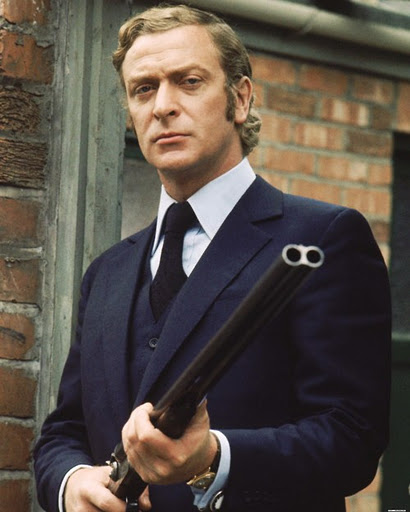
Get Carter is justifiably remembered for Michael Caine’s gripping portrayal of London hard man Jack Carter, visiting his old stomping ground in Newcastle to bury his brother and sort out the men who killed him. Caine is iconic as the immaculately attired, quick witted vengeance seeker, endlessly quotable (“Clever sod, aren’t you?” “Only comparatively”) and calmly menacing, yet credit should also be given to director Mike Hodges (…Flash Gordon). The framing of the shots is excellent, particularly when showing Caine watching a video, as a cleverly positioned mirror allows us to see both what he is seeing, and his reaction to it, without the need for split screens, a delayed response or a clumsy cut. The ending is brutal, if perfect, and it will take a great deal for me to sit down and watch the inevitably terrible 2000 Stallone remake.
Choose film 8/10

Les Vampires

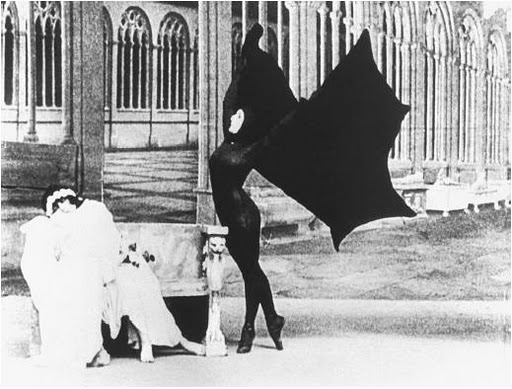
If acclaimed surrealist master Luis Bunuel is a fan of your work, it’s fair to say it’s unlikely to be a straightforward police procedural picture. The likes of Zodiac and All the President’s Men are probably far too logical for him to have admired, with far too few poisonous rings, hidden cannons and magic anagrams for his liking. That, and they aren’t 10-part silent serials from 1915, as is the case with Louis Feuillade’s Les Vampires, following newspaper editor Philippe Guerande and his flamboyant sidekick Mazzamette as they attempt to track down the notorious criminal gang known only as the Vampires, led by an ever changing Grand Vampire and his muse, the most interesting character of the series, Irma Vep.
In this world nothing is ever as it seems, with walls and paintings sliding aside to reveal hidden compartments (occasionally containing cannons), Vampires revealing themselves to be policemen, figures of authority revealing themselves to be Vampires and the dead returning back to life. This does become irritating, as logical second-guessing of the plot becomes impossible when it makes up its own rules as it goes along, but the sense of ingenuity keeps things interesting throughout the almost 7 hours runtime. I’m grateful too that modern architecture has advanced to a stage where most exterior surfaces are now only scalable using a ladder, whereas here they seem designed by the people behind Assassin’s Creed.
Choose film 7/10

Run Lola Run

Has there ever been a more straightforward plot? Lola (a flame-haired Franka Potente) has 20 minutes to find 100,000 Deutsche Mark (about £33,670 back in 1998) to save her boyfriend’s life. That’s it. Yet director Tom Tykwer (Perfume) takes this core premise and from it creates a film so startlingly original and entertaining its a wonder Hollywood has yet to fully embrace his unique style. Employing all manner of cinematic devices, from splitscreen to monochrome, converting our heroine into animated form and revealing the lives of very minor characters in Polaroid form, the film moves at such a breakneck speed yet remains easy to follow and only occasionally exasperating. The nightclub soundtrack may fit the relentless pace but is a little headache inducing at times, as are the jarring changes in pace, from running full tilt to pontificating pillow talk on the nature of love, but with ideas this fresh even 13 years after its release, these flaws can be forgiven.
Choose film 8/10

Big

When 12-year old Josh Baskin is denied a ride on a roller coaster for being too short, and is therefore embarrassed in front of his dream girl, he wishes himself big at a fairground fortune booth. The next morning he awakes as a 30-year old Tom Hanks, complete with chest hair, deeper voice and a ripped pair of space pyjamas. So ensues a fish-out-of-water comedy, as Josh, having been chased from his house by his understandably terrified mother, must fend for himself in the big wide world.
Hanks is incredible as man-child Josh, in his first truly memorable role, utterly convincing in an underappreciated performance, arguably Hanks’ best, be it kneeling on a chair, eating Oreos or simply swinging his bag as he walks, every touch adds to the sense that this really is a 12-year old boy in a man’s body.
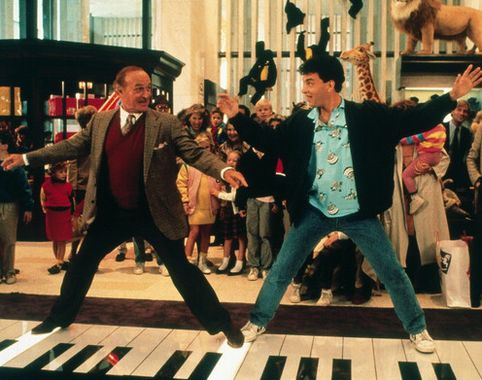
If there are any faults, they lie in the third act, when the clichés drop thick and fast into this previously original movie. Josh begins to realise his responsibilities and grows up, ditching his best friend for a girl and eventually, if a little suddenly, realising that he just wants to be a kid again. There is also one of the most uncomfortably wrong relationships ever seen in film between Josh and corporate climber Susan (Elizabeth Perkins), so squirm-inducing it probably would have been omitted today (that said, it’s just as bad as the centuries-old vampire/teenage girl romance from Twilight… not that I know anything about those films). But regardless of however many faults the film may have, one scene, featuring Hanks, his new boss (Robert Loggia) and a giant floor keyboard in a toy store, makes any film worth watching. This is the kind of scene that never fails to cheer me up.
Choose film 8/10

West Side Story

It’s easy to mock West Side Story, and incredibly hard not to let out a start of incredulity, disbelief and hilarity when the Jets, a New York street gang, begin clicking, walking and turning in sync, but this 60s retelling of Shakespeare’s Romeo and Juliet has a lot going for it. Yes, the two leads – Jet old hand Tony (Richard Beymer) and rival Shark’s head honcho’s sister Maria (Natalie Wood, not even close to being Puerto Rican) are lifeless, charisma free and unforgivably dubbed for their singing. And yes, the dialogue has not aged well in places, but the toe-tapping tunes, particularly I Feel Pretty, America and Gee, Officer Krupke and outstanding choreography, with dances staged as fights and fights staged as dances more than make up for its faults. Supporting players perform admirably, notably Russ Tamblyn as Jets leader Riff and George Chakiris as Shark leader Bernardo, making this a musical for people who don’t like musicals – people like me then.
Choose film 7/10