Collateral

Michael Mann takes a break from shootouts and dogged cops hunting master criminals in favour of a more laidback, narrative-driven movie about Jamie Foxx’s ambitious yet stunted taxi driver Max carries his fares around the neon-lit streets of L.A. That is, until he picks up Tom Cruise’s hitman Vincent, and Max’s night, and his dreams, are thrown into turmoil as the body count rises.
Cruise seems like an odd choice to play a fairly villainous guys, but he proves spot-on, retaining his usual casual charm but with a steely glint and wolfish menace to go with his salt and pepper hair, leaving Foxx to submit lie in his shadow.
The script relies too much on luck and coincidence, and leaves some pretty gaping plot holes you could drive a cab through, plus those paying attention should see that there’s really only one way the film can end, with a last act twist clearly signposted in seemingly throwaway lines. The writer even resorts to a low cell phone signal and battery as a means of moving the plot along; generally the laziest idea anyone could use.
The film evokes memories of much better films – Leon’s hitman, Taxi Driver, The French Connection’s subway stand-off, every buddy movie ever made – reminding you that there’s little original here. So whilst it’s watchable, it’s by no means worthy of a place on the list, and was wisely cut from the 1001 book some years ago.
Choose life 5/10

Synecdoche, New York

Charlie Kaufman has often been described as a breath of fresh air in Hollywood. The legend goes that there are twelve different stories in every film in Hollywood, and with his debut script Being John Malkovich, Kaufman wrote the thirteenth, and there’re so many ideas in Adaptation and Eternal Sunshine of the Spotless Mind that they probably count for numbers fourteen through twenty, and fortunately they’re all on the List. So after working on so many inspiring and imaginative modern classics, Kaufman’s directorial debut is a disappointingly convoluted tangle, as Philip Seymour Hoffman’s theatre director Caden Cotard struggles to create a play based on his own life, whilst struggling with a myriad of relationships and a mystery illness.

Whilst the entirety of the plot – also written by Kaufman – is positively brimming with ideas and ingenuity, from Caden seeing himself in cartoons and commercials, to a character living in a perpetually burning house, the lack of clarity between how much takes place in the real world, how much is in the obsessive director’s head and how much is part of the play is at best frustrating and at times infuriating. It doesn’t help that many of the actors look alike, possibly on purpose, with Michelle Williams, Samantha Morton and Emily Watson all used to play the same character in different levels of life, with the play being featured in the play, requiring Caden to cast himself, casting himself in the play of his own life. Time skips in the blink of an eye for us and for him – his four year old daughter with Catherine Keener’s bohemian artist ages seven years in a matter of days.

You get the feeling that the end result of the film is exactly what Kaufman set out to achieve, with every layer of obsession and confusion being carefully planned and perfectly executed, but when I tried to make some sense of it all, my brain started to run out of my ear.

Choose Life
6/10

Unlisted: Chocolat

That’s right, some weeks I don’t go to the cinema or watch a new DVD release, I’ve got a fairly large and ever-increasing stack of non-List DVDs I either haven’t seen before or haven’t really watched properly (I have films on in the background a lot, especially when I was at university) and this regular feature gives me some motivation to get through them.
Just in time for Easter, and after a messy, sticky but god damn delicious bout of chocolate egg making, we sat down to watch Chocolat, a film that’s been on my radar ever since it was discussed with much vigour in the disappointing Paul Rudd vehicle I Love You, Man, as his character’s favourite film. Just like when I rushed out to watch Point Break on Danny Butterman’s recommendation (I’ve been known to enjoy Bad Boys 2) I was more than a little disappointed, as I went in with higher hopes than I probably should.
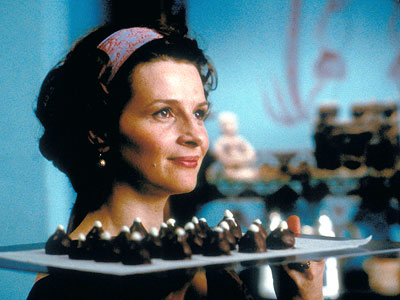
Chocolat sees Juliette Binoche’s master chocolatier opening up a cocoa boutique in a sleepy little French village, just at the start of lent. The villagers initially shun her temptations, before gradually growing to accept them and their delicious ways, assisted by her worldly knowledge, kind soul and the fact that some of her products act as an extreme aphrodisiac, an aspect that was severely underused, and could have led to a much more light hearted and entertaining piece, as at one point it seemed to be heading towards.
Overall, the tone was far too unbalanced; whimsical at times and overly serious at others, and the myriad of diversions – Alfred Molina’s stern mayor attempting to My Fair Lady Peter Stormare’s abusive barman, Binoche’s unfulfilling fling with sailing drifter Johnny Depp – leave the palate tempted but wanting for more depth. The outer shell is sweet and smooth, but alas where a rich praline centre should be there is nought but a hollow cavity. Everything looks delicious though, and I picked up a few tips for my own chocolate making.
Choose life 5/10

Babel

The first film to arrive from LoveFilm from the recent additions, Babel has seen my List update shoot me in the foot, as Babel is quite a long film that I’ve seen twice before, once just before starting the List, and that to be in honest doesn’t live up to its potential.
We follow the lives of four groups of people, as their existences are disrupted by a single bullet. First, there’s the poverty-stricken goat herder and his two young, competitive sons who purchase a rifle to protect their flock from jackals. We also have a wealthy American couple (Brad Pitt and Cate Blanchett, both excellent if trying a little too hard in largely thankless roles) as they bicker their way through a holiday in Morocco. An Hispanic maid is forced to take the two young children she cares for with her and her nephew (Gael Garcia Bernal) to Mexico for her son’s wedding, and the deaf/mute daughter of a successful Japanese businessman struggles to lose her virginity. The multicultural cast is good, especially Rinko Kikuchi as the Japanese girl, who carries most of her story arc single-handed, but there are several scenes that are very difficult to watch – the younger of the goat-herder’s sons masturbating within earshot of his brother, a disillusioned young boy witnesses the chicken he is about to eat slaughtered in front of him and a troubled teen coming on very strongly to her dentist.
The film is entirely humourless, with barely a smile to be seen either onscreen or off, and it lacks the finesse of director Alejandro González Iñárritu’s Amores Perros. That, and the entire thing is thoroughly depressing, with only some interesting scenes – a nightclub seen from a deaf perspective – to pique the interest.
Choose life 6/10

Alice

Lewis Carroll’s Alice in Wonderland is already pretty mental, so when I read that this version by Czechoslovakian director Jan Svankmajer was “memorably bizarre,” I strapped myself in for a rollercoaster of ridiculousness, and I was not left wanting.
A terrifying stuffed rabbit – animated via stop motion – bites through its restraints with eyes bulging like a cartoon, dons gloves, coat and a hat, checks its pocket watch and escaped through the drawer of a writing desk that is only a little bit like a raven. Oh, and the rabbit has ripped a gash in its chest that continually leaks sawdust like an open wound. The young Alice (Kristyna Kohoutova) follows the rabbit along a carpet of set squares and rulers and down an elevator past jars of drawing pins in chutney and various animal skulls with eyeballs.
I won’t ruin all the insanity, though there is plenty here to suffice, but rest assured some of the regular Alice beats are present – the shrinking potion and growing cake, the caterpillar, the Mad Hatter’s tea party and the King and Queen of Heart’s, but the question begs to be asked that, if everything in between the main points has been dramatically changed, why not just make a different story altogether? Plus, it takes far too long for Alice to get to Wonderland (if that’s what they’re still calling it). Imagine if Frodo didn’t leave the Shire until near the end of the Two Towers, or Harry didn’t get to Hogwarts until two hours into the Philosopher’s Stone, yet the books remained the same.
If I’d seen this as a child, chances are I’d still wake up screaming. From the burrowing inflatable sock-worms, the carnivorous animal skeletons reminiscent of Toy Story’s franken-toys, baguettes sprouting nails, living steaks, Alice crying enough to flood a room and a swimming rat hammering a campfire into Alice’s head, this is nightmarish to the highest degree. Also, who the hell is in charge of screwing on the doorknobs in this world, because they’re doing a terrible job.
Choose life 5/10

Mad Max

Essentially a glorified B-Movie, Mad Max saw Mel Gibson break out as live wire hero cop Max Rockatansky in a not too distant semi-dystopian Australian future. Other than Gibson, and sometimes including him, the acting and scenes are straight out of a direct-to-DVD movie – see Max sitting bolt upright in bed, a red light illuminating his haunted eyes, or his looking under a sheet at the hospital, so I wonder whether this is memorable more for the creation of the character, a Dirty Harry inspired ‘bronze’ who’ll nab his victims by whatever means, and for the supposedly superior sequel (watch this space).

My main issue is that the character of Max is initially built up as being a kind of supercop brought in when no-one else will do, almost robotic in terms of getting the job done, and for the first scene, in which Max steps in to take out a cop killer and his girl when the rest of the force is lying in a heap of wrecked cars, this seems to fit, but for the next hour we see a completely different character, a family man in need of a break from his high stress job. It’s almost as though Gibson is playing twins. Annoyingly, it’s these more sentimental moments, making up the majority of the film, that prevent MM from being the guy’s night in classic it could well have become, for the scenes of brutality, chases and revenge have real potential.
Another problem is that the film has no real message. The gang of the man Max killed at the start end up tracking Max and his family, yet not because he killed their cohort, simply because they run into each other. It could so very easily have been a vengeance plot, but for reasons unbeknownst to all, this was omitted in favour of fate and coincidence.
Choose life 6/10

Unlisted: The Woman in Black

Technically, Daniel Radcliffe is an adult. He’s 22 years old, so it’s possible he could have a young child and a wife who died in childbirth, and I suppose in the past these things happened younger, and of course he wants to distance himself from a certain well known child role, but with his boyish face and general lack of sufficient acting ability (though there’s no doubting it’s improvement since the early years of Potter) you’d think he’d pick a role that required a little less heavy living as the bereaved lawyer struggling to make ends meet in this picture from Hammer. But as it is, Radcliffe has unfortunately picked a part he simply isn’t right for. His face is too well known against a cast of whose are only vaguely familiar. It’s a role better suited to the likes of Rafe Spall, Armie Hammer or Jim Sturgess, who have already landed but haven’t yet rocketed to megastardom. One understands Radcliffe’s motivation, and indeed his name carries the film, but it’s clear he wasn’t cast for his skill as an actor or appropriateness for the character.

I’d heard tell from a horror aficionado that the film was scary. This is true, in the same sense that a jack-in-the-box is scary. If your idea of terror stems from a clearly signposted jump scare (every time the cat appears in Alien, for example) then this movie will chill you to the bone, but other than a couple of mildly inventive scares there’s not a lot here to send your popcorn skyward. This doesn’t mean it’s advisable to take young kids to though, for although it is a 12A, some of the themes are not suitable for bringing your 6 year old son and his two friends to see, especially if you’re going to sit in the seats directly in front of me and the little sods are going to insist on turning round and staring at me for the final hour of the film. Selfish father in Salisbury last Wednesday, I’m talking to you. Also, the two mad old woman behind me to the right, please shut the hell up in future, I can see and hear the film, so do not need everything explained loudly, and guys sitting along my row, sit the fuck still, all these chairs are joined together. Dick. Seriously, there weren’t that many people in the cinema, how come I was surrounded?
Anyway, the film. Radcliffe plays small time lawyer with poor emoting abilities Arthur Kipps, who visits a remote village to sort out some legal documents for a house. The villagers are less than happy to have an outsider visiting, and are rather keen to send him on his way, for they’re understandably concerned that every time Kipps visits the house, separated from the mainland by a long path that’s underwater when the tide comes in (you reckon he’s going to get trapped out there at some point?), someone’s kid dies in horrific or violent circumstances. What’s stranger here though, and what doesn’t make sense at the end of the film, is why the villagers don’t explain to Kipps what is going on. Had they told him he’s inadvertently causing it and how, chances are he might stop. Other than this glaring oversight, there were a couple of other issues I had with the film. Firstly, at one point Arthur willingly goes swimming around in mud deeper than he is. Before doing this, any sensible person would at least remove their waistcoat, tie and shoes, not needlessly jump in dressed for a formal dinner party. Secondly, about half way through the film part of the game is given away purely by stylistic choices as to the nature of what is causing the travesties is shown to us but not to Kipps, and will clearly not be a threat towards him until somewhere near the end of the third act. At this point I nearly stood up brushed my hands off and walked out with a “Right, that’s that sorted then” motion.
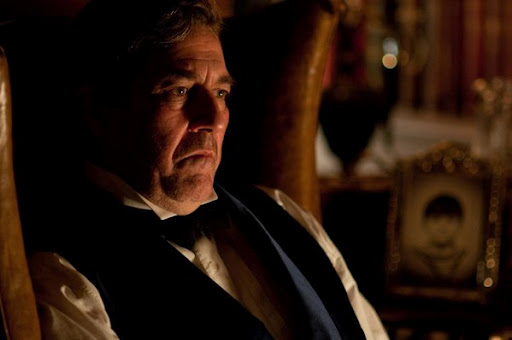
Not to say it’s a bad film, it’s just thoroughly underwhelming and predictable. Other than a few sequences – the candles in the hallway and a nice moment with a reflection in the window – and a wonderful supporting role for the ever-underused Ciaran Hinds, there’s nothing here I’ll remember for long.
Choose life 5/10
Platoon

Charlie Sheen is Chris Taylor who, after dropping out of college because he wasn’t learning anything, volunteers to fight in the Vietnam war, amongst recruits including Keith David, Forest Whittaker, Tony Todd, Kevin Dillon and a young Johnny Depp. The platoon is split, with half drawn to Willem Dafoe’s free-thinking, laidback stoner Sergeant Elias, with the rest, including brown-nosing Sergeant O’Neill (John C. McGinley), prefer the ethos of scarred Staff Sergeant Barnes (Tom Berenger), who counts success by how high the bodies are piled, rather than whether peace has been achieved.
There’s an interesting film buried in here somewhere, but it either follows Sheen’s naive, error-realising private or the conflicts between the two sergeants and their unrespected, inexperienced Lieutenant (Desperate Housewives’ Mark Moses). Some gripping moments stand out – a night ambush, and the colour slowly fading back in after a white-out napalm drop – but the rest is underwhelming and littered with trite or cheesy dialogue and 5-cent philosophising: “We did not fight the enemy, we fought ourselves, and the enemy was within us.”
Choose life 6/10

The Docks of New York

One of the last films to be made before the invention of the talkie, The Docks Of New York sees hulking, tattooed ship stoker Bill docking into port one night. He saves the suicidal Nell from drowning, steals her some dry clothes and, almost on a whim, marries her in the bar that night. The morning arrives with a stark clarity, as Bill intends to head back out to sea.
 
The plot is boring and predictable – there’s even a last ditch attempt to save the girl after she gets in trouble with the authorities over her new duds, but there’re some hilarious – though possibly unintentional – lines of dialogue: “I’ve sailed the seven seas, but I’ve never seen a craft as trim as yours” Bill tells his new bride-to-be.
 
Choose life 4/10

Hairspray

No, not John Travolta in a fat suit, a sight so diabolical not even Christopher Walken can save it, but the 1988 John Waters original, in which real life transvestite Divine, a Waters regular, plays severely overweight Edna Turnblad, mother of also rotund Tracey, who watches and dances along to the Corny Collins show every day on TV. Tracey is jealous of the more attractive (as in slimmer) dancers picked to perform on the show, especially bitch council member Amber, who dissolves into a flap-handed tizzy when she discovers a pimple. When Tracey is sent to a special class at school because her hair is too high (seriously) she learns how to dance with the segregated black kids that have been banned from the show except for one day a month for Negro Day. The film is intolerably cheesy and often stupid (using a psychiatrist to make a white girl not love a black boy), and does not help the racial stereotyping it tries to prevent, with one black woman talking only in rhymes.

Choose life 5/10