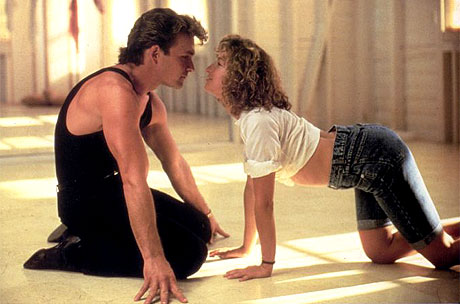
We recently booked tickets to see this on stage at the Mayflower theatre in April (not my idea) and I’ve never seen the film. I know, shocking. I’ve seen Crazy, Stupid Love, so I figure I’d seen the important bit already, but enough goddamn Empire readers voted it onto the top 500 films list that I had to see it. Motherfuckers.
Category Archives: Choose Life
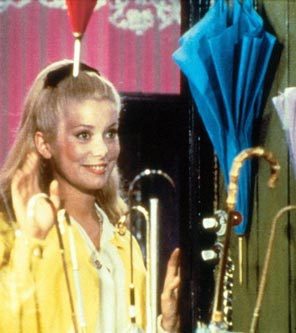
The Umbrellas of Cherbourg
So you’ve written a fairly standard, almost boring script about a young man and woman in love, with many obstacles in their way in the likes of a failing umbrella shop, a disapproving mother, an ill aunt, a rival rich suitor and a war, hired two capable but not great leads, utilised a sickeningly candy-coloured colour scheme and obtained a soundtrack that sounds like someone is randomly sitting on a piano, but don’t know how to make it stand out from the slew of identical dramadies? Well why not make the cast sing every line of dialogue? Every. Damn. Line. My God this is intolerable. I’m all for musicals occasionally breaking into song in ways that are integral to the plot, well written or just entertaining, but please stop for the occasional conversation. It may have worked on paper, but as soon as someone sings a response of “Yeeeeeeeeeeeeees” I wanted to throw a slipper at the screen.Eraserhead
I think this is David Lynch’s idea of a romantic comedy. Shot in stark black and white and sounding like it was filmed underwater or near a busy factory, we follow the bizarrely coiffed Henry Spencer (Jack Nance) through the trials and tribulations of an average young man – meeting his girlfriends parents for dinner, encountering a beautiful woman living in the same apartment building, watching a woman with hideously deformed cheeks dancing deliriously on stage, you know, the usual.
Peeping Tom
After making this film, director Michael Powell, here working without regular co-director Emeric Pressburger, had to move to Australia, for no-one else would employ him. This is a somewhat extreme reaction, especially by today’s standards, as through the eyes of a 21st century film viewer there is nothing here to shock or frighten anyone, but back then the tale of a socially awkward young man filming women’s last moments as he kills them with a specially designed camera with a blade attached probably pushed boundaries beyond what the public was used to, though it was released the same year as Hitchcock’s Psycho.
Winter Light
My first Ingmar Bergman film does not make me want to watch any more, though several appear on the list. Winter Light opens with a 12-minute long church service by a vicar in front of a very small congregation, including hymns, prayer and the breaking of bread, and from there remains bleak and uneventful, as the vicar meets with a member of his flock contemplating suicide over concerns China could start a nuclear war and travels to a neighbouring village. The scenes are unbearably long and tedious – a man waiting by a body then helping to load it into a van with the only sound being the river flowing behind him, or a static shot of a woman reading her own letter staring straight into the camera, and overall there is little dialogue, camera movement or anything to engage the attention.Five Easy Pieces
Jack Nicholson is Bobby, a talented pianist who gave up his life of potential greatness to slum it on an oil rig, with a waitress girlfriend and spending his time bowling and gambling with his buddies. The movie is comprised of several great scenes – Bobby playing the piano on the back of a moving truck, trying to order French toast from a difficult waitress (“I want you to hold it between your knees”) and being ‘recognised’ by two girls at a bowling, only to be accused of being bald, but everything between these scenes is forgettable and bland, with only Nicholson’s performance – his reaction at the bowling alley is priceless – being worth paying attention to.In This World
Michael Winterbottom’s semi-documentary uses a novel approach in setting up and suggesting situations, then filming the reactions of Pakistani refugees at Shamshatoo Refugee Camp, Pakistan in February 2002, blurring the line between fact and fiction. We Follow Jamal and Enayat, a boy and his uncle, as they attempt to seek asylum to London, being smuggled across borders packed behind orange crates or hiding amongst sheep on a truck, but more information would have been appreciated on the details of why they are seeking asylum when their other countrymen aren’t, and some shots – a cow being brutally sacrificed, twitching as its life is forcibly removed – should have been omitted.
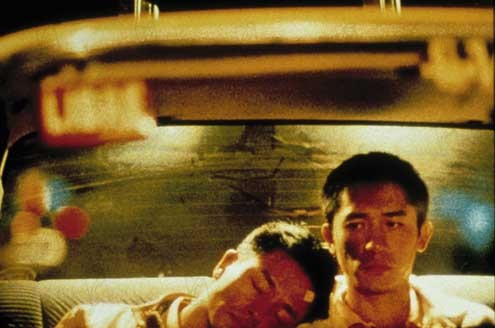
Happy Together
One of the clearest examples of style over substance I’ve ever seen on screen, this tale of a Chinese gay couple emigrating to Argentina before breaking up but being repeatedly drawn back together again uses every trick in the film school handbook to distract from the lack of anything worthwhile happening on screen.
Boudu Saved From Drowning
A kindly, respectable yet adulterous bookshop owner sees a homeless man jump from a bridge and rushes to his aid, jumping into the river fully clothed to save him (though many other younger and less plump people are on the scene before he is) and subsequently takes the tramp in, giving him clothing, food and a bed for the night. This kicks off an unusual love square between the tramp, the bookshop owner, his wife and their maid, with the ruse and uncouth hobo causing disruption in the lives of those around him. Michel Simon is perfect as Boudu, but the plot is derailed by lottery-pivoted hokum and a scene where Boudu insults, frightens and possibly rapes the bookshop owner’s wife is glossed over, though she does seem to enjoy it.Beau Travail
Opening with a foreign cover of Holly Valance’s seminal pop masterpiece Kiss Kiss and apparently based on Herman Melville’s Billy Budd, Beau Travail is the Nytol of cinema. Twenty minutes after pressing play you’ll feel your eyelids become heavy, the world around you will slowly blur and you’ll sink back into your chair like a beanbag full of marshmallows, for this is a film in which nothing coherent really happens.