The Great St. Louis Bank Robbery

The second film in my travels through Steve McQueen’s career is actually his fifth movie, as I’ve yet to come in contact with a copy of Girl on the Run, Never Love a Stranger or The Blob, and is the second film in which he plays the lead (after The Blob, which I really want to see am annoyed I can’t find).

Here, McQueen plays George Fowler, a man in need of some funds to pay his way through college after being kicked out years ago. He accepts the job of driver for a bank robbery being conducted by his friend Gino (David Clarke) and two others, John and Willie (Crahan Denton and James Dukas), neither of whom trust George, as he’s lived a clean life and hasn’t even been to prison. Meanwhile, George meets up with Gino’s sister Ann (Molly McCarthy), an old flame of his, and complications arise when she works out the real reason George is in town.


Or rather, they don’t. I fully intend to spoil certain aspects of this film that I don’t recommend watching, so I’d advise the spoiler-wary to either skip to the end of the review or stop reading, but regardless you shouldn’t watch the film. You see, my first issue with the film was that halfway through the film there is a pivotal moment in the plot where, having discovered George and Gino are planning to rob a bank, Ann writes on the side of said bank that they are going to be robbed. Understandably, John and Willie are none too pleased about this and, upon discovering Ann is the culprit, kill her. Yet, after this happens, there are no further ramifications on the actual heist of the bank receiving a warning. So in effect Ann is killed for really no reason, as her actions had zero impact on anything that happened.

Secondly, in the film’s opening there is a brief intro stating that the parts of police officers have been performed by the real officers during the real life robbery upon which this story is based, however the police have yet to show up anywhere in the film even before the heist has begun, so it is obvious that something is going to go wrong, the alarm will go off and the police will arrive, else there’d have been no point to the intro. Also, it’s quite clear why the policemen have opted for careers in law enforcement rather than a more thespian path, as though only a couple get actual lines, they are all delivered rather forcefully.

Not that the rest of the cast fares much better, as even McQueen has his wooden moments, and the various conversations within the film, especially those between George and Ann, all feel stilted and awkward, even when they aren’t supposed to be. It’s no great surprise to find that McCarthy hasn’t really done much since. 

My main problem though? The story is dull. Now normally I love a good heist flick. There’s something about the meticulous planning of a con, the recruiting of the team, pulling it off, working around unforeseen obstacles and either seeing the criminals being brought to justice or fleeing with the loot that I find fascinating and immensely watchable, be it the star-studded, glossy likes of the Ocean’s trilogy or Inside Man, or something a bit more noir-y and stripped back like Rififi. Dog Day Afternoon, The Taking of Pelham 123, Out of Sight – these are all amazing films that I don’t hear talked about nearly as often as I feel that I should. And The Great St. Louis Bank Robbery is deservedly not amongst this hallowed list, because it’s just dull.

The robbery itself is completely straightforward, with no clever tricks or any kind of skill involved. The plan is simply to go in, rob the bank and leave before the cops arrive. There’s about as much of a plan as Gale and Evelle had in Raising Arizona, yet this is after a solid 75 minutes of planning shown on screen, that actually took place over at least five days during the film. And the great thing is that nothing goes wrong – the alarm is triggered, as the thieves had expected, but the cops arrived sooner than anticipated, descending into a hail of gunfire. Other than the last minute shoot-out and McQueen going insane, there’s little of any worth that I think I’ll remember. McQueen’s final scenes are worth mentioning in that they are the only time I’ve seen so far where he has played anything other than a by-the-numbers hero character. When he finds himself alone in the bank with the hostages and a gun, he breaks down and goes a bit loopy, which was interesting to watch, but was unconvincing because it’s Steve McQueen, and he just doesn’t do that.

One interesting part of the film was that it showed how a good, clean man – in this case George – can become embroiled in the seedier underbelly of a nation, and how if he’s not careful he could quite easily become stuck within it forever.

Also, when the film opens they wisely removed the ‘Great’ from the title, as neither the film nor the factual account are anything even close to resembling great. And is it too much to ask for a little note at the end saying what happened to those that survived?

So, this isn’t a great film, mainly because the story is boring – the heist doesn’t even begin until 15 minutes before the end – the acting is poor, the soundtrack has been taken from a fairground ghost train and pretty much the whole thing is in shadow and impossible to make out.

Choose life 2/10
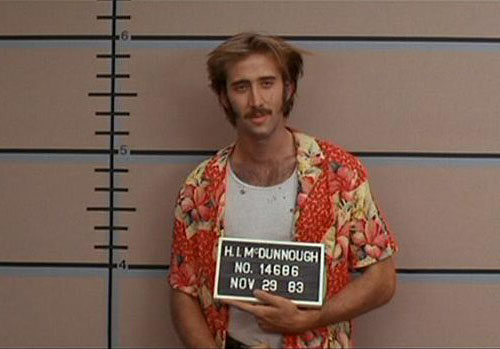
Raising Arizona

It’s hard to imagine a sharper left turn taken by a director than from the Coen brother’s debut, Blood Simple, to their sophomore picture, Raising Arizona. Where Blood Simple was dark and mostly serious, Arizona is the closest a film has ever come to capturing a Tex Avery cartoon in live action – with the possible exception of some parts of The Mask.

in the role that possibly best combines his often underrated acting ability, comedic potential and trademark brand of insanity, Nicolas Cage gives one of my favourite performances of his as H. I. McDunnough (‘Hi’ for short), a serial petty convict whose ineptitude at evading the law is only matched by his love for police photographer Ed (Holly Hunter). On at least the third time Hi is released from the prison where Ed works he proposes, and the two settle down for a life of happiness in a trailer park in Arizona. But all is not well in the McDunnough household. When Ed discovers she is unable to have children she falls apart, not helped by Hi’s criminal background leaving them unsuitable for adoption, so the only logical solution is, of course, to kidnap one of a famous batch of quintuplets born to a local unpainted furniture magnet, Nathan Arizona. To add to Hi’s woes, two of his former cellmates, Gale and Evelle Snoats (John Goodman and William Forsythe) escape from prison and attempt to crash on the couple’s sofa, Hi’s boss at the metalworks attempts to entice him into swinging, and there’s Leonard Smalls (Randall ‘Tex’ Cobb), a bounty hunter from Hell, on the path of the stolen baby.

This is a film with no intentions of meandering along at a gentle pace. The opening ten minutes or so, setting up the couple’s initial meetings, Hi’s triple incarcerations, their engagement and marriage, runs along at such a breakneck pace you’re liable to get whiplash once the credits roll and a more sedate step is taken. The change in speed is almost jarring, but is helped along with ample amounts of comedy and terrific, perfectly pitched performances, especially from Cage. His Hi, sporting a now standard ridiculous feathered hairdo, is a manic, OTT oddball with more Hawaiian shirts than sense. Hunter’s performance is good, but Ed doesn’t really get to do an awful lot other than reprimand Hi at every turn.


If the characters feel like exaggerated caricatures, then this is exactly the point. This film doesn’t take place in any kind of recognisable reality as much as it does in the heightened, prison-crazed mind of the lead. At times though I felt it went a little too far. The two escaped convicts are maybe a little too stupid – though often to hilarious results, as in their ill-planned bank robbery – and their incessant screaming throughout the entire film became beyond grating. No-one can yell like John Goodman. Leonard Smalls, on the other hand, wasn’t enough of a badass. I couldn’t quite put my finger on it, but I always felt that he was a guy pretending, Cobb never inhabited the role quite as fully as I’d have liked, so his presence was very much under felt. It’s a shame, as the Coens can do great work with the right actors in the antagonist roles – check out Javier Bardem as Anton Chigurh in No Country For Old Men, or Paul Newman’s Sidney J. Mussburger in The Hudsucker Proxy. Smalls should have been larger than life, and could have been the best part of the film, but remains sadly forgettable. Which in itself is impressive seeing as he is a guy who will happily grenade a fluffy bunny just for being alive.

The fight scenes are tremendously enjoyable, and really cement home the cartoonish nature of the film. Most of the characters involved would have received serious, possibly fatal injuries several times throughout the film – particularly Hi – yet they mostly just walk it off with little more than a plaster stuck to their face. And the film’s solitary death scene is so ridiculously over the top and insane that it is very much a moment of explosive comedy, regardless of whether you can see it coming or not.

I think that one of the overall messages from the film is that Hi and Ed, though they seem incredibly unsuitable to take on the task, are possibly the best parents of all the film’s characters. Of the various people who assume the role of the kidnapped baby’s guardian throughout the story, Hi and Ed are the only ones to not immediately name the baby after themselves. Granted, they name him after each  other instead, but at least they’re thinking about someone else, not just themselves.

Whilst this is in no way one of the best Coen brothers film, it is still hugely entertaining and definitely worth a watch, if only to see some classic comic Cage before he went off the rails.

Choose film 8/10

Combat Academy

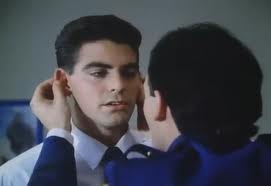
George Clooney strikes again. Looking up his C.V., I’ve got at most four more films I have immediate access to until I get to one that’s even half decent (From Dusk Till Dawn), and that’s skipping six I can’t find yet! My god his early career was appalling. And then straight after Dusk I’ve got the one-two double punch of One Fine Day and Batman and Robin. I am really beginning to regret this decision, but its too late now.

Anyway, Combat Academy. In case you hadn’t guessed from the title and the 1986 release date, this is an attempt at a rip-off of the hugely popular Police Academy, down to copying the poster style and title typography, but this time set around a military school. However, the key area they failed to take inspiration from is in the use of colourful, quirky characters, engaging yet entertaining performances, and the inclusion of actual jokes. There’s even a commanding officer with a tank-bound pet. They can’t even blame it on coincidence either, as director Neal Israel was on script duty for Police Academy.


Two high school pranksters, Perry and Max (Wallace Langham and Keith Gordon) are kicked out of school on the first day back from summer vacation, and are sentenced to spending a year at Kirkwood Military Academy, due to having 238 separate acts of hijinks each on their permanent records. Two hundred and thirty eight. I’m pretty sure some point before the 50th time he found a herd of pigs in the library their headmaster would have instilled some discipline, contacted the authorities or just flat out killed the little shits. Anyway, the kids’ parents are disappointed in their kids (Perry’s dad is John Ratzenberger! Hell yes!) and don’t mind too much to see them be sent off to learn a few lessons in obedience, but the guys themselves are less than happy with the situation. However, seeing as Max at least is one of the least likable leads I’ve ever watched in a film, I had to agree with the parents. Max is a dick. Plain and simple. He incessantly causes havoc around himself purely for kicks, and doesn’t give a moment’s thought to repercussions to himself or those around him, particularly the stuttering, nervous Perry whom he drags down with him wherever he goes. And Keith Gordon is certainly no Steve Guttenberg, and his overuse of obnoxious, predictable and hokey one-liners just makes him all the more detestable. Perry on the other hand is somewhat likable, but is such a wet fish that he fails to register.

The two rub their commanding officers, George Clooney and Kevin Haley, up the wrong way early on, but by this point I’d stopped paying too much attention to the meagre plot – there’s a thief in the academy, some visiting Russian cadets, Perry falls in love and Max is trying to pull a Mahoney and get himself kicked out – and focused instead on the terrible performances on display here, particularly from Kevin Haley, who is possibly the most wooden an actor I’ve ever seen. It doesn’t help that he’s partnered up with Clooney for several scenes, but still. In fact, none of the actors seems to be in the same film as one another, at least in the sense that for the entire 96 minute runtime there isn’t a drop of chemistry between any of them, including the two leads who have apparently been best friends for over a decade.

The closest the film comes to a comical character is in the academy’s science teacher Col. Long (Richard Moll), who aims for eccentric but overshoots to certifiable. Amongst the rest of the cast, look out for Danny Nucci (Titanic‘s Fabrizzio), Elya Baskin (Spiderman‘s landlord) and Sherman Hemsley (George Jefferson). Of the leads, Keith Gordon went on to become a TV director, working on the likes of Dexter and House, whilst Wallace Langham played Kirby, the guy who signed in the Hooper family at the pageant in Little Miss Sunshine.

Elsewhere, the film suffers from an outrageous 80s soundtrack and the worst effects shot in any film, ever, when Max attempts to show off some kind of stunt during a paintball match that probably was supposed to involve him throwing his gun high in the air and catching it again, but which he clearly fumbled so they used the footage of him throwing it, then played it backwards for 2 seconds to make it look as though he caught the gun again. Did director Neal Israel, who directed the Tom Hanks classic Bachelor Party, really think he was going to get away with that? Not on my watch, bucko.

There are plenty of missed opportunities for comedy to be mined too. Firstly, the pranks the pair pull are all either incredibly tired or have no resounding effect on anything – lockers explode whilst people standing nearby remain oblivious, and switching the signs on the restrooms is just hokey, pre-teen nonsense. 
So, is there any reason at all to watch this film? If so, I can’t think of it. It is entirely devoid of anything approaching humour, features some very heavy handling of moral issues – Clooney’s Major Biff Woods (yes, that’s his name) just wants to please his Daddy – suffers from a hastily tied up resolution via an out of character rousing speech, hideous acting and completely and utterly fails to be comparable to even Police Academy 7: Mission to Moscow.

Choose life, 1/10

The Farmer’s Wife

In the late 1920s, having just wedded Alma Reville, marriage was clearly at the forefront of Alfred Hitchcock’s mind as he adapted this play be Eden Phillpotts about a farmer who, after the passing of his wife and the marriage of his daughter, seeks to find a new wife within the small group of eligible women within his village. Farmer Samuel Sweetland (Jameson Thomas) is by and large a good man, though he has difficulty in expressing himself, often fails to see what is directly in front of him and has a heightened ego. Still, he means well. After his wife’s death, in which her last words are reminding the maid (Lillian Hall-Davis, returning from The Ring) to air out her master’s pants, Minta the maid takes over all of the wife’s duties as well as her own. Once the farmer’s daughter has been given away, Minta is given one more job to do, help Sweetland find a wife, so the two of them sit down and make a list of the four potential candidates.

This being a comedy, things inevitably do not go to plan, mainly due to Sweetland’s pomposity and the various faults of the women. It probably didn’t help that his first proposal attempt involved calling his prospective fiance a fat hen, and that he announces that he is getting married, before actually asking if she is OK with the situation. The script is full of mild – and not so mild – put downs, largely aimed at the women (“Her back view’s not a day over 30.” “But you have to live with her front view.” “I don’t mind pillowy women, so long as they be pillowy in the right places.”). Elsewhere, the film featured possibly my favourite title card from a silent film ever, with the completely unexpected line “You are the first man who has accepted my sex challenge,” made all the more hilarious by the frail, demure woman who utters it.

As the farmer, Jameson Thomas has mastered the art of looking flustered with wide-eyed rage and exasperation, although at times I felt he was just as likely to strangle some of the women as propose to them, not helped by his Snidely Whiplash moustache and sneer. I can’t help thinking the women who turned him down were lucky not to wake up tied to the train tracks. I felt the film seemed to lose it’s way a little later on, and the ending is clearly signposted within the first 15 minutes, but is done so sweetly that you really don’t mind, and the overall theme of the plot reminded me of Keaton’s Seven Chances, which similarly involves a largely unsuccessful attempt at finding a wife, but for different reasons entirely. The handyman, Mr. Ash (Gordon Harker) gets the short end of the stick comedically, having to endure a series of pratfalls, mostly involving oversized trousers, but this doesn’t detract from the film too much. These may have been an attempt to distance the film from the largely dialogue-based play, as is the case with a climactic fox hunt that would have been almost impossible to perform on a stage.

This was far more enjoyable, and funnier, than I was expecting. If you don’t mind silent comedies, and I’m learning that I don’t, then this isn’t a must-see, but is enjoyable if you can find it.

Choose film 7/10

A Kid in King Arthur’s Court

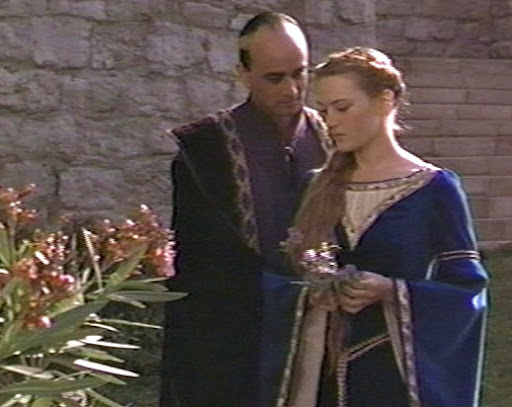
It seems I didn’t quite think through the strategy of watching the entire careers of various prestigious film-makers. Who’d have thought that, before they became renowned and laden with numerous awards, actors would take any roles going to pay the rent, regardless of the claptrap they may be. And so it is with A Kid in King Arthur’s Court, the family-friendly second entry on Kate Winslet’s CV, and what I hope will be the worst, although seeing as I’ve still got The Holiday to watch at some point, this may not be the case.
Continue reading

Blood Simple

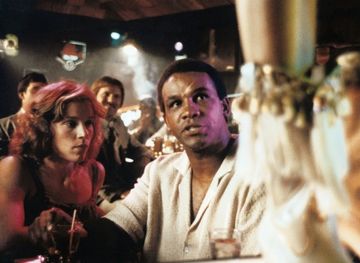
Blood Simple, the directorial/writing debut of the Coen brothers Joel and Ethan, is a sticky, sweaty, clammy picture about deceit and confusion, set in the heart of Texas. Marty (Dan Hedaya) runs a bar, and is the boss of Ray (John Getz) and Meurice (Samm-Art Williams). Distrustful of his wife Abby (Frances McDormand), Dan has hired private investigator Loren Visser (M. Emmet Walsh) to look into what she does with her time. It transpires that Abby is sleeping with Ray, so Marty hires Loren to kill them both whilst he is away on a fishing trip. What with this being a Coen film, things don’t necessarily go to plan, but it is the direction the events took, and the motives involved that I found both interesting and compelling.

Tonally, this is probably most similar to Fargo or No Country For Old Men amongst the Coens’ oeuvre. There’s not a great deal of humour surrounding the violence and devious plotting going on, and the location of Texas adds a great deal to the setting, just as Minnesota did for Fargo and Texas again for No Country. I found this lack of comedy to be a bit jarring – there are some moments of Coen-esque quirkiness certainly, and a couple of jokes in the script, but for the most part this is played dead seriously. The brothers can do serious very well, but personally I prefer their lighter efforts.
Had I not known this was a Coen film (and had it not starred Frances McDormand) then I don’t think I’d have immediately associated it with them. If anything, the structure of the narrative felt far too linear and ordinary, with the exception of perhaps missing an opening and closing scene most directors would have felt obliged to leave in. We’re fed the plot in dribs and drabs, discovering who each of the characters is and their relationships to one another just a couple of minutes after we need to.
Though he isn’t necessarily amongst the lead trio of the film, I would class Walsh’s performance as the greatest in the movie. His Visser is the human embodiment of a lizard, a slimy, oily gumshoe with a malicious streak and a rasping laugh that still haunts my dreams. He plays the part so well that I can’t believe I haven’t come across the actor in much else. For my sins I only really know him from Wild Wild West (he was the train driver). Can anyone recommend any of his other work?
I loved the musical choices in the film, especially Ray mopping up blood to the sounds of The Four Tops’ It’s the Same Old Song, an almost Tarantino-like retro song choice. The camerawork too was at times inspired; the marriage of lighting and camera movement revealing Visser’s cigarette lighter on a table, and the oppressive close shots inside the bar intensifying the humid atmosphere.
I can’t imagine this film cost very much to make – the biggest set pieces involve a car and a shovel, and a gun, knife and a window – yet it’s easily as gripping as many other big budget blockbusters. It reminded me of the likes of Glengarry Glen Ross or Reservoir Dogs, neither one which involves a lot of spectacle, but they have great characters and dialogue, which really is in my opinion more important. I’d have liked a last shot of Meurice – one of the coolest characters in film, check out his bar-top shuffle – but other than that the ending was pretty well contained and executed. Whilst by no means the Coens’ best, this is still definitely worth a watch.
Choose film 8/10

Somebody Up There Likes Me

After a couple of small TV roles and an uncredited appearance in 1953’s Girl On the Run (I haven’t found it yet, but I will) Steve McQueen’s second film role, again uncredited, was in this Paul Newman boxing film that I’d previously never heard of and can kind of understand why. It’s not that it’s a terrible film, it’s just thoroughly underwhelming, and tells a familiar story in a genre that has since far superseded it. To start with, it’s a boxing movie where the lead character is Italian and called Rocky Barbella (Newman). If that’s not a coincidence I’ll be shocked.

Rocko ‘Rocky’ Barbella (later Braziano) is a street hoodlum son of a former boxer. As a kid, his Dad Mick (Harold J. Stone) embarrassed Rocky in front of his friends whilst he tried to teach him how to box, and ten years later his layabout father has clearly had a prominent effect on Rocky, as he’s on the lam from the cops, and refuses to either get a job or an education. Things don’t work out too well for the lad, and he gets himself in trouble and locked away for a few years and, upon his release, is immediately conscripted to fight in World War 2. During this time, he discovers an aptitude for fighting, and is able to mould it into a boxing career, which comes in useful when he needs to raise a little money later on.
I can’t really pick out much that was terrible about this film, but nor can I find many reasons to recommend it. Newman was good (other than sounding like Jackie Gleason), but had yet to reach his shining greatness (he is definitely a front-running candidate for a future Film-Makers run, even if I have to watch Cars again) and there were some shots that I loved, particularly a receding tracking shot as Rocky makes his way through a busy market, but this happens near the start of the film, and I kept my hopes up for more cinematography of this calibre but sadly was left wanting. As well as being reminiscent of many boxing films that have been released since (not a fault of this film, but certainly not a reason to watch it either) there were some plot points eerily similar to another Newman classic, Cool Hand Luke, most noticeably his incarceration into a chain gang, during which he has a life-changing fist fight.
There were a couple of obvious gaffs – at one point a man knocks on a very wooden-sounding tent – but otherwise the script was generally entertaining (when offered a cup for a boxing match, Rocky declines and says he’ll drink out of the bottle). Some beats seemed a little extreme – a prison guard pulling a gun when an inmate doesn’t move his towel, a judge awarding Rocky with a prison sentence of indeterminate length – but these could be a product of the time the film was made and set. I loved the scene where Rocky’s manager (Everett Sloane) was telling him his love life (with his sister’s friend Adrian, sorry Norma, Pier Angeli) was making him too happy and healthy to be a boxer.
McQueen plays one of Rocky’s gang early on in the film, and his trademark doing-something-in-the-background-eve-when-he’s-not-supposed-to-be is evident even here. I was expecting him to show up again later in the film, when Rocky revisits his old town and meets up with other ruffian Romolo (Sal Mineo), but alas he only got a few scenes at the start, and didn’t have too much to do in them, but it’s only his second film so it’s OK.
I felt the film seemed to drag near the end, even though it skipped through the dense plot pretty quickly and remained under two hours long. I definitely felt like they couldn’t think of a name (or last line) for the film, and someone saw the title of Perry Como’s song, which coincidentally plays over the credits, and thought they may as well use it for this. It didn’t really fit, going by the amount of bad luck Rocky endured throughout most of his life, but it didn’t jar too much either. For all I could tell Newman was convincing in his boxing scenes, and fans of his won’t be disappointed, but unless you’re a completist like me, or have a particular fixation with boxing movies, there’s not much else here to keep you engaged.
Choose life 6/10

Return to Horror High

Given the cinematic journey I’ve chosen to peruse, I don’t often get to watch truly terrible films. Sure, there are some on the 1001 List that I’m not necessarily a fan of, but they tend to have some kind of artistic merit or historical value that justifies their position. I also tend to make an effort to avoid films I think are likely to be awful, as I probably won’t enjoy them, and there are so many other films I’m sure will be better. I think the last awful film I reviewed was Big Trouble in Little China, and that was only because Empire readers inexplicably voted it the 430th greatest film of all time, despite it having almost no redeeming features whatsoever. It was refreshing then, as I begin my exploration through George Clooney’s career, to go out with a mate, have a few drinks, plays some Call of Duty and settle in to watch this goddawful slice of tripe.
The plot is reminiscent of Scream 3; a film crew is shooting a horror movie based on the killings that occurred in a school some years earlier. To add to the realism, they are shooting the film on the site of the school, and some of the parts are being played by the people involved in the actual event. A few days later, a police investigation is being undertaken as almost everyone involved in the film has been found dead outside the school, except for the writer, who is recounting the tale to two police officers. This scenario has potential to be a half-decent horror flick, I mean I’ve heard a lot worse, but alas this is not the case, as what little plot there is deteriorates into a hashed up mess fairly early on.Clooney, for he is the reason I’m watching this, has a miniscule role as an actor eager to break his contract early so he can start filming on a TV series.He succeeds in leaving his role, only to be killed moments later, in one of those moments where the intensifying score clearly signposts exactly what will happen. You know, when they’re walking down a dark corridor, and the ominous music only plays when they’re slowly making their way forward, then the music stops when they do. To be honest, it’s probably for the best that Clooney died when he did in this film, his hair is atrocious.

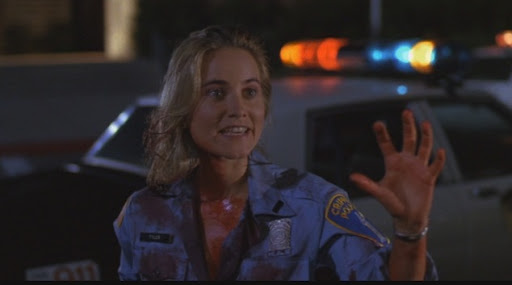
As far as I can tell the rest of the cast is of little note – hardly surprising when you look at the acting on show – with the exception of Maureen McCormick, whose turn as a cop that becomes alarmingly aroused by dismembered body parts proves to be all the more bizarre when you discover she played Marcia Brady on The Brady Bunch. Now I’ve never seen that show for two reasons: a, I’ve always lived in the UK, where I’m fairly sure it’s never been aired, and b, I’m under the age of 35, but I’m fairly sure Marcia never came on to her superior officer after discovering a severed arm, or clawed seductively at her blood-splattered breasts whilst she retold her exploits involving sliding down a gruesome hallway.

My main problem with the film was the plot, especially the last ten minutes, which features not one but two of the worst twists I’ve ever seen. The first, involving a Mission Impossible-style removable face mask, is ridiculous enough, but the second is of such sweeping idiocy that it beggars belief, and doesn’t withstand even a second’s worth of examination. Up until that point I had forgiven most of the film’s other flaws – of which there are many – on the basis of the director’s lack of experience (this is his only film credit) and budgetary reasons (although great films have been made for far less than this film cost), but the film’s ending is just so ridiculously inane that it turned me off the rest of the film completely.

So what else is wrong with it? Well, it uses the age old filming-a-scene-but-not-telling-us-they’re-filming-a-scene schtick at least three times, and the it’s-all-a-dream thing once, there’s a sex scene illuminated by someone welding something quite far away from the first floor window of the room in which the coitus is occurring, no-one actually finds the bodies mounting up, yet people are clearly scared of a suspected killer they have no reason to suspect, and there’s one of the worst uses of a Schwarzanegger-esque one-liner I’ve ever seen (“Class dismissed.”)

On the plus side, the script the script does have some gems, including a conversation about explosive breasts (“There will be no exploding tit shot!”) and possibly the greatest worst special efect I’ve ever seen in a shot of an axe beheading someone in silhouette through a frosted glass door, with the axe swinging down, followed wiftly by a clearly fake head being thrown far too enthusiastically up in the air. Needless to say, my friend and I were in stitches at this, and it received a good few rewinds before we were done. If I knew how to embed mpegs you’d be watching this for the rest of the day.

So, all in, this is one of the worst films I’ve ever seen. At times it wanders into so-bad-its-good territory, but for the most part it’s just terrible. I will not be returning to Horror High any time soon.

Choose life 2/10

The Ring (1927)

Although this wasn’t Hitchcock’s first film (he made at least five before this one, although at least one of those in deemed ‘lost’ [1926’s The Mountain Eagle] and another two unfinished [Number 13 and Always Tell Your Wife, from 1922 and 1923 respectively]) The Ring is the earliest one I can get my hands on at present, so my travels through the history of Hitch will have to begin here. Telling the story of an amateur boxer working at a carnival who gets a shot at the big time after he is scouted by a renowned heavyweight, The Ring almost knocked me out for being a Hitchcock film about one of the least Hitchcockian subjects, sport.
Carl Brisson is Jack ‘One Round’ Sander, who makes his living by challenging regular schmoes to a boxing match at a carnival. His fiance (Lillian Hall-Davis) chews gums as she works the ticket counter, and his friends are his assistants and announcer. One night, after dispatching the usual rag-tag band of hopefuls fairly promptly – one of whom defeats himself as he enters the ring – Jack meets his match against Bob Corby (Ian Hunter), who unbeknownst to Jack is an Australian heavyweight champion, and has already been making moves on his girl. After the fight, Bob claims his reward (a grand total of £2.00), and tells Jack he plans to give him his chance with the professionals. Bob and Jack’s fiance, and eventually his wife, become much closer as Jack becomes more successful, which leads to a love triangle developing between the three, coming to a head when Jack and Bob fight on another at the end of the film.

Had I not known this was a Hitchcock film, I would have been very surprised to discover the fact. Other than themes of deception and suspicion, this does not seem to fit within the rest of his work. Even the leading female is a brunette! Now I’m sure that Hitchcock obviously didn’t start out as a master film-maker – truly brilliant debut films are few and far between – but I had hoped for more than this, as this film is at best just mediocre. The plot is nothing special, and feels dragged out even at less than 90 minutes, and when you consider that the last 10+ minutes of this are a boxing match that feels like it lasts at least an hour, then the pacing is really quite a problem.

Hitchcock’s infamous mysogany and sexism is evident in places. Though she is essentially the third lead, Hall-Davis’ character is only ever referred to as ‘The Girl,’ even though her character has is called Millie. In both the opening credits and her introductory title card she is given that fairly vague, nondescript title. There is some interesting camerawork, especially early on in the initial fight, with the camera remaining stationery, pointed at Jack’s opponent’s corner of the ring, as the would-be fighter heads off screen to fight, only to be thrown back a second later, dishevelled and clearly defeated. However other than this and some occasional semi-dream sequences and video distortion to emulate rage, drunkeness and being knocked out, there isn’t much to take note of.

The title of ‘The Ring‘ most obviously refers to the boxing ring within which a fair amount of the film takes place, however it also refers to the wedding ring (this is possibly the first cinematic incarnation of a best man losing the ring), a bangle given to Millie by Bob, a forune-teller’s ring of cards and the circular nature of the plot, as the final scenes are very similar to the opening one, with Millie watching on as the two men fight it out. By the end, they are no longer just fighting for money and a title, but for honour, pride and the hand of the woman they both love.

I had one major gripe with the film. Throughout the story we are shown countless posters advertising boxing matches, upon which are the names of dozens of boxers. Yet of them all, Jack is the only one with a nickname. (Although at one point someone dates the movie a tad by referring to a boxer in a less than affectionate racial slur that I don’t care to repeat.) Surely at least one of the others would have a stage name, for the sake of realism? Also, look out for one of Bob’s assistants, who looks spot on like Jack Nance in Eraserhead.

Before watching this, I’d yet to see a Hitchcock film I hadn’t at least liked. I hope dearly that his learning curve was steep, and he got better very quickly.

Choose life 4/10

Heavenly Creatures

Christchurch, New Zealand, the mid-1950s. Two girls, Pauline (Melanie Lynskey) and Juliet (Kate Winslet) run terrified through the dense forest, the air streaked with their screams and their faces streaked with blood. They burst through the bushes and emerge to the concerned face of a passer-by with the words “It’s Mummy! She’s terribly hurt!”So begins Peter Jackson’s Heavenly Creatures, the true story of two schoolgirls whose problematic home lives forge a bridge between them, a bridge that leads to a fantasy world of princes and princesses, giant butterflies, murder, topiary and unicorns. But when their parents strive to separate the two, the girls hatch a plan to remain together by taking drastic actions.