Alice

Lewis Carroll’s Alice in Wonderland is already pretty mental, so when I read that this version by Czechoslovakian director Jan Svankmajer was “memorably bizarre,” I strapped myself in for a rollercoaster of ridiculousness, and I was not left wanting.
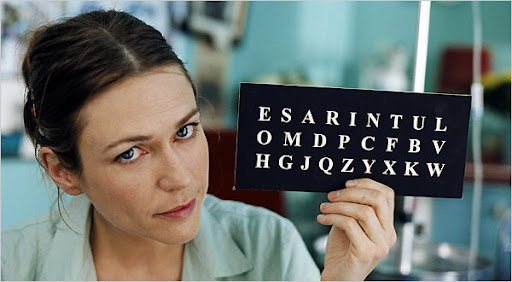
A terrifying stuffed rabbit – animated via stop motion – bites through its restraints with eyes bulging like a cartoon, dons gloves, coat and a hat, checks its pocket watch and escaped through the drawer of a writing desk that is only a little bit like a raven. Oh, and the rabbit has ripped a gash in its chest that continually leaks sawdust like an open wound. The young Alice (Kristyna Kohoutova) follows the rabbit along a carpet of set squares and rulers and down an elevator past jars of drawing pins in chutney and various animal skulls with eyeballs.
I won’t ruin all the insanity, though there is plenty here to suffice, but rest assured some of the regular Alice beats are present – the shrinking potion and growing cake, the caterpillar, the Mad Hatter’s tea party and the King and Queen of Heart’s, but the question begs to be asked that, if everything in between the main points has been dramatically changed, why not just make a different story altogether? Plus, it takes far too long for Alice to get to Wonderland (if that’s what they’re still calling it). Imagine if Frodo didn’t leave the Shire until near the end of the Two Towers, or Harry didn’t get to Hogwarts until two hours into the Philosopher’s Stone, yet the books remained the same.
If I’d seen this as a child, chances are I’d still wake up screaming. From the burrowing inflatable sock-worms, the carnivorous animal skeletons reminiscent of Toy Story’s franken-toys, baguettes sprouting nails, living steaks, Alice crying enough to flood a room and a swimming rat hammering a campfire into Alice’s head, this is nightmarish to the highest degree. Also, who the hell is in charge of screwing on the doorknobs in this world, because they’re doing a terrible job.
Choose life 5/10

Das Experiment

Based on a real test held at Stanford Prison in 1971, Oliver Hirschbiegel’s Das Experiment sees 20 volunteers placed in a 14-day research trial under 24-hour surveillance. Twelve of the men are given the role of prisoners, whilst the other eight are their guards. The prisoners are assigned three to a cell and forced to wear thin gowns, flimsy flip-flops and no underwear, whilst the guards have only one job: to ensure the prisoners obey the rules without resorting to violence. Among the prisoners is taxi driver Tarek (Run Lola Run’s Moritz Bleibtreu), a former reporter whose desperation for a story could lead to him pushing things a step too far.

Predictably, not all goes to plan, and the film remains engrossing with the fascination at how far the test will go, how far out of control it will become and what those involved will resort to. At times quite violent, the film’s strength lies in the relationship between the three groups – prisoners, guards and scientists – and in the frantic style of the more action-filled scenes. Rather more naked men than I was expecting though.
Choose film 7/10

Sucker for punishment

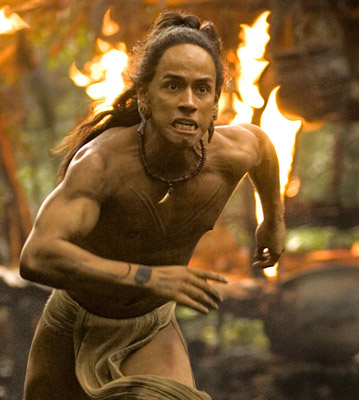
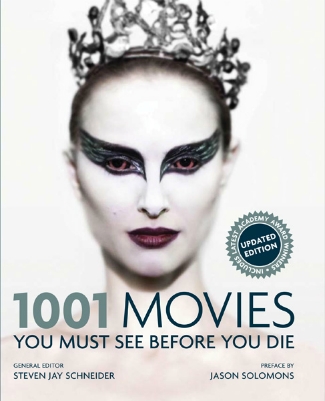
I discovered recently that, in the most recent edition of 1001 Movies You Must See Before You Die, not only had some films been added from the past 12 months (subsequently removing some of the films from the past few years, but mainly last year) but some films from earlier than last year had been added in, for example 2006’s Apocalypto, which was not in the 2011 edition, but is in the 2012. Outraged isn’t the word. It’s clear that the makers of the book were allowing themselves to benefit from the glorious gift of hindsight, allowing them to now know that Apocalypto is a much better film than the likes of An Education and Precious, but I got to thinking, what other films am I missing out on? It didn’t feel right to base my list on the randomness of the year I received the book. So after a quick Google I discovered this lovely little site, where you can find all of the films ever to appear on any of the lists, and so I’ve added the 54 missing films onto my pile, including those added for the latest book edition. Rest assured I’ll be doing the same thing for every new edition released, but I’ll try and keep within the time limit of five years. This should make January 2016 especially fun, as I’ll be finishing off the list as well as those films added only days before, but we’ll cross that bridge when we get to it.

One quick note, I’m trying to cheat by pre-empting the list, as if I saw the films that have been added in the cinema or on DVD before they were put on the list, but only if I’ve posted a review, then I consider that film already crossed off, so the 2010 True Grit that is now present has already been crossed out, as the review can be found here. Here’s hoping that The Muppets, The Help, The Artist, Bill Cunningham New York and War Horse all appear next year! I don’t have much hope for The Woman In Black.

New additions include films I know and love (Adaptation, The Host), some I’ve seen once but want a reason to watch again (The Social Network, In the Loop, the aforementionned Apocalypto), some I’ve never seen but feel I should (The Passion Of The Christ, The Queen) and some I’ve seen, but kind of hoped I wouldn’t ever have to watch again (Eyes Wide Shut, Babel). There’s also a few fairly random additions (Meet the Parents). The list now sits at 1382 films in total, so I should probably stop writing this and crack on.

Mad Max

Essentially a glorified B-Movie, Mad Max saw Mel Gibson break out as live wire hero cop Max Rockatansky in a not too distant semi-dystopian Australian future. Other than Gibson, and sometimes including him, the acting and scenes are straight out of a direct-to-DVD movie – see Max sitting bolt upright in bed, a red light illuminating his haunted eyes, or his looking under a sheet at the hospital, so I wonder whether this is memorable more for the creation of the character, a Dirty Harry inspired ‘bronze’ who’ll nab his victims by whatever means, and for the supposedly superior sequel (watch this space).

My main issue is that the character of Max is initially built up as being a kind of supercop brought in when no-one else will do, almost robotic in terms of getting the job done, and for the first scene, in which Max steps in to take out a cop killer and his girl when the rest of the force is lying in a heap of wrecked cars, this seems to fit, but for the next hour we see a completely different character, a family man in need of a break from his high stress job. It’s almost as though Gibson is playing twins. Annoyingly, it’s these more sentimental moments, making up the majority of the film, that prevent MM from being the guy’s night in classic it could well have become, for the scenes of brutality, chases and revenge have real potential.
Another problem is that the film has no real message. The gang of the man Max killed at the start end up tracking Max and his family, yet not because he killed their cohort, simply because they run into each other. It could so very easily have been a vengeance plot, but for reasons unbeknownst to all, this was omitted in favour of fate and coincidence.
Choose life 6/10

I Am Cuba/Memories of Underdevelopment/Lucia

There comes a point in the life of every blog when you just have to give in and succumb to what the public wants. It’s a wonder I’ve made it this far, but I’m afraid that time has come. I’ve been inundated with torrents of requests to focus on an area I, and many other blogs, have previously neglected. Yes, that’s right, it’s time for the post devoted to the history of Cuba! Yep, that’s right. There are not one, not two, not four, but three films on the list that all focus on the ‘modern’ history of a country I’ve never really even thought about, let alone cared (apologies to my veritable army of Cuban followers) and surprisingly enough, none of them are any good.
I Am Cuba inconceivably holds the rank of 112th best film in Empire’s poll, and for the life of me I can’t fathom why. Other than the impressive early tracking scene, where the camera goes underwater in an unbroken shot, there’s little to recommend about this tale if four disconnected stories in Cuba. The acting is largely terrible, and the stories are slow and poorly told, with an at least 10-minute edit on each section still required. Nothing more than well-filmed propaganda, such a high placing on Empire’s list makes me question their tallying methods.
Memories of Underdevelopment is a largely plotless rumination on gender, language and politics in early 60’s Havana, following a wealthy former businessman turned writer as he woos an aspiring actress, only to eventually be taken to court for allegedly abusing her virginity. Dull and overlong even at 97 minutes; it’s so boring that one of the highlights is a lecture.
At 2 hours and 40 minutes long, Lucia is a monumental waste of time. Three women, all conveniently but pointlessly named Lucia, live through three eras in Cuban history – 1895, 1932 and the 1960s. I can’t really explain the importance of these times without external research, as I was bored after 10 minutes and spent the next 150 intermittently looking at my watch and hoping for the film to end, as other than some interestingly lit scenes, nothing coherent really happens in any of the segments.
I Am Cuba: Choose life 3/10
Memories of Underdevelopment: Choose life 2/10
Lucia: Choose life 2/10

Platoon

Charlie Sheen is Chris Taylor who, after dropping out of college because he wasn’t learning anything, volunteers to fight in the Vietnam war, amongst recruits including Keith David, Forest Whittaker, Tony Todd, Kevin Dillon and a young Johnny Depp. The platoon is split, with half drawn to Willem Dafoe’s free-thinking, laidback stoner Sergeant Elias, with the rest, including brown-nosing Sergeant O’Neill (John C. McGinley), prefer the ethos of scarred Staff Sergeant Barnes (Tom Berenger), who counts success by how high the bodies are piled, rather than whether peace has been achieved.
There’s an interesting film buried in here somewhere, but it either follows Sheen’s naive, error-realising private or the conflicts between the two sergeants and their unrespected, inexperienced Lieutenant (Desperate Housewives’ Mark Moses). Some gripping moments stand out – a night ambush, and the colour slowly fading back in after a white-out napalm drop – but the rest is underwhelming and littered with trite or cheesy dialogue and 5-cent philosophising: “We did not fight the enemy, we fought ourselves, and the enemy was within us.”
Choose life 6/10

Waltz With Bashir

An Israeli animated documentary about the Palestinian conflict that at one point features a cartoon porn sequence? Righty-O. Artist/director Ari Folman, himself a Lebanon veteran, employs a unique cel-shaded animation style to assist in recounting the dreams, memories, flashbacks and hallucinations of his fellow surviving comrades that, whilst beautiful and visually striking, occasionally detracts from the already fascinating tales his friends have to tell. The style fits well with the inspiring dreams – packs of yellow-eyed feral dogs chasing through the streets – but during the one-on-one conversations that inspire the stories, the style feels jerky and distracting, so perhaps these sequences would have been better off using real footage or kept as voiceover.

Choose film 6/10

The Diving Bell and the Butterfly

42-year old Jean-Dominique Bauby (Mathieu Amalric) lives a life of wealth and excess, flitting between his three young children, a successful career as editor of Elle magazine and the bevy of beauties ready to satisfy his every need. But one day, on a drive with his eldest son, Jean-Do suffers a stroke and becomes a victim of ‘Locked-In Syndrome’, an extremely rare condition leaving him fully conscious but completely paralysed, except for blinking his left eyelid.
Beginning with the blurry, distorted hospital room swimming into focus, much of the film is shot from Bauby’s perspective, including the harrowing experience of having his right eyelid sewn up, seen from the inside. Amalric’s narration is wonderful, encapsulating the frustration of a man used to extreme independence, who now cannot wash, communicate or even move without another’s assistance, and praise must also be given to the supporting cast of implausibly attractive therapists and assistants tasked with acting to a camera for a lot of the film, and Max Von Sydow as Bauby’s elderly, apartment-bound father.
A story of triumph over intense adversary that does well not to dwell on the depressing, director Julian Schnabel amazingly mines humourous streaks – the agony of an immovable fly on the nose – whilst also celebrating the wonders of perseverance, memory and imagination.
Choose film 8/10

The Secret In Their Eyes

This 2010 Argentinean story of a retired lawyer reliving a case from 25 years ago starts slow, but after about half an hour finds its feet, becoming a gripping, thought provoking thriller.

Benjamin Esposito (Ricardo Darin, excellent) has become bored of retired life, and wants to write a novel based on his most interesting case, that of the rape and murder of a 23-year old schoolteacher a quarter of a century ago. Flitting between his modern-day remembering with the upper class boss he never had the guts to say he loved and the case itself, the film is difficult to initially pigeonhole, as it can’t decide if it’s a crime procedural, romantic drama or nostalgia piece, and is overall too slow. A turning point is reached when the cinematography kicks it up a notch with the stunning scene that starts with the camera flying through the air towards a football stadium, dives into the crowd and on to our protagonist and his alcoholic assistant searching the throngs for suspects. Seemingly unedited we follow them as a chase breaks out behind the scenes, through a bathroom brawl, down quite a long drop and onto the pitch mid-game; stunning.
Though the case appears to be all wrapped up just after the half-way mark, yet solving the case isn’t the only hurdle that must be overcome for justice to prevail. Creatively shot, with characters usually framed by doorways, piles of books, paperwork or grimy windows, this plays out like a particularly classy episode of your favourite law-based TV series (don’t have one myself), and there is more tension in one brief, wordless elevator scene it’s almost unbearable. Some scenes, particularly early on, do not realise their full potential – a raid on an elderly woman’s house in search of evidence could have been more of a set piece, though there is a nice chuckle to be had at its payoff.

A worthwhile film who’s ending and key scenes will stay with you, but if the Hollywood remake in the cards ever come to fruition (and I hope it doesn’t) then they need to wprk on the start.

Choose film 7/10

All About My Mother

Single mother Manuela (Cecilia Roth) lives with her only son Esteban as she works as organ transplant co-ordinator at the hospital. Her son believes his father is dead, but when a tragedy occurs, Manuela heads from Madrid to Barcelona in search of the boy’s father, where she ends up caring for a new brood, made up of Penelope Cruz’s demure nun, Antonia San Juan’s seasoned prostitute and Marisa Paredes’ legendary gay stage actress. The performances are all exquisite from a mostly female cast, and the plot is suitably diverse enough to remain unpredictable throughout, from the events to the tone of the picture, and a vibrant colour scheme adds to the sensual feel.

Choose film 7/10