Michael Winterbottom’s semi-documentary uses a novel approach in setting up and suggesting situations, then filming the reactions of Pakistani refugees at Shamshatoo Refugee Camp, Pakistan in February 2002, blurring the line between fact and fiction. We Follow Jamal and Enayat, a boy and his uncle, as they attempt to seek asylum to London, being smuggled across borders packed behind orange crates or hiding amongst sheep on a truck, but more information would have been appreciated on the details of why they are seeking asylum when their other countrymen aren’t, and some shots – a cow being brutally sacrificed, twitching as its life is forcibly removed – should have been omitted.
Category Archives: The List
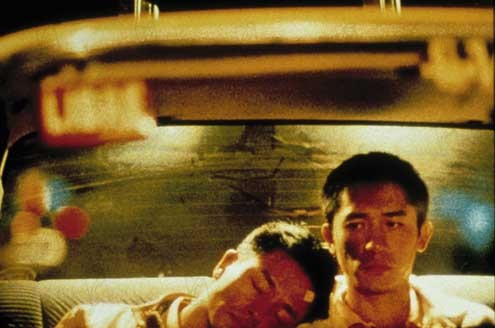
Happy Together
One of the clearest examples of style over substance I’ve ever seen on screen, this tale of a Chinese gay couple emigrating to Argentina before breaking up but being repeatedly drawn back together again uses every trick in the film school handbook to distract from the lack of anything worthwhile happening on screen.
Boudu Saved From Drowning
A kindly, respectable yet adulterous bookshop owner sees a homeless man jump from a bridge and rushes to his aid, jumping into the river fully clothed to save him (though many other younger and less plump people are on the scene before he is) and subsequently takes the tramp in, giving him clothing, food and a bed for the night. This kicks off an unusual love square between the tramp, the bookshop owner, his wife and their maid, with the ruse and uncouth hobo causing disruption in the lives of those around him. Michel Simon is perfect as Boudu, but the plot is derailed by lottery-pivoted hokum and a scene where Boudu insults, frightens and possibly rapes the bookshop owner’s wife is glossed over, though she does seem to enjoy it.First Blood
The first time I watched this franchise kickstarter, as I’m sure was the case with most people who saw it after the release of the sequels, I was expecting a film more like Rambo 2-4, Stallone’s version of Red Dawn or Commando, charging around winning the Vietnam war singlehandedly, damming rivers with the sheer volume of machine gun shell casings left in his wake. But instead, First Blood follows Sly’s Vietnam vet John Rambo who, upon discovering he is the last surviving member of his crew, is run out of town by Brian Dennehy’s judgemental cop who doesn’t like the look of him. Refusing to leave, the cops – all of whom are either crooked, sadistic or offensively ginger – take him in and beat him around a bit, causing Rambo to snap and run off into the wood suffering ‘Nam flashbacks, with the cops hot on his tail and eager for revenge.Beau Travail
Opening with a foreign cover of Holly Valance’s seminal pop masterpiece Kiss Kiss and apparently based on Herman Melville’s Billy Budd, Beau Travail is the Nytol of cinema. Twenty minutes after pressing play you’ll feel your eyelids become heavy, the world around you will slowly blur and you’ll sink back into your chair like a beanbag full of marshmallows, for this is a film in which nothing coherent really happens.A Canterbury Tale
If I’ve never heard of the film I’m watching, I usually assume it’s from the 1001 or 5-star lists, as though I’ve heard of a lot of films, these lists are peppered with some pretty obscure titles, so I was surprised to find this 1944 British film to be sitting at number 176 on Empire’s reader-voted top 500 and nowhere else.
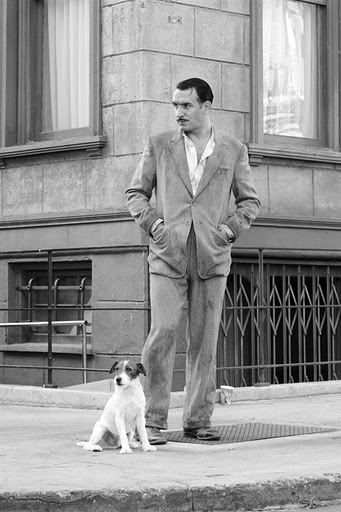
The Artist
That’s right! I’ve been to the cinema twice in 5 days! Haven’t done that since I was single! Anyway, I managed to convince Aisha to come with me to see the Artist, the modern made silent film about the birth of the ‘talkies’, currently bothering awards ceremonies and set to win big at the Oscars next month. The film was excellent; it didn’t overplay the silent gimmick, even using it for some well timed and perfectly executed comic beats, and the performances were flawless, especially from leads Jean Dujardin and Berenice Bejo, and the adorable dog Uggie.
The plot was a tad predictable, concerning Dujardin’s silent movie star losing his way amid the encroaching sound-laden future, whilst Bejo’s struggling extra finds spoken dialogue could lead to a promising career, but then the plots of silent movies often were, especially by today’s standards, where 99% of stories are entirely made from previous pictures. The supporting cast of well known or know-the-face actors, including John Goodman, James Cromwell, Missi Pyle and Malcolm MacDowell, was a little off putting, as many had wordless roles I was waiting to crop up again, but other than that this was a near perfect film that’s my current frontrunner for best picture.Choose film 9/10
Dog Day Afternoon
Based on a true story, Sidney Lumet’s tale of two inept criminals (Al Pacino and John Cazale reuniting after the Godfather 1 & 2) whose attempted robbery of a Brooklyn bank descends into chaos once the police, the media and the general public get wind of their plans. Pacino gives arguably one of his best performances – without resorting to ‘shouty Al’ – as he struggles to handle a situation completely out of his control, that is only ever going to become more so, and it’s refreshing to see a heist film with a couple of average Joes doing the robbing, as unlike Ocean’s Eleven or Inside Man, these guys have no plan, no masks, hell they even use their real names. Lumet excels when restricted to small locations (see 12 Angry Men), and here is no different, with almost the entire film taking place in and around the bank, as Pacino’s Sonny becomes a hit with the crowds gathering around the crime scene. Heading straight into the plot – Lumet rarely bothers with much initial back story – the direction is tight and entirely to the point, as every scene helps to progress the story further, or reveals a character detail previously unknown. There are some nice comedic touches – a bank teller hostage receives a call from her husband, asking what time she thinks she will be finished there, and when Sonny asks Cazale’s borderline psychotic Sal what country he wants to flee to, Sal replies “Wyoming,” and look out for Lance Henrikssen as FBI agent Murphy in one of his first film roles.
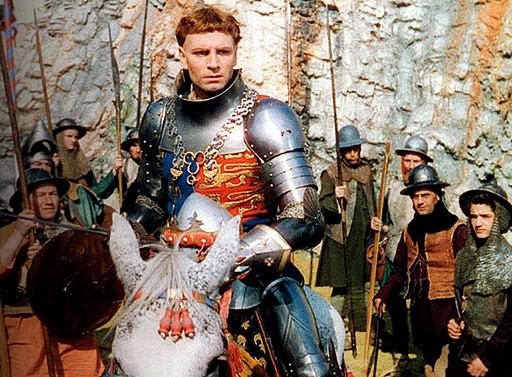
Henry V
Before going in I thought I’d be completely lost in this, having not seen Henry I-IV, but I think the films must be standalone stories or something. This adaptation of Shakespeare’s royal epic (which I haven’t read, yet, and am not overly inspired to do so now) stars, and was directed by, Sir Lawrence Olivier, and uses the novel concept of being set on a stage at the Globe, complete with a heckling audience and backstage costume changes. Whilst certainly an interesting idea, this distances us from the film, in the same way as a laugh track would from a terrible sitcom, constantly reminding you that you’re watching a film. The conceit is wisely dropped for the central acts, freeing up the action for larger sets, sweeping camera movement, horses and battles. The rousing speeches are highlights, but the whole affair is dry and slow.
King of New York
Christopher Walken landed a rare starring role in Abel Ferrara’s 1990 thriller as NY crime lord Frank White, recently released from prison and patrolling the rain lashed, neon-lit underbelly of his city. With the aid of his crew, Frank sets out to fix the city that has fallen apart in his absence, whilst retaining his criminal status, something cops Wesley Snipes and David Caruso rather object to. Also featuring Lawrence Fishburne, casting a shadow over everyone else’s performance as Walken’s right hand man and overall manic chicken-eatin’ mother fucker Jimmy Jump, and small roles from Steve Buscemi and Lost’s Harold Perrineau, if anything this film focuses too much on the policemen, and would have benefitted greatly from more Walken (as indeed could every film). He is the titular king, the film is his story, yet he seems to be a lesser character in it, though he is the most interesting as he disposes of the competition that have been running his city into the ground, and walks coolly and calmly away from a kill. I don’t think the ending did him justice either.