
Never So Few

A Steve McQueen film set during World War 2 where at one point he talks about brewing his own alcohol? No, sadly I’ve not yet reached The Great Escape (one of my consistently top 5 films of all time), I’m onto Never So Few, the Frank Sinatra-starring final obstacle before I get to watch The Magnificent Seven again, when I’ll actually start to enjoy going through all of Steve McQueen’s films.

Never So Few sees Sinatra as Captain Tom Reynolds in North Burma during the Second World War. He and his band of highly trained men, including Peter Lawford’s be-monocled Captain Grey Travis and Charles Bronson’s Seargeant Danforth, are training the native Kachins to defend their land against their attackers, but the hardships of jungle warfare and the difficulties posed by his commanding officers – particularly the lack of an assigned doctor in his troop – begin to weigh on Reynolds.

Whilst on a short trip back to headquarters, followed by a two week adjourn for the two captains, Reynolds falls in love with Carla (Gina Lollobrigida), a voluptuously alluring partner to a foreign dignitary, and he also uncovers the beginnings of a plot that may or may not involve his superiors being in cahoots with their Chinese enemies. They also meet Bill Ringa (Steve McQueen), the resourceful driver for their Colonel, and soon recruit him to join their squad.
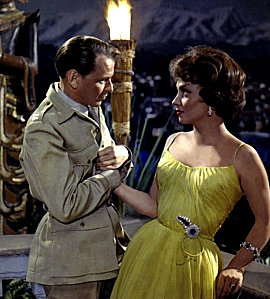
This film has some serious tone issues. Director John Sturges, yes of The Great Escape and The Magnificent Seven, cannot seem to decide whether he is making a war film – as I initially expected – a romance or a political thriller, as all three elements share roughly equal screen time, and the transition from one to another is often jarring. Styles change when Reynolds walks into a room, leaving the government corruption plot as the music swells to a bad daytime soap opera sweeping score as Carla rushes into his arms for a longing embrace. The three different elements seem only loosely tied together too – it could be justified as to having the war and conspiracy themes, as the subjects are at least related, but the romance could quite easily be lifted without affecting the other two, so tacked on is the feel. This was clearly added just to try and entice female viewers – or possibly more men with Lollobrigida’s Jessica Rabbit-like curves – but it always feels awkward and out of place with the rest of the film, just like Carla’s Spock-like eyebrows.

Speaking of tagged on, McQueen’s character is fairly superfluous too, other than adding someone engaging to watch and a mildly interesting character – plus a somewhat inventive fighting technique early on. I got the feeling that Sturges wanted to include McQueen in the film somewhere, and who can blame him? By this point McQueen had perfected the art of ‘doing something in the background’ when he wasn’t overly important in a scene, hence why he always managed to retain your focus by swatting a mosquito on his neck or playing with his gun, regardless of whether you should be looking at him or not. Sinatra’s Reynolds also has an amusing if distracting penchant for pithy one-liners that don’t necessarily make much sense (“He speaks English like he hates it.” “Inside my mouth tastes like the outside of a crocodile.”) or bizarrely successful seduction techniques in which he discusses the correct use of the word ‘hanker’. Some of the lines are great (“I’ll miss you; where I’m going nobody smells of soap”) whereas others raised a chuckle but would be worthy of a slap in real life (“I’ll be back; learn to cook.”). He also wears a cowboy hat whilst parachuting, which is only something Slim Pickens is allowed to do.

I loved Charles Bronson in the film, though his role is far too short. When his gun runs out of bullets during a Chinese attack on the camp, without hesitating he picks up a table and takes out three men with that instead. Genius. Look out for a young George Takei as a head-bandaged hospital patient complaining about the food and James Hong as a diplomat fairly late on. You may be as astounded as me to learn that Hong currently has 371 acting credits to his name, as diverse as Blade Runner to Kung Fu Panda, Airplane! to Chinatown. The guy’s been in everything.

The plot involves far too many talky scenes for a war film, with not enough actual fighting, despite a not-bad mid-film set piece involving the attack of a Chinese air base using hundreds on cans of gasoline, and a third act counterattack over the Chinese border. In spite of these, the film comes off as boring and overlong – 125 minutes – and the actual backbone of the conspiracy plot is almost impossible to fully comprehend. I’m still not entirely sure what was going on for most of it.

Choose life 5/10

The Great St. Louis Bank Robbery

The second film in my travels through Steve McQueen’s career is actually his fifth movie, as I’ve yet to come in contact with a copy of Girl on the Run, Never Love a Stranger or The Blob, and is the second film in which he plays the lead (after The Blob, which I really want to see am annoyed I can’t find).

Here, McQueen plays George Fowler, a man in need of some funds to pay his way through college after being kicked out years ago. He accepts the job of driver for a bank robbery being conducted by his friend Gino (David Clarke) and two others, John and Willie (Crahan Denton and James Dukas), neither of whom trust George, as he’s lived a clean life and hasn’t even been to prison. Meanwhile, George meets up with Gino’s sister Ann (Molly McCarthy), an old flame of his, and complications arise when she works out the real reason George is in town.


Or rather, they don’t. I fully intend to spoil certain aspects of this film that I don’t recommend watching, so I’d advise the spoiler-wary to either skip to the end of the review or stop reading, but regardless you shouldn’t watch the film. You see, my first issue with the film was that halfway through the film there is a pivotal moment in the plot where, having discovered George and Gino are planning to rob a bank, Ann writes on the side of said bank that they are going to be robbed. Understandably, John and Willie are none too pleased about this and, upon discovering Ann is the culprit, kill her. Yet, after this happens, there are no further ramifications on the actual heist of the bank receiving a warning. So in effect Ann is killed for really no reason, as her actions had zero impact on anything that happened.

Secondly, in the film’s opening there is a brief intro stating that the parts of police officers have been performed by the real officers during the real life robbery upon which this story is based, however the police have yet to show up anywhere in the film even before the heist has begun, so it is obvious that something is going to go wrong, the alarm will go off and the police will arrive, else there’d have been no point to the intro. Also, it’s quite clear why the policemen have opted for careers in law enforcement rather than a more thespian path, as though only a couple get actual lines, they are all delivered rather forcefully.

Not that the rest of the cast fares much better, as even McQueen has his wooden moments, and the various conversations within the film, especially those between George and Ann, all feel stilted and awkward, even when they aren’t supposed to be. It’s no great surprise to find that McCarthy hasn’t really done much since. 

My main problem though? The story is dull. Now normally I love a good heist flick. There’s something about the meticulous planning of a con, the recruiting of the team, pulling it off, working around unforeseen obstacles and either seeing the criminals being brought to justice or fleeing with the loot that I find fascinating and immensely watchable, be it the star-studded, glossy likes of the Ocean’s trilogy or Inside Man, or something a bit more noir-y and stripped back like Rififi. Dog Day Afternoon, The Taking of Pelham 123, Out of Sight – these are all amazing films that I don’t hear talked about nearly as often as I feel that I should. And The Great St. Louis Bank Robbery is deservedly not amongst this hallowed list, because it’s just dull.

The robbery itself is completely straightforward, with no clever tricks or any kind of skill involved. The plan is simply to go in, rob the bank and leave before the cops arrive. There’s about as much of a plan as Gale and Evelle had in Raising Arizona, yet this is after a solid 75 minutes of planning shown on screen, that actually took place over at least five days during the film. And the great thing is that nothing goes wrong – the alarm is triggered, as the thieves had expected, but the cops arrived sooner than anticipated, descending into a hail of gunfire. Other than the last minute shoot-out and McQueen going insane, there’s little of any worth that I think I’ll remember. McQueen’s final scenes are worth mentioning in that they are the only time I’ve seen so far where he has played anything other than a by-the-numbers hero character. When he finds himself alone in the bank with the hostages and a gun, he breaks down and goes a bit loopy, which was interesting to watch, but was unconvincing because it’s Steve McQueen, and he just doesn’t do that.

One interesting part of the film was that it showed how a good, clean man – in this case George – can become embroiled in the seedier underbelly of a nation, and how if he’s not careful he could quite easily become stuck within it forever.

Also, when the film opens they wisely removed the ‘Great’ from the title, as neither the film nor the factual account are anything even close to resembling great. And is it too much to ask for a little note at the end saying what happened to those that survived?

So, this isn’t a great film, mainly because the story is boring – the heist doesn’t even begin until 15 minutes before the end – the acting is poor, the soundtrack has been taken from a fairground ghost train and pretty much the whole thing is in shadow and impossible to make out.

Choose life 2/10

Somebody Up There Likes Me

After a couple of small TV roles and an uncredited appearance in 1953’s Girl On the Run (I haven’t found it yet, but I will) Steve McQueen’s second film role, again uncredited, was in this Paul Newman boxing film that I’d previously never heard of and can kind of understand why. It’s not that it’s a terrible film, it’s just thoroughly underwhelming, and tells a familiar story in a genre that has since far superseded it. To start with, it’s a boxing movie where the lead character is Italian and called Rocky Barbella (Newman). If that’s not a coincidence I’ll be shocked.

Rocko ‘Rocky’ Barbella (later Braziano) is a street hoodlum son of a former boxer. As a kid, his Dad Mick (Harold J. Stone) embarrassed Rocky in front of his friends whilst he tried to teach him how to box, and ten years later his layabout father has clearly had a prominent effect on Rocky, as he’s on the lam from the cops, and refuses to either get a job or an education. Things don’t work out too well for the lad, and he gets himself in trouble and locked away for a few years and, upon his release, is immediately conscripted to fight in World War 2. During this time, he discovers an aptitude for fighting, and is able to mould it into a boxing career, which comes in useful when he needs to raise a little money later on.
I can’t really pick out much that was terrible about this film, but nor can I find many reasons to recommend it. Newman was good (other than sounding like Jackie Gleason), but had yet to reach his shining greatness (he is definitely a front-running candidate for a future Film-Makers run, even if I have to watch Cars again) and there were some shots that I loved, particularly a receding tracking shot as Rocky makes his way through a busy market, but this happens near the start of the film, and I kept my hopes up for more cinematography of this calibre but sadly was left wanting. As well as being reminiscent of many boxing films that have been released since (not a fault of this film, but certainly not a reason to watch it either) there were some plot points eerily similar to another Newman classic, Cool Hand Luke, most noticeably his incarceration into a chain gang, during which he has a life-changing fist fight.
There were a couple of obvious gaffs – at one point a man knocks on a very wooden-sounding tent – but otherwise the script was generally entertaining (when offered a cup for a boxing match, Rocky declines and says he’ll drink out of the bottle). Some beats seemed a little extreme – a prison guard pulling a gun when an inmate doesn’t move his towel, a judge awarding Rocky with a prison sentence of indeterminate length – but these could be a product of the time the film was made and set. I loved the scene where Rocky’s manager (Everett Sloane) was telling him his love life (with his sister’s friend Adrian, sorry Norma, Pier Angeli) was making him too happy and healthy to be a boxer.
McQueen plays one of Rocky’s gang early on in the film, and his trademark doing-something-in-the-background-eve-when-he’s-not-supposed-to-be is evident even here. I was expecting him to show up again later in the film, when Rocky revisits his old town and meets up with other ruffian Romolo (Sal Mineo), but alas he only got a few scenes at the start, and didn’t have too much to do in them, but it’s only his second film so it’s OK.
I felt the film seemed to drag near the end, even though it skipped through the dense plot pretty quickly and remained under two hours long. I definitely felt like they couldn’t think of a name (or last line) for the film, and someone saw the title of Perry Como’s song, which coincidentally plays over the credits, and thought they may as well use it for this. It didn’t really fit, going by the amount of bad luck Rocky endured throughout most of his life, but it didn’t jar too much either. For all I could tell Newman was convincing in his boxing scenes, and fans of his won’t be disappointed, but unless you’re a completist like me, or have a particular fixation with boxing movies, there’s not much else here to keep you engaged.
Choose life 6/10

Top 5… Films of the Film-Makers I’m Watching

I know what you’re thinking: “A Top 5? On a Monday? Madness!” and you’re correct. However, this isn’t any old Top 5. No, it’s a Top 5 that’s actually five Top 5s, all of which are likely to change over the next few months. Basically, as regular readers will know I’ve recently decided to watch all of the films by some of my favourite film-makers, but I thought I’d give you all a taste of my opinions of them before I completely submerge myself. So, below, are my current Top 5 lists of the films of George Clooney, the Coen brothers, Alfred Hitchcock, Steve McQueen and Kate Winslet. I’ll re-do each person’s list once I’ve finished all of their films. Chances are, if you’re favourite of their films isn’t on any of the lists then I haven’t watched it yet. Or you’re wrong.