Top 5… Toilet Scenes

Let’s revel in some low brown humour for a change and look at cinema’s greatest toilet scenes. Not just bathrooms, so no Full Metal Jacket or Psycho I’m afraid, but those that specifically feature the porcelain throne.
In an attempt to ruin his date, Lloyd (Jim Carrey) has given his pal Harry (Jeff Daniels) a heavy does of powerful laxatives. To top it off, Harry’s latrine of choice doesn’t have a working flush.
Continue reading

Unlisted: The Woman in Black

Technically, Daniel Radcliffe is an adult. He’s 22 years old, so it’s possible he could have a young child and a wife who died in childbirth, and I suppose in the past these things happened younger, and of course he wants to distance himself from a certain well known child role, but with his boyish face and general lack of sufficient acting ability (though there’s no doubting it’s improvement since the early years of Potter) you’d think he’d pick a role that required a little less heavy living as the bereaved lawyer struggling to make ends meet in this picture from Hammer. But as it is, Radcliffe has unfortunately picked a part he simply isn’t right for. His face is too well known against a cast of whose are only vaguely familiar. It’s a role better suited to the likes of Rafe Spall, Armie Hammer or Jim Sturgess, who have already landed but haven’t yet rocketed to megastardom. One understands Radcliffe’s motivation, and indeed his name carries the film, but it’s clear he wasn’t cast for his skill as an actor or appropriateness for the character.

I’d heard tell from a horror aficionado that the film was scary. This is true, in the same sense that a jack-in-the-box is scary. If your idea of terror stems from a clearly signposted jump scare (every time the cat appears in Alien, for example) then this movie will chill you to the bone, but other than a couple of mildly inventive scares there’s not a lot here to send your popcorn skyward. This doesn’t mean it’s advisable to take young kids to though, for although it is a 12A, some of the themes are not suitable for bringing your 6 year old son and his two friends to see, especially if you’re going to sit in the seats directly in front of me and the little sods are going to insist on turning round and staring at me for the final hour of the film. Selfish father in Salisbury last Wednesday, I’m talking to you. Also, the two mad old woman behind me to the right, please shut the hell up in future, I can see and hear the film, so do not need everything explained loudly, and guys sitting along my row, sit the fuck still, all these chairs are joined together. Dick. Seriously, there weren’t that many people in the cinema, how come I was surrounded?
Anyway, the film. Radcliffe plays small time lawyer with poor emoting abilities Arthur Kipps, who visits a remote village to sort out some legal documents for a house. The villagers are less than happy to have an outsider visiting, and are rather keen to send him on his way, for they’re understandably concerned that every time Kipps visits the house, separated from the mainland by a long path that’s underwater when the tide comes in (you reckon he’s going to get trapped out there at some point?), someone’s kid dies in horrific or violent circumstances. What’s stranger here though, and what doesn’t make sense at the end of the film, is why the villagers don’t explain to Kipps what is going on. Had they told him he’s inadvertently causing it and how, chances are he might stop. Other than this glaring oversight, there were a couple of other issues I had with the film. Firstly, at one point Arthur willingly goes swimming around in mud deeper than he is. Before doing this, any sensible person would at least remove their waistcoat, tie and shoes, not needlessly jump in dressed for a formal dinner party. Secondly, about half way through the film part of the game is given away purely by stylistic choices as to the nature of what is causing the travesties is shown to us but not to Kipps, and will clearly not be a threat towards him until somewhere near the end of the third act. At this point I nearly stood up brushed my hands off and walked out with a “Right, that’s that sorted then” motion.
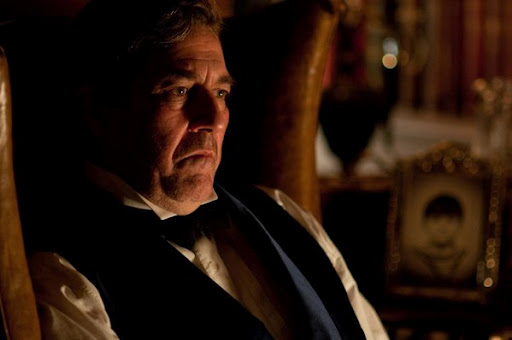
Not to say it’s a bad film, it’s just thoroughly underwhelming and predictable. Other than a few sequences – the candles in the hallway and a nice moment with a reflection in the window – and a wonderful supporting role for the ever-underused Ciaran Hinds, there’s nothing here I’ll remember for long.
Choose life 5/10

I Am Cuba/Memories of Underdevelopment/Lucia

There comes a point in the life of every blog when you just have to give in and succumb to what the public wants. It’s a wonder I’ve made it this far, but I’m afraid that time has come. I’ve been inundated with torrents of requests to focus on an area I, and many other blogs, have previously neglected. Yes, that’s right, it’s time for the post devoted to the history of Cuba! Yep, that’s right. There are not one, not two, not four, but three films on the list that all focus on the ‘modern’ history of a country I’ve never really even thought about, let alone cared (apologies to my veritable army of Cuban followers) and surprisingly enough, none of them are any good.
I Am Cuba inconceivably holds the rank of 112th best film in Empire’s poll, and for the life of me I can’t fathom why. Other than the impressive early tracking scene, where the camera goes underwater in an unbroken shot, there’s little to recommend about this tale if four disconnected stories in Cuba. The acting is largely terrible, and the stories are slow and poorly told, with an at least 10-minute edit on each section still required. Nothing more than well-filmed propaganda, such a high placing on Empire’s list makes me question their tallying methods.
Memories of Underdevelopment is a largely plotless rumination on gender, language and politics in early 60’s Havana, following a wealthy former businessman turned writer as he woos an aspiring actress, only to eventually be taken to court for allegedly abusing her virginity. Dull and overlong even at 97 minutes; it’s so boring that one of the highlights is a lecture.
At 2 hours and 40 minutes long, Lucia is a monumental waste of time. Three women, all conveniently but pointlessly named Lucia, live through three eras in Cuban history – 1895, 1932 and the 1960s. I can’t really explain the importance of these times without external research, as I was bored after 10 minutes and spent the next 150 intermittently looking at my watch and hoping for the film to end, as other than some interestingly lit scenes, nothing coherent really happens in any of the segments.
I Am Cuba: Choose life 3/10
Memories of Underdevelopment: Choose life 2/10
Lucia: Choose life 2/10

Top 5… Alan Tudyk Characters

Alan Tudyk is 41 today, so let’s celebrated his birthday with his best five roles:

5. Jack (Knocked Up):
More of a cameo, Tudyk plays Jack, Alison’s (Katherin Heigl) boss at the TV studio where she works along with Kristen Wiig’s bitchy colleague Jill. Tudyk steals the scenes he’s in, insisting that, if Alison wants to be on camera, though he can’t legally ask her to lose weight, it would be nice if she looked a bit tighter.
Continue reading

Platoon

Charlie Sheen is Chris Taylor who, after dropping out of college because he wasn’t learning anything, volunteers to fight in the Vietnam war, amongst recruits including Keith David, Forest Whittaker, Tony Todd, Kevin Dillon and a young Johnny Depp. The platoon is split, with half drawn to Willem Dafoe’s free-thinking, laidback stoner Sergeant Elias, with the rest, including brown-nosing Sergeant O’Neill (John C. McGinley), prefer the ethos of scarred Staff Sergeant Barnes (Tom Berenger), who counts success by how high the bodies are piled, rather than whether peace has been achieved.
There’s an interesting film buried in here somewhere, but it either follows Sheen’s naive, error-realising private or the conflicts between the two sergeants and their unrespected, inexperienced Lieutenant (Desperate Housewives’ Mark Moses). Some gripping moments stand out – a night ambush, and the colour slowly fading back in after a white-out napalm drop – but the rest is underwhelming and littered with trite or cheesy dialogue and 5-cent philosophising: “We did not fight the enemy, we fought ourselves, and the enemy was within us.”
Choose life 6/10

Waltz With Bashir

An Israeli animated documentary about the Palestinian conflict that at one point features a cartoon porn sequence? Righty-O. Artist/director Ari Folman, himself a Lebanon veteran, employs a unique cel-shaded animation style to assist in recounting the dreams, memories, flashbacks and hallucinations of his fellow surviving comrades that, whilst beautiful and visually striking, occasionally detracts from the already fascinating tales his friends have to tell. The style fits well with the inspiring dreams – packs of yellow-eyed feral dogs chasing through the streets – but during the one-on-one conversations that inspire the stories, the style feels jerky and distracting, so perhaps these sequences would have been better off using real footage or kept as voiceover.

Choose film 6/10

Unlisted: Bill Cunningham New York

Chances are, you’ve never heard of Bill Cunningham. If he cycled past you on the street you may not give him a second glance, and if you saw him hop off his bike to take pictures of a pretty young thing in attractive attire, you’d be forgiven for thinking him to be nothing more than a dirty old man, but Bill is one of the most interesting, knowledgeable and influential fashion photographers working today, and he’s over 80 years old.
For Bill, you see, is behind two regular columns for the New York Times. Evening Hours sees him documenting the goings-on of New York’s night life at various functions and parties around the city; whilst On The Street gives Bill a chance to publish the photographs he’s taken of the more creatively dressed pedestrians he finds wandering around the Big Apple. Models and celebrities are not necessarily of his concern; it is the clothing that catches his eye, from a unique hat or novel colour combination to something truly original. He treats everyone the same, from supermodels to the bag women living on the streets, as long as it’s something different, and he’s not afraid to call out the likes of Mizrahi or Armani if they dare to release a new line similar to something that’s already been done. At one stage in his life, Bill owned a hat store, yet had no interest when the likes of Ginger Rogers and Joan Crawford graced his doorway, for in his mind they just weren’t stylish.
For all his love of the fashion world, the octogenarian doesn’t exactly cut a stylish figure in his functional street-sweeper jacket, flat cap and duct-taped poncho, and for the most part Bill isn’t in it for the money. He lives in a tiny one-room apartment with no kitchen, no wardrobe, and barely a bed crammed in amongst the forest of filing cabinets holding negatives of every photo he’s ever taken.
If you think that everyone in the fashion world refuses to leave the house without being ready for the catwalk, this is a must-see, and will even appeal to those without any interest in style (oh, wait, that’s me!). It’s refreshing to see someone with a true passion, who doesn’t mind working for next to nothing, genuinely enjoys what he does and is rewarded for it, yet still remains courteous, honest and immensely dedicated even in his autumn years, and to prove it, the likes of Tom Wolfe, Patrick McDonald and Anna Wintour all show up to sing Bill’s praises.
Choose film 7/10

The Diving Bell and the Butterfly

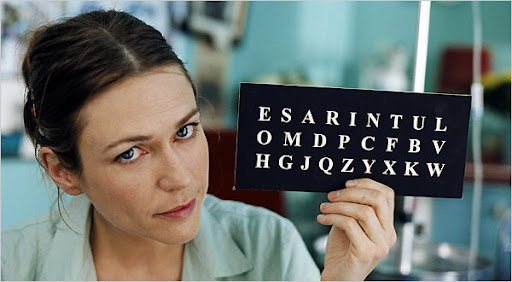
42-year old Jean-Dominique Bauby (Mathieu Amalric) lives a life of wealth and excess, flitting between his three young children, a successful career as editor of Elle magazine and the bevy of beauties ready to satisfy his every need. But one day, on a drive with his eldest son, Jean-Do suffers a stroke and becomes a victim of ‘Locked-In Syndrome’, an extremely rare condition leaving him fully conscious but completely paralysed, except for blinking his left eyelid.
Beginning with the blurry, distorted hospital room swimming into focus, much of the film is shot from Bauby’s perspective, including the harrowing experience of having his right eyelid sewn up, seen from the inside. Amalric’s narration is wonderful, encapsulating the frustration of a man used to extreme independence, who now cannot wash, communicate or even move without another’s assistance, and praise must also be given to the supporting cast of implausibly attractive therapists and assistants tasked with acting to a camera for a lot of the film, and Max Von Sydow as Bauby’s elderly, apartment-bound father.
A story of triumph over intense adversary that does well not to dwell on the depressing, director Julian Schnabel amazingly mines humourous streaks – the agony of an immovable fly on the nose – whilst also celebrating the wonders of perseverance, memory and imagination.
Choose film 8/10

Unlisted: The Muppets

Celebrating the best film I’ve seen this week that’s not on the list, first up its The Muppets. I mentioned recently that I’ve not had a lot of dealings with the muppets in the past, and I now realise I’ve lived a previously unfulfilled life, devoid of a required amount of felt to maintain the desired level of happiness.
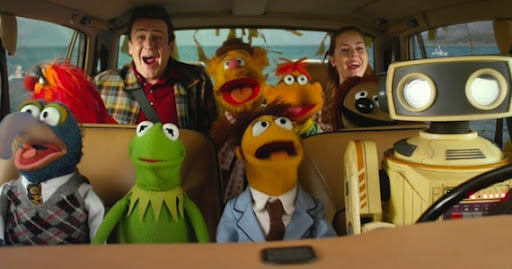
The cloth characters latest outing both improves upon and acknowledges those that have come before it (I’ve read that Muppets in Space and Muppet Treasure Island aren’t as good as The Muppet Movie or Muppet Christmas Carol, but I intend to find out soon) and like those other films the plot is kept nice and simple – Muppet superfan brothers Walter and Gary (co-writer and real-life Muppet super face Jason Segel) go on holiday to LA with Gary’s long term girlfriend Mary (Amy Adams), where they discover that wealthy oil baron Tex Richman (Chris Cooper) plans to buy and destroy the Muppet Theatre, giving the duo a few days to round up their disbanded heroes and raise $10 million. Just like its predecessors, the film is packed with mostly recognisable cameos, including Alan Arkin, Sarah Silverman and a very game Jack Black, and the soundtrack, including a moment where Chris Cooper quite unexpectedly raps (it’s not that bad actually) and the Oscar winning Man or Muppet is amazing, written by Flight of the Conchords Bret McKenzie, and I shall be purchasing it soon.
Improving upon the first movie by never spending too much time on one character, there are still a few flaws. Most irritatingly, a detail from the finale – Walter’s talent – is not mentioned throughout the entire film, and is pulled out of a hat at the end, and the first half, whilst good, is nowhere near as entertaining as the second, once the show the gang are putting on kicks off. Hopefully we won’t have to wait another 10 years before the next Muppet film, though if we do I’m sure it will be worth it.
Choose film 9/10