Violence is Funny

Everybody has their own favourite Christmas films, and more often than not they tend to be those watched every year during your childhood. The ones you can quote line for line, and aren’t ashamed to admit you love. That’s the beauty of the Christmas film, by their very nature they almost have to be sappy, family-friendly, it’ll-all-be-OK-in-the-end schmaltz, and some are so much the better for it. Whilst A Christmas Story may not be my personal favourite, I can absolutely see why others may adore it, and you give me National Lampoon’s Christmas Vacation, The Muppet Christmas Carol or Elf every day of December and you’ll find it a difficult task to prise me from the sofa. But this post isn’t about any of those film, it’s about a series of films, all set over the holiday period, which I feel I should write about, because I love them so much. That’s right, it’s Home Alone.

Growing up, I must have watched Home Alone and its sequel, Lost in New York, every Christmas since about 1995, but for some reason or another I hadn’t seen either of them for a good few years, so earlier this year I spotted the 4-disc boxset in my local second-hand DVD store for far less money than I would have been willing to pay, so I made a swift purchase and shelved them aside, looking ahead to Christmas when numbers 1 and 2 would be watched for the umpteenth time, and parts 3 and 4would be seen for the first. Well on the weekend before Christmas the time finally came, and was made all the more special by it being my girlfriend’s first viewing of all of them (quickly followed by her first viewing of The Muppet Christmas Carol, although I’ve yet to sit her down for Christmas Vacation).
Before watching, I was slightly apprehensive as to whether the first two films would live up to my memories, but I can attest that they are still amazing. There’s something about spending a considerable amount of time setting up the premise – Kevin McCallister (Macaulay Culkin) is, through a series of coincidences and mishaps, left alone at his family’s palatial home over Christmas whilst they are holidaying in Paris. After coming to terms with his situation and learning how to take care of himself and the house, his troubles are deemed far from over when two bumbling crooks, Harry and Marv (Joe Pesci and Daniel Stern), pick the McCallister’s apparently empty house as the perfect target for a little festive theft, so Kevin must use every trick at his disposal to stop them.
This is the very definition of a film of two halves. The first half outlines Kevin’s predicament – his family waking up late after a downed power line, confusion at the taxi head count and rushing through the boarding gates – and introduces our hero’s nemeses, gradually setting up the life lessons that Kevin will have learned by the end of the film – the importance of both independence and family, ingenuity and friendship – whilst the second half is a monumental payoff, with the two crooks getting absolutely everything they deserve in a masterpiece milieu of slapstick, gurning and cringing (the nail through the foot, always the nail through the foot!).
The sequel manages to recreate the same sense of wonder and excitement at the prospect of being allowed to run amok with no adult supervision, but this time gives Kevin not just his home town to play with, but the entirety of New York City, complete with a grand hotel and a magnificent toy store to muck about in. Although the structure is almost exactly identical – Kevin argues with his family, is separated from them, thrives on his own, befriends an apparently scary local loner, runs into difficulties, thwarts the plans of Harry and Marv, rigs a house full of wince-inducing booby traps, uses the aforementioned friend to catch the thieves before being reunited with his family – it remains fresh by approaching each aspect in a new and interesting way. And it features Daniel Stern being hit in the face with a brick, four times. Stern’s subsequent defiant yell of “Suck brick, kid” when he is presented with the opportunity to retaliate is one of my favourite moments in festive cinema, up there with Jimmy Stewart’s life-affirmed canter through Bedford Falls and Andrew Lincoln’s title card confession to Keira Knightley. And Buddy the Elf being hit by a car.
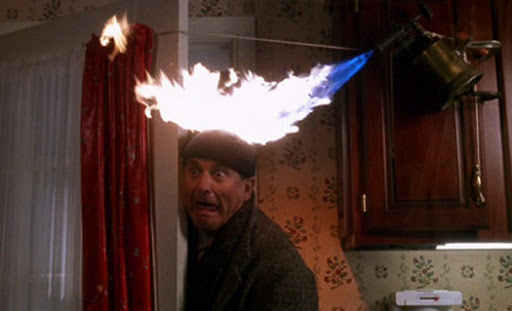
The real universal joy of these first two films lies partly with the heartwarming morals and happy endings, colourful characters and the triumph over adversity of not just a child alone at Christmas, but his parents’ desperate attempts to reunite the family, but personally I believe the true unique quality that sets this duo apart from other festive fare is the violence, of which almost the entirety is directed towards Harry and Marv. Throughout the films they endure enough torment and torture to kill them many, many times, be it from five-storey falls onto concrete, toilet bowl explosions (after an impressive handstand from Harry), being crushed by numerous heavy objects (the nose-bending tool chest down the stairs is a personal highlight) or just being conked on the back of a head with a snow shovel. The beauty is, no matter how much the pair are put through, they can always get back up again and continue their chase of the kid at the other end of the string those paint cans are tied to. It’s a live-action cartoon, and made all the better by the expressions Pesci and Stern are able to contort their faces into. Pesci’s acting decision to channel Muttley in the second film does tend to throw me a little, but it fits the feel.
This love in the first films of all things potentially disabling and dismembering was surely the reason for my high hopes for parts three and four. I had of course heard that these films were sub-par at worst, and disappointing at best, but I had assumed this would be because the film-makers hadn’t understood that you need to have that balance of the gentler, expositionary first half, before the riotous free-for-all of a conclusion. I’d anticipated the directors (The Smurfs’ Raja Gosnell and Teen Wolf’s Rod Daniel, rather than Chris Columbus) would have settled for the most basic of premises before unleashing a never ending torrent of flamethrowers, anvils and rocket-packs, but it turns out I could not have been more wrong. Instead of the expected violence-fest, there was a seemingly endless amount of set-up with so little pay-off I almost missed it completely. Home Alone 3 at least puts a little effort in, but the traps set are far less ingenious and incapacitating than in the previous installments, with at one point of the crooks (four this time, none of whom have done enough to remove Home Alone 3 from their top four films on IMDb) being forcibly restrained by nothing more than a weak hose pipe going off in his face, and they all go through a lot worse than what ultimately immobilizes each of them. Also, where in the first two films Kevin’s isolation was accidental, here Alex (Alex D. Linz) is left home alone on purpose, and only for a few hours at a time, when he’s home sick, his parents are at work and his siblings (including a young Scarlett Johansson) are at school. The fact that at the end of every day the rest of his family comes home to surround him with safety kind of ruins most of the tension. My main issue though, other than the lack of Daniel Stern and Joe Pesci, or a John Candy/Tim Curry-style comedic actor in a supporting role, is that the villains are international terrorists on the trail of a misplaced microchip hidden inside a remote control car Alex has recently acquired. The first times around the crooks were a pair of bumbling ne’er-do-wells who couldn’t find a bag of cement if it fell on their heads, so their being bested by a bratty kid is almost plausible, but this time the crooks come equipped with enough plans and gadgetry that it just becomes silly, and not in the way it’s supposed to.
All of this is fine, however, in comparison to Home Alone 4, a film which justifiably was only released as a TV movie. It tries to bring back the character of Kevin McCallister (Mike Weinberg, hands down the worst child actor I’ve seen) and Marv (French Stewart), but this time Kevin’s parents are separated, and Kevin runs away to spend Christmas with his Dad (Jason Beghe) and his mega-rich new girlfriend (and potential fiancé) Natalie (Joanna Going). Natalie lives in an ultra-modern, remote controlled house complete with a butler and maid, and the British royal family are coming to stay for the festive period. Marv and his girlfriend Vera (Missi Pyle) plan to kidnap the young prince, but weren’t expecting the young Kevin to be around and get in the way. I have four main problems with this film, other than the aforementioned acting talent on display. The predominant one is that, in a film series called Home Alone, and in which the previous three installments have all featured a child being abandoned and left to fend for himself; at no point in this film is Kevin actually alone. The maid and butler are always there somewhere, and if they are ever both unavailable for assistance, this isn’t made clear until after the events have taken place, so you spend the entire time just waiting for help to arrive. Secondly, there’s a twist signposted early on that so obviously wants you to think one thing that the only possible alternative becomes abundantly clear, yet is portrayed as a dramatic surprise when it is eventually spelled out. Thirdly, this is a film in the Home Alone series, yet there’s barely any traps laid out for the crooks to fall into. I’m going to spoil it a little now, but I strongly advise you not to watch this film, which makes it OK in my book. The whole point of the Home Alone films is for a kid to find novel ways to injure trespassers using household objects and toys, but this is almost entirely ignored. The only trap Kevin actually sets is a large frying pan rigged behind a door to bash someone in the head, and he even has to stand next to it to release it. Granted, seeing French Stewart being smacked in the face with a swinging pan is still pretty damn funny, but I really wanted more. A stereo playing one of the crook’s voices doesn’t make sense, and setting up a revolving bookcase to spin faster when there’s people trapped inside is nowhere near what could have been achieved with so much gadgetry to hand. Oh, and the elevator that can’t go up so gets stuck between floors? Well why not just go down or force the doors open? Ridiculous. Anyway. My fourth and final problem is the film’s final shot, when Kevin looks into the camera and instructs his voice-activated remote-control, that apparently only controls the house, to alter the weather patterns and make it snow. I hate this kind of thing, and this may well have just replaced Sex and the City 2 as the worst film I’ve ever seen.
So, other than one smirk-inducing frying pan to the face, there is absolutely no reason to watch Home Alone 4, and don’t bother with part 3 either, just watch 1and 2, every Christmas, forever.
Home Alone: Choose Film 8/10
Home Alone 2: Choose Film 8/10
Home Alone 3: Choose Life 3/10
Home Alone 4: Choose Life 1/10
Seven Psychopaths

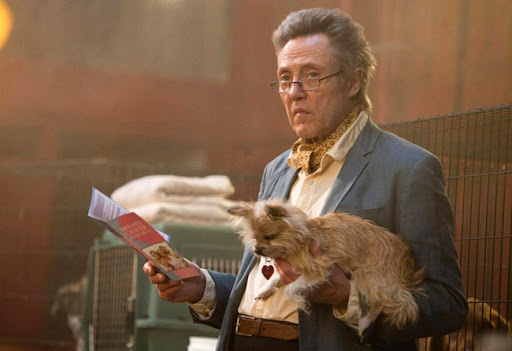
Marty (Colin Farrell) is an alcoholic writer (otherwise known as just a writer) who has the title of his latest screenplay – Seven Psychopaths – but is struggling for anything after that. His best friend Billy Bickle (Sam Rockwell) is desperate to help, and posts an advert in a newspaper, calling for any psychopathic characters to get in touch as inspiration. Meanwhile, Billy and Hans (Christopher Walken) run a dog-napping business, in which Billy ‘borrows’ the dogs from unsuspecting owners, only for Hans to return them a few days later and collect the reward. This all goes a little awry when Billy’s latest victim, Bonny the ShihTzu, is owned by ruthless mob boss Charlie (Woody Harrelson), and he really loves that dog.
Continue reading

The Day The Earth Stood Still

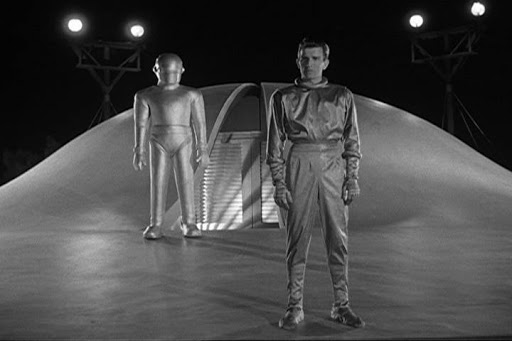
An alien ship lands in Washington D.C., and from it emerges Klaatu (Michael Rennie), a humanoid from a neighbouring planet, who brings with him a message he wishes to convey to the various leaders of Earth. When they squabble pettily over where the meeting should be held, Klaatu instead decides to meet with the general public, so he rents a room in a boarding house, under the name Mr. Carpenter. There he meets the other lodgers, including Helen (Patricia Neal) and her young space-obsessed son Bobby (Billy Gray), and eventually he meets with Professor Barnhardt (Sam Jaffe), a learned scientist, in the hopes of discovering something worthwhile about Earth and mankind. Oh, and one other thing. Klaatu has a giant, omnipotent robot guardian called Gort, who has an eye-laser capable of disintegrating anything.

As a nerd, I like my science fiction, but I’ve never obsessed over it. I’m a fan of Star Wars, but I’m not a super fan, and the only Star Trek-related media I’ve seen is J. J. Abrams recent film. To be honest, Firefly has always been more my cup of tea, and that’s only science fiction in that its set in space, and that’s a similar situation here. The actual science fiction elements of The Day The Earth Stood Still are mere background details for a large section of the film, as it becomes almost a fish out of water tale of a man unfamiliar with his new surroundings, learning about a new culture, its eccentricities and foibles. Obviously there is still a great deal of the otherworldy – Klaatu is an alien after all, and there’s the robot capable of destroying worlds who is controlled by words and flashing lights – but the more memorable aspect is the social indictment; the message that we, as a civilisation, need to get our act together or suffer the consequences. It comes as no surprise that the film was remade in 2008 (though I’ve not yet seen it), as clearly had the events of this film actually taken place in 1951, then we certainly didn’t listen, as can be seen by the state of the world today. But I don’t want to get too political, so I’ll just say that message from the film back in the 50s, just six years after the end of the Second World War, is possibly just as relevant today.

Anyway, the film. Seeing as it was made over 60 years ago, its no real shock to find that the special effects for the most part don’t really stand up. Gort is quite blatantly a man in a suit (Lock Martin, of whose nine screen roles six were uncredited and one was deleted), wires are fairly visible in some scenes and footage is clearly sped up to indicate people running away. The laser and disintegration scenes are ropey at best, but I was thoroughly captivated by the shots of the spacecraft opening, with a doorway appearing on its seamless surface, and disappearing again just as effortlessly. 

Michael Rennie seems perfectly cast as a creature not off this world, with his angular features, harsh cheekbones and a deliberate, considered approach to movement and speech making him seem passable for a human, but one who’s definitely a little… off. Which makes it something of a surprise when Helen has no qualms about leaving her son Bobby with this strange man she’s known for only a matter of hours as she goes gallanting off with her beau.  There was a very high possibility of the kid becoming excruciatingly annoying – my girlfriend certainly thought he was – but I found his naivety endearing, even if he seemed far too respectful of his elders, in a manner unheard of today.

The film’s cinematography was brilliant, especially the use of shadows and silhouettes, and the imagery of Gort carrying the figure of Helen, as made famous by the poster. Bernard Herrmann’s score is also suitable sweeping and atmospheric. It’s no surprise that this film has become an integral part of classic science fiction, with the phrase “Klaatu, barada, nichto” (or is it necktie?) going down in history as one of the greatest quotes in cinema. I’m intrigued to now see the remake (if only for John Cleese, an idol of mine), but public opinion has left it not very high on my to-watch list.

Choose film 8/10

The Brothers Bloom

There is one benefit to my passing out during Looper last weekend, I’ve now managed to see director Rian Johnson’s second feature before seeing all of his third. It’s streaming on LoveFilm at the moment, so if you’re a member, go forth and watch it now, post haste. All being well, I’ll be seeing Looper before this time next week, and next Sunday should see my review.

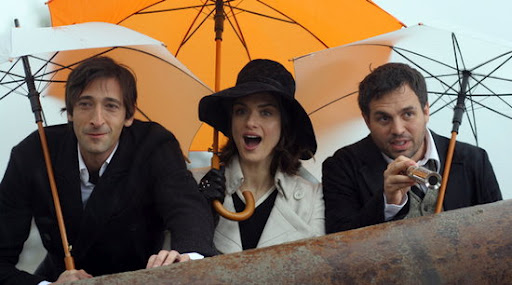
The Brothers Bloom seems on the surface to be far more straightforward than the high-school-noir Brick and time-travel-brain-twister Looper, but in reality its just as subversive as those two. Mark Ruffalo and Adrien Brody are brothers Stephen and Bloom, two con men who have been running scams since their early teens. Stephen (Ruffalo) is the brains of the outfit, and Bloom (Brody) always takes the leading role in the con. Roughly twenty five years after their first con, Bloom wants to quit, but Stephen ropes him in to one last job, conning Rachel Weisz’s ludicrously wealthy yet decidedly eccentric heiress Penelope from some money she’d probably never miss. Along with their near-mute accomplice Bang Bang (Rinko Kikuchi), the brothers set out to dupe Penelope from her riches, but who exactly is the victim in this game?
Continue reading

Man on Wire

Another film I reviewed for the So You Think You Can Review tournament at the Lamb, this also sees the start of my attempting to review at least one documentary a month for this site.I’ve had the debate many times with various people as to whether a documentary can really be considered as a film. This usually happens when I use the phrase “I watched a great film last night; it was a documentary about…” The conversation’s other participant invariably glazes over at the ‘D’ word, as how could anything compiled entirely from archive footage and talking-head interviews be seen as entertaining? After all, there’s the danger they might actually learn something. I feel that if there was ever going to be a documentary that could sway the naysayers, then that film is Man on Wire. Even though it is very much a true story, told by those involved with the aid of photographs, footage and re-enactments, this tale of a man attempting to infiltrate the World Trade Centre and walk a tightrope between the towers is compelling, nail-biting stuff, and for the most part feels like a work of fiction.
Continue reading

Tinker Tailor Soldier Spy

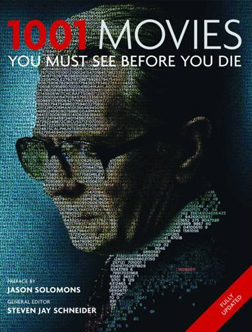
Seeing as the cover of the next edition of the 1001 Movies You Must See Before You Die has been announced (the book is due to be released next month), I thought it’d be a good time to review the film on said cover, as it’s a certainty to become a member of the hallowed list in the imminent future. So, without further ado, I present Tinker Tailor Soldier Spy, a film that I was very surprised to see on the cover, as personally I don’t think I’d have included it in the book at all, giving the cover space instead to probably The Artist, even if the Tinker Tailor poster is better.


It’s only fitting that such a muddled up film should have a relatively incoherent review, so I’m going to jump in randomly and start with the cast. It’s pretty goddamn incredible that such a stellar cast, comprising of some of the best British actors from varying generations working today, could be assembled for one film. You’ve got the likes of John Hurt amongst the more senior players, Toby Jones, Colin Firth, Mark Strong, Ciarin Hinds and Kathy Burke as the seasoned actors as well as up-and-comers like Benedict Cumberbatch and Tom Hardy, not to mention bit roles for Stephen Graham, Roger Lloyd-Pack and Christian McKay. And, of course, Gary Oldman. It just goes to show the strength of the source material that such a great cast, and director Tomas Alfredson, straight from his similarly bravura Let The Right One In, would flock to it. Even Colin Firth was willing to take what is essentially a tangential role after just having won a Best Acting Oscar for The King’s Speech.

It takes a brilliant actor to not only attempt to replace the likes of Alec Guinness, James Mason and Dunholm Elliot – all of whom have played the character of George Smiley before – but to in fact outshine them as arguably the definitive screen version of Smiley. Oldman is magnificent in a pared down, stripped back performance almost entirely devoid of movement, yet the cogs behind his eyes are just about audibly whirring away as he sits and watched, drinking everything in and analysing the situation. Smiley rarely utters a word or makes an extraneous movement – his first utterance is a good 16 minutes in, after having appeared in several scenes already. He shines even beneath the massive glasses and dour overcoat that would envelop a lesser actor.

Remarkably, Tinker Tailor marks Oldman’s first ever Oscar nomination, for Best Actor, naturally, which he justifiably lost to Jean Dujardin for the aforementioned The Artist, but I believe Oldman came a close second. I myself was shocked to find he’s never even be nominated, but when you look back through his body of work there aren’t many roles that you could argue he should have been awarded for. Perhaps Sid and Nancy, but that wasn’t terribly well received I think, and doesn’t really fit in with the kinds of films that the Oscar board tend to take notice of, and in everything else he’s either been the bad guy – rarely awarded by the academy (at least until The Dark Knight) – or performs well in a small role, lost amongst an ensemble cast of similar abilities to himself – see True Romance, Harry Potter and Batman. You’ve also got to take into account some of the more questionable roles in his career – playing a dwarf in Tiptoes anyone? So it’s nice to think that, with so many outlandish, extravagant roles under his belt – The Fifth Element, Leon – it is Oldman’s most quiet, restrained and subdued performance that earned him the Oscar nod.

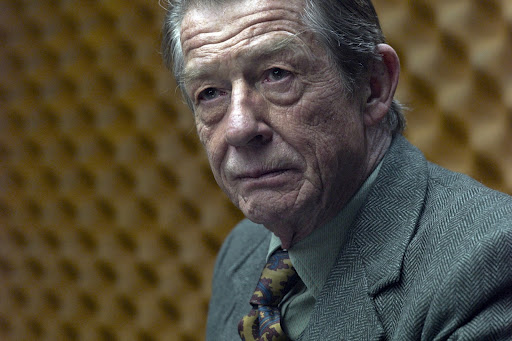
 I’m not even going to try and explain the plot of this film as, after having watched it and read John Le Carre’s book upon which it is rigidly based I could still only pin point the major issues. Basically, Smiley has been brought back into The Circus – the nickname for the British Intelligence – to try and find a mole from within a small group of higher ups – a group that used to contain him. His boss is/was John Hurt’s Control, and the suspects are the shifty Toby Estergase (David Dencik, a Swedish actor I’ve not come across before, but who played different roles in the two versions of The Girl with the Dragon Tattoo, and is suitably engaging here), the suave, womanising Bill Haydon (Colin Firth), “poison dwarf” head honcho Percy Alleline (Toby Jones) and his right-hand man Roy Bland (Ciarin Hinds). We are also shown, in parallel, the story of field agent Jim Prideaux (Mark Strong, in a rare and disorientating non-bad-guy role), whose shooting on assignment may have caused the suspicion back at headquarters. Assisting Smiley is Peter Guillam (Benedict Cumberbatch), a trustworthy up-and-comer with a way with the ladies, and Tom Hardy plays Ricki Tarr, the unreliable young firebrand whom Smiley introduced to the industry, and who may hold the key to the mystery.

Everyone is perfectly cast, and there isn’t a weak link amongst them. Similarly, the mood of the film is spot-on, and there is never so much as a red or a green on screen at any point, everything is in varying shades of grey, brown and taupe, from the sky to the clothes, the walls to the cars. The entire thing may as well have been shot in sepia, as it’s apparently been set in a time before colour was invented. The many conversations throughout mostly take places in dusty, dingy rooms yellowing with tobacco. It’s unusual for a film that some of the flashback sequences are actually more vibrant and brightly lit than those set in the film’s present, which could be read as an indication that perhaps those sunnier days were better for everyone involved, with less conspiracies and deception. Or at least, less in the current direction.

So, why did I have such a problem with this film? Well, mainly it’s because it’s so damn confusing. I understand that that’s entirely the point, and that some elements of the plot – when which bits are set in relation to others – are only roughly clarified towards the end to aide this sense of confuddlement, but even having read the book I still couldn’t tell what everyone was doing and why. This could also be because I didn’t really care. None of the characters are particularly likable, with the possible exception of Guillam and Prideaux at times, and even knowing who the final reveals didn’t help me very much. That’s something to praise, I suppose, that knowing the ending doesn’t lessen my appreciation for the film, but that’s a little bit of damning with faint praise if you ask me.

The most fun thing I found about this film is playing ‘Spot the Harry Potter Actor’ during it (Can anyone beat my six?). Though the performances are all impeccable and the atmosphere is both what was aimed for and what it should be, I cannot recommend this film on the basis that I didn’t enjoy it, and I’m still not sure what it was about – yet I don’t really mind.

Choose life 8/10

Departures

Once again I find myself writing under the influence of various prescription narcotics as I recover from my latest malady, so please accept the usual apologies for any slurred typing or off kilter ramblings. Well, any more than usual, anyway.

Departures is a film I feel I should have heard more about. I don’t stay abreast of foreign features as much as I’d like, but I feel that whenever any that are widely deemed great come along, then the chances are that I’ve at least heard of them, yet ‘s slow, personal, moving story of an unemployed cellist discovering self confidence in the most unlikeliest of places has completely passed me by, despite winning the Best Foreign Language Oscar in 2009, beating out the likes of Waltz With Bashir, The Baader Meinhof Complex and The Class, all of which I’ve heard of and two of which I’ve seen. I can’t really explain why I’ve not heard of it, though I’m certain it was never released in any cinemas near me, hardly surprising, considering how many screens were booked up for Twilight: New Moon, released one week previously.

The aforementioned cellist is Daigo Kobayashi (Masahiro Motoki), a possible relation to Pete Postlethwaite’s character in the Usual Suspects. His Tokyo orchestra plays for more-than-half empty audiences, so the owner dissolves the group and Daigo, lacking the self confidence the seek employment elsewhere, sells his cello and moves back with his wife, Mika (Ryoko Hirosue) to the house his mother left him when she passed away. Daigo’s search for employment leads him to a vague newspaper advertisement and a nondescript building. Without even fully realising the job he has unwittingly applied for, Daigo is hired. The career path he has just found himself travelling along? Preparing the dead for their funerals.

Now to me, this job doesn’t sound quite as disgusting as is made out in the film, as similarly to Daigo I’ve never seen a corpse or even a coffin. Yet Daigo’s initial reaction is shame and repulsion – he tells his wife that his job is doing ‘ceremonies’ which, although technically correct, is probably not what she was thinking. His first encounter with a member of the deceased results in a trip to the baths probably longer than advised (though in all fairness the corpse in question had been left to fester for two weeks, and there were maggots crawling around on the nearby plates of food), and when the people around him begin to realise the nature of his profession, he is soon told to get a ‘proper’ job, or be shamed forever. I don’t think it’s racist to say that this may have something to do with the greater focus on dignity and shame in the Japanese culture, in fact I consider it an admirable quality, and one that we could indeed use more of in the West, but I find the extreme nature of the reactions Daigo’s career choice receives to be more exaggerated than I was expecting.

The film is beautifully shot, and though I’ve only seen one of his films. I can see a clear influence from Yasujiro Ozu, especially in the limited camera movements, with most of the scenes imbued with a quiet stillness, shot with the same level of calmness and precision with which Daigo attends to his clients. Although music played a large part in the film, I cannot for the life of me remember it having a great effect upon me, which I find especially surprising considering the amount of praise other reviews have lauded upon that aspect. From what I can remember, the occasional cello performances were beautiful, but I’m afraid my personal knowledge of classical music is far from extensive, so the overall effect was a little lost on me. It did add to the serene nature of the film though.

I’ve been known to at times criticise a film for being too slow, but here I felt the more lethargic pace was very fitting, and I rarely felt the need to glance at my watch even at 130 minutes long. However, there are only so many scenes of someone breaking into tears at a funeral that I can take, and seeing as the film takes place at a lot of different ceremonies, this took up a larger portion of the film than was strictly necessary. 

Plot-wise, there were a couple of elements that I was certain were going to result in an annoying third-act twist, but I’m grateful this wasn’t the case, and the story played out entirely straight, yet wasn’t necessarily predictable. There was a great deal more comedy than expected – Daigo’s first ceremony, and the role he plays on his first day of the job in a marketing video – which definitely helped to alleviate what would have otherwise been a very sombre affair.

Though initially I had put off watching this film, for fear of an overly morbid subject matter, I was left not necessarily bounding with joy, but satisfied, and content.

Choose film 8/10

Yojimbo

Another film I reviewed for the recent So You Think You Can Review tournament over at the Lamb that’s also on the List.

Akira Kurosawa has never denied the fact that he was heavily influenced by the western genre, citing John Ford, amongst others, as something of an idol. It’s fitting then that at least two of the Japanese director’s most prominent works, this and Seven Samurai, would go on to be remade, unofficially yet almost shot-for-shot in Yojimbo’s case, as two of the definitive classics of the western genre. Though I’ve seen Seven Samurai once before, and The Magnificent Seven and Sergio Leone’s Dollars trilogy a fistful of times each, this was my first viewing of Kurosawa’s classic. Yojimbo sees a lone, nameless samurai wander into a town divided by two warring gangs. Seeing an opportunity to rectify the situation, and possibly pocket a little something along the way, the ronin stays in town and pits the two rival factions against one another.

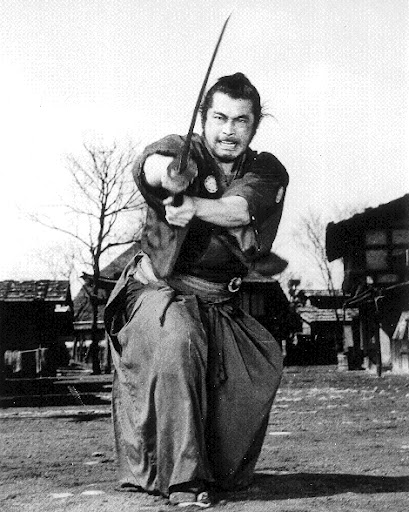
The solitary sword swinger is Toshiro Mifune, with whom Kurosawa had a similar relationship as Ford did with John Wayne, working together on 16 pictures in total. Upon his arrival into the one-road town, the samurai – who later calls himself Kuwabatake Sanjiro (meaning Mulberry Thirty), though he freely admits this is a sudonym – hires himself out to both gang lords. Neither the henpecked, frustrated Seibei nor his foe and former right hand man Ushi-tora outright trust this professional blade-for-hire, yet his opponent accepting the fighter’s offer would guarantee their victory. When everything seems to be going according to Sanjiro’s plans, with the two tribes threatening to wipe one another out, complications arise with the arrival of Ushi-tora’s brother Unosuke, brandishing a pistol.
The gun clearly poses quite a threat to our heroic samurai, as now the skill has been removed from the kill. Previously, Sanjiro had no great challenge within the town – other than maybe the lumbering giant with the comically oversized mallet – but now Unosuke, despite his arrogance, ridiculous posturing and insistence on carrying the gun inside his kimono – looking like he’s wearing a sling and hiding a pot belly – has taken the upper hand. No longer is the killer simply the smarter, faster, more skilled competitor; now it is the man with his finger on the trigger.
Throughout the film, Sanjiro’s motives are never clarified. Is he out for payment? Justice? Peace? Or is he simply seeking entertainment, something he clearly achieves as the two clans fight for his allegiance and to pay for his sake. His allegiance changes as often as the direction of the wind, and one of the most memorable scenes occurs as Sanjiro opts out of a confrontation he himself instigated, yet had no intention of taking part in. Instead, he heads atop a vantage point to watch as the two gangs reluctantly face off against one another, faux-lunging and backing away until only a few feet apart. Were it not for the arrival of a town inspector checking up on them, it’s likely this stalemate could have lasted forever.
Inspired by two of Dashiell Hammett’s film noirs, Red Harvest and The Glass Key, the film has a far greater comedic tone than I was expecting. Be it the odd-couple relationship between the tavern keeper and the persistently noisy coffin maker next door (the only townsperson making a profit from the constant fighting), the boorish stupidity of Ushi-tora’s other brother Inokichi as he struggles to work out that four dead enemies is better than two dead allies, or the belittling wife of his rival, there is much here to gain amusement from. Even serious moments, such as Sanjiro overhearing a plot to double cross and murder him, are juxtaposed by the man waggling both tongue and eyebrow at the young harem girls eavesdropping with him.
The film’s western influence isn’t merely seen in its lone ‘gun’-man story. From wide shots with a character stood alone in the distance, to high noon showdowns with gangs positioned at either end of a one-road town, it seems every shot, character and plot point is a loving homage to the director’s favourite genre. The wind even rustles leaves around in place of rolling tumbleweeds. Exposition is handled swiftly and elegantly via the tavern keeper who takes the samurai in and feeds him, regardless of his lack of funds. Sliding screen panels transform what would otherwise be a static, uneventful dialogue scene into an almost comic-book like affair, with each window shifting aside to reveal the disparate groups at either end of the town. The sliding panel is a recurring theme throughout the film, with many shots taking place inside buildings looking out, and later using the more traditional screen-wipe edit.
If I had to pick some minor flaws with the film, I’d mention that the all-too-brief combat scenes don’t quite live up to their pulse-quickening build ups, and that some of the more minor characters come off as little more than caricatures, instead of fully rounded individuals, but this is nit-picking more than anything else. I’d also heard that there were some intense and gory bursts of violence, and although there are certainly small explosions of slice’n’dice fury, fortunately they weren’t as gruesome as I was led to believe – and of course my expectations are no fault of the film’s.
For the most part the acting is stellar, particularly from Mifune, who plays the wandering samurai with a confident swagger, a sly smirk and an imposing stance. Every inch the typical lone ‘gunslinger’, Mifune is incomparable as the professional killer, his only master the fate that led him to the village; via the direction a falling stick pointed towards. Like a coiled spring, he is able to dish out far more than you might expect, and though it is clearly signposted by the rousing score and natural progression of the scenes, his swordsmanship often comes as much of a shock to us as those on the more uncomfortable end of his blade. Upon first entering the town, the man is greeted by a small dog scampering past, clutching a severed human hand in its mouth. At a sight like this, any other man would have had the sense to turn tail and flee, but Sanjiro – with a look of hilarious incredulity creeping across his face – nonetheless ventures on, possibly in search of the one-armed man this appendage-gnawing mutt has left behind.
The final showdown – because it’s a western, so there has to be a final showdown – has a setup shot of such simple elegance it’d be beautiful, were it not for the haggard, near-dead old man trussed up and dangling at the front of the frame. The ability to pan the camera around the decrepit victim, always keeping him in frame whilst progressing the scene, is a masterful stroke, assisted by Mifune’s Sanjiro stalking ever-closer towards the finale – a ten against one fight to the death – as a tornado of dust swirls up around him. What follows, alas, fails to match that establishing shot for artistry and effect, and also features an almost ridiculously drawn out death, but is nonetheless riveting and satisfying.
Whilst it’s not quite as good as Kurosawa’s other great remade eastern-western, Seven Samurai, Yojimbo is at least shorter, making it the perfect choice for a samurai fix if you’ve got two hours rather than three and a half.
Choose film 8/10

Raising Arizona

It’s hard to imagine a sharper left turn taken by a director than from the Coen brother’s debut, Blood Simple, to their sophomore picture, Raising Arizona. Where Blood Simple was dark and mostly serious, Arizona is the closest a film has ever come to capturing a Tex Avery cartoon in live action – with the possible exception of some parts of The Mask.

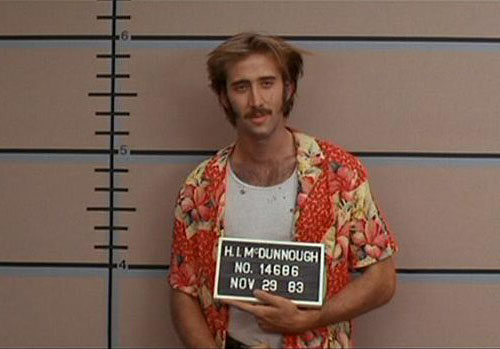
in the role that possibly best combines his often underrated acting ability, comedic potential and trademark brand of insanity, Nicolas Cage gives one of my favourite performances of his as H. I. McDunnough (‘Hi’ for short), a serial petty convict whose ineptitude at evading the law is only matched by his love for police photographer Ed (Holly Hunter). On at least the third time Hi is released from the prison where Ed works he proposes, and the two settle down for a life of happiness in a trailer park in Arizona. But all is not well in the McDunnough household. When Ed discovers she is unable to have children she falls apart, not helped by Hi’s criminal background leaving them unsuitable for adoption, so the only logical solution is, of course, to kidnap one of a famous batch of quintuplets born to a local unpainted furniture magnet, Nathan Arizona. To add to Hi’s woes, two of his former cellmates, Gale and Evelle Snoats (John Goodman and William Forsythe) escape from prison and attempt to crash on the couple’s sofa, Hi’s boss at the metalworks attempts to entice him into swinging, and there’s Leonard Smalls (Randall ‘Tex’ Cobb), a bounty hunter from Hell, on the path of the stolen baby.

This is a film with no intentions of meandering along at a gentle pace. The opening ten minutes or so, setting up the couple’s initial meetings, Hi’s triple incarcerations, their engagement and marriage, runs along at such a breakneck pace you’re liable to get whiplash once the credits roll and a more sedate step is taken. The change in speed is almost jarring, but is helped along with ample amounts of comedy and terrific, perfectly pitched performances, especially from Cage. His Hi, sporting a now standard ridiculous feathered hairdo, is a manic, OTT oddball with more Hawaiian shirts than sense. Hunter’s performance is good, but Ed doesn’t really get to do an awful lot other than reprimand Hi at every turn.


If the characters feel like exaggerated caricatures, then this is exactly the point. This film doesn’t take place in any kind of recognisable reality as much as it does in the heightened, prison-crazed mind of the lead. At times though I felt it went a little too far. The two escaped convicts are maybe a little too stupid – though often to hilarious results, as in their ill-planned bank robbery – and their incessant screaming throughout the entire film became beyond grating. No-one can yell like John Goodman. Leonard Smalls, on the other hand, wasn’t enough of a badass. I couldn’t quite put my finger on it, but I always felt that he was a guy pretending, Cobb never inhabited the role quite as fully as I’d have liked, so his presence was very much under felt. It’s a shame, as the Coens can do great work with the right actors in the antagonist roles – check out Javier Bardem as Anton Chigurh in No Country For Old Men, or Paul Newman’s Sidney J. Mussburger in The Hudsucker Proxy. Smalls should have been larger than life, and could have been the best part of the film, but remains sadly forgettable. Which in itself is impressive seeing as he is a guy who will happily grenade a fluffy bunny just for being alive.

The fight scenes are tremendously enjoyable, and really cement home the cartoonish nature of the film. Most of the characters involved would have received serious, possibly fatal injuries several times throughout the film – particularly Hi – yet they mostly just walk it off with little more than a plaster stuck to their face. And the film’s solitary death scene is so ridiculously over the top and insane that it is very much a moment of explosive comedy, regardless of whether you can see it coming or not.

I think that one of the overall messages from the film is that Hi and Ed, though they seem incredibly unsuitable to take on the task, are possibly the best parents of all the film’s characters. Of the various people who assume the role of the kidnapped baby’s guardian throughout the story, Hi and Ed are the only ones to not immediately name the baby after themselves. Granted, they name him after each  other instead, but at least they’re thinking about someone else, not just themselves.

Whilst this is in no way one of the best Coen brothers film, it is still hugely entertaining and definitely worth a watch, if only to see some classic comic Cage before he went off the rails.

Choose film 8/10

Silver Lode

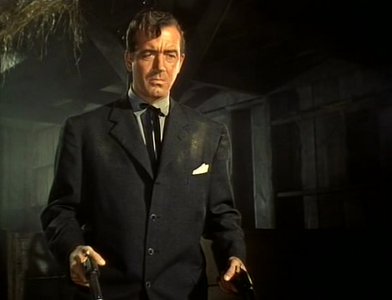
You ever have one of those mornings when you’re on holiday, you’ve woken up a few hours before your other half is likely to surface from the depths of slumber and you can’t go anywhere? Well, this happened to me recently, but fortunately I had my laptop and a copy of Silver Lode, yet I knew absolutely nothing of the film (save for it’s 81-minute runtime) so I settled down to watch it. I like watching films with o prior knowledge, and it happens less and less these days, so this was a nice surprise. In the opening credits though, I second-guessed the film completely incorrectly. You see, I could tell from the title that it was likely to be a western, and it stars a man called John Payne, who I’d previously never heard of, so I assumed it was a western spoof, and they’d tried to be funny by subbing the lead actor’s name with one comically similar to John Wayne. Nope, it turns out there’s an actor called John Payne who, according to IMDb, has 73 acting credits to his name, including this definitely-not-a-parody-or-even-a-comedy film.


Payne stars as Dan Ballard, a man who seems to only ever be referred to by his full name. On his wedding day, on the 4th of July, four U.S. Marshals, led by the greasy Ned McCarty (Dan Duryea), arrive in the town of Silver Lode and set about arresting Dan for a crime committed two years previously, just prior to his arrival in the town. Dan, who has become something of a pillar within the town’s community, initially has the support of his friend and neighbours, and especially his bride-to-be Rose (Lizabeth Scott), but it’s not long before the marshal’s story seems to make sense, and Dan is given two hours to put his affairs in order before he is to be arrested.

Surprisingly for a film released in 1954, I was bowled over by the cinematography in this movie. There is one shot in particular, which sees Ballard running for four blocks, dodging people, horses and gunshots, which has the camera following him the entire way. I’d even go so far as to call this the Children of Men of the 50s, so stunning is the shot. The actual story plays out in real time, from the moment the marshals arrive in town until the story reaches it’s conclusion, so in that way it was reminiscent of another classic western, High Noon, and in fact featured similar plot elements. Just as Gary Cooper’s Marshal Will Kane had to plead with all of his friends to help him out, so too eventually does Ballard, and with similar results. If you liked High Noon, I’m fairly sure you’ll get on well with Silver Lode.

Some of the scenes have become almost cliches today, for example the opening-a-door-on-an-innocent-man-holding-a-gun-over-a-corpse trick, yet they remain effective if only a little eye-roll-worthy. The characters have become stock western tropes too – the tart with a heart of gold, grumpy magistrate, naive farmhand etc. They do spit out some wonderful, and occasionally cringe-inducing lines, with a young man, who I could have sworn was Ron Howard but apparently isn’t, telling Dan that he’ll never trust anyone again if he’s lied.

I approved of the way that initially the audience is kept as much in the dark as the townspeople, until around the halfway mark we’re put into Ballard’s shoes and shown what is really going on. This increased my empathy towards Dan, as it wasn’t until then that I knew what he was up against. Payne plays the man well, hinting at the possibility of a shady past, even though he  could be Cary Grant’s brother – in both speech pattern and the way he fills out a suit. The portrayal of Duryea’s McCarty was a little too on the nose as being the obvious villain of the piece. He definitely comes off as evil early on and not simply an antagonist for Ballard to overcome, which made some of the later reveals a tad unsurprising, but all in all I thoroughly enjoyed this film, and would recommend it to anyone else stuck for a couple of hours with nothing else they can possibly do.

Choose film 8/10