
The Virgin Suicides

Completely unintentionally, this was the second film in a row I watched where a young girl burns her own record collection (after Heavenly Creatures), and also the second in not too long a time in which Kirsten Dunst has sex in a field (after Melancholia a few months ago). With a title like The Virgin Suicides, I wasn’t exactly looking forward to watching this film, as it seemed like it was going to be joining the ranks of those thoroughly depressing films I’d been trying to avoid lately, and the fact that it was directed by Sofia Coppola, whose Lost in Translation I wasn’t overly fond of the last time I watched it, and who I still haven’t completely forgiven for The Godfather Part III, made me even less excited. Plus, its a story of the multiple suicides of a clan of teenage sisters, which always leads to a laugh riot in my books.

The girls in question are the Lisbons, five sisters aged 13 to 17, who are kept under the watchful eyes of their strictly religious parents, Kathleen Turner and James Woods. The girls are largely kept under lock and key, only allowed out to go to school, where they are lusted over by the local boys, as that which you cannot have will always be that which you want the most. Cecilia (Hannah Hall, Forrest Gump‘s young Jenny), the youngest girl at just thirteen years old, attempts to kill herself in the bathtub. After she survives and recovers, her parents throw a party for the girls and some of the local boys, during which Cecilia excuses herself, goes upstairs and jumps out of the window, impaling herself upon the railings in their front garden. Hey, I warned you, this ain’t the happiest of films. The death of their youngest sibling seems to have little effect upon the sisters, though their parents ratchet up the levels of over-protectiveness, coming to a head when eventually the girls are taken completely out of school, never being let out of their parents’ sight.Kirsten Dunst is a revelation in this film, and I’m not normally her biggest fan. She displays a confidence on screen that’s almost otherworldly. At the time of making this film, aged just seventeen (though playing the second-youngest Lisbon, 14-year old Lux) she had appeared in no less than fourteen films, including Jumanji, Interview with the Vampire and Small Soldiers, and her level of experience is clear as she is this picture’s main focus. Even as the youngest, after Cecilia’s demise, Lux appears more world-weary and equipped with a greater level of confidence and intelligence than her oldest sisters (Chelse Swain, A. J. Cook and Leslie Hayman), so much so that the sisters all seem to merge together in a largely forgettable blur. The adults are all impressive, particularly Woods in an unusually repressed role, but be prepared to be taken out of the film when Danny DeVito pops in for one scene as the psychiatrist Cecilia is sent to after her first suicide attempt.

The film has been shot with an air of beauty and nostalgia –  opening with an upbeat yet mellow soundtrack of a bright sunny days, the light dappling through the trees of a suburban Michigan town – but this is immediately contrasted to the stark sterile blue of Cecilia lying in a bathtub, being carted away by the paramedics. This jarring emotional toggle switch occurs a couple more times throughout the picture, and each time it is effective. The narration, by one of the boys waiting outside each day just to catch a glimpse of the girls, is largely unemotional and distanced from events, as though bored of a story told many times before.

From what I know the 1970s was recreated well, particularly in the fashions and vile interior design. Every shot was reminiscent of an old photograph, saturated and hazy, almost sepia and fading at the edges. Unusually, a lot of the scenes didn’t play out as I originally expected, even more of a surprise when you consider they have such standard high school movie tropes as a prom, featuring parents enthusiastic at their daughters’ dates, fumbled first dances and peach schnappes under the podium (“Babes love it.”) The script is at times comic, and occasionally blackly so, with my favourite moment being when, after awaking in the hospital, her doctor tells Cecilia she shouldn’t have tried to kill herself because she’s “not even old enough to know how bad life gets,” which is a pretty terrible way of convincing someone not to try and kill themselves again, but her response is perfect, “You’ve never been a 13-year old girl.”
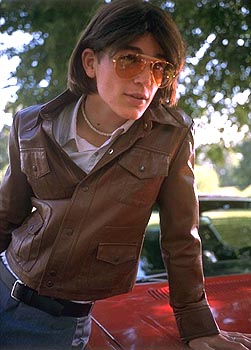
I suppose I should mention Josh Hartnett, who appears as the local dreamboat, Trip Fontaine, adored by students, parents and teachers alike, all except Dunst’s Lux, which only makes him want her more. Hartnett is his usual self, and I’m not too much of a fan (his only good films in my opinion are Sin City, The Faculty and Black Hawk Down, which surprise surprise don’t feature him all too heavily), and his abominable curtains-style haircut almost ruined the film for me. It was nice to see him playing such a prick though. Hayden Christensen is also in there somewhere, which is never a good thing.

So, whilst it’s not really going to cheer you up after a long day’s work, this is still a very well made and easily appreciated film, far better than I was expecting from Coppola. The ending in particular left me reeling for days afterwards.

Choose film 8/10

Blood Simple

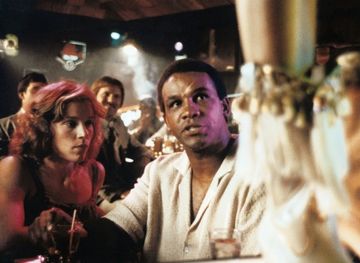
Blood Simple, the directorial/writing debut of the Coen brothers Joel and Ethan, is a sticky, sweaty, clammy picture about deceit and confusion, set in the heart of Texas. Marty (Dan Hedaya) runs a bar, and is the boss of Ray (John Getz) and Meurice (Samm-Art Williams). Distrustful of his wife Abby (Frances McDormand), Dan has hired private investigator Loren Visser (M. Emmet Walsh) to look into what she does with her time. It transpires that Abby is sleeping with Ray, so Marty hires Loren to kill them both whilst he is away on a fishing trip. What with this being a Coen film, things don’t necessarily go to plan, but it is the direction the events took, and the motives involved that I found both interesting and compelling.

Tonally, this is probably most similar to Fargo or No Country For Old Men amongst the Coens’ oeuvre. There’s not a great deal of humour surrounding the violence and devious plotting going on, and the location of Texas adds a great deal to the setting, just as Minnesota did for Fargo and Texas again for No Country. I found this lack of comedy to be a bit jarring – there are some moments of Coen-esque quirkiness certainly, and a couple of jokes in the script, but for the most part this is played dead seriously. The brothers can do serious very well, but personally I prefer their lighter efforts.
Had I not known this was a Coen film (and had it not starred Frances McDormand) then I don’t think I’d have immediately associated it with them. If anything, the structure of the narrative felt far too linear and ordinary, with the exception of perhaps missing an opening and closing scene most directors would have felt obliged to leave in. We’re fed the plot in dribs and drabs, discovering who each of the characters is and their relationships to one another just a couple of minutes after we need to.
Though he isn’t necessarily amongst the lead trio of the film, I would class Walsh’s performance as the greatest in the movie. His Visser is the human embodiment of a lizard, a slimy, oily gumshoe with a malicious streak and a rasping laugh that still haunts my dreams. He plays the part so well that I can’t believe I haven’t come across the actor in much else. For my sins I only really know him from Wild Wild West (he was the train driver). Can anyone recommend any of his other work?
I loved the musical choices in the film, especially Ray mopping up blood to the sounds of The Four Tops’ It’s the Same Old Song, an almost Tarantino-like retro song choice. The camerawork too was at times inspired; the marriage of lighting and camera movement revealing Visser’s cigarette lighter on a table, and the oppressive close shots inside the bar intensifying the humid atmosphere.
I can’t imagine this film cost very much to make – the biggest set pieces involve a car and a shovel, and a gun, knife and a window – yet it’s easily as gripping as many other big budget blockbusters. It reminded me of the likes of Glengarry Glen Ross or Reservoir Dogs, neither one which involves a lot of spectacle, but they have great characters and dialogue, which really is in my opinion more important. I’d have liked a last shot of Meurice – one of the coolest characters in film, check out his bar-top shuffle – but other than that the ending was pretty well contained and executed. Whilst by no means the Coens’ best, this is still definitely worth a watch.
Choose film 8/10

The Dark Knight Rises

Just to let you know, like the rest of the world, I have seen The Dark Knight Rises. I saw it opening night, over two weeks ago, but haven’t written a review yet for two reasons: 1, I haven’t had time, and 2, I didn’t really have anything to say that everyone else hasn’t already said. So, I’m not going to review it yet. What I am going to do is wait until it comes out on DVD, buy it, watch it again, and then review it. Simple. Hopefully by then everyone will be over the inundation of Batman reviews. In the meantime, here’s my quick thoughts on the film:

Continue reading

The Descendants

I’ve had The Descendants, currently the only Blu-Ray I own, sat on my shelf for a few weeks now, ever since I won it from the Empire Podcast, by answering a question about E.R., even though I’ve never seen a single episode. All praise IMDb. I’m something of a fan of Alexander Payne, and both Sideways and Election are just wonderful, so I’d been looking forward to sitting down and watching this, especially with all the Oscar buzz it had garnered earlier this year. The Descendants was nominated for five awards in all, including Best Picture, Director, Editing and Actor, and eventually won for Adapted Screenplay.

George Clooney, the aforementioned acting nominee, is Matt King, a wealthy landowner living in Hawaii,  and on the brink of a massive retail deal, in which his family’s historic heritage is to be sold, as requested by many of Matt’s less wealthy cousins. As if life weren’t stressful enough, Matt’s sporty wife Elizabeth (Patricia Hastie) suffers a horrific speedboat accident, leaving her in a coma, and Matt boosted from his former role as ‘back-up parent’ to the sole guardian of their two children, 10-year old Scottie (Amara Miller) and 17-year old Alexandra (Shailene Woodley), and soon becomes lumbered with Alexandra’s lunkheaded friend Sid (Nick Krause).
There’s a certain level of expectation for an Alexander Payne movie. The ones I’ve seen (not including Citizen Ruth or Inside Out 1 and 3) have all dealt with a story with dour aspects – be it failure, adultery, fraud, unhappiness or Kathy Bates’ backside – yet the sadness has been all but shrouded in comedy, yet here Payne’s reputable light touch is fighting against a brick wall of melancholy with the probable impending death of a spouse and mother. Such a morbid topic is no match for any level of wit, and the film almost always retains a depressing tone. This isn’t to say its a bad film, far from it in fact, its just that I was expecting a much more enjoyable watching experience that didn’t leave me deeply moved and my girlfriend literally in tears.
Payne made exactly the right casting decision in Clooney as Matt. The character is, let’s be honest, a bit of a dick. Yes, he’s a hard worker with a balanced head on his shoulders (he believes in giving his children enough money to do something, not so much that they’ll do nothing) yet he is practically absent when it comes to being a father and husband. Frequently away on business, he has little-to-no knowledge of his daughter’s lives, and it comes as no surprise to learn that prior to her accident, his wife was having an affair. It’d be a heartbreaking moment in most other actor’s hands, but Clooney breaks the tension with a ridiculously stone-faced flip-flop run. Under his command Matt is almost likable, and definitely relatable, even though he’s obscenely wealthy. Clooney is, in my opinion, a thoroughly under-rated comedic actor, and in one memorable scene (pictured) he has some genuinely hilarious eyebrows. Matt always seems to do the right thing and have the best of intentions at heart, yet his methodology and timing aren’t necessarily sound.
The revelatory performance of the film however is Shailene Woodley as Matt’s eldest daughter Alex, who lives on a different island to her father both literally and figuratively. Woodley is perfect in the role, her first in a film after appearing regularly on television since 1999, aged 8. Here she captures the exact transition from petulant teenager to woman-of-the-house, becoming a surrogate mother to her younger sister and a confidante to her father. Nick Krause is also great as Sid, a cliched dumbass who still gets to set up some of the film’s funniest moments. His first interaction with Matt’s father-in-law is just genius.
Beau Bridges and Judy Greer crop up in small roles, and Matthew Lillard does surprisingly well as a guy you really should hate deeply. The script has subtlety – offhand remarks to Elizabeth’s alcoholism and Alex’s drug taking – and definitely deserved at least the Oscar nomination, and whilst much of the action is fairly predictable, there are still a few unexpected turns along the way. This is still probably the least enjoyable of Payne’s films that I’ve seen – mostly due to the subject matter – but it’s still moving, well acted and performed, and all the locations are stunning.
Choose Film 8/10

Midnight in Paris

Woody Allen continues his obsession with Europe (Vicky Cristina Barcelona, the upcoming To Rome With Love) and adds a little time travel into the mix with this delightful slice of whimsy. Owen Wilson picks up the Allen role as Gil, a writer tagging along with his fiance Inez (Rachel McAdams) visiting her parents as they embark on a business merger in Paris. Gil has made a name for himself writing not terribly good films for Hollywood, but has aspirations for writing novels, and dreams of moving back to Paris, whereas Inez and her disapproving parents seem far more level headed. On a late night drunken stroll Gil finds himself in the 1920s world he so wishes to live in, and gets to meet his idols from a time long passed.

It all sounds a little bit ridiculous – a Woody Allen time travel film – and my parents and girlfriend, with whom I watched the film, were expecting something quite different and tuned out quite early on – but I thought it was wonderful. Wilson is a perfect fit as the neurotic Gil, refusing to tolerate Inez’s pedantic know-it-all friend Paul (Michael Sheen, brilliantly punchable) and forever wishing he’d been born in a different time.
Many films would dumb down the references to the past, and I’ll admit there were many I didn’t get, but the characters portrayed are so rich and interesting that I’m encouraged to discover more about them on my own. I’m ashamed to say that I’m unfamiliar with the likes of F. Scott & Zelda Fitzgerald and Gertrude Stein, and have only a passing knowledge of Cole Porter, Ernest Hemingway, Picasso and T. S. Eliot, though I think I got most of the Bunuel and Dali references (I’ve even seen The Exterminating Angel, the film Gil proposes to Bunuel, and it’s not even on the List), and as for the others I’m now making an effort to better myself by looking into their works. This is exactly what a film should do, not work out what its audience already knows and repeat that to them, but provide an opportunity to further their own knowledge.
The supporting cast is incredible. Kathy Bates is Stein, Tom Hiddleston and Scott Pilgrim‘s drummer Alison Pill are the Fitzgeralds and Marion Cotillard is delightful as Gil’s 1920s love interest Adriana, but it is the brief appearance of Adrien Brody as a flamboyantly insane Dali that steals the show (“I see rhinoceroses!”). Rachel McAdams plays a fairly thin character in the almost-bitchy, not understanding fiance, and her parents (Kurt Fuller and Mimi Kennedy) begin to grate after a while as their characters refuse to develop throughout the film.
All the typical Parisian tourist attractions are acknowedged, and got out the way, early on in a brief montage. This is nice, as it’d be a shame to ignore them, for they aren’t part of the story, but they show perhaps the draw of the city to Inez and her family, whereas Gil prefers the layers of life and history underneath. The present day scenes are shot crisply, everything looking bright and new, whereas those set in the past are softer, slightly fuzzy around the edges, and with such a warm palette it’s no wonder Gil wants to live there. It has a more mysterious atmosphere full of soirees and flapper dresses.
 It’s not for everyone, and many may find it just too odd to come to grips with, but if you are a Woody Allen fan (and you should be), and have either a good knowledge of the 1920s or want a place to build yours from, check this out.
Choose film 8/10

Million Dollar Baby

The second part of my Clint-Eastwood-directing-himself-and-Morgan-Freeman-in-a-supporting-role double bill see Clint take on a genre he’s never really (that I know of) looked at before, the sports movie (please feel free to let me know if he has, I’m often wrong about these things and he’s been working for an awfully long time).

If there’s two criticisms that can be lauded onto Eastwood, it’s that he doesn’t direct happy stories or portray more than one character. He’s not renowned for making lighter films with happy endings or playing people who aren’t grumpy, stoic curmudgeons with their trousers too high, and his streak continues here. I know he’s made a few lighter films (Paint Your Wagon, Every Which Way But Loose) but I haven’t seen them, and I’m guessing he plays the grumpy, stoic, possibly singing straightman to a comically messy primate who never stops annoying him. Again, please let me know if I’m wrong and recommend any films where he flashes a smile, once.

Here, Eastwood plays Frankie Dunn, a knowledgeable, best-there-is boxing trainer who can’t seem to get it together to be more than the owner of the run-down Hit Pit Gym. His latest fighter, Big Willie Little (Mike Colter) has a promising career ahead of him, with Frankie having gotten him almost to a title fight, but alas he leaves for a more prolific manager, leaving Frankie high and dry. Meanwhile, self-proclaimed white trash  Maggie Fitzgerald (Hilary Swank) has joined his gym and is looking for a trainer, though Dunn is adamant that he doesn’t train girls. Her pluck and commitment eventually wears down Dunn, assisted by persistent advice from his assistant, Morgan Freeman’s retired boxer and former recipient of Dunn’s training, Eddie ‘Scrap-Iron’ Dupris.


The story is a little corny and at times downright predictable. It’s clear that Maggie and Frankie will work together, each filling a void in the other’s life (Maggie’s father is dead, Frankie’s daughter has fled and refuses to acknowledge his efforts to contact her), and once they get going her rise through the ranks is unbelievable, especially as she never received any training until she was 31, but the delivery is spot-on. Heartstrings are at times shamelessly plucked, but justifiably so, and there’s a blindsided moment I genuinely didn’t see coming on first viewing. This isn’t your average rags-to-riches underdog sports movie, and it’s proud of this. There’s moments of humour, most noticeably from Dunn trying to talk to Maggie (“I’m going to try and forget the fact that you’re a girl”) and from Jay Baruchel’s simpleton wanna-be-but-never-gonna-be boxer ‘Danger’ Barch.


Swank is, expectedly, brilliant, earning her second Oscar as she all but becomes the downtrodden heroine. Her family has never stopped putting her down (look out for Garfunkel & Oates’ Riki Lindhome as her welfare-cheating sister!) but she retains a dogged sense of determination, saving up all her money from waitressing jobs where she has to steal half-eaten steaks to survive, just to buy a speedball for training. The outcome of her trying to do something nice for the family that’s never done anything for her is genuinely heartbreaking. Eastwood is good, but it’s well trodden ground for him, and Morgan Freeman is wonderfully understated – until he gets a chance to show off some moves later on.


There’s a lot to recommend about the film, but not a lot to bring you back. It’s certainly worth watching at least once, and I took a great deal away from it, but most of that was that I didn’t want to go through the harrowing gut-punch of an experience of watching it again any time soon.


Choose film 8/10

Up in the Air

Jason Reitman’s third directorial outing, after the stellar Thank You For Smoking and the good-the-first-time-you-watch-it Juno takes two done-to-death plot conceits – the business-set rom-com and road movie odd-couple – and reinvigorates them to be not only modern, but impressively timely.
Up in the Air is much more in keeping with the structure of Smoking, as we follow a successful, charming but morally dubious and emotionally detached businessman discovering that his perfect life may not be as ideal as it seems once women step a little too far into it. Previously it was Aaron Eckhart’s fast-talking cigarette peddler Nick Naylor, here it’s George Clooney’s professional corporate downsizer Ryan Bingham, jetting around the country to fire people when their own superiors don’t quite have the balls. And with the economic climate and unemployment rates where they are now, no other film could be quite so prescient.
But it isn’t just that this film rings true with modern times. Clooney channels his inner Cary Grant in the role he was seemingly born to play, whilst Vera Farmiga is wonderful as his female equivalent, Alex. The real surprise though is Anna Vendrick. Formerly most famous as Bella’s best friend in Twilight, here she shows real comic ability and acting prowess as Natalie, the bright young whippersnapper brought in to downsize the downsizers, aiming to revolutionise the business by doing it all online.
The cast is rounded out by some Reitman regulars, including Jason Bateman, J. K. Simmons and Sam Elliott, as well as Danny McBride, Melanie Lynskey and Zack Galifianakis, and a gaggle of non-actors portraying essentially themselves when they were fired, with Reitman instructing them to dwell on their own experiences in some moving moments.
The best scenes involve the principals just sitting down and talking. Be it Ryan and Alex comparing the weight of their loyalty cards, or Natalie learning that, as you get older, your expectations of life lessen to more realistic goals, the script is insightful, sparky and above all else funny. I was a little annoyed at seeing Sam Elliott in the opening credits, and seeing his cardboard-cutout as the Chief Pilot in an airport signposting that, at some point, his character was going to crop up somewhere, but that’s another of those things that only really hurts the film nerds.  Some of the metaphors are a little heavy-handed (at one point Ryan’s family literally doesn’t fit into his suitcase) and the ending feels like a series of devastating gut-punches that kind of spoils the mood, but each one feels perfectly justified and necessary.
If you don’t settle too deeply into the subject matter this is a fun comedy with a great script, and even if you do it’s still thought-provoking and entertaining stuff. I await tracking down Reitman’s latest offering, the Charlize Theron starring Young Adult, with anticipation.
Choose film 8/10

The Class

Filmed in a real school (and mostly in a real classroom) with an unprofessional cast all playing versions of themselves, Laurent Cantet’s semi-improvised near-documentary follows Mr. Marin (François Bégaudeau), a French teacher at an inner city school as he tries to connect with, further and inspire a class of 13-15 year olds. Bégaudeau co-wrote the script, and stars in his first acting role essentially playing himself, for he used to be a teacher, so it is no surpirse that his performance is wonderfully naturalistic, as are those of the multi-cultural students he presides over.
It is impossible not to feel the frustration felt by Marin, as he does his utmost to help his students, who almost seem to repell any learning, yet even when the other teachers have given up on the more problematic pupils, Marin still endeavours to find ways to reach them.
If this all sounds a little Dead Poet’s Society or Dangerous Minds, fear not. Here there are no last reel acts of defiance or obligatory contests won, life simply goes on. We see the less exciting but still interesting goings-on behind the scenes at the school – teachers debating punishment techniques and coffee machines, warning the new staff about the difficult classes – all shot in a documentarian, handheld style in amongst the desks.
The first half feels a little directionless, yet is still compelling, but the second, following the fallout of Marin saying two students behaved like “sluts” and his endeavours to help troublesome miscreant Souleymane, is much more on target. If you’ve ever been inclined to take up teaching, this film may infuriate you, with regards to how much effort Marin must fight against to even give Souleymane a chance.
Choose film 8/10

Harry Potter and the Deathly Hallows Parts 1 & 2

I’m a strange breed of muggle. I’ve seen all the Harry Potter films, most in the cinema. I’ve read all the books. Hell, I own them. Double hell, I was first in line queueing up outside Morrison’s on the morning book 7 was released. But I wouldn’t call myself a Harry Potter fan. So why have I kept with it? I read the first book in school, and found the wizarding world to be quite wonderful, a dream of a place to escape to. Granted, by the time the much darker later books came along I became much happier that this world of dictatorial terrorists with almighty magical powers didn’t actually exist (or so I’m led to believe) but back then it was nothing short of fun, and the fact that I was of a similar age to the protagonist when the books were released made it all the more so.
The books were perfect for film adaptations, and the stylistic choices throughout the series have been close to faultless. Most of the negative aspects, other than the questionable acting abilities of the children early on in the franchise, can be blamed on the books being too labyrinthine to be condensed down into a 150-minute movie, and there are arguments to make as to whether each book would have been better off as a TV series, but it’s doubtful they’d have received such a hefty budget or impressive cast, or made nearly as much money.
Of the films, part 3, Prisoner of Azkaban, is widely regarded as the best, with director Alfonso Cuaron unleashing the franchise’s dark potential, redirecting away from Chris Columbus’ more child-friendly first parts, but personally I prefer part 4, Goblet of Fire, because it’s easily the most fun and structured, following the Tri-Wizard Tournament, and it has dragons in it, which are awesome. Parts 5 and 6 are, in my opinion, the weakest, with my reasoning being that I can barely remember anything that happens in them other than some character deaths and casting decisions, but the final films really kick things into gear.
Many have questioned the decision to split the final book into two halves, citing financial gain as being the true reason, but having seen the results I approve of the choice. Whilst the earlier books could stand to lose some of the lesser plot points without the plot suffering, the amount of closure given in the finale could not have been achieved with a similar level of editing. Whilst the total runtime for the final two films could have been a little shorter than the 4½ hours achieved here, getting it down to a length the core Potter audience would be willing to sit through without complaining would have resulted in almost catastrophic levels of cutting.
The most impressive aspect of the film franchise has always been the cast. Whilst the three leads, Daniel Radcliffe, Rupert Grint and Emma Watson, were never expected to be incredible actors (and, for the most part, lived up to this promise) the film studios ensured this wouldn’t be a problem by surrounding their stars with almost every British actor working today, with more added every film. To list them all would be senseless, but the fact that, Richard Harris’ untimely demise notwithstanding, every actor returned to their roles for every subsequent film shows that the films must have been great to work on too.The Deathly Hallows alone saw the inclusion of Bill Nighy, David O’Hara, Rhys Ifans, Ciarin Hinds and Nick Moran into a cast already including the likes of Ralph Fiennes, Robbie Coltrane, Julie Walters, Helena Bonham Carter, Alan Rickman, Jason Isaacs and Maggie Smith, and the fact that so many notable actors returned for such minuscule roles is incredible. Jim Broadbent, John Hurt and Emma Thompson are barely on screen, but the fact is they are.
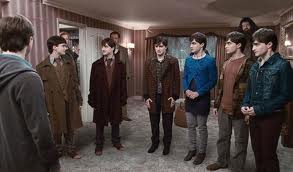
Part 7 is the only one of all eight films not to feature Hogwarts, the wizarding school where our young heroes are taught, and therefore doesn’t feel like part of the Potter pantheon. Freed from the structure of lessons, Quidditch matches and Harry being picked on by Slytherin, the film feels a little meandering, as Harry, Ron and Hermione scour the country looking for a series of magical Maguffins, horcruxes, that for one reason or another must be destroyed to help bring down the evil Lord Voldemort. The film opens strongly, with Harry’s escape from his home assisted by his wizarding friends transformed to be replicas of him, but it’s not until a later infiltration of the Ministry of Magic that any more excitement is had. There’s an awful lot of tension and relationship issues, exacerbated by a locket that builds negative feelings in whoever wears it (so… put it in a bag rather than wear it?) and a particularly cringeworthy scene wear Harry attempts to alleviate some tension by dancing with Hermione in a tent, but it feels empty without the action-balance provided by the second film. The brief animation, depicting the origins of the Deathly Hallows that grant the owner power over death, is easily the highlight of the series in total.
If watched as one long film, the two halves join together to form a perfectly balanced picture, with the final hour-long battle a rewarding epic culmination after a mammoth build-up, so if watching make sure to set aside the best part of an afternoon, however just watching part 8 alone is also acceptable. The infiltration of Bellatrix Lestrange’s Gringott’s vault, with Helena Bonham Carter gleefully impersonating Emma Watson, is tremendous fun (there’s another dragon!) and now they’ve got all the teenage angst and worrying out of the way it’s time for good and evil to get scrapping. The finale is equal parts devastating and spellbinding, as the regular cast is treated with a sporadic survival rate, literally anyone is up for the chop, up to and including Hogwarts itself, as various sets we’ve grown to feel at home in are burned to the ground. Some aspects of the battle feel crowbarred in – Mrs. Weasley’s showdown against Lestrange, Ron and Hermione’s inevitable kiss – but for the most part it’s a cinematic marvel that doesn’t disappoint.
Harry Potter and the Deathly Hallows Part 1: Choose life: 6/10
Harry Potter and the Deathly Hallows Part 2 : Choose film 7/10
Harry Potter and the Deathly Hallows Part 1 & 2: Choose film 8/10

Iron Man

Iron Man was the superhero movie we were all waiting for, we just didn’t know it; discovering the missing ingredient from all those that came before it – comedy. Though many that came before it weren’t overly serious, dark or gritty, they still took themselves too seriously, but Iron Man ensures a thick vein of comedy runs right the way through it. Released over 2 months before the masked behemoth and current comic book movie touchstone The Dark Knight, Iron Mancame out of nowhere with an untested star and middling director in Robert Downy Jr, and Jon Favreau. RDJ was still making his comeback after years of exile from Hollywood due to substance abuse, and Favreau’s most mainstream work was Christmas classic Elf, but he wasn’t exactly known for blockbusters, but after the movie’s release both found themselves sitting pretty on the A list.
Stark is such a great creation. By his own admission a “genius billionaire playboy philanthropist,” yet Downey Jr. somehow makes such a character not only likable, but one you’d willingly like to go for a drink with, and not just because he’d not only pick up the tab, but probably already owns the bar. He ably assisted by Gwyneth Paltrow and Terrence Howard as his dependable assistant and best friend, and Jeff Bridges is on fine menacing-brow villain mode as Obediah Stane, the business partner of Stark’s deceased father.
Iron Man has an advantage over other superhero stories in that Stark’s story is actually interesting. A twist of fate doesn’t have him bitten by a spider, he isn’t an alien from a distant planet and he isn’t avenging his parent’s death. No, Stark had all of his superpowers before the film even starts. Wealth, intelligence, a sharp with and an immaculate goatee are goals he’s worked towards and achieved; he just needed the push to fit them all together in the form of a titanium-gold alloy flying suit with a rocket launcher and flamethrower, and what greater motivation than a terrorist attack against him, using the very weapons his company created? This means that the villains are also people every can be against – terrorists and the evil corporation heads who supply them.
The best scenes involve the subtle yet inspired gadgetry around Stark’s house, from the Paul Bettany-voiced quasi-butler Jarvis, to the robotic arms that are a little over zealous with the fire extinguisher. The flawless suiting up sequences and Downey Jr. interacting with nothing but a mechanical three clawed appendage aren’t too showy, yet set the film above its rivals.
The only possibly problems are that Howard’s Officer Rhodes is bland, but then who wouldn’t be compared to Stark, and the Stane-is-a-villain story arc is clearly signposted from the get-go, having been given the perfect set-up as the man who took on Stark Industries when it’s CEO passed away, only to be muscled out by some upstart genius, that and his full head with a thick, lustrous beard mean at some point in the near future he’ll be laughing with maniacal glee and threatening the hero’s love interest. Now that the Avengers (sorry, Avengers Assemble) is in place, this film does seem like a bit of a precursor to it, especially the scenes involving Clark Gregg’s Agent Coulson, which don’t really add anything here other than some fanboy cheers every time someone says Strategic Homeland Intervention, Enforcement and Logistics Division, but the scenes don’t detract too much, and can be forgiven as they tie everything up nicely.
Otherwise, the film is pretty much perfect, and remains enjoyable after many viewings.
Choose film 8/10