Tokyo Story

Unlike this film, life is nothing but disappointment. This is the discovery made by an elderly middle class Japanese couple as they visit Tokyo for the first time to see their children and grandchildren, only to find they do not have room in their busy lives to send time with their parents.
Shot with an unmoving camera set at sitting height from the floor, this largely encompasses the family’s conversations, discussing everyday life, but it is often the occasional periods without dialogue that are more moving, and say more than any could.
There is a sense of finality throughout, as though the couple know they are unlikely to see their children again, and it is difficult after watching this film not to pick up the phone and call your own parents. Surely a film that makes us want to at least try to be better people, and live up to the expectations of others cannot be a bad thing?
Choose life 9/10

Into the Wild

Christopher McCandless (Emile Hirsch) has a very promising future ahead of him. Considering Harvard Law school after graduating from college, with a healthy savings fund and parents willing to buy him a new car, he’s set to make a name for himself in middle class middle America.
But alas, this is not the life he wishes to lead, refusing to make the same mistakes his parents made – marrying the high school sweetheart, living in an unhappy, abusive marriage for the sake of appearances – he gives his savings to charity, dumps his car, burns his ID and cash and changes his name to Alexander Supertramp, pledging to live life alone, “no watch, no maps, in the wild.”
Told through letters to his sister, accounts from those he met along the way and excerpts from his own diary, this true story, directed by Sean Penn, is at times joyous, tense and heartbreaking. There isn’t a weak link in the cast, but the standouts are easily William Hurt and Marcia Gay Harden as the confused parents left behind as their ideal son wanders for years with no communication, not even a letter goodbye.
Penn at times drifts too far into Terrence Malick territory (Malick previously directed Penn in the Thin Red Line), with elegiacal shots of admittedly beautiful scenery, poetic, philosophical pontificating and a meandering style, flitting between Alex’s journey across America and his time spent living in an abandoned ‘Magic’ bus he finds in Alaska, but the story and performances pull it through. You get the feeling the journey is exactly how Alex had hoped, finding the people he would have preferred knowing when growing up; the parental fellow travellers Jan and Rainey (Catherine Keener & Brian Dierker), girlfriend (Kristen Stewart), boss (Vince Vaughn), friends (the semi-nudist random Swedes) and kind hearted, lovably cantankerous grandfather (Hal Holbrook). The soundtrack is amazing too.
Choose film 8/10

Dances with Wolves

After unintentionally becoming a hero when his suicide attempt becomes a mass charge against the enemy, Lt. John J. Dunbar (a be-whiskered Kevin Costner) is given his choice of location in the Union army, opting for a small, broken down post miles from anywhere, in order to “see the frontier before it’s gone.” When he saves a white woman adopted by their tribe as a girl, the local Native Americans take a shine to him, as he attempts to educate them of a civilised world, whilst they in turn teach him of their ways.
The plotting is formulaic and the pace is stodgy. There are some good performances (Graham Greene and Rodney A. Grant as the two most forthcoming members of the Sioux tribe), but this feels too bogged down in a history and culture more important to the American people than anyone else. Unforgivably, Costner beat Scorsese to the Best Director Oscar for Goodfellas, and it is extremely difficult to understand why.
Choose life 4/10

The Bourne Trilogy

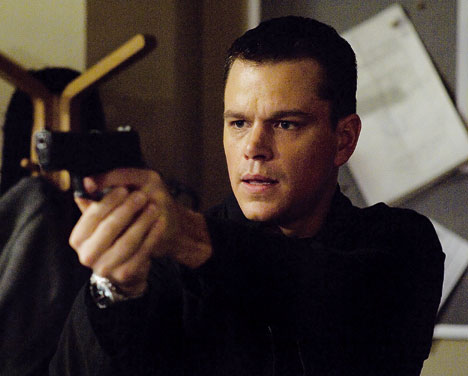
Back in 2002, the espionage genre must have felt a little like Matt Damon’s Jason Bourne at the start of this trilogy, floating unconscious in the Mediterranean Sea with a bullet in the back after the abysmal CGI tsunami of Die Another Day and the shallow, clichéd hotchpotch of Mission Impossible 2, although they may have envied Bourne’s lack of memory. Thank the heavens then for the metaphorical fishing vessel of star Damon, director Doug Liman and writer Tony Gilroy for bringing this energetic affair to the screen, both setting up Damon as a bona fide action star and throwing the gauntlet at the feet of Bond and Ethan Hunt to step it up a gear (both of whom willingly accepting the challenge with Casino Royale’s gritty realism and MI3’s intelligent action).

Diner

Overshadowed by the more successful, identically plotted yet inferior St. Elmo’s Fire for its starrier cast (back then anyway), this follows six friends as they joke, laugh, date and above all talk through their situations and lots in life as one of their number gears up to get married in a few days time. The cast of then near unknowns includes Steve Guttenberg, Daniel Stern, Mickey Rourke, Paul Reiser, Tim Daly, Kevin Bacon and Ellen Barkin, most of whom are fine in their roles, particularly Guttenberg as Eddie, the highly-strung groom-to-be who insists his fiancé must pass a football test or he’ll cancel the ceremony, and Stern’s Shrevie, the sensible, married member of the group who has discovered he has nothing to talk about with his wife (Barkin). Only Reiser is left without much of a character of story arc, left merely to pop up now and then with a well timed joke or put-down, something the comedian is more than equipped to do. Some of the dialogue seems to have been lifted from an unused Steven Seagal script (“I’ll hit you so hard I’ll kill your whole family”), but the 50’s soundtrack, featuring such artists as Bobby Darin, Jerry Lee Lewis and Chuck Berry help to make this an 80’s classic, even if it’s set in December 1959.
Choose film 6/10

The Bird with the Crystal Plumage

With my pre-existing knowledge of Italian horror auteur Dario Argento – admittedly mostly garnered from watching Juno – I watched this apprehensively, ensuring the girlfriend – who scares easily – was out of the flat, and a sick bucket and towels were close to hand, lest the television begin leaking the copious flow of blood that would soon inevitably be filling up the screen. It is with a relieved sense of disappointment that I can confirm this is not a horror, more a suspense thriller, following a down on his luck American writer seeking inspiration in Italy, who witnesses an attempted murder whilst he is trapped between two sheets of glass. Discovering the attack was the handiwork of an active serial killer, he becomes obsessed with the case, up to the point where he is hunted by those who’d rather the killer remain unknown. Mostly following the standard crime whodunit formula, this effectively cranks up the suspense, but the goriness and brutality of the occasional murder jars with the largely sedate tone of the rest of the film. There are nice comedic touches – tracking down the man in the yellow jacket – and a collection of memorable oddball supporting characters including a stuttering pimp and a reclusive cat eating art collector, but this is little more than a sporadically bloodier version of A Touch of Frost.
Choose life 5/10

All That Jazz

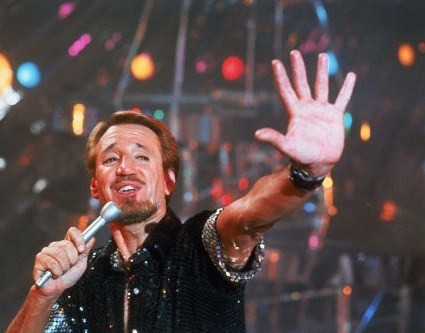
Anyone seeking a straightforward musical, like Grease or Chicago, as was expected by this reviewer, would do well to seek elsewhere. A semi-autobiographical tale from director/writer/choreographer Bob Fosse, this shows musical director/writer/choreographer/everything else Joe Gideon (Roy Scheider) as he discusses his life with angel of death Jessica Lange. There are occasional songs and dance numbers, and parts of his life are exaggerated and dramatised on stage. To use the description given to one of Gideon’s own performances (a very surprising sequence referred to as Erotic-Air), this film is “interesting, very interesting…unusual, very unusual.” It is difficult to decipher which parts are really from Gideon’s life and which are distorted and rewritten via his own limitless, unburdened imagination, from his own growing up in a burlesque house, being teased by barely clad women from an early age, to becoming a pill-popping, heavy smoking, heavy drinking perfectionist self-proclaimed liar who is “generous with his cock,” through to ruthlessly directing himself on his death bed. This ambitious, and possibly achieves what it set out to do, yet you leave the film unsatisfied, unsure of what you’ve seen and what to make of it.
Choose life 4/10

Anvil

In the summer of 1984 some of the biggest names in rock music, including Whitesnake, Bon Jovi and the Scorpions all performed at the Super Rock festival in Japan, to vast audiences of screaming fans. Also playing was a band that has proven to be an inspiration to a pantheon of rock and metal bands since, such as Metallica, Motorhead, Anthrax, Slayer and Guns ‘n’ Roses, yet you’ve probably never heard of them, unless of course you’ve seen this real-life Spinal Tap rock-doc, in which case sacn to the end and move on, you’re done here. The band in question is a four piece Canadian metal outfit known as Anvil, still performing with two of their original members; singer Steve ‘Lips’ Kudlow and drummer Robb Reiner, but instead of basking in huge mansions, making records with big name producers or performing sell-out tours to millions, they are working dead end jobs and playing gigs at tiny sports bars, occasionally not even getting paid. This brilliant film tells their story, directed by their former roadie Sacha Gervasi, and tries to ascertain why such a talented, influential band could have failed so fantastically, and follows their attempt to relaunch their stalled careers in a music industry where the landscape has changed.
Choose film 7/10

The Silence of the Lambs

It’s easy to forget just how impressive Silence of the Lambs is as a film; receiving the ‘Big 5’ Oscars (Actor, Actress, Picture, Director, Screenplay) back in 1992, an accolade since rusted by the diminishing returns of the sequels/prequel. When remembered, the image brought to mind is of a motionless Anthony Hopkins stood eerily in the centre of a jail cell, awaiting Jodie Foster’s FBI student Clarice Starling, the conversations that ensue regarding Hopkins’ incarcerated Hannibal Lecter assisting the FBI with psychological analysis of an active serial killer, and certainly Hopkins’ aggressive, manic yet restricted delivery of oft-quoted and even more so parodied dialogue. Admittedly Hopkins turn, equal parts refined and ruthless, educated and insane, psycho-analytical and psychopathic, is remarkable, before Ridley Scott’s Hannibal turned him into some kind of dandy rogue (albeit one who feeds Ray Liotta his own brain), but it is so overpowering that it overshadows the rest of the film, feeling his absence whenever he’s not on screen, staring directly into the soul of the viewer. Not to diminish the rest of the production, with Jodie Foster being another highlight, her twig-like rookie about a foot shorter than all the other male recruits, all of whom have no problem checking her out as she walks by, seeing her not as an equal, but simply as a girl. Ted Levine (Monk, Heat) is also incredible as the killer Buffalo Bill, keeping his victims alive in a well before skinning them to make himself a suit. Criminally he was not even considered for a supporting actor nomination, yet his portrayal is arguably more chilling than Hopkins’, delving deep into a twisted, scarred psyche and throwing the shattered remains at the screen. The third reel reveals, both examples of fine editing and cinematography, also deserve mentioning, keeping you guessing long after you thought you knew what was happening.
Choose film 8/10

A Room with a View

Featuring an unexpected amount of penises for a period film (or any other for that matter), this tells the story of Helena Bonham Carter’s upper class Lucy Honeychurch, who finds herself having to choose between two suitors; her betrothed, oily, irritatingly snobbish Cecil (Daniel Day-Lewis, over enunciating to grating effect) and Julian Sands’ playful, liberated yet of a lower social standing George. Obviously Lucy will choose the less pretentious and by all means friendlier George, overcoming the general repression of the times (a break-up is ended with a simple handshake), but the supporting cast makes this a worthwhile watch, from Maggie Smith’s unobtrusive Aunt Charlotte, Dame Judi Dench’s romance novelist, Simon Callow as the local vicar (and owner of one of the aforementioned phalluses) and Denholm Elliot as George’s forward thinking father. With so much talent surrounding them, it’s no wonder Bonham Carter and Sands struggle to shine, proving themselves to be merely audience ciphers.

Choose film 6/10