Wonder Boys

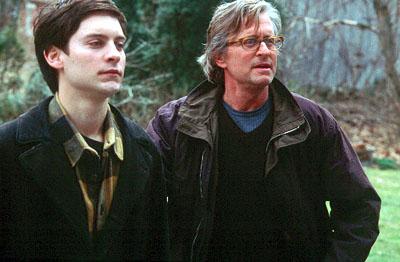
Always be wary when a DVD cover proclaims the feature it houses is an Oscar winner, yet follows this statement with an asterisk not revealed until the fineprint on the back of the box, for more than likely this will lead to a win for one of the lesser Oscars that, though probably well deserved and awarded to people who are very good at, and have worked very hard on what they do, does not make the associated film any good. And so it is with Wonder Boys, overly proud recipient of the Oscar for Best Original Song for Bob Dylan’s Things Have Changed, so worthy is it that I cannot even remember hearing it, when part of me was specifically listening out after discovering the win. Whilst Michael Douglas gives one of his best performances as the mild-mannered, scarf-wearing, adulterous English professor Grady Tripp, he is let down by a meandering plot involving a dead dog, a 7ft transvestite, a stolen dress and an epic manuscript, and a fairly average cast with Tobey Maguire it’s obvious weak link – impressive when Katie Holmes is also involved as a besotted student. Too much takes place without a reason – is Maguire’s James fascinated with celebrity deaths just because he is weird? – and the script is far from excellent (“I’m not gonna draw you a map, sometimes you need to do your own navigating.”)

Choose life 4/10

Apollo 13

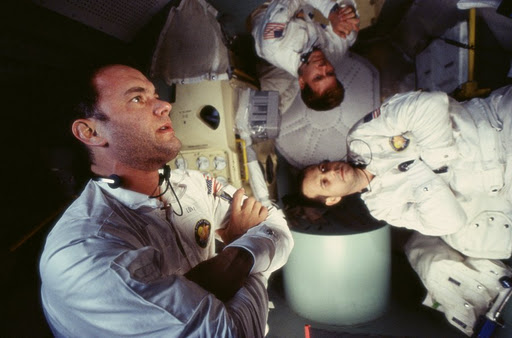
In 1969, man landed on the moon. This man was not Tom Hanks’ Jim Lovell, then first reserve for Neil Armstrong, but later he was given his own shat at the big floating wheel of cheese aboard the ill-fated Apollo 13. Hanks displays his greatest talent of evermanisation in this film, managing to make even an astronaut seem like a regular Joe, suffering from everyday concerns with young kids and a daughter dressing inappropriately on Halloween, coupled with the hours of arduous practice and training required for his profession and the worrying endured by the families left behind. Director Ron Howard evokes the feel of the late 60s well – the excitement of new scientific endeavours coupled with the period details, fashions, chain smoking and news reports, and Hanks is well supported by Gary Sinise, Bill Paxton and Kevin Bacon as his fellow astronauts, Ed Harris as the waistcoat wearing mission control and Kathleen Quinlan’s distraught wife, the latter of the two were Oscar nominated for their roles.
Choose film 8/10

Inception

Apparently the concept of Inception began when director Chris Nolan, he of the Dark Knight, Batman Begins, Memento and the upcoming Dark Knight Rises, the most anticipated film of 2012 (tied with the Avengers and the Hobbit), wanted to make a film in which several climaxes are all occurring simultaneously. Most directors would then structure a plot in such a way as to have different characters in different locations, all partaking in various climactic events and cutting between them, but Nolan, in what I’m going to assume was an evening rife with alcohol, narcotics and some rare kinds of cheese, opted instead to make a film predominantly set within the world of dreams.

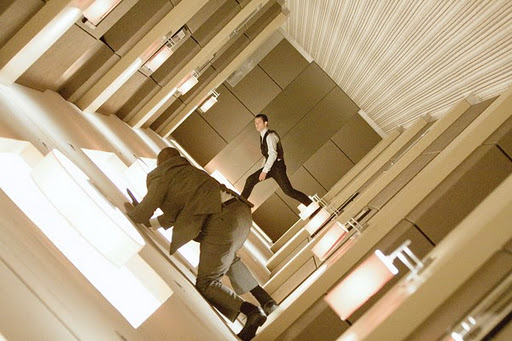
Taking an already interesting, fantastical premise – secrets can be obtained by stealing them from people’s dreams via extraction and spinning it on its head, as Leonardo DiCaprio’s master extractor Cobb and his team – Joseph Gordon Levitt, Ellen Page, Tom Hardy and Dileep Rao, are enlisted for one last job, to plant an idea in Cillian Murphy’s dream by business rival Ken Watanabe. By using this world of dreams, Nolan has released literally all limitations as to where the plot can go, and opened up the door for some thoroughly original set pieces, the standout of which is Gordon Levitt’s taciturn Arthur fighting armed goons in a corridor with an ever-changing, and disappearing, centre of gravity. This, combined with a rain-lashed chase through busy city streets and a Bond-inspired snowbound explosive finale adds up to one of the most thought provoking action movies in recent years.

The plot is sometimes lost amid the spectacle of the dream worlds and the new logic required to understand it – in a dream, time travels 12 times slower with each level you go down, your subconscious can flare up against you but you can bend the environment around your will – so at times you forget just what they are fighting to achieve. Nolan also appears to have paid attention to the naysayer accusers who believe, not unfairly, that his films lack a required heart and emotional depth, as the addition of Cobb’s deceased wife Mal (Marion Cotillard) appears in his subconscious, eager to turn the dream worlds against him, and the entire plot takes place just so Cobb can be reunited with his kids. Both these points seem tacked on and superfluous to the overall plot, other than adding a motive and antagonist that, although not asked for, do not overly deter.

Under close scrutiny some of the dream logic is inconsistent and doesn’t quite hold up, with some questions remaining unanswered – how exactly does Tom Hardy’s scene-stealing Eames transform into other people as the teams forger? – but the performance, cast (also including Michael Caine, Tom Berenger and Pete Postlethwaite), effects and sheer scale of the project make this unmissable, and my best film of 2010, although it makes my dreams look utterly pathetic in comparison.

Choose film 9/10
Evil Dead Trilogy

When five college friends go to stay in a mysterious cabin deep in the woods, it’s safe to assume they’ll be lucky to see their homes again, as they will undoubtedly encounter a clan of cannibalistic hillbillies or some centuries old curse. So when, in Sam Raimi’s schlock horror debut, the kids find the Book of the Dead, bound in human flesh, written in human blood, and play a recording of it being read, the dead become free to walk the Earth, and the kids must struggle to stay alive until morning, in the hope of finding their way back to civilisation. So far, so standard, but where the film differs from the gory also-rans is when a girl is dragged into the woods – by the woods – and raped by a tree. Plug sockets and light bulbs leak with blood, and one by one the kids become possessed by demons, with bloodied eyes, gnarled, pallid skin and faces like beaten up clowns. Raimi’s innovative camerawork and game cast – all terrible actors aside from our hero, the uber-chinned Bruce Campbell – stand this film out from its imitators and inspirations.
Evil Dead 2: Dead by Dawn is that rarest of sequels that rewrites the entire plot of its predecessor in its first 7 minutes, showing what the film could have been had a greater budget been available – a more attractive love interest, advanced effects and even a back story for the Book of the Dead. Having discovered an audience for his own brand of homemade horror and slapstick splattery, Raimi lets himself, and reprising star Campbell, off the leash, balancing the grotesque with the quirky in such classic scenes as Ash cutting off his own possessed hand and replacing it with a fully operational chainsaw. The more what the fuck moments add to the feeling of watching someone’s head explode onto a screen – the maniacally laughing moose head and bizarre neck extension are standouts, and this remains a tremendously fun, if occasionally bat-shit insane adventure.
As with Raimi’s other threequel, 2007’s Spiderman 3, the approach to Army of Darkness is to take everything and throw it at the script, see what sticks, and include it all anyway. This leads to a film with a frankly ludicrous premise – at the end of part 2 Campbell’s Ash opened a rift in time, and is now stranded in 1300AD, and stretches it past breaking point with the sheer volume of ideas piled on top. The opening death pit scene is fun, but the ensuing insanity of a two-headed Ash (beginning with a repulsive eye growing on his shoulder), Gulliver’s travel style tiny men causing havoc and a skeletal army complete with beards takes it all too far. The result is a film still endlessly enjoyable and quotable, but lacking the overall playful sense of fun from the previous entries.
The Evil Dead choose film 8/10
The Evil Dead 2: Dead by Dawn Choose film 9/10
The Evil Dead 3: Army of Darkness Choose film 6/10

Get Carter

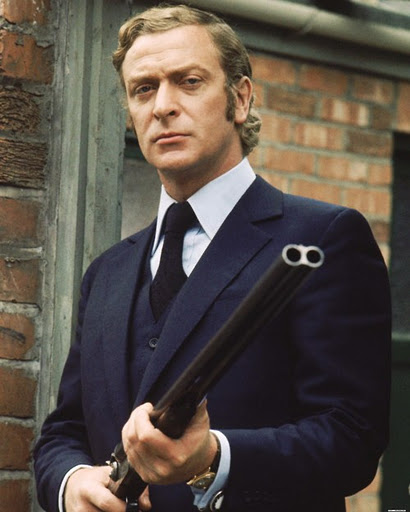
Get Carter is justifiably remembered for Michael Caine’s gripping portrayal of London hard man Jack Carter, visiting his old stomping ground in Newcastle to bury his brother and sort out the men who killed him. Caine is iconic as the immaculately attired, quick witted vengeance seeker, endlessly quotable (“Clever sod, aren’t you?” “Only comparatively”) and calmly menacing, yet credit should also be given to director Mike Hodges (…Flash Gordon). The framing of the shots is excellent, particularly when showing Caine watching a video, as a cleverly positioned mirror allows us to see both what he is seeing, and his reaction to it, without the need for split screens, a delayed response or a clumsy cut. The ending is brutal, if perfect, and it will take a great deal for me to sit down and watch the inevitably terrible 2000 Stallone remake.
Choose film 8/10

The Girl with the Dragon Tattoo (2009)

6 years ago Stieg Larsson’s Millennium trilogy took the world by storm, so it was only a matter of time before movies were made, and even less before Hollywood came a-knocking with a US remake, due to hit cinemas this Boxing Day. David Fincher is a perfect fit for the source material, as he revels in the darkness and shadows of those living on societies outskirts, so hopefully he’ll do a better job of it than Niels Arden Oplev in this Swedish original. Understandably when transferring a book to the screen, especially one as dense as this, some omissions will need to be made; plot points will be skipped over, characters written out and those remaining will be trimmed down to a fraction of their former selves, how else will it all fit into a two hour time slot whilst not alienating newcomers by cutting vital exposition? But when the central storyline is a whodunit case of a 16-year old girl vanishing from a closed off island 40 years previously and only one possible suspect is given any level of character depth, it removes any sense of mystery as to who the culprit is.
That being said, the performances are exceptional, especially Noomi Rapace (currently seen in an underused role in the Sherlock sequel, and soon to be in Ridley Scott’s Alien sequel/prequel/equal Prometheus) as the rake-thin, leather-clad, eponymously inked super hacker Lisbeth Salander, but the overall feel seems rushed. Given the choice, opt instead for the six-part extended TV series version recently released on DVD, or read the books if that way inclined, as some of the grislier scenes – the anal rape, for example – are far easier to read about than they are to watch.
Choose life 7/10

West Side Story

It’s easy to mock West Side Story, and incredibly hard not to let out a start of incredulity, disbelief and hilarity when the Jets, a New York street gang, begin clicking, walking and turning in sync, but this 60s retelling of Shakespeare’s Romeo and Juliet has a lot going for it. Yes, the two leads – Jet old hand Tony (Richard Beymer) and rival Shark’s head honcho’s sister Maria (Natalie Wood, not even close to being Puerto Rican) are lifeless, charisma free and unforgivably dubbed for their singing. And yes, the dialogue has not aged well in places, but the toe-tapping tunes, particularly I Feel Pretty, America and Gee, Officer Krupke and outstanding choreography, with dances staged as fights and fights staged as dances more than make up for its faults. Supporting players perform admirably, notably Russ Tamblyn as Jets leader Riff and George Chakiris as Shark leader Bernardo, making this a musical for people who don’t like musicals – people like me then.
Choose film 7/10

The Usual Suspects

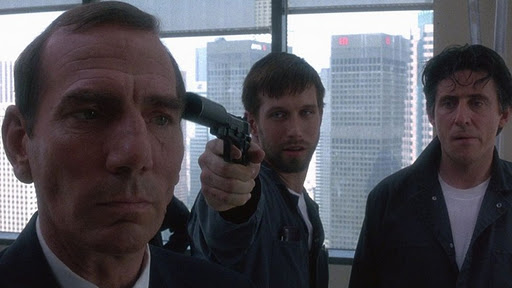
 Is it OK to ruin the Usual Suspects yet? Doesn’t anyone who cares who the ending already? Its 16 years old! Is it not another Sixth Sense or Empire Strikes Back, where the big reveal has either been witnessed firsthand or spoiled by someone else? Miraculously, my film watching companion had not seen or heard the ending to Bryan Singer’s sophomore film, and he’d have throttled me had I revealed it (Marcos hates spoilers, and will punch you in the head) so no, it would seem there are some out there yet to discover the fate of the five criminals bought in for a line-up, nor do they know the identity of their tormentor, the mythical Keyser Soze, so I’ll try and tread carefully. The cons in question – Stephen Baldwin, Kevin Pollak, Gabriel Byrne, Benicio del Toro and a career-launching, Oscar winning Kevin Spacey – have been brought together on a bogus line-up, and use their time in incarceration to plan a robbery, bus is it all a part of a bigger plan?
Told in flashback by Spacey’s weaselly over talkative ‘Verbal’ Kint, the tale begins with the death of Byrne’s Keaton, a crooked cop gone straight and the closest the gang has to a leader, after what appears to be a drug deal gone wrong. Chazz Palminteri, the cop to whom Kint tells his story, has his own theories as to what went wrong, but his opinions, and those of the viewer, get in the way of seeing the truth, ably assisted by Christopher McQuarrie’s deservedly Oscar winning ever twisting screenplay.
The cast are exceptional, particularly the scene stealing del Toro and Pete Postlethwaite at stoic lawyer Kobayashi, but it is the fine balance between tightly plotted twists and turns and sporadic bursts of action and violence that plants this firmly on the choose film list, regardless of whether you know the ending.
Choose film 9/10

Candyman

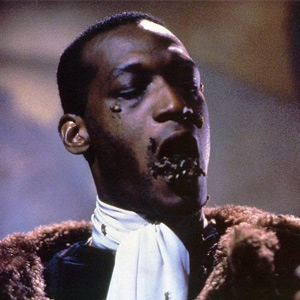
If someone told you that if you looked in a mirror and said the word “Candyman” five times, that a man with a hook for a hand would appear behind you and kill you, what would you do? If the answer is call them an idiot and defriend them on Facebook, congratulations you’re not in a horror movie. Here, of course, the myth is discussed and inevitably activated, with disturbing and horrifying results. Virginia Madsen (remember her?) plays our doomed heroine Helen Lyle, married to university lecturer Xander Berkeley and writing a thesis on local mythology, focusing on the Candyman, an educated son of a slave whose hand was sawn off by hooligans in the late 19th century, before he was smeared with honey, stung to death by bees and burned in a giant pyre. His legend lives on with the residents of Cabrini Green – the area where his ashes were scattered, blaming him for unsolved murders.
A  lot is left unclear in the film – possibly clarified in the sequels, I didn’t like it enough to find out, and there is much debate throughout as to whether Candyman, memorably embodied by the imposing Tony Todd, whose breathy voice, sinister smile and nightmarish stare were made for horror films, is real, whether Helen is going insane or if her husband is framing her to keep her out of the way while he gets his leg over a hot young student, something never really explained, and even by the end all three are still a possibility. There is plenty of gratuitous and unnecessary nudity and some horrible imagery – graffiti from smeared excrement – but the unclear nature of Candyman’s powers, origin, intent or motive and the lacking of anything inherently scary makes this a pointless watch.
Choose life 4/10

Public Enemies

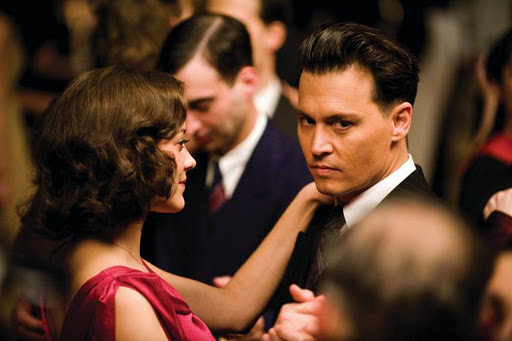
Michael Mann likes the central plot of Heat – expert cop and master thief and their teams on a destructive path towards one another with disregard for their personal lives – that this is the third time he’s made it, after the TV-movie L.A. Takedown, the DeNiro/Pacino classic and now this depression-era take, pitting Johnny Depp’s public enemy number one John Dillinger against Christian Bale’s FBI man Melvin Purvis (whose name is almost an anagram of Mr Evil Penis, but is one for vermin pelvis). (For all I know this is also the plot of Miami Vice and the Last of the Mohicans, I haven’t got round to watching them yet but it seems unlikely.)
The parallels with Heat run deep – the first criminal act, an opening prison break, is almost botched by a trigger happy accomplice soon removed from the group – but the key difference is the pivotal central scene where our two leads meet. In Heat, DeNiro’s thief McCauley and Pacino’s cop Hanna share a mutual respect, that they are dealing here with the other side of their own coin, a talented man with opposite morals. Here, Dillinger and Pervis despise one another, disgusted that they are within the other’s presence or mentioned in the same breath. This complex central relationship was key to the layered texture of Heat, and its absence is felt.
Depp has always been better at characters (Scissorhands, Sparrow) than he has emotions, and Dillinger is bland and lifeless in his hands, yet still more likeable than Bale’s cold, business-like Pervis. DiCaprio would probably have been a better fit for Dillinger, but as FBI director J. Edgar Hoover appears here as Billy Crudup this would have made DiCaprio and Clint Eastwood’s current biopic of the man problematic.
All this in account, this is still an entertaining action/crime movie, with plenty of period gun porn for those that way inclined. Mann’s attention to detail is perfect, and there is some of the best comedy ever seen in a 1930s set cop movie – see Dillinger wondering around the offices of the FBI department out to catch him, casually asking the score of a sports game. Smarter and more thought provoking than most gun-happy movies, this is definitely worth a watch.
Choose film 7/10