Aladdin

What better way to kick off a lazy Bank Holiday Monday than with a Disney classic? With a Pixar one of course, but I’ve watched most of those, so Disney it is. Notable in the Disney archives for being the first to use big name actors to voice its characters (Robin Williams steals the show as the Genie, even though he isn’t in the first third of the film) , Aladdin doesn’t have a lot else going for it to set it apart from the more renowned Disney pictures such as Beauty and the Beast, the Lion King or the Jungle Book. Yes, the devious royal advisor Jafar is a masterclass in how to draw an evil character (acute angles, lots of acute angles, think a dehydrated Peter Cushing), Gilbert Gottfried is excellent as the cantankerous parrot Iago and there is some of the studios greatest comedy from Williams’ improv and one liners (“10,000 years will give you such a crick in the neck!”), but the plot is thin, the Arabian stereotypes broad (and at times a little racist, a wink to Uncle Walt maybe?) and most of the songs are forgotten before the credits roll, with only A Whole New World and Genie’s Never Had a Friend Like Me leaving any kind of impression.
The animation is largely flawless, although touches of CGI sap the warmth from the otherwise hand-rendered imagery, and it is hugely impressive just how much characterisation has been given to a tasselled rug, but the plot is too thin and predictable, the morals daubed too thickly, even for a Disney, to make this a must-see.
Choose life 6/10

Dangerous Liaisons

John Malkovich: object of desire? Talk about playing against type. As the Vicomte Sebastien de Valmont in 18th Century France, he is challenged by the Marquise Isabelle de Merteuil (Glenn Close) to deflower Uma Thurman’s virginal bride-to-be Cecile. Deeming the task too easy, he instead chooses to bed Michelle Pfeiffer’s Madame de Tourvel, a virtuous, devout, happily married woman staying with the Vicomte’s aunt. The Marquise then drafts in Keanu Reeves’ Danceny to woo Cecile instead. If the plot sounds familiar, it’s because it was adapted more recently (and poorly) in the modern-set Cruel Intentions, which succeeded in dumbing down the many deceits and allegiances in the plot, but retains the deeply unlikable protagonists, too rich for their own good and revelling in destroying the lives of those around them.
More erotic than most period dramas, with necklines set to plunging and cleavages set to stun, this sees more bedhopping than a season of Desperate Housewives. Malkovich is on excellent form as the callous, vain and calculating lothario, deemed “conspicuously charming” and Close walks the line between on/off romance and hardnosed bitch, but every time Keanu opens his mouth you get the feeling Bill and Ted got their time travelling phone booth stuck in the reign of Louis XV, so thick and distracting is the slacker dude lilt he so desperately tries to hide.
Choose life 5/10

Bad Lieutenant Port of Call

This is not a remake, nor is it a sequel or prequel to Abel Ferrara’s Harvey Keitel-starring 1992 Bad Lieutenant, although there is one key similarity, in that the titular law enforcement officer is a corrupt drug addict attempting to solve a crime, in ’92 the rape of a nun, in Port of Call, the murder of a drug dealer, using their own, unconventional methods.
In this film, the drug-fuelled lead role is not so much played as inhabited, snorted, smoked and injected by a wired, tense and almost hunched Nicolas Cage, giving his best performance since Leaving Las Vegas, alongside a cast of largely unknowns or non-actors (including Xzibit as the drug kingpin lead subject of the investigation). As is traditional with maverick cop movies, there is more than just the case plaguing Cage’s Lt. Terence McDonagh, and at one point he must also juggle looking after his father’s dog, protecting a witness to the case, his friendship/relationship with Eva Mendes’ high class hooker/partner in narcotics and an investigation into his unorthodox interrogation of the witness’ grandmother, jeopardising the life of an elderly woman in her care. The very fact that McDonagh faces the repercussions of his actions sets this aside from other films in the genre, that so usually see their protagonists commit crimes in the name of justice with no consequences.
As amazingly intense as Cage’s performance is, the film itself never quite grips the attention. There is little here that hasn’t been seen before (other than hallucinations of iguanas and the break-dancing of a recently deceased hoodlum), but director Werner Herzog should be commended for rewriting the script to set the action in New Orleans in the aftermath of hurricane Katrina in order to provide the city with jobs and income.
Choose life 5/10

Capote

Philip Seymour Hoffman is a great actor, this cannot be questioned. Whether leading a small film in the likes of Synecdoche New York, Before the Devil Knows You’re Dead and the Savages, outshining the rest of an ensemble cast in Magnolia, Boogie Nights, the Boat that Rocked and the Talented Mr. Ripley or chewing the scenery as the bad guy in a big screen blockbuster like Mission Impossible 3, he always sinks completely into his characters, be they good-natured yet uncouth storm chasers, an intimidating phone-sex supervisor/mattress salesman or an outspoken rock journalist. With Hoffman’s acting ability in little doubt, it’s a wonder this film was made, as other than showcasing his talent for inhabiting the persona of another individual, there is little to recommend for this drab, largely plot-less offering .
Hoffman plays acclaimed writer Truman Capote (Breakfast at Tiffany’s), visiting a small town to document the aftermath of a murder for a magazine. Fascinated with the case, and even more so by one of the convicted killers, he expands his piece to become the last book he ever finished, In Cold Blood. The only real narrative drive is that of the court proceedings and Truman writing his book, interspersed with various parties and conversations with his friend Harper Lee (Catherine Keener) as she herself achieves publication and film adaptation of her own seminal novel To Kill A Mockingbird, but what the film lacks in purpose it makes up for in performances.
Choose life 5/10

The Red Balloon

A woman went out walking one day and discovered a snake’s egg on the path. She took the egg home and cared for it until it hatched, when she kept the snake as a pet. She doted on the snake for years, attending to its every need and treating it better than any snake had been treated before. Then, one day, the snake bit the woman, and with her dying breath she asked the snake “Why?” and the snake replied “Bitch, you knew I was a snake.”
It is this sense of inevitability and apprehension that fills the Red Balloon, as beautiful and well crafted as it is, that almost ruins the short about a boy who befriends a bright red balloon, but finds owning it proves problematic when all the other children want it as well. Yet however destined the ending may seem, it is the journey up to it, and indeed the repercussions that make the film so endearing, at times unexpectedly hilarious and beautifully heartwarming, especially the moment the balloon encounters an equally bright and vivid blue inflatable friend of a young girl. The ending, too, is truly uplifting.
Choose film 9/10

Annie Hall

Woody Allen famously has a tendency to write himself into most, if not all, of his scripts. It is usually difficult to distinguish where Allen ends and his characters begin, and this is none more so than with Alvy Singer, Allen’s neurotic obsessive from this, arguably his greatest and funniest film. It is this ability to use himself, or at least a variation of himself, as his protagonist that has allowed Allen to create such a well rounded, nuanced persona. One wonders if he hasn’t been living life as this character since birth, honing the pessimism, the paranoia and awkwardness, so now all he needs to do is put the ‘character’ into a slightly heightened situation, and a natural comedy will emerge.
Not that character is the only weaponry in Allen’s arsenal. The script is hysterical yet droll enough to quote in everyday life (“we can walk to the curb from here”), the performances perfect, particularly Diane Keaton as the eponymous Hall, both Singer’s ideal partner and greatest foe, and the film is peppered with fourth wall breaking with moments of originality, from a narration that admits it may be exaggerating to direct-to-camera conversations and asides.
Thee almost sketch-like format of the film, flitting backwards and forwards in Hall and Singer’s relationship, suits Allen well, as he is a filmmaker of varying styles and techniques, so he is able to showcase this without jarring the rest of the film, such as when he used split-screen to compare different family meals, or stopping random people in the street for relationship advice.
Oh, and the woman waiting with Singer at the end of the film, out of focus and silent in the distance for a matter of seconds? None other than Sigourney Weaver.
Choose film 8/10

Changeling

In the spring of 1928 Walter Collins, the 9 year old son of Christine Collins (Angelina Jolie, restrained, passionate, focused) goes missing. Five months later, the police find a boy that matches Walter’s description, but Christine is sure that he is not her son, seeing as he is a few pounds heavier, circumcised and three inches shorter. With the help of Walter’s dentist, schoolteacher and the local pastor (John Malkovich), she begins to uncover a web of conspiracy and lies within the Los Angeles police department, so eager to have good publicity they’ll manufacture it themselves, but when she digs too deep she is shipped off to an insane asylum. Jolie remains just the right side of hysterical throughout, and Amy Ryan pulls off an outstanding but far too brief performance similar to her scene stealing role in Gone Baby Gone. The film is gripping, and the true story is at times chilling and sickening as truths begin to emerge, but I feel it would have been a more superior picture had we not discovered whether Jolie’s replacement son was the real deal or not.
Choose film 6/10

Heat

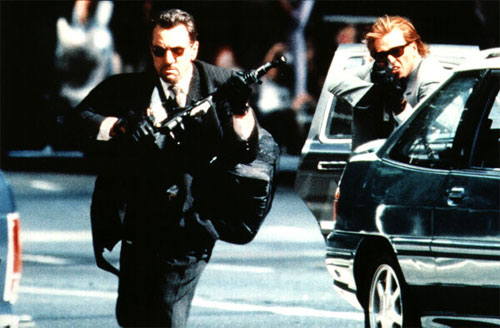
Most crime films tend to pick a side early on, focusing on a ‘means to an end’ band of criminals thieving because they have to, or a team of patriotic, all-American supercops able to match their never-ending machine gun clips with a limitless supply of one liners, but Michael Mann’s Heat, a remake of his own 1989 made for TV movie L.A. Takedown, takes a different path, giving Robert De Niro’s gang of seasoned thieved and Al Pacino’s police squad equal screen time, equal motivation and similar levels of compassion, so you get to decide who you want to win. Though the two main characters; De Niro’s master thief Neil McCauley and Pacino’s dogged detective Vincent Hanna are sworn enemies, they are still two sides of the same coin, separated by their own opinions of the law, but brought together by a deep mutual respect. Neither one is the villain of the film, there are more than enough scumbags among the supporting player to take that role, yet neither is necessarily the hero, although in the end it’s Pacino who grabs the most heroic moments.
Surrounded by an incredible ensemble cast (deep breath: Val Kilmer, Tom Sizemore, Danny Trejo, Dennis Haysbert, Natalie Portman, Xander Berkeley, Hank Azaria, Jon Voight, Jeremy Piven, Mykelti Williamson, William Fichtner, Tom Noonan, Ted Levine, Ashley Judd), some perfectly choreographed set pieces (the opening truck heist and mid film bank robbery/street shootout) and ability to show the effect their chosen lifestyles has had on these characters and their personal lives, or lack thereof, this is a tremendous film, even if it does give in to the occasional cliché, but these can be forgiven for the fact that they use weapons that actually, from time to time, need reloading.
Choose film 9/10

Tokyo Story

Unlike this film, life is nothing but disappointment. This is the discovery made by an elderly middle class Japanese couple as they visit Tokyo for the first time to see their children and grandchildren, only to find they do not have room in their busy lives to send time with their parents.
Shot with an unmoving camera set at sitting height from the floor, this largely encompasses the family’s conversations, discussing everyday life, but it is often the occasional periods without dialogue that are more moving, and say more than any could.
There is a sense of finality throughout, as though the couple know they are unlikely to see their children again, and it is difficult after watching this film not to pick up the phone and call your own parents. Surely a film that makes us want to at least try to be better people, and live up to the expectations of others cannot be a bad thing?
Choose life 9/10

The Bourne Trilogy

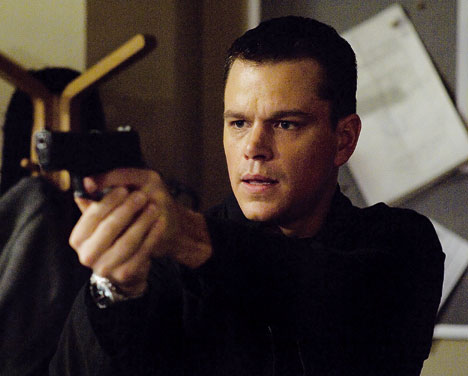
Back in 2002, the espionage genre must have felt a little like Matt Damon’s Jason Bourne at the start of this trilogy, floating unconscious in the Mediterranean Sea with a bullet in the back after the abysmal CGI tsunami of Die Another Day and the shallow, clichéd hotchpotch of Mission Impossible 2, although they may have envied Bourne’s lack of memory. Thank the heavens then for the metaphorical fishing vessel of star Damon, director Doug Liman and writer Tony Gilroy for bringing this energetic affair to the screen, both setting up Damon as a bona fide action star and throwing the gauntlet at the feet of Bond and Ethan Hunt to step it up a gear (both of whom willingly accepting the challenge with Casino Royale’s gritty realism and MI3’s intelligent action).