Annie Hall

Woody Allen famously has a tendency to write himself into most, if not all, of his scripts. It is usually difficult to distinguish where Allen ends and his characters begin, and this is none more so than with Alvy Singer, Allen’s neurotic obsessive from this, arguably his greatest and funniest film. It is this ability to use himself, or at least a variation of himself, as his protagonist that has allowed Allen to create such a well rounded, nuanced persona. One wonders if he hasn’t been living life as this character since birth, honing the pessimism, the paranoia and awkwardness, so now all he needs to do is put the ‘character’ into a slightly heightened situation, and a natural comedy will emerge.
Not that character is the only weaponry in Allen’s arsenal. The script is hysterical yet droll enough to quote in everyday life (“we can walk to the curb from here”), the performances perfect, particularly Diane Keaton as the eponymous Hall, both Singer’s ideal partner and greatest foe, and the film is peppered with fourth wall breaking with moments of originality, from a narration that admits it may be exaggerating to direct-to-camera conversations and asides.
Thee almost sketch-like format of the film, flitting backwards and forwards in Hall and Singer’s relationship, suits Allen well, as he is a filmmaker of varying styles and techniques, so he is able to showcase this without jarring the rest of the film, such as when he used split-screen to compare different family meals, or stopping random people in the street for relationship advice.
Oh, and the woman waiting with Singer at the end of the film, out of focus and silent in the distance for a matter of seconds? None other than Sigourney Weaver.
Choose film 8/10

Changeling

In the spring of 1928 Walter Collins, the 9 year old son of Christine Collins (Angelina Jolie, restrained, passionate, focused) goes missing. Five months later, the police find a boy that matches Walter’s description, but Christine is sure that he is not her son, seeing as he is a few pounds heavier, circumcised and three inches shorter. With the help of Walter’s dentist, schoolteacher and the local pastor (John Malkovich), she begins to uncover a web of conspiracy and lies within the Los Angeles police department, so eager to have good publicity they’ll manufacture it themselves, but when she digs too deep she is shipped off to an insane asylum. Jolie remains just the right side of hysterical throughout, and Amy Ryan pulls off an outstanding but far too brief performance similar to her scene stealing role in Gone Baby Gone. The film is gripping, and the true story is at times chilling and sickening as truths begin to emerge, but I feel it would have been a more superior picture had we not discovered whether Jolie’s replacement son was the real deal or not.
Choose film 6/10

The Cat Concerto

I had a revelation watching this 1946 Tom and Jerry short on Youtube. For years, watching these cartons as a child, I had always thought of Jerry, the mouse, as the hero, and Tom, the cat, as the bad guy. I think this is largely to do more with my own personal deep hatred of cats (I won’t go into it) than any context of the cartoons, but watching this (and subsequently Mice Follies, a personal favourite), my groundbreaking, life changing epiphany is this: Jerry’s a jerk. Seriously, the mouse is a dick. Think about it, Tom is playing a piano solo in a large, important concert, but his playing awakens Jerry, who has chosen the piano as an optimal sleeping venue. Yes, that’s right; he’s sleeping in a piano. You know; a musical instrument? Something designed to make noise and do nothing else? And upon being woken up he has the audacity to be pissed off, and sets out to sabotage the rest of Tom’s performance.
Utilising physical comedy, slapstick (the troublesome cummerbund) and surreal inflections (Tom’s extendable finger able to reach the extra high notes), this is beautifully choreographed, tightly controlled comic perfection that never misses a note.
Choose film 8/10

Heat

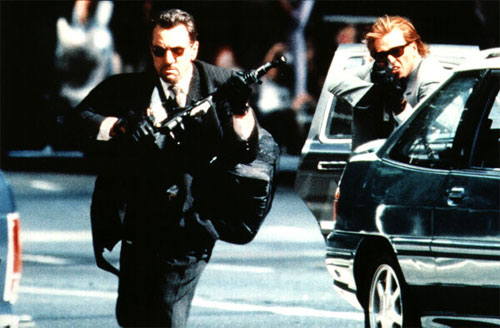
Most crime films tend to pick a side early on, focusing on a ‘means to an end’ band of criminals thieving because they have to, or a team of patriotic, all-American supercops able to match their never-ending machine gun clips with a limitless supply of one liners, but Michael Mann’s Heat, a remake of his own 1989 made for TV movie L.A. Takedown, takes a different path, giving Robert De Niro’s gang of seasoned thieved and Al Pacino’s police squad equal screen time, equal motivation and similar levels of compassion, so you get to decide who you want to win. Though the two main characters; De Niro’s master thief Neil McCauley and Pacino’s dogged detective Vincent Hanna are sworn enemies, they are still two sides of the same coin, separated by their own opinions of the law, but brought together by a deep mutual respect. Neither one is the villain of the film, there are more than enough scumbags among the supporting player to take that role, yet neither is necessarily the hero, although in the end it’s Pacino who grabs the most heroic moments.
Surrounded by an incredible ensemble cast (deep breath: Val Kilmer, Tom Sizemore, Danny Trejo, Dennis Haysbert, Natalie Portman, Xander Berkeley, Hank Azaria, Jon Voight, Jeremy Piven, Mykelti Williamson, William Fichtner, Tom Noonan, Ted Levine, Ashley Judd), some perfectly choreographed set pieces (the opening truck heist and mid film bank robbery/street shootout) and ability to show the effect their chosen lifestyles has had on these characters and their personal lives, or lack thereof, this is a tremendous film, even if it does give in to the occasional cliché, but these can be forgiven for the fact that they use weapons that actually, from time to time, need reloading.
Choose film 9/10

Tokyo Story

Unlike this film, life is nothing but disappointment. This is the discovery made by an elderly middle class Japanese couple as they visit Tokyo for the first time to see their children and grandchildren, only to find they do not have room in their busy lives to send time with their parents.
Shot with an unmoving camera set at sitting height from the floor, this largely encompasses the family’s conversations, discussing everyday life, but it is often the occasional periods without dialogue that are more moving, and say more than any could.
There is a sense of finality throughout, as though the couple know they are unlikely to see their children again, and it is difficult after watching this film not to pick up the phone and call your own parents. Surely a film that makes us want to at least try to be better people, and live up to the expectations of others cannot be a bad thing?
Choose life 9/10

Into the Wild

Christopher McCandless (Emile Hirsch) has a very promising future ahead of him. Considering Harvard Law school after graduating from college, with a healthy savings fund and parents willing to buy him a new car, he’s set to make a name for himself in middle class middle America.
But alas, this is not the life he wishes to lead, refusing to make the same mistakes his parents made – marrying the high school sweetheart, living in an unhappy, abusive marriage for the sake of appearances – he gives his savings to charity, dumps his car, burns his ID and cash and changes his name to Alexander Supertramp, pledging to live life alone, “no watch, no maps, in the wild.”
Told through letters to his sister, accounts from those he met along the way and excerpts from his own diary, this true story, directed by Sean Penn, is at times joyous, tense and heartbreaking. There isn’t a weak link in the cast, but the standouts are easily William Hurt and Marcia Gay Harden as the confused parents left behind as their ideal son wanders for years with no communication, not even a letter goodbye.
Penn at times drifts too far into Terrence Malick territory (Malick previously directed Penn in the Thin Red Line), with elegiacal shots of admittedly beautiful scenery, poetic, philosophical pontificating and a meandering style, flitting between Alex’s journey across America and his time spent living in an abandoned ‘Magic’ bus he finds in Alaska, but the story and performances pull it through. You get the feeling the journey is exactly how Alex had hoped, finding the people he would have preferred knowing when growing up; the parental fellow travellers Jan and Rainey (Catherine Keener & Brian Dierker), girlfriend (Kristen Stewart), boss (Vince Vaughn), friends (the semi-nudist random Swedes) and kind hearted, lovably cantankerous grandfather (Hal Holbrook). The soundtrack is amazing too.
Choose film 8/10

The Bourne Trilogy

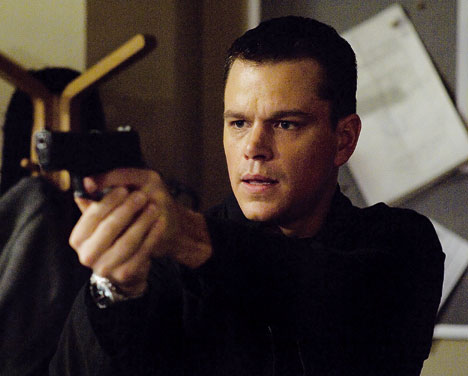
Back in 2002, the espionage genre must have felt a little like Matt Damon’s Jason Bourne at the start of this trilogy, floating unconscious in the Mediterranean Sea with a bullet in the back after the abysmal CGI tsunami of Die Another Day and the shallow, clichéd hotchpotch of Mission Impossible 2, although they may have envied Bourne’s lack of memory. Thank the heavens then for the metaphorical fishing vessel of star Damon, director Doug Liman and writer Tony Gilroy for bringing this energetic affair to the screen, both setting up Damon as a bona fide action star and throwing the gauntlet at the feet of Bond and Ethan Hunt to step it up a gear (both of whom willingly accepting the challenge with Casino Royale’s gritty realism and MI3’s intelligent action).

Diner

Overshadowed by the more successful, identically plotted yet inferior St. Elmo’s Fire for its starrier cast (back then anyway), this follows six friends as they joke, laugh, date and above all talk through their situations and lots in life as one of their number gears up to get married in a few days time. The cast of then near unknowns includes Steve Guttenberg, Daniel Stern, Mickey Rourke, Paul Reiser, Tim Daly, Kevin Bacon and Ellen Barkin, most of whom are fine in their roles, particularly Guttenberg as Eddie, the highly-strung groom-to-be who insists his fiancé must pass a football test or he’ll cancel the ceremony, and Stern’s Shrevie, the sensible, married member of the group who has discovered he has nothing to talk about with his wife (Barkin). Only Reiser is left without much of a character of story arc, left merely to pop up now and then with a well timed joke or put-down, something the comedian is more than equipped to do. Some of the dialogue seems to have been lifted from an unused Steven Seagal script (“I’ll hit you so hard I’ll kill your whole family”), but the 50’s soundtrack, featuring such artists as Bobby Darin, Jerry Lee Lewis and Chuck Berry help to make this an 80’s classic, even if it’s set in December 1959.
Choose film 6/10

Anvil

In the summer of 1984 some of the biggest names in rock music, including Whitesnake, Bon Jovi and the Scorpions all performed at the Super Rock festival in Japan, to vast audiences of screaming fans. Also playing was a band that has proven to be an inspiration to a pantheon of rock and metal bands since, such as Metallica, Motorhead, Anthrax, Slayer and Guns ‘n’ Roses, yet you’ve probably never heard of them, unless of course you’ve seen this real-life Spinal Tap rock-doc, in which case sacn to the end and move on, you’re done here. The band in question is a four piece Canadian metal outfit known as Anvil, still performing with two of their original members; singer Steve ‘Lips’ Kudlow and drummer Robb Reiner, but instead of basking in huge mansions, making records with big name producers or performing sell-out tours to millions, they are working dead end jobs and playing gigs at tiny sports bars, occasionally not even getting paid. This brilliant film tells their story, directed by their former roadie Sacha Gervasi, and tries to ascertain why such a talented, influential band could have failed so fantastically, and follows their attempt to relaunch their stalled careers in a music industry where the landscape has changed.
Choose film 7/10

Batman Begins

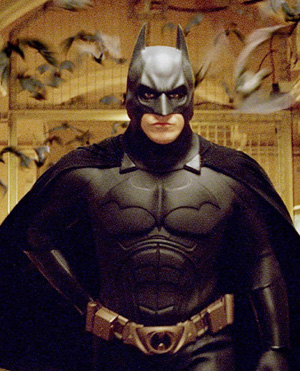
As the title suggests, this predominantly covers Batman’s origin story, from the death of his parents after he becomes scared at the theatre, through his training by Liam Neeson’s Ducard, his development of a crime-fighting persona and his confrontation with his former mentor in a city ridden with toxin-crazed criminals and madmen. This is arguably the most realistic, or at least vaguely plausible comic book movie ever made, with the only real superpowers on display being a gas that makes people insane and a ridiculously vast fortune to funs Bruce Wayne’s double lifestyle. Granted, the secret passage in Wayne Manor is operated by hitting a coded sequence of piano keys, but this can be forgiven, and is at least a variation from the classic sliding of a secret book on a shelf.
Continue reading