The Great St. Louis Bank Robbery

The second film in my travels through Steve McQueen’s career is actually his fifth movie, as I’ve yet to come in contact with a copy of Girl on the Run, Never Love a Stranger or The Blob, and is the second film in which he plays the lead (after The Blob, which I really want to see am annoyed I can’t find).

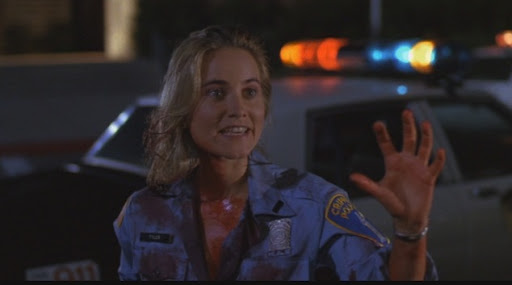
Here, McQueen plays George Fowler, a man in need of some funds to pay his way through college after being kicked out years ago. He accepts the job of driver for a bank robbery being conducted by his friend Gino (David Clarke) and two others, John and Willie (Crahan Denton and James Dukas), neither of whom trust George, as he’s lived a clean life and hasn’t even been to prison. Meanwhile, George meets up with Gino’s sister Ann (Molly McCarthy), an old flame of his, and complications arise when she works out the real reason George is in town.


Or rather, they don’t. I fully intend to spoil certain aspects of this film that I don’t recommend watching, so I’d advise the spoiler-wary to either skip to the end of the review or stop reading, but regardless you shouldn’t watch the film. You see, my first issue with the film was that halfway through the film there is a pivotal moment in the plot where, having discovered George and Gino are planning to rob a bank, Ann writes on the side of said bank that they are going to be robbed. Understandably, John and Willie are none too pleased about this and, upon discovering Ann is the culprit, kill her. Yet, after this happens, there are no further ramifications on the actual heist of the bank receiving a warning. So in effect Ann is killed for really no reason, as her actions had zero impact on anything that happened.

Secondly, in the film’s opening there is a brief intro stating that the parts of police officers have been performed by the real officers during the real life robbery upon which this story is based, however the police have yet to show up anywhere in the film even before the heist has begun, so it is obvious that something is going to go wrong, the alarm will go off and the police will arrive, else there’d have been no point to the intro. Also, it’s quite clear why the policemen have opted for careers in law enforcement rather than a more thespian path, as though only a couple get actual lines, they are all delivered rather forcefully.

Not that the rest of the cast fares much better, as even McQueen has his wooden moments, and the various conversations within the film, especially those between George and Ann, all feel stilted and awkward, even when they aren’t supposed to be. It’s no great surprise to find that McCarthy hasn’t really done much since. 

My main problem though? The story is dull. Now normally I love a good heist flick. There’s something about the meticulous planning of a con, the recruiting of the team, pulling it off, working around unforeseen obstacles and either seeing the criminals being brought to justice or fleeing with the loot that I find fascinating and immensely watchable, be it the star-studded, glossy likes of the Ocean’s trilogy or Inside Man, or something a bit more noir-y and stripped back like Rififi. Dog Day Afternoon, The Taking of Pelham 123, Out of Sight – these are all amazing films that I don’t hear talked about nearly as often as I feel that I should. And The Great St. Louis Bank Robbery is deservedly not amongst this hallowed list, because it’s just dull.

The robbery itself is completely straightforward, with no clever tricks or any kind of skill involved. The plan is simply to go in, rob the bank and leave before the cops arrive. There’s about as much of a plan as Gale and Evelle had in Raising Arizona, yet this is after a solid 75 minutes of planning shown on screen, that actually took place over at least five days during the film. And the great thing is that nothing goes wrong – the alarm is triggered, as the thieves had expected, but the cops arrived sooner than anticipated, descending into a hail of gunfire. Other than the last minute shoot-out and McQueen going insane, there’s little of any worth that I think I’ll remember. McQueen’s final scenes are worth mentioning in that they are the only time I’ve seen so far where he has played anything other than a by-the-numbers hero character. When he finds himself alone in the bank with the hostages and a gun, he breaks down and goes a bit loopy, which was interesting to watch, but was unconvincing because it’s Steve McQueen, and he just doesn’t do that.

One interesting part of the film was that it showed how a good, clean man – in this case George – can become embroiled in the seedier underbelly of a nation, and how if he’s not careful he could quite easily become stuck within it forever.

Also, when the film opens they wisely removed the ‘Great’ from the title, as neither the film nor the factual account are anything even close to resembling great. And is it too much to ask for a little note at the end saying what happened to those that survived?

So, this isn’t a great film, mainly because the story is boring – the heist doesn’t even begin until 15 minutes before the end – the acting is poor, the soundtrack has been taken from a fairground ghost train and pretty much the whole thing is in shadow and impossible to make out.

Choose life 2/10
A Kid in King Arthur’s Court

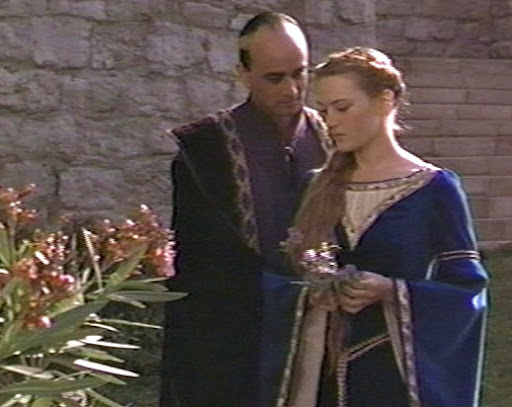
It seems I didn’t quite think through the strategy of watching the entire careers of various prestigious film-makers. Who’d have thought that, before they became renowned and laden with numerous awards, actors would take any roles going to pay the rent, regardless of the claptrap they may be. And so it is with A Kid in King Arthur’s Court, the family-friendly second entry on Kate Winslet’s CV, and what I hope will be the worst, although seeing as I’ve still got The Holiday to watch at some point, this may not be the case.
Continue reading

Return to Horror High

Given the cinematic journey I’ve chosen to peruse, I don’t often get to watch truly terrible films. Sure, there are some on the 1001 List that I’m not necessarily a fan of, but they tend to have some kind of artistic merit or historical value that justifies their position. I also tend to make an effort to avoid films I think are likely to be awful, as I probably won’t enjoy them, and there are so many other films I’m sure will be better. I think the last awful film I reviewed was Big Trouble in Little China, and that was only because Empire readers inexplicably voted it the 430th greatest film of all time, despite it having almost no redeeming features whatsoever. It was refreshing then, as I begin my exploration through George Clooney’s career, to go out with a mate, have a few drinks, plays some Call of Duty and settle in to watch this goddawful slice of tripe.
The plot is reminiscent of Scream 3; a film crew is shooting a horror movie based on the killings that occurred in a school some years earlier. To add to the realism, they are shooting the film on the site of the school, and some of the parts are being played by the people involved in the actual event. A few days later, a police investigation is being undertaken as almost everyone involved in the film has been found dead outside the school, except for the writer, who is recounting the tale to two police officers. This scenario has potential to be a half-decent horror flick, I mean I’ve heard a lot worse, but alas this is not the case, as what little plot there is deteriorates into a hashed up mess fairly early on.Clooney, for he is the reason I’m watching this, has a miniscule role as an actor eager to break his contract early so he can start filming on a TV series.He succeeds in leaving his role, only to be killed moments later, in one of those moments where the intensifying score clearly signposts exactly what will happen. You know, when they’re walking down a dark corridor, and the ominous music only plays when they’re slowly making their way forward, then the music stops when they do. To be honest, it’s probably for the best that Clooney died when he did in this film, his hair is atrocious.

As far as I can tell the rest of the cast is of little note – hardly surprising when you look at the acting on show – with the exception of Maureen McCormick, whose turn as a cop that becomes alarmingly aroused by dismembered body parts proves to be all the more bizarre when you discover she played Marcia Brady on The Brady Bunch. Now I’ve never seen that show for two reasons: a, I’ve always lived in the UK, where I’m fairly sure it’s never been aired, and b, I’m under the age of 35, but I’m fairly sure Marcia never came on to her superior officer after discovering a severed arm, or clawed seductively at her blood-splattered breasts whilst she retold her exploits involving sliding down a gruesome hallway.

My main problem with the film was the plot, especially the last ten minutes, which features not one but two of the worst twists I’ve ever seen. The first, involving a Mission Impossible-style removable face mask, is ridiculous enough, but the second is of such sweeping idiocy that it beggars belief, and doesn’t withstand even a second’s worth of examination. Up until that point I had forgiven most of the film’s other flaws – of which there are many – on the basis of the director’s lack of experience (this is his only film credit) and budgetary reasons (although great films have been made for far less than this film cost), but the film’s ending is just so ridiculously inane that it turned me off the rest of the film completely.

So what else is wrong with it? Well, it uses the age old filming-a-scene-but-not-telling-us-they’re-filming-a-scene schtick at least three times, and the it’s-all-a-dream thing once, there’s a sex scene illuminated by someone welding something quite far away from the first floor window of the room in which the coitus is occurring, no-one actually finds the bodies mounting up, yet people are clearly scared of a suspected killer they have no reason to suspect, and there’s one of the worst uses of a Schwarzanegger-esque one-liner I’ve ever seen (“Class dismissed.”)

On the plus side, the script the script does have some gems, including a conversation about explosive breasts (“There will be no exploding tit shot!”) and possibly the greatest worst special efect I’ve ever seen in a shot of an axe beheading someone in silhouette through a frosted glass door, with the axe swinging down, followed wiftly by a clearly fake head being thrown far too enthusiastically up in the air. Needless to say, my friend and I were in stitches at this, and it received a good few rewinds before we were done. If I knew how to embed mpegs you’d be watching this for the rest of the day.

So, all in, this is one of the worst films I’ve ever seen. At times it wanders into so-bad-its-good territory, but for the most part it’s just terrible. I will not be returning to Horror High any time soon.

Choose life 2/10

I Am Cuba/Memories of Underdevelopment/Lucia

There comes a point in the life of every blog when you just have to give in and succumb to what the public wants. It’s a wonder I’ve made it this far, but I’m afraid that time has come. I’ve been inundated with torrents of requests to focus on an area I, and many other blogs, have previously neglected. Yes, that’s right, it’s time for the post devoted to the history of Cuba! Yep, that’s right. There are not one, not two, not four, but three films on the list that all focus on the ‘modern’ history of a country I’ve never really even thought about, let alone cared (apologies to my veritable army of Cuban followers) and surprisingly enough, none of them are any good.
I Am Cuba inconceivably holds the rank of 112th best film in Empire’s poll, and for the life of me I can’t fathom why. Other than the impressive early tracking scene, where the camera goes underwater in an unbroken shot, there’s little to recommend about this tale if four disconnected stories in Cuba. The acting is largely terrible, and the stories are slow and poorly told, with an at least 10-minute edit on each section still required. Nothing more than well-filmed propaganda, such a high placing on Empire’s list makes me question their tallying methods.
Memories of Underdevelopment is a largely plotless rumination on gender, language and politics in early 60’s Havana, following a wealthy former businessman turned writer as he woos an aspiring actress, only to eventually be taken to court for allegedly abusing her virginity. Dull and overlong even at 97 minutes; it’s so boring that one of the highlights is a lecture.
At 2 hours and 40 minutes long, Lucia is a monumental waste of time. Three women, all conveniently but pointlessly named Lucia, live through three eras in Cuban history – 1895, 1932 and the 1960s. I can’t really explain the importance of these times without external research, as I was bored after 10 minutes and spent the next 150 intermittently looking at my watch and hoping for the film to end, as other than some interestingly lit scenes, nothing coherent really happens in any of the segments.
I Am Cuba: Choose life 3/10
Memories of Underdevelopment: Choose life 2/10
Lucia: Choose life 2/10

Hold Me While I’m Naked

A man is making a film (and not a very good one by the looks of it) in this short by George Kuchar. 17 minutes is not a lot of time to get a plot across, as Kuchar seems to have realised, and therefore doesn’t really bother with one, instead resolving to show snippets of pretentious conversations between the film’s director (himself) and it’s stars during production (“The mysticism of the stained glass window and the profanity of that brazier just do not go together”), footage of him coaxing the fakest looking bird ever created down from a tree, the actress leaning against a mirror whilst a man goes through her clothes, Kuchar staring from a window, walking along with the camera pointed up his nose, lying covered in unspooled film reels and his leading actress having sex in the shower. I’m not sure what to draw from this, so I’m not going to.

Choose life 2/10

Mediterranee

This is not a film, but is merely cinema for the sake of art, as three unconnected mediums – a semi-poetic, philosophical narration, a hauntingly evocative soundtrack and a collection of unconnected, repeated images and videos are played out for 45 minutes. Ruins, statues, machinery, oceans, gardens, a girl on an operating table, a man rowing a boat full of junk and tracking shots of hallways are all included, and none of them have a point. I’m also getting rather of tired of watching animals killed on films, what with this, Strike, In This World and Land Without Bread (to be reviewed) all featuring slaughter of some kind. Please stop it.
Choose life 2/10

Eraserhead

I think this is David Lynch’s idea of a romantic comedy. Shot in stark black and white and sounding like it was filmed underwater or near a busy factory, we follow the bizarrely coiffed Henry Spencer (Jack Nance) through the trials and tribulations of an average young man – meeting his girlfriends parents for dinner, encountering a beautiful woman living in the same apartment building, watching a woman with hideously deformed cheeks dancing deliriously on stage, you know, the usual.

Coming across like a 90-minute montage of nightmares I would not advise watching this before bed. Henry and his partner’s baby has the appearance of a mechanised cow foetus (possibly because undenied rumours suggest this was what was used), the aforementioned dinner sequence involves a tiny roast chicken still moving, bubbling and bleeding on the plate, and a scene where Henry cuts open the deformed baby has it becoming a bile volcano, one of the most horrific images I’ve ever seen. I’m not sure what happened to Lynch growing up, but I damn well hope it doesn’t happen to me.
Choose life 2/10

Winter Light

My first Ingmar Bergman film does not make me want to watch any more, though several appear on the list. Winter Light opens with a 12-minute long church service by a vicar in front of a very small congregation, including hymns, prayer and the breaking of bread, and from there remains bleak and uneventful, as the vicar meets with a member of his flock contemplating suicide over concerns China could start a nuclear war and travels to a neighbouring village. The scenes are unbearably long and tedious – a man waiting by a body then helping to load it into a van with the only sound being the river flowing behind him, or a static shot of a woman reading her own letter staring straight into the camera, and overall there is little dialogue, camera movement or anything to engage the attention.
Choose life 2/10

In This World

Michael Winterbottom’s semi-documentary uses a novel approach in setting up and suggesting situations, then filming the reactions of Pakistani refugees at Shamshatoo Refugee Camp, Pakistan in February 2002, blurring the line between fact and fiction. We Follow Jamal and Enayat, a boy and his uncle, as they attempt to seek asylum to London, being smuggled across borders packed behind orange crates or hiding amongst sheep on a truck, but more information would have been appreciated on the details of why they are seeking asylum when their other countrymen aren’t, and some shots – a cow being brutally sacrificed, twitching as its life is forcibly removed – should have been omitted.

Choose life 2/10

Big Trouble in Little China

What on Earth is this film doing on the list? It seems enough people voted for it to become the 430th greatest film of all time in Empire’s 2008 poll, but it has nothing going for it. The plot is sketchy, full of holes and relies too much on coincidence, the sets are shoddy and in danger of falling over, the effects are terrible and the script even worse (“Are you ready, Jack?” “I was born ready.”)
The story, as much as there is one, concerns opinionated but dumb brute Jack Burton (Kurt Russell), truck driver of the Pork Chop Express. After meeting up with an old friend in San Francisco’s Chinatown district, he loses his truck and his friend’s fiancé is kidnapped by a mysterious, yet ridiculous, magical Chinese cult.  Burton is, unquestionably, a bit of a dick, only helping to look for her in the hope of finding his truck, and getting the money his friend owes him. They spend the rest of the film looking for her, with the help of Kim Cattrall’s friendly neighbourhood lawyer, who just happens to be in league with a reporter writing an article about the magic. The mythology is inconsistent (as are the characters’ fighting abilities from one scene to the next) and bizarre, and the bad guys look too ridiculous to be taken seriously, flying through the air shooting lightning from their hands, wearing giant comedy lampshades on their heads.
The final confrontation is disappointingly brief, and the freaky ball of floating eyes and Chewbacca/orang-utan/rejected muppet hybrid are unsettling, not to mention almost entirely superfluous to the plot. Maybe, after enough alcohol and a dangerously undercooked kebab this could slip into so-bad-it’s-good territory, but otherwise avoid at all costs.
Choose life 2/10