 I’ve made the point before that the list contains films of three varieties; great, popular and important. The greats arrive via the Empire 5-star 500 list, the popular from the two lists voted by the general public, and the important ones are provided by the 1001 Films to See Before You Die. Many films, though arguably important, aren’t actually very good, so one could argue that they should be remembered and acknowledged for their gifts to cinema, but not necessarily watched, as was the case with the Jazz Singer, marking the introduction of spoken dialogue to the big screen, which nowadays is dull, racist and features too many unnecessary songs. The Big Lebowski, on the other hand, is also an important film, spawning a cult following so vast there is a fan club (the Little Lebowski Urban Achievers), several books and an annual festival (creatively named Lebowski-Fest, I hope to attend one day). And yet, it does not appear among the important list, appearing here after being awarded a 5-star review and obtaining positions on both nominated lists. This is less a crime and more a cultural injustice, as the impact this film has had on society is measurable from space. Hell, they even played clips of it recently on Something for the Weekend.
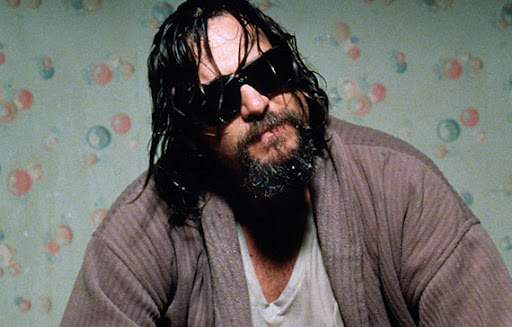
 So just what is it that resonates so much with the public? Maybe it’s the snappy, endlessly quotable dialogue (“Obviously you’re not a golfer), particularly everything said in the bowling alley. Or perhaps it’s the borderline caricature roster of characters on display, from John Turtorro’s lilac-hued pederast Jesus (whom nobody fucks with) to Julianne Moore’s naked yet cultured Pollock-esque artist Maud and of course John Goodman’s psychotic ‘Nam vet Walter. It’s probably got something to do with the extremely crowded plot that bears little effect upon the characters it happens to. But mainly, it has to be Jeff Bridges turn as The Dude, a man shambling and smoking his way through life, following the flow it leads him on via nihilists, urinating Chinamen, porn moguls and private detectives. That, and it’s the first great film to feature a pot-smoking lead since Cheech and Chong, and one must conclude that many of those attending Lebowski-Fest, drinking white Russians in their dressing gowns and sunglasses have similar feeling towards the weed as his Dudeness.
Me? I love it because it’s a quintessential Coen Brothers movie. It features everything you need to make a great film – a twisting plot, stellar cast (I haven’t even mentioned Steve Buscemi, Peter Stormare, Philip Seymour Hoffman, Tara Reid, Sam Elliot, David Thewlis, Aimee Mann or the Red Hot Chilli Peppers’ Flea), terrific performances all round and a cracking soundtrack. The film introduced me to my cocktail of choice – Vodka, Kahlua and milk, easy on the Kahlua and heavy on the ice – and every time I watch it I either see something new or am reminded of a moment of pure gold I’d previously forgotten.
Choose film 9/10
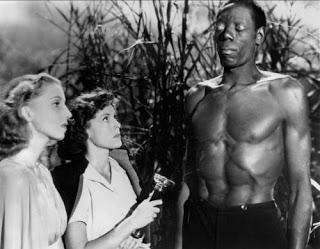 Have you ever been really disappointed by the title of a film? I’m talking about films like Monster’s Ball, Elephant and Free Willy, films that, when you hear the name without knowing the plot, your mind heads off in completely the wrong direction. I was very disappointed when I found out the Tyrannosaur from the title of Paddy Considine’s recent film was an abusive drunk rather than a giant carnivorous lizard rampaging around a London estate. And so it is with I Walked with a Zombie, less a heart-pulling romance of a woman falling for the reanimated corpse of the man she loved, more a nurse caring for a patient who cannot feel, talk or think, but obeys simple commands and can walk around. Continue reading



 Life Vs Film