Les Miserables

Jean Valjean (Hugh Jackman) has worked his last day of nineteen years of slavery, all for stealing a loaf of bread to feed his starving family, and subsequently  trying to escape. Upon his release he is informed by policeman Javert (Russell Crowe) that he will be on parole for the rest of his life, so Valjean flees and tries to make a life for himself anew. Some years later, Valjean has become a successful businessman, but Javert remains on his tail, which distracts Valjean at a key moment, which in turn dramatically affects the future of one of Valjean’s employees, Fantaine (Anne Hathaway), and her young daughter Cosette. Some years later, and on the eve of the French Revolution, Cosette (Amanda Seyfried) becomes the object of affections of Marius (Eddie Redmayne), a young but prominent revolutionary, who is himself adored by Eponine (Samantha Barks).

Continue reading

Citizen Kane

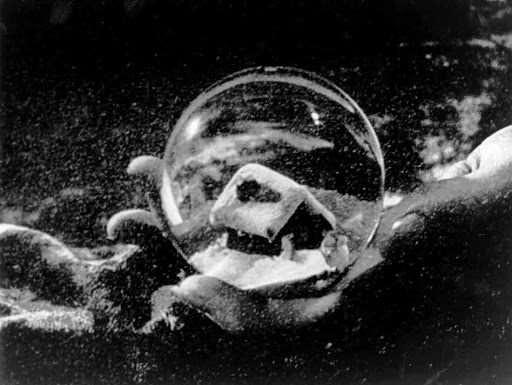
Charles Foster Kane (Orson Welles), an unimaginably wealthy publishing kingpin, drops his snowglobe and dies alone in his bed. His last dying word, “Rosebud,” sends the national newspaper journalists into a frenzy, all eager to discover it’s true meaning, in the hope of shedding some light onto the tycoon. Led by Jerry Thompson (William Alland), the reporters speak with Kane’s former wife, friends, employees, business partner and butler on their search for the truth. Could it be the name of a girl? A dog? A boat? Or just the rambling ravings of an insane old man?

Up until last year, Citizen Kane has topped Sight and Sound magazine’s Greatest Film Of All Time list, but was recently toppled by Vertigo. It’s been a little while since I’ve seen Hitchcock’s classic, so I can’t vouch for whether the change is correct or not, but I can say that I have no problem with Citizen Kane having been up there for quite so long. This film actually appears on all four of the lists I’m currently working through, and so great is its reputation that I can’t imagine a respected film list denying it a place. I mean, it spawned the prefix “It’s the Citizen Kane of…” as a way of saying a film is the greatest of a specific type. And heads up, this isn’t going to be the Citizen Kane of Citizen Kane reviews. So what makes it so important? Why is it revered by so many people? Will every paragraph in this review end in a question mark?

Continue reading

The Hobbit: An Unexpected Journey

Bear with me here, this may sound a little strange. There’s these things called hobbits, which are basically people, but they’re quite a bit shorter than humans, with big hairy feet, and they live in the ground in houses with big round doors, and they have a penchant for pipes. One of these hobbits, Bilbo Baggins, is paid a visit by a wizard – stay with me – called Gandalf, who arranges for said hobbit to go on a quest with thirteen dwarfs – kind of like hobbits, but a little taller, bulkier, hairier and grumpier – to travel a really long way in order to break into a locked mountain and kill the giant dragon that’s sleeping on a huge pile of gold that rightfully belongs to the dwarves. Oh, and one of the dwarfs, Thorin (their king), chopped off the hand of a giant pale orc (a kind of, um, ogre?) after the orc (called Asok the Defiler, of course) killed Thorin’s grandfather, and understandably Asok is out for revenge. Oh, and there’s a mass of caves full of goblins, some giant wolf-creatures called Wargs, great big problem-solving eagles and another wizard called Radagast the Brown who keeps birds under his hat, their faeces in his hair and rides a sleigh pulled by big rabbits. Actually, now I think about it, there’s nothing all that weird about any of this.
Continue reading

Violence is Funny

Everybody has their own favourite Christmas films, and more often than not they tend to be those watched every year during your childhood. The ones you can quote line for line, and aren’t ashamed to admit you love. That’s the beauty of the Christmas film, by their very nature they almost have to be sappy, family-friendly, it’ll-all-be-OK-in-the-end schmaltz, and some are so much the better for it. Whilst A Christmas Story may not be my personal favourite, I can absolutely see why others may adore it, and you give me National Lampoon’s Christmas Vacation, The Muppet Christmas Carol or Elf every day of December and you’ll find it a difficult task to prise me from the sofa. But this post isn’t about any of those film, it’s about a series of films, all set over the holiday period, which I feel I should write about, because I love them so much. That’s right, it’s Home Alone.

Growing up, I must have watched Home Alone and its sequel, Lost in New York, every Christmas since about 1995, but for some reason or another I hadn’t seen either of them for a good few years, so earlier this year I spotted the 4-disc boxset in my local second-hand DVD store for far less money than I would have been willing to pay, so I made a swift purchase and shelved them aside, looking ahead to Christmas when numbers 1 and 2 would be watched for the umpteenth time, and parts 3 and 4would be seen for the first. Well on the weekend before Christmas the time finally came, and was made all the more special by it being my girlfriend’s first viewing of all of them (quickly followed by her first viewing of The Muppet Christmas Carol, although I’ve yet to sit her down for Christmas Vacation).
Before watching, I was slightly apprehensive as to whether the first two films would live up to my memories, but I can attest that they are still amazing. There’s something about spending a considerable amount of time setting up the premise – Kevin McCallister (Macaulay Culkin) is, through a series of coincidences and mishaps, left alone at his family’s palatial home over Christmas whilst they are holidaying in Paris. After coming to terms with his situation and learning how to take care of himself and the house, his troubles are deemed far from over when two bumbling crooks, Harry and Marv (Joe Pesci and Daniel Stern), pick the McCallister’s apparently empty house as the perfect target for a little festive theft, so Kevin must use every trick at his disposal to stop them.
This is the very definition of a film of two halves. The first half outlines Kevin’s predicament – his family waking up late after a downed power line, confusion at the taxi head count and rushing through the boarding gates – and introduces our hero’s nemeses, gradually setting up the life lessons that Kevin will have learned by the end of the film – the importance of both independence and family, ingenuity and friendship – whilst the second half is a monumental payoff, with the two crooks getting absolutely everything they deserve in a masterpiece milieu of slapstick, gurning and cringing (the nail through the foot, always the nail through the foot!).
The sequel manages to recreate the same sense of wonder and excitement at the prospect of being allowed to run amok with no adult supervision, but this time gives Kevin not just his home town to play with, but the entirety of New York City, complete with a grand hotel and a magnificent toy store to muck about in. Although the structure is almost exactly identical – Kevin argues with his family, is separated from them, thrives on his own, befriends an apparently scary local loner, runs into difficulties, thwarts the plans of Harry and Marv, rigs a house full of wince-inducing booby traps, uses the aforementioned friend to catch the thieves before being reunited with his family – it remains fresh by approaching each aspect in a new and interesting way. And it features Daniel Stern being hit in the face with a brick, four times. Stern’s subsequent defiant yell of “Suck brick, kid” when he is presented with the opportunity to retaliate is one of my favourite moments in festive cinema, up there with Jimmy Stewart’s life-affirmed canter through Bedford Falls and Andrew Lincoln’s title card confession to Keira Knightley. And Buddy the Elf being hit by a car.
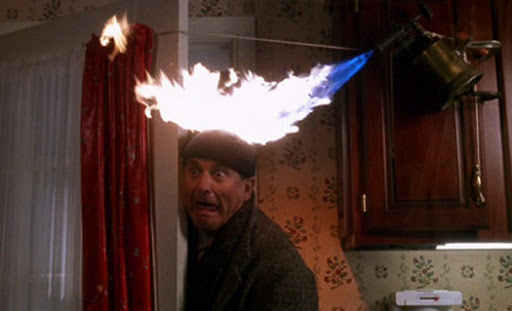
The real universal joy of these first two films lies partly with the heartwarming morals and happy endings, colourful characters and the triumph over adversity of not just a child alone at Christmas, but his parents’ desperate attempts to reunite the family, but personally I believe the true unique quality that sets this duo apart from other festive fare is the violence, of which almost the entirety is directed towards Harry and Marv. Throughout the films they endure enough torment and torture to kill them many, many times, be it from five-storey falls onto concrete, toilet bowl explosions (after an impressive handstand from Harry), being crushed by numerous heavy objects (the nose-bending tool chest down the stairs is a personal highlight) or just being conked on the back of a head with a snow shovel. The beauty is, no matter how much the pair are put through, they can always get back up again and continue their chase of the kid at the other end of the string those paint cans are tied to. It’s a live-action cartoon, and made all the better by the expressions Pesci and Stern are able to contort their faces into. Pesci’s acting decision to channel Muttley in the second film does tend to throw me a little, but it fits the feel.
This love in the first films of all things potentially disabling and dismembering was surely the reason for my high hopes for parts three and four. I had of course heard that these films were sub-par at worst, and disappointing at best, but I had assumed this would be because the film-makers hadn’t understood that you need to have that balance of the gentler, expositionary first half, before the riotous free-for-all of a conclusion. I’d anticipated the directors (The Smurfs’ Raja Gosnell and Teen Wolf’s Rod Daniel, rather than Chris Columbus) would have settled for the most basic of premises before unleashing a never ending torrent of flamethrowers, anvils and rocket-packs, but it turns out I could not have been more wrong. Instead of the expected violence-fest, there was a seemingly endless amount of set-up with so little pay-off I almost missed it completely. Home Alone 3 at least puts a little effort in, but the traps set are far less ingenious and incapacitating than in the previous installments, with at one point of the crooks (four this time, none of whom have done enough to remove Home Alone 3 from their top four films on IMDb) being forcibly restrained by nothing more than a weak hose pipe going off in his face, and they all go through a lot worse than what ultimately immobilizes each of them. Also, where in the first two films Kevin’s isolation was accidental, here Alex (Alex D. Linz) is left home alone on purpose, and only for a few hours at a time, when he’s home sick, his parents are at work and his siblings (including a young Scarlett Johansson) are at school. The fact that at the end of every day the rest of his family comes home to surround him with safety kind of ruins most of the tension. My main issue though, other than the lack of Daniel Stern and Joe Pesci, or a John Candy/Tim Curry-style comedic actor in a supporting role, is that the villains are international terrorists on the trail of a misplaced microchip hidden inside a remote control car Alex has recently acquired. The first times around the crooks were a pair of bumbling ne’er-do-wells who couldn’t find a bag of cement if it fell on their heads, so their being bested by a bratty kid is almost plausible, but this time the crooks come equipped with enough plans and gadgetry that it just becomes silly, and not in the way it’s supposed to.
All of this is fine, however, in comparison to Home Alone 4, a film which justifiably was only released as a TV movie. It tries to bring back the character of Kevin McCallister (Mike Weinberg, hands down the worst child actor I’ve seen) and Marv (French Stewart), but this time Kevin’s parents are separated, and Kevin runs away to spend Christmas with his Dad (Jason Beghe) and his mega-rich new girlfriend (and potential fiancé) Natalie (Joanna Going). Natalie lives in an ultra-modern, remote controlled house complete with a butler and maid, and the British royal family are coming to stay for the festive period. Marv and his girlfriend Vera (Missi Pyle) plan to kidnap the young prince, but weren’t expecting the young Kevin to be around and get in the way. I have four main problems with this film, other than the aforementioned acting talent on display. The predominant one is that, in a film series called Home Alone, and in which the previous three installments have all featured a child being abandoned and left to fend for himself; at no point in this film is Kevin actually alone. The maid and butler are always there somewhere, and if they are ever both unavailable for assistance, this isn’t made clear until after the events have taken place, so you spend the entire time just waiting for help to arrive. Secondly, there’s a twist signposted early on that so obviously wants you to think one thing that the only possible alternative becomes abundantly clear, yet is portrayed as a dramatic surprise when it is eventually spelled out. Thirdly, this is a film in the Home Alone series, yet there’s barely any traps laid out for the crooks to fall into. I’m going to spoil it a little now, but I strongly advise you not to watch this film, which makes it OK in my book. The whole point of the Home Alone films is for a kid to find novel ways to injure trespassers using household objects and toys, but this is almost entirely ignored. The only trap Kevin actually sets is a large frying pan rigged behind a door to bash someone in the head, and he even has to stand next to it to release it. Granted, seeing French Stewart being smacked in the face with a swinging pan is still pretty damn funny, but I really wanted more. A stereo playing one of the crook’s voices doesn’t make sense, and setting up a revolving bookcase to spin faster when there’s people trapped inside is nowhere near what could have been achieved with so much gadgetry to hand. Oh, and the elevator that can’t go up so gets stuck between floors? Well why not just go down or force the doors open? Ridiculous. Anyway. My fourth and final problem is the film’s final shot, when Kevin looks into the camera and instructs his voice-activated remote-control, that apparently only controls the house, to alter the weather patterns and make it snow. I hate this kind of thing, and this may well have just replaced Sex and the City 2 as the worst film I’ve ever seen.
So, other than one smirk-inducing frying pan to the face, there is absolutely no reason to watch Home Alone 4, and don’t bother with part 3 either, just watch 1and 2, every Christmas, forever.
Home Alone: Choose Film 8/10
Home Alone 2: Choose Film 8/10
Home Alone 3: Choose Life 3/10
Home Alone 4: Choose Life 1/10

Seven Psychopaths

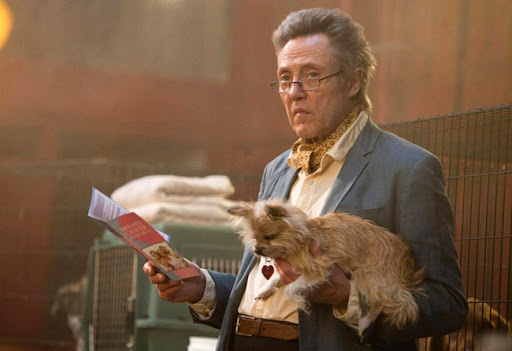
Marty (Colin Farrell) is an alcoholic writer (otherwise known as just a writer) who has the title of his latest screenplay – Seven Psychopaths – but is struggling for anything after that. His best friend Billy Bickle (Sam Rockwell) is desperate to help, and posts an advert in a newspaper, calling for any psychopathic characters to get in touch as inspiration. Meanwhile, Billy and Hans (Christopher Walken) run a dog-napping business, in which Billy ‘borrows’ the dogs from unsuspecting owners, only for Hans to return them a few days later and collect the reward. This all goes a little awry when Billy’s latest victim, Bonny the ShihTzu, is owned by ruthless mob boss Charlie (Woody Harrelson), and he really loves that dog.
Continue reading

The Day The Earth Stood Still

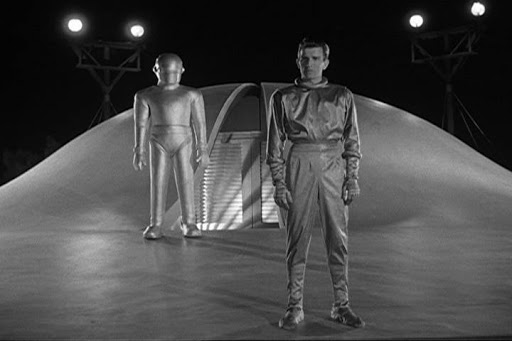
An alien ship lands in Washington D.C., and from it emerges Klaatu (Michael Rennie), a humanoid from a neighbouring planet, who brings with him a message he wishes to convey to the various leaders of Earth. When they squabble pettily over where the meeting should be held, Klaatu instead decides to meet with the general public, so he rents a room in a boarding house, under the name Mr. Carpenter. There he meets the other lodgers, including Helen (Patricia Neal) and her young space-obsessed son Bobby (Billy Gray), and eventually he meets with Professor Barnhardt (Sam Jaffe), a learned scientist, in the hopes of discovering something worthwhile about Earth and mankind. Oh, and one other thing. Klaatu has a giant, omnipotent robot guardian called Gort, who has an eye-laser capable of disintegrating anything.

As a nerd, I like my science fiction, but I’ve never obsessed over it. I’m a fan of Star Wars, but I’m not a super fan, and the only Star Trek-related media I’ve seen is J. J. Abrams recent film. To be honest, Firefly has always been more my cup of tea, and that’s only science fiction in that its set in space, and that’s a similar situation here. The actual science fiction elements of The Day The Earth Stood Still are mere background details for a large section of the film, as it becomes almost a fish out of water tale of a man unfamiliar with his new surroundings, learning about a new culture, its eccentricities and foibles. Obviously there is still a great deal of the otherworldy – Klaatu is an alien after all, and there’s the robot capable of destroying worlds who is controlled by words and flashing lights – but the more memorable aspect is the social indictment; the message that we, as a civilisation, need to get our act together or suffer the consequences. It comes as no surprise that the film was remade in 2008 (though I’ve not yet seen it), as clearly had the events of this film actually taken place in 1951, then we certainly didn’t listen, as can be seen by the state of the world today. But I don’t want to get too political, so I’ll just say that message from the film back in the 50s, just six years after the end of the Second World War, is possibly just as relevant today.

Anyway, the film. Seeing as it was made over 60 years ago, its no real shock to find that the special effects for the most part don’t really stand up. Gort is quite blatantly a man in a suit (Lock Martin, of whose nine screen roles six were uncredited and one was deleted), wires are fairly visible in some scenes and footage is clearly sped up to indicate people running away. The laser and disintegration scenes are ropey at best, but I was thoroughly captivated by the shots of the spacecraft opening, with a doorway appearing on its seamless surface, and disappearing again just as effortlessly. 

Michael Rennie seems perfectly cast as a creature not off this world, with his angular features, harsh cheekbones and a deliberate, considered approach to movement and speech making him seem passable for a human, but one who’s definitely a little… off. Which makes it something of a surprise when Helen has no qualms about leaving her son Bobby with this strange man she’s known for only a matter of hours as she goes gallanting off with her beau.  There was a very high possibility of the kid becoming excruciatingly annoying – my girlfriend certainly thought he was – but I found his naivety endearing, even if he seemed far too respectful of his elders, in a manner unheard of today.

The film’s cinematography was brilliant, especially the use of shadows and silhouettes, and the imagery of Gort carrying the figure of Helen, as made famous by the poster. Bernard Herrmann’s score is also suitable sweeping and atmospheric. It’s no surprise that this film has become an integral part of classic science fiction, with the phrase “Klaatu, barada, nichto” (or is it necktie?) going down in history as one of the greatest quotes in cinema. I’m intrigued to now see the remake (if only for John Cleese, an idol of mine), but public opinion has left it not very high on my to-watch list.

Choose film 8/10

Argo

In the last days of the 70s, Iranian militants take over the US Embassy in Tehran taking everyone inside hostage. Unbeknownst to them, six Americans managed to escape, and were able to covertly make their way to the Canadian ambassador’s house (after being turned away by the New Zealanders and those pesky Brits). After hiding out their for weeks, never going outside for fear of being seen and executed on sight, it soon becomes clear that the CIA must make a move to ‘exfiltrate’ these citizens. Tony Mendez (Ben Affleck), their top exfiltration specialist, comes up with a plan to pull them out, by pretending to be a Canadian film crew scouting locations for a new sci-fi B-movie called Argo, and to make the story more convincing, Hollywood needs to get involved.
Continue reading

The Graduate

Ben Braddock (Dustin Hoffman) has returned home from university a star scholar, with his parents and all their friends keen to voice their high hopes for him and his future, but Ben is more uncertain with what he wants to do. Amidst this despondency, Ben finds himself the reluctant object of the affections of Mrs. Robinson (Anne Bancroft), the wife of his father’s business partner, and the pair begin a secret and sordid affair, which becomes complicated when Mrs. Robinson’s husband (Murray Hamilton) has plans to set Ben up with his daughter Elaine (Katharine Ross), obviously against the wishes of Mrs. Robinson.


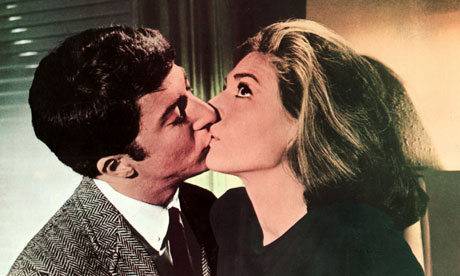
This is one of those films that has become famous for a few significant moments that have become integral to pop culture. Moments like Anne Bancroft trying to seduce Dustin Hoffman, him framed in a doorway behind her strategically cocked legs in the foreground, or the ending, which gives way to one of my favourite final scenes in cinema (featuring the second time I’ve seen a crucifix being used as a weapon in recent times, after Liam Neeson cracked skulls with his in Gangs of New York). The first time I watched this film, as I’m discovering is the case with so many films, I didn’t understand it that much or in fact take any of it in, and the true meaning of the ending was lost on me. This time around I’m pretty sure I got it. Maybe I’m the right age now. Maybe it’s because I’ve now finished my studies and, only a few years ago, was briefly adrift in an ocean of directions I didn’t want to pursue. Or maybe it’s because I’ve seen (500) Days Of Summer, in which the ending is discussed and potentially ruined for anyone who hadn’t seen it or couldn’t remember it (like me, for example).

That’s the problem with such a culturally significant film; it’s been discussed and dissected not just on film blogs such as this one (and probably a few better ones too), but in many other areas of pop culture. The more famous sequences have been riffed on in the likes of
Starter For Ten, American Pie and several times in The Simpsons, whereas the overall plot can be heard in The Player (in which a sequel is pitched, set 25 years later), and in Rumor Has It (which I’ve not seen, but my knowledge of the plot led me to expect certain scenes in The Graduate that never actually came about). Fortunately, even though the basics of the plot have been in the public eye for some time now, there are a great many more charms which this film can rely upon.

Firstly, the acting. I’m starting to think that Dustin Hoffman could well be one of the most under-rated actors of his generation. Now, I know that he’s received two leading actor Oscars from seven nominations (the first of which came from this very film), but he’s always seemed overshadowed by the likes of Al Pacino and Robert DeNiro from actors of that age. It hasn’t been helped by his far-from-stellar later work, but then Pacino and DeNiro are hardly innocent of that either. You can pretty much guarantee Hoffman will be the focus of a future Film-Makers series. In The Graduate, Hoffman takes a character who should be sympathetic and runs in the opposite direction, making him quite unlikable; someone who’s been handed everything but couldn’t care less. The true genius of the performance shines when Ben is at his most nervous. His subconscious, subtle nod when Mrs. Robinson asks if he knew she was an alcoholic;
his unintentional little whinny and half-swallow whenever he’s put upon the spot or caught off guard. You completely believe, despite the ten year age difference between Hoffman and the character he was playing, that he could be this bright young scholar, the former big man on campus, who now finds himself in the submissive role of a relationship he has no control of. Anne Bancroft is also noteworthy as the woman Ben was completely unprepared for. She retains a steely demeanour, forever in control of every situation she is in, usually because she pulled the strings to instigate it in the first place. 


The cinematography and editing were surprisingly good too – surprisingly because I didn’t remember them being very memorable the first time around. The brilliant opening, following Ben as he glides down an airport’s moving walkway, has been shamelessly ripped off by Tarantino in Jackie Brown, but it’s the cuts that really impressed me. Whether it’s Ben getting dressed as he leaves the swimming pool and walks through a doorway cutting to him walking into a hotel room and being undressed by Mrs. Robinson, or his mounting a lilo cutting seamlessly to mounting her on a bed. The editing from In The Heat Of The Night must have been superb to have beaten this at the Oscars.


The main detracting factor is the soundtrack. I was pleasantly surprised when Simon and Garfunkel’s The Sound Of Silence opened the film, for it’s a song I’m happy to listen to. However, they perform the entirety of the soundtrack, which unfortunately is comprised of only about three of their songs, repeated over and over again, and I became truly sick of it all the second time Scarborough Fair was played in the space of a couple of minutes. I don’t normally mind the haunting, melancholic feel of their songs, but after too long I felt like I was drowning in cold syrup. The main problem is that they always sound bored of singing their own songs, and I’m certainly now bored of hearing them.


There were a couple of uncomfortable moments, but they were played out masterfully, particularly the initial encounter between Benjamin and Mrs. Robinson, who have known each other all of his life, just not in that present light. After giving her a lift home in his shiny new graduate-present car, Ben is requested to accompany Mrs. Robinson indoors, as she is frightened of entering an empty, dark house alone. He is plied with alcohol and music and led upstairs, torn between intense awkwardness and the desire to be polite and not offend his parents’ close friend. Just as you think things cannot possibly become any more excrutiating for Benjamin, after Mrs. Robinson has all but thrown her naked form at him, of course Mr. Robinson comes home and encourages young Ben to enjoy himself that summer, making sure he has a few flings. This is an embarrassing situation far beyond anything you will find on Curb Your Enthusiasm.


The script is also wonderful, and any film that can feature the lines “You’re the most attractive of all my parents’ friends” and “I don’t love your wife, I love your daughter sir,” can do no wrong by me.

Choose film 9/10

The Wicker Man

Devout Christian police officer Sergeant Howie (Edward Woodward) receives an anonymous letter telling him that a young girl, 12 year old Rowan Morrison, went missing a year ago and hasn’t been seen since. Armed only with the letter, a photo and his unbreakable religious beliefs, Howie sets out to the secluded island of Summerisle, where he is met by hostility from the locals, who do not approve of a mainlander on their soil, and all deny any knowledge of Rowan’s existence. As Howie investigates further, he is met by obstructions at every turn, and discovers the islands inhabitant’s rituals and ideology may have a more sinister cause for Rowan’s disappearance than the policeman could ever have imagined.

First things first, I’ve not seen the 2006 Nicolas Cage remake, so I can’t really discuss that film here, which is fine, because this post isn’t about that film, it’s about the 1973 original. I have seen a few of Cage’s clips online, and I was glad to see that at no point did Edward Woodward (who, by the way, has the greatest name ever, I can’t stop saying it) explode into a torrent of “How’d it get burned?!?”, have a cage of bees strapped to his head, or perform a running punch whilst dressed as a bear. I had, however, seen this version before, but I now realise it was a heavily edited-for-TV cut, as although I watched it some years ago, I cannot remember nearly as much of the frankly disturbing goings-on that occurred in this film.

Even though it is essentially about a cult, and it’s seen through the eyes of an outsider, there is a lot of this film that’s difficult to fully come to terms with, particularly the downright infuriating manner in which the children of the island are taught. For example, with their forthcoming May Day celebrations, the lessons focus on the maypole, and how it symbolises the penis. Strips of flesh are hung by gravestones, one of which reads ‘Protected by the Ejaculation of Serpents’. Oh, and graveyards are apparently appropriate places to breastfeed children. The children are also encouraged to sing, which I’ve got no problem with, unless the lyrics contain such gems as “On that bed, there was a girl. And on that girl, there was a man. And from that man, there was a seed. And from that seed, there was a boy.” Bear in mind these children are all pre-teen, maybe even by a fair few years in some cases. 

Oh yes, the singing. I’ve decided that if I ever revisit my Top 5 Films That Should Be Musicals, this film is a prime candidate for the sub-list of ones that already pretty much are ones. There are far more songs here than I had expected, and their diversity was something of a surprise. You’ve got a group of naked women prancing around a stone circle singing about pregnancy, and elsewhere there’s an impressively impromptu pub-wide rendition of The Landlord’s Daughter, which must have taken rather a lot of choreographing, seeing as no-one steps on anyone else’s lines. Britt Ekland, who plays Willow, the aforementioned innkeeper’s spawn, even gets her own solo (though I think she was dubbed by someone). Her song, creatively named Willow’s Song on the soundtrack, plays out like a pornographic music video, as Ekland, naked of course, sings directly to the camera as she gyrates ferociously around her room, slapping herself and beating on the wall in an effort to entice the neighbouring Howie to come and attend to her. Understandably, this is one of the more memorable of the film’s scenes, but the breaking of the fourth wall was distracting, and it felt like it went on for far too long.

I very much approved of how we as the audience are kept as much in the dark as Howie is as he goes about his quest, only realising something’s up when he does, at which point of course it’s too late. Woodward also does a good job with Howie’s character, establishing a hero who is something of a dick, and definitely not a people person. I don’t want to get into a debate about religion (in short, it’s not for me), but I’m glad that I’ve never met someone who is quite so steadfast in their beliefs as Howie, who is utterly appalled when he discovers the island education system doesn’t contain anything to do with the teachings of Jesus, as the only religion he even acknowledges the existence of is Christianity, proving he is possibly just as obsessed or bigotted as the islanders themselves.


Even with so many distubing aspects – the thought of the beetle slowly crawling around the desk until it strangles itself still upsets me a little – I can’t help but appreciate this film as being a thoroughly engaging mystery, with an enrapturing plot that, even though I had an inkling of a memory as to what the ending was, I couldn’t wait to see pan out to find out exactly what was going on. Also, Christopher Lee is generally brilliant in anything, here appearing as the charming Lord Summerisle. I’d have appreciated a little less music and a lot less insanity, but I’m still very pleased to have seen it again. Oh, and I’m fairly sure the Salmon of Knowledge was from a lost Monty Python sketch.

Choose film 7/10

Brief Encounter

Laura and Alec (Celia Johnson and Trevor Howard) meet every Thursday in town – he after work, and she to do the weekly grocery shopping. At first their regular meetings are nothing more than a newfound friendship, but it is not long before they fall for one another. The problem is, Alec will soon be leaving to work in Africa. Oh, and they’re both married, with families at home.


It’s a simple story, and therein lies the beauty. There’s no surprise ending, no unforeseen third act plot contrivance – in fact, the ending of the couple’s relationship is the first thing we see, but it isn’t until the end that we realise quite how devastating it is, as the events leading up to their separation are told chronologically through flashback, from their meeting when Alec assists Laura when she gets soot in her eye, through shared meals and cinema-goings, culminating in their final moments together, probably forever, in this day before social media and the ease of communicating with someone half the world away. 

Our focus is on Laura and Alec, and in a way there is nothing in this film but them. Their families are largely only hinted at, other than Laura’s dull husband Fred, but even with only mild insinuation and a well-implemented voiceover from Laura we are offered as much background information as we need to realise their situation and motivations. Neither were looking for someone else, and both believed they were content with the lives they were leading. Everything would have been perfectly fine if they’d just never met one another, but fate is a cruel mistress, and the couple’s momentary enjoyment cannot possibly last, and the sadness comes from their clear understanding of this fact.

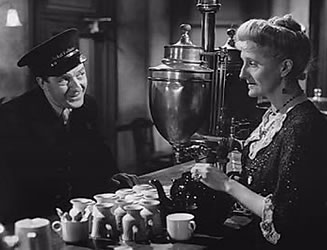
There are other marginal characters – the tempestuous relationship between the cafe owner and train conductor (who walks across the train tracks! It’s like a different world!) – but they are merely background, and serve to frame this story, rather than add to it. In fact, without their inclusion I got the feeling that Laura and Alec’s story would have struggled to breach feature-length, coming in at only 86 minutes. This length felt perfect for the story though. There’s nothing I could add, and nothing I’d take away, and if anything were to be added, it would be in the form of excess background – perhaps a love interest for Beryl, the tea room assistant, but there’s no need for it, and it’d just be padding.

I’m fairly sure this is the most British film ever made, and it’s popularity is probably the main reason behind the English stereotype of the stiff upper lip and clipped manner of speech that has become synonymous with my fellow Englishmen. The amount of scenes that involve the drinking of tea (something of which I’m fairly proud I’ve never done) are almost farcical, and everyone speaks as though they were born not with just a silver spoon in their mouth, but half the cutlery drawer rammed down their oesophagus. It’s this typically British sense of repressed feelings and not letting your guard down that really makes this film, as we see our two leads, particularly Laura, struggling to maintain their steely facades whilst underneath their hearts are being torn apart my these circumstances beyond their control. You can’t let these things be public knowledge, it’s just not how we do things around here.

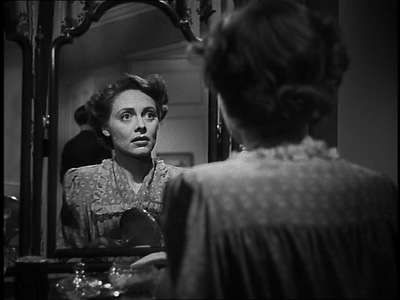
There are many moments of intense emotion and poignancy, but if I had to pick one, it would be the traumatised look Laura gives herself in the mirror after the first time she lies to her husband, followed by the internalised “It’s awfully easy to lie when you know that you’re trusted implicitly.” She knows that there is nothing more wrong than what she is currently doing, but that she has no choice to do it anyway, and is just going to have to live with herself. By today’s standards the romance is almost laughably timid – the most that happens between the two leads is the occasional kiss – but the reactions and implications from these events are just as bad to our leads as if they’d been knocking boots five days a week for several months, if not more so.

This is one of the first films I’ve fully appreciated that doesn’t have a lot going for it in terms of action, humour or a happy ending that makes me feel all warm inside. Instead, this is heartfelt, emotional film-making, that shows just how much can be done with very little.

Choose film 9/10