Das Experiment

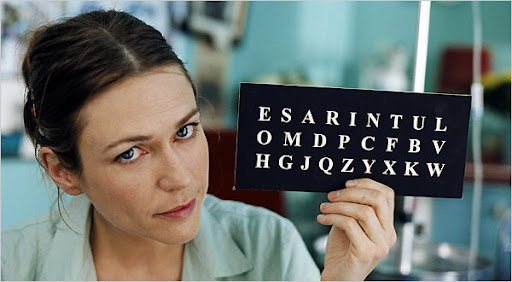
Based on a real test held at Stanford Prison in 1971, Oliver Hirschbiegel’s Das Experiment sees 20 volunteers placed in a 14-day research trial under 24-hour surveillance. Twelve of the men are given the role of prisoners, whilst the other eight are their guards. The prisoners are assigned three to a cell and forced to wear thin gowns, flimsy flip-flops and no underwear, whilst the guards have only one job: to ensure the prisoners obey the rules without resorting to violence. Among the prisoners is taxi driver Tarek (Run Lola Run’s Moritz Bleibtreu), a former reporter whose desperation for a story could lead to him pushing things a step too far.

Predictably, not all goes to plan, and the film remains engrossing with the fascination at how far the test will go, how far out of control it will become and what those involved will resort to. At times quite violent, the film’s strength lies in the relationship between the three groups – prisoners, guards and scientists – and in the frantic style of the more action-filled scenes. Rather more naked men than I was expecting though.
Choose film 7/10

Unlisted: The Help

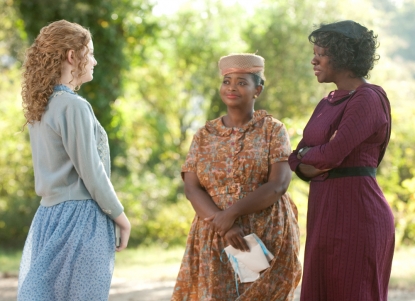
Based on Kathryn Stockett’s best-selling novel, The Help follows Emma Stone’s aspiring writer Skeeter as she returns home from college to Jackson, Mississippi (the opportunity to play some Johnny Cash is thankfully not missed). Whilst home, the free-thinking journalist discovers the maids that helped raise her, and the rest of their upper middle class society, are treated despicably – paid less than minimum wage with no social security, forced to use separate bathrooms and generally treated as sub-humans without the blink of an eye, so Skeeter sets out to tell their story to the world, helpfully with their assistance.


As recently seen with Glory, it seems the only way Hollywood can show a story about black people is through the eyes of the white person who helped them on their way, without whom they’d be powerless and stuck as they were, and the popularity of the film, not to mention it’s numerous nominations at the Oscars, has been struck by a case of white guilt, as though not a bad picture, there isn’t really anything new here. The ground has been trod many times before, but few have used such a great multi-generational ensemble cast without a weak link amongst them. Stone is good in her first dramatic lead, showing potential but retaining her well-honed comic chops, but she is shadowed by the likes of Bryce Dallas Howard’s bitchy queen bee, Octavia Spencer’s outspoken piemaker Minny and Viola Davis’ cautious yet catalytic maid Aibileen. Spencer is good, but her Oscar should have gone to Jessica Chastain for her unrecognisably bubbly portrayal of ditzy Celia Foote, giving a performance that could so easily have been paper thin, but ends up stealing the show. Davis too didn’t deserve the Oscar everyone was so sure she’d receive, but the nomination is well placed. Allison Janney, Sissy Spacey and Mary Steenburgen help round out the cast, and all give natural, layered performances from even the most cliché characters. 

Whilst often resorting to shameless pulling of the heartstrings and occasionally implementing a chopped narrative that adds nothing to the overall result, this is elevated by the great cast offering tremendous performances.
Choose film 7/10

I Am Cuba/Memories of Underdevelopment/Lucia

There comes a point in the life of every blog when you just have to give in and succumb to what the public wants. It’s a wonder I’ve made it this far, but I’m afraid that time has come. I’ve been inundated with torrents of requests to focus on an area I, and many other blogs, have previously neglected. Yes, that’s right, it’s time for the post devoted to the history of Cuba! Yep, that’s right. There are not one, not two, not four, but three films on the list that all focus on the ‘modern’ history of a country I’ve never really even thought about, let alone cared (apologies to my veritable army of Cuban followers) and surprisingly enough, none of them are any good.
I Am Cuba inconceivably holds the rank of 112th best film in Empire’s poll, and for the life of me I can’t fathom why. Other than the impressive early tracking scene, where the camera goes underwater in an unbroken shot, there’s little to recommend about this tale if four disconnected stories in Cuba. The acting is largely terrible, and the stories are slow and poorly told, with an at least 10-minute edit on each section still required. Nothing more than well-filmed propaganda, such a high placing on Empire’s list makes me question their tallying methods.
Memories of Underdevelopment is a largely plotless rumination on gender, language and politics in early 60’s Havana, following a wealthy former businessman turned writer as he woos an aspiring actress, only to eventually be taken to court for allegedly abusing her virginity. Dull and overlong even at 97 minutes; it’s so boring that one of the highlights is a lecture.
At 2 hours and 40 minutes long, Lucia is a monumental waste of time. Three women, all conveniently but pointlessly named Lucia, live through three eras in Cuban history – 1895, 1932 and the 1960s. I can’t really explain the importance of these times without external research, as I was bored after 10 minutes and spent the next 150 intermittently looking at my watch and hoping for the film to end, as other than some interestingly lit scenes, nothing coherent really happens in any of the segments.
I Am Cuba: Choose life 3/10
Memories of Underdevelopment: Choose life 2/10
Lucia: Choose life 2/10

Waltz With Bashir

An Israeli animated documentary about the Palestinian conflict that at one point features a cartoon porn sequence? Righty-O. Artist/director Ari Folman, himself a Lebanon veteran, employs a unique cel-shaded animation style to assist in recounting the dreams, memories, flashbacks and hallucinations of his fellow surviving comrades that, whilst beautiful and visually striking, occasionally detracts from the already fascinating tales his friends have to tell. The style fits well with the inspiring dreams – packs of yellow-eyed feral dogs chasing through the streets – but during the one-on-one conversations that inspire the stories, the style feels jerky and distracting, so perhaps these sequences would have been better off using real footage or kept as voiceover.

Choose film 6/10

Unlisted: Bill Cunningham New York

Chances are, you’ve never heard of Bill Cunningham. If he cycled past you on the street you may not give him a second glance, and if you saw him hop off his bike to take pictures of a pretty young thing in attractive attire, you’d be forgiven for thinking him to be nothing more than a dirty old man, but Bill is one of the most interesting, knowledgeable and influential fashion photographers working today, and he’s over 80 years old.
For Bill, you see, is behind two regular columns for the New York Times. Evening Hours sees him documenting the goings-on of New York’s night life at various functions and parties around the city; whilst On The Street gives Bill a chance to publish the photographs he’s taken of the more creatively dressed pedestrians he finds wandering around the Big Apple. Models and celebrities are not necessarily of his concern; it is the clothing that catches his eye, from a unique hat or novel colour combination to something truly original. He treats everyone the same, from supermodels to the bag women living on the streets, as long as it’s something different, and he’s not afraid to call out the likes of Mizrahi or Armani if they dare to release a new line similar to something that’s already been done. At one stage in his life, Bill owned a hat store, yet had no interest when the likes of Ginger Rogers and Joan Crawford graced his doorway, for in his mind they just weren’t stylish.
For all his love of the fashion world, the octogenarian doesn’t exactly cut a stylish figure in his functional street-sweeper jacket, flat cap and duct-taped poncho, and for the most part Bill isn’t in it for the money. He lives in a tiny one-room apartment with no kitchen, no wardrobe, and barely a bed crammed in amongst the forest of filing cabinets holding negatives of every photo he’s ever taken.
If you think that everyone in the fashion world refuses to leave the house without being ready for the catwalk, this is a must-see, and will even appeal to those without any interest in style (oh, wait, that’s me!). It’s refreshing to see someone with a true passion, who doesn’t mind working for next to nothing, genuinely enjoys what he does and is rewarded for it, yet still remains courteous, honest and immensely dedicated even in his autumn years, and to prove it, the likes of Tom Wolfe, Patrick McDonald and Anna Wintour all show up to sing Bill’s praises.
Choose film 7/10

The Diving Bell and the Butterfly

42-year old Jean-Dominique Bauby (Mathieu Amalric) lives a life of wealth and excess, flitting between his three young children, a successful career as editor of Elle magazine and the bevy of beauties ready to satisfy his every need. But one day, on a drive with his eldest son, Jean-Do suffers a stroke and becomes a victim of ‘Locked-In Syndrome’, an extremely rare condition leaving him fully conscious but completely paralysed, except for blinking his left eyelid.
Beginning with the blurry, distorted hospital room swimming into focus, much of the film is shot from Bauby’s perspective, including the harrowing experience of having his right eyelid sewn up, seen from the inside. Amalric’s narration is wonderful, encapsulating the frustration of a man used to extreme independence, who now cannot wash, communicate or even move without another’s assistance, and praise must also be given to the supporting cast of implausibly attractive therapists and assistants tasked with acting to a camera for a lot of the film, and Max Von Sydow as Bauby’s elderly, apartment-bound father.
A story of triumph over intense adversary that does well not to dwell on the depressing, director Julian Schnabel amazingly mines humourous streaks – the agony of an immovable fly on the nose – whilst also celebrating the wonders of perseverance, memory and imagination.
Choose film 8/10

Unlisted: The Muppets

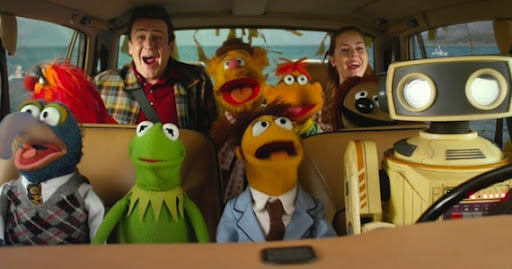
Celebrating the best film I’ve seen this week that’s not on the list, first up its The Muppets. I mentioned recently that I’ve not had a lot of dealings with the muppets in the past, and I now realise I’ve lived a previously unfulfilled life, devoid of a required amount of felt to maintain the desired level of happiness.
The cloth characters latest outing both improves upon and acknowledges those that have come before it (I’ve read that Muppets in Space and Muppet Treasure Island aren’t as good as The Muppet Movie or Muppet Christmas Carol, but I intend to find out soon) and like those other films the plot is kept nice and simple – Muppet superfan brothers Walter and Gary (co-writer and real-life Muppet super face Jason Segel) go on holiday to LA with Gary’s long term girlfriend Mary (Amy Adams), where they discover that wealthy oil baron Tex Richman (Chris Cooper) plans to buy and destroy the Muppet Theatre, giving the duo a few days to round up their disbanded heroes and raise $10 million. Just like its predecessors, the film is packed with mostly recognisable cameos, including Alan Arkin, Sarah Silverman and a very game Jack Black, and the soundtrack, including a moment where Chris Cooper quite unexpectedly raps (it’s not that bad actually) and the Oscar winning Man or Muppet is amazing, written by Flight of the Conchords Bret McKenzie, and I shall be purchasing it soon.
Improving upon the first movie by never spending too much time on one character, there are still a few flaws. Most irritatingly, a detail from the finale – Walter’s talent – is not mentioned throughout the entire film, and is pulled out of a hat at the end, and the first half, whilst good, is nowhere near as entertaining as the second, once the show the gang are putting on kicks off. Hopefully we won’t have to wait another 10 years before the next Muppet film, though if we do I’m sure it will be worth it.
Choose film 9/10


The Secret In Their Eyes

This 2010 Argentinean story of a retired lawyer reliving a case from 25 years ago starts slow, but after about half an hour finds its feet, becoming a gripping, thought provoking thriller.

Benjamin Esposito (Ricardo Darin, excellent) has become bored of retired life, and wants to write a novel based on his most interesting case, that of the rape and murder of a 23-year old schoolteacher a quarter of a century ago. Flitting between his modern-day remembering with the upper class boss he never had the guts to say he loved and the case itself, the film is difficult to initially pigeonhole, as it can’t decide if it’s a crime procedural, romantic drama or nostalgia piece, and is overall too slow. A turning point is reached when the cinematography kicks it up a notch with the stunning scene that starts with the camera flying through the air towards a football stadium, dives into the crowd and on to our protagonist and his alcoholic assistant searching the throngs for suspects. Seemingly unedited we follow them as a chase breaks out behind the scenes, through a bathroom brawl, down quite a long drop and onto the pitch mid-game; stunning.
Though the case appears to be all wrapped up just after the half-way mark, yet solving the case isn’t the only hurdle that must be overcome for justice to prevail. Creatively shot, with characters usually framed by doorways, piles of books, paperwork or grimy windows, this plays out like a particularly classy episode of your favourite law-based TV series (don’t have one myself), and there is more tension in one brief, wordless elevator scene it’s almost unbearable. Some scenes, particularly early on, do not realise their full potential – a raid on an elderly woman’s house in search of evidence could have been more of a set piece, though there is a nice chuckle to be had at its payoff.

A worthwhile film who’s ending and key scenes will stay with you, but if the Hollywood remake in the cards ever come to fruition (and I hope it doesn’t) then they need to wprk on the start.

Choose film 7/10

All About My Mother

Single mother Manuela (Cecilia Roth) lives with her only son Esteban as she works as organ transplant co-ordinator at the hospital. Her son believes his father is dead, but when a tragedy occurs, Manuela heads from Madrid to Barcelona in search of the boy’s father, where she ends up caring for a new brood, made up of Penelope Cruz’s demure nun, Antonia San Juan’s seasoned prostitute and Marisa Paredes’ legendary gay stage actress. The performances are all exquisite from a mostly female cast, and the plot is suitably diverse enough to remain unpredictable throughout, from the events to the tone of the picture, and a vibrant colour scheme adds to the sensual feel.

Choose film 7/10

Brick

Recent years have seen seemingly exhausted classic genres being reinvigorated by big name directors and classy films, just look at the recent slew of westerns, or the amount of pictures throwing back not just their topics, but how the films have been made to more classic times. Hell, this year’s Oscars were dominated by a silent film and a film about the birth of cinema. Yet one classic genre remains relatively untouched, possibly because in 2005 first time feature director Rian Johnson updated the film noir template so pitch perfectly that no other films have been needed.

With closed eyes, Brick could quite easily take place amongst a myriad of smoke-filled bars, pool halls and rain-lashed phone booths, yet the action here has been transposed to a modern day high school, and in place of a perma-smoking Humphrey Bogart we’ve Joseph Gordon-Levitt’s Brendan, finding his ex-girlfriend (Lost’s Emilie de Raven) face down in the mouth of a tunnel, and he is eager to find out why, regardless of how beaten up by jocks, thugs and car doors he becomes. Granted, there’s not really enough rain for it to be a traditional noir, but there’s plenty of secrecy, rich beautiful dames with brandy decanters in ostentatious mansions, moody shadows and an easily dismissed average Joe acting as gum shoe, sticking his nose in where most feel it has no business.
It’s not short on laughs – JG-L flounders like the best of them and his conversation with the principal is comedy gold, played spot-on like a detective berating his chief of police, and the final act wrap-up is gratefully received, for much of the highly quotable dialogue is sometimes too dense to catch.
Choose film 8/10