
Four Weddings and a Funeral

Richard Curtis and Hugh Grant seem to be a match made in heaven. So far they’ve collaborated on three features (Notting Hill and Love, Actually being the other, equally enjoyable films that, for some reason or another, aren’t on the List), and Grant’s lovably foppish dithering perfectly fits into Curtis’ skill with a subtle put-down or throwaway comment.
Here, Grant plays Charles, terminally lost amidst a sea of acquaintances tying the knot, swinging from one wedding to the next seemingly every weekend. Perpetually late, lost and underprepared, Charles is a creation that, if you don’t know someone just like him, it’s probably you in your circle of friends. And it is this circle, just like in Notting Hill, that makes the film what it is. The supporting characters in any film have the potential to be more layered and interesting than the audience ciphers required as the leads. If need be they can even be people you don’t overly like or agree with, but fortunately here they’re a wonderful bunch, from Kristin Scott Thomas’ heartbreakingly brittle Fiona, John Hannah’s dependable Matthew, Simon Callow’s enigmatic, irascible Gareth and of course James Fleet’s hopelessly wealthy Tom, who trumps Charles for the worst best man come wedding number 3 (sample speech quote: “When Bernard told me he was getting engaged to Lydia, I congratulated him because all his other girlfriends were such complete dogs. Although may I say how delighted we are to have so many of them here today”).
Often hilarious and at times genuinely touching, not the least in Matthew’s moving elegy at the titular funeral, the script is also so much swearier than you remember (“fuck fuckety-fuck”), and deals with all the problems one might encounter at a wedding – drunken bride, boorish guests, horrendous dresses, improbable hats and inappropriate songs (I Will Survive, at a wedding?) as well as the more unusual scenarios, like being sat at a table full of your former partners, or being trapped in the room the happy couple are consummating their vows in.
The only problems occur are the horrendously cliché rain-soaked finale (“Is it still raining? I hadn’t noticed”) and the casting of Andie MacDowell as Charles’ American dream girl, who is only actually desirable the less he gets to know her in my opinion.
Choose film 7/10

300

300thmovie! Yes! Nailed it! This has been a plan from the outset, that the 300thfilm just had to be 300, and lo it has been done. Finally I can stop checking the count every day of how many films I’ve watched and just get on with watching more and writing posts (I won’t).
Based on the incredibly stylish graphic novel by Frank Miller (Sin City), it could be argued that this two-hour fight scene suffers from a severe case of style over substance, with a small squadron of 300 Spartan warriors heading out to take on the thousands-strong army of Persians out to conquer their land, but whilst there is some accuracy to this, there is quite enough story behind the oceans of cool.
The Spartans, led by Gerard Butler’s King Leonidas in a role that remains his calling card after six years of mostly forgettable romcoms and mindless shooters, have been trained since birth to feel no pain or mercy – or cold, judging by how little they wear – and all live to fight, and die, honourably in battle. One soldier, when questioned as to why he has brought his adult son along to fight, replies that he has others to replace him.
It’s impossible for a man not to watch this and feel inferior. Some may see it as a rabble-rousing celebration of what it truly means to be a man – fighting and killing, safe in the knowledge your son will carry on your name – but personally I see it as a reminder of the garage-worth of spare tyres congregating about my torso, and how I’ve managed to survive almost 25 years without so much as throwing a punch. I can almost feel my ovaries forming.
The combat, and believe me there’s an awful lot of it, is wonderfully choreographed, and director Zack Snyder utilises a deft blend of colour, lighting, slow motion, shadows and speeding up to showcase its full glory. At times it feels more like a videogame, as the quantity and skill level of the foes to be vanquished steadily increases.
The occasionally flits back to Sparta, where Leonidas’ Queen (Lena Headey) tries to convince their council to send reinforcements, do a good job of breaking away from the otherwise incessant violence, but some touches – the giant troll, a bizarre goat-creature – take away from the experience, and overly-pierced big bad guy Xerxes has a voice comically mismatched to his appearance.
Look out too for an early appearance from LifeVsFilm favourite Michael Fassbender as one of 
the 300.
Choose film 8/10

A Man Escaped

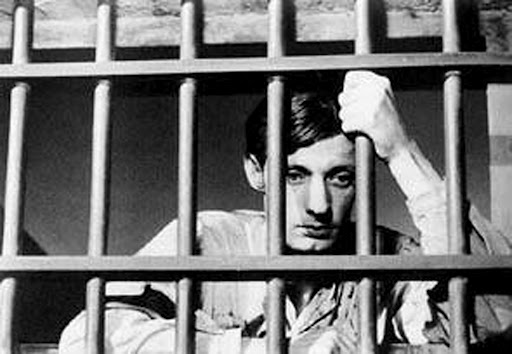
Francois Leterrier (father of director Louis Leterrier who, other than Unleashed, is really quite terrible, with a track record including The Transporter 1 & 2, The Incredible Hulk and the godawful Clash of the Titans) is Fontaine, an inmate at a Nazi execution prison. Left bloodied and beaten after an escape attempt en route, Fontaine doesn’t hang about before he tries to break out again.
This is an incredibly minimalistic film, with much of it taking place from the confines of Fontaine’s cell, tapping conversations to his neighbour or scraping away at his door with a spoon, and the camera is infatuated with the nuances of his face.
There are some glaring plot holes that could well be just a product of the time – cell checks seem to be very infrequent and less than thorough, and why exactly do the cells have a solid stone shelf, strong enough to support a grown man’s weight and accessible even to the elderly, positioned right next to the only window in the cell.
The film’s finale is at times almost unbearably tense, with no music but for the sound of trains rushing past and a mysterious creaking noise, and fans of the Shawshank Redemption – or any other prison movie for that matter – would do well to seek this out.
Choose film 7/10

I Am Cuba/Memories of Underdevelopment/Lucia

There comes a point in the life of every blog when you just have to give in and succumb to what the public wants. It’s a wonder I’ve made it this far, but I’m afraid that time has come. I’ve been inundated with torrents of requests to focus on an area I, and many other blogs, have previously neglected. Yes, that’s right, it’s time for the post devoted to the history of Cuba! Yep, that’s right. There are not one, not two, not four, but three films on the list that all focus on the ‘modern’ history of a country I’ve never really even thought about, let alone cared (apologies to my veritable army of Cuban followers) and surprisingly enough, none of them are any good.
I Am Cuba inconceivably holds the rank of 112th best film in Empire’s poll, and for the life of me I can’t fathom why. Other than the impressive early tracking scene, where the camera goes underwater in an unbroken shot, there’s little to recommend about this tale if four disconnected stories in Cuba. The acting is largely terrible, and the stories are slow and poorly told, with an at least 10-minute edit on each section still required. Nothing more than well-filmed propaganda, such a high placing on Empire’s list makes me question their tallying methods.
Memories of Underdevelopment is a largely plotless rumination on gender, language and politics in early 60’s Havana, following a wealthy former businessman turned writer as he woos an aspiring actress, only to eventually be taken to court for allegedly abusing her virginity. Dull and overlong even at 97 minutes; it’s so boring that one of the highlights is a lecture.
At 2 hours and 40 minutes long, Lucia is a monumental waste of time. Three women, all conveniently but pointlessly named Lucia, live through three eras in Cuban history – 1895, 1932 and the 1960s. I can’t really explain the importance of these times without external research, as I was bored after 10 minutes and spent the next 150 intermittently looking at my watch and hoping for the film to end, as other than some interestingly lit scenes, nothing coherent really happens in any of the segments.
I Am Cuba: Choose life 3/10
Memories of Underdevelopment: Choose life 2/10
Lucia: Choose life 2/10

Platoon

Charlie Sheen is Chris Taylor who, after dropping out of college because he wasn’t learning anything, volunteers to fight in the Vietnam war, amongst recruits including Keith David, Forest Whittaker, Tony Todd, Kevin Dillon and a young Johnny Depp. The platoon is split, with half drawn to Willem Dafoe’s free-thinking, laidback stoner Sergeant Elias, with the rest, including brown-nosing Sergeant O’Neill (John C. McGinley), prefer the ethos of scarred Staff Sergeant Barnes (Tom Berenger), who counts success by how high the bodies are piled, rather than whether peace has been achieved.
There’s an interesting film buried in here somewhere, but it either follows Sheen’s naive, error-realising private or the conflicts between the two sergeants and their unrespected, inexperienced Lieutenant (Desperate Housewives’ Mark Moses). Some gripping moments stand out – a night ambush, and the colour slowly fading back in after a white-out napalm drop – but the rest is underwhelming and littered with trite or cheesy dialogue and 5-cent philosophising: “We did not fight the enemy, we fought ourselves, and the enemy was within us.”
Choose life 6/10

Brick

Recent years have seen seemingly exhausted classic genres being reinvigorated by big name directors and classy films, just look at the recent slew of westerns, or the amount of pictures throwing back not just their topics, but how the films have been made to more classic times. Hell, this year’s Oscars were dominated by a silent film and a film about the birth of cinema. Yet one classic genre remains relatively untouched, possibly because in 2005 first time feature director Rian Johnson updated the film noir template so pitch perfectly that no other films have been needed.

With closed eyes, Brick could quite easily take place amongst a myriad of smoke-filled bars, pool halls and rain-lashed phone booths, yet the action here has been transposed to a modern day high school, and in place of a perma-smoking Humphrey Bogart we’ve Joseph Gordon-Levitt’s Brendan, finding his ex-girlfriend (Lost’s Emilie de Raven) face down in the mouth of a tunnel, and he is eager to find out why, regardless of how beaten up by jocks, thugs and car doors he becomes. Granted, there’s not really enough rain for it to be a traditional noir, but there’s plenty of secrecy, rich beautiful dames with brandy decanters in ostentatious mansions, moody shadows and an easily dismissed average Joe acting as gum shoe, sticking his nose in where most feel it has no business.
It’s not short on laughs – JG-L flounders like the best of them and his conversation with the principal is comedy gold, played spot-on like a detective berating his chief of police, and the final act wrap-up is gratefully received, for much of the highly quotable dialogue is sometimes too dense to catch.
Choose film 8/10

The Fountain

One love story is told across three wildly different time periods as Tom (Hugh Jackman) tries to cure his wife Izzy (Rachel Weisz) of her life threatening disease. Told in the modern day, Elizabethan era and a space-set future time, the film is beautifully shot and lit, effects created using different liquids dispersing into one another to create timeless yet phenomenal scenes. The story strands flow into one another, as the modern day surgeon struggles for a cure, a historic conquistador seeks to discover the fountain of youth and the slap-headed space traveller floats inside a giant bubble talking to – and occasionally eating –  a tree. If this all sounds a little too much for you, you’re not alone, as this is a polarising film that many dismissed for being just too odd. The modern day segments are the easiest to follow, with a straightforward narrative, relatable characters and situations requiring minimal explanation. Director Darren Aronofsky (Requiem for a Dream, The Wrestler) alas does not have much of an eye for combat, with some of the past tense skirmishes coming across muddled and confusing, but otherwise this is a creative and visually stunning depiction of an otherwise done to death story.

Choose film 7/10

Hairspray

No, not John Travolta in a fat suit, a sight so diabolical not even Christopher Walken can save it, but the 1988 John Waters original, in which real life transvestite Divine, a Waters regular, plays severely overweight Edna Turnblad, mother of also rotund Tracey, who watches and dances along to the Corny Collins show every day on TV. Tracey is jealous of the more attractive (as in slimmer) dancers picked to perform on the show, especially bitch council member Amber, who dissolves into a flap-handed tizzy when she discovers a pimple. When Tracey is sent to a special class at school because her hair is too high (seriously) she learns how to dance with the segregated black kids that have been banned from the show except for one day a month for Negro Day. The film is intolerably cheesy and often stupid (using a psychiatrist to make a white girl not love a black boy), and does not help the racial stereotyping it tries to prevent, with one black woman talking only in rhymes.

Choose life 5/10

Cabaret

Berlin, 1931. Liza Minnelli is a performer with several other near-transvestites in the filthy Kit Kat Klub. English teacher Michael York rents a room at the same house as Minnelli, and the two apparently hit it off, but the actors have such appalling chemistry its hard to tell. Minnelli’s Sally Bowles is amorous and self important, discussing only herself and is fully aware of the state her body is supposedly able to drive men to (though I don’t see it myself), whilst York is either dry or drunk, there is no middle ground. There are failed attempts to mine humour and songs about a man sleeping with two women and having a relationship with a gorilla, but the only song that’s any good is the closing Cabaret.

Choose life 3/10

Atonement

Based on the book of the same name that swept the country a few years ago, Atonement tells the story of Briony in three stages of her life, as a young writer in her parents stately manor in the early 30s (Saoirse Ronan), training to become a nurse during World War 2 (Romola Garai) and much later, releasing a book on the subject as an old woman (Vanessa Redgrave), cut the story she tells is not only her own, but that of Cecilia and Robbie (Keira Knightley and James McAvoy), her older sister and their gardener.

A childhood misunderstanding of several events lad Briony to make a rash decision she would live to deeply regret, for its consequences had the very real possibility of being incredibly dire. Whilst beautifully shot in every scene, most notably the standout 5 minute continuous steadicam sequence as three soldiers (including Ashes to Ashes’ Daniel Mays) discover a war ravaged beach complete with hundreds of extras, horses and a funfair making the film worthwhile on its own, the film does not quite have the right mix of war and romance to attract both genders, focussing more on the females than males, yet there is still plenty to keep all engaged, and at times agog.
Choose film 7/10