Of Gods and Men

Based on the true story of Cistercian monks in Algeria in 1996 (stay with me) this film is the very definition of slow, but there is no other way it could be told. Had I watched it after a long day at work or a particularly stodgy meal (my favourite kind), then odds are I ‘d have drifted off into an unbroken slumber until the next morning at around twenty minutes in, but the elegiac pace, mostly following the monks everyday lives as they become gradually more effected by the increasing terrorist presence as their government deteriorates is beautiful and engrossing.
Long shots of prayer, studying, tending to the garden, cleaning the monastery, more prayer, ploughing the fields, singing hymns and praying again, largely showing little more than the backs of people’s heads doesn’t sound particularly enthralling, and it’s not, but the camera’s obsession with these monk’s defiance and dependency in the face of violence is just gripping, made all the more effective by the sheer lack of action preceding. The best scenes involve nought but dialogue – the monks refusing to allow their doctor and his medicine to be taken from them forcefully, monastery meetings discussing whether desertion is a viable option, or no dialogue whatsoever, with a piece of classical music and a glass of wine reducing the men to tears – and I previously wasn’t aware how fulfilling an experience could be achieved with so little happening on screen. 
This won’t appeal to the Friday night crowd after a little bang for their buck, a crowd I’ll admit to joining regularly, but for a thought-provoking watch with plenty of room to think and absorb the atmosphere, you could do a lot worse.
Choose film 8/10
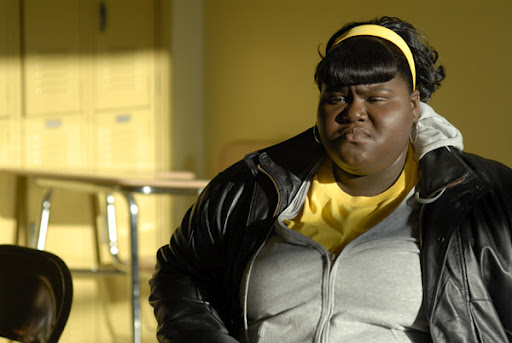
Precious (based on the novel Push by Sapphire)

I knew what I was expecting when I sat down to watch Precious: being depressed, angered and infuriated by the action on screen, but doubtlessly impressed by the acting on display. Shockingly, I was correct, though thankfully most of the abuse was verbal.
Gabourey Sidibe (more recently seen in Tower Heist and The Big C, where I’m guessing everyone else on set spends most of their time working out how to pronounce her name) is Clarice ‘Precious’ Jones, a severely obese sixteen year old, pregnant with her second child as a result of being raped by her father again. She lives in a cramped apartment with her volatile, welfare-abusing mother (Oscar-winning Mo’nique, a revelation from a woman exclusively known for comedy until this point) in Harlem in 1987. Oh, and her first child has been nicknamed Mongo for suffering Down’s Syndrome. See, told you it was depressing.
Precious’ mother is a monster of Hannibal Lecter proportions, with every word calculated to bring the most destruction to her child. We hear such gems as “School ain’t gonna help none, take your fat ass down to the welfare,” “You will never know shit, don’t nobody want you,” and “I should have aborted your fat fuckin’ ass.” Charming. Many scenes are beyond difficult to watch, from the furious tirade aimed at Precious when her headmistress (“white bitch”) drops round after school, to the fantasies of red carpets and photo shoots that make up the only escape Precious has from her unbearable existence.
It’s not all crushing depression. Mostly, but not all, for Precious seeks to improve her situation, enrolling in an alternative school for kids who’ve fallen through the cracks, so there is light at the end of the tunnel, shone from three supporting adults, her teacher Ms. Rain (Paula Patton), the nurse’s assistant who helps delivers her baby (Lenny Kravitz) and her social worker (Mariah Carey). These last two choices seem like some fairly risky stunt casting, but it pays off, as though the singers aren’t likely to be bothering the Academy any time soon, they perform ably and selflessly in places you wouldn’t normally expect them.
Though well made, directed and shot, the subject matter at times feels like a particularly sobering episode of Jerry Springer, interspersed with some truly shocking moments that generally involve potential harm to Precious baby. But it’s not as miserable as first thought, and the performances on display are worth watching.
Choose film 7/10

An American Werewolf in London

After being attacked on the Moors in rural northern England, a young backpacking American (David Naughton) awakes in a London hospital and falls for his nurse, Walkabout’s Jenny Agutter. This leads to some romcom hijinks, mostly involving Agutter’s Alex not being allowed to sleep with patients, and the vacationing David bored and alone in her apartment all day with no money and no where to go, trying to amuse himself. Oh, one last thing, David’s a werewolf being stalked by the ever-decaying remains of his zombie best friend. Sorry, forgot that bit.
This film is great, mostly memorable for Rick Baker’s stunning effects, featuring a transformation entirely CGI free that looks and feels unbearably painful and has yet to be equalled over thirty years later. There are some good jump scares and creative cinematography, with even a stationery phone box call shot seemingly on a circling bicycle. The subway sequence is particularly exhilarating, and the film is a lot funnier than you might remember, especially the scene in the porn theatre, with various undead suggesting the best ways for David to kill himself (we finally get to see director John Landis’ in-joke movie See You Next Wednesday, referenced in all his films, that turns out to not be that recommendable).
Unfortunately Landis doesn’t follow Spielberg’s rule of not showing too much monster, as the later scenes, before an overly abrupt ending, reveal the creature too clearly, gnawing away at some of the mystery. Frank Oz’s cameo as an American embassy official is also offputting, as I can’t take him seriously when he’s doing a voice that sounds exactly like the one he uses for Fozzie Bear in the Muppets. The most unbelievable part though? It’s possible to get a taxi far in London for £1.50. Ridiculous.
Still, thoroughly enjoyable and worth watching for Baker’s Oscar-winning make-up and effects.
Choose film 7/10

Collateral

Michael Mann takes a break from shootouts and dogged cops hunting master criminals in favour of a more laidback, narrative-driven movie about Jamie Foxx’s ambitious yet stunted taxi driver Max carries his fares around the neon-lit streets of L.A. That is, until he picks up Tom Cruise’s hitman Vincent, and Max’s night, and his dreams, are thrown into turmoil as the body count rises.
Cruise seems like an odd choice to play a fairly villainous guys, but he proves spot-on, retaining his usual casual charm but with a steely glint and wolfish menace to go with his salt and pepper hair, leaving Foxx to submit lie in his shadow.
The script relies too much on luck and coincidence, and leaves some pretty gaping plot holes you could drive a cab through, plus those paying attention should see that there’s really only one way the film can end, with a last act twist clearly signposted in seemingly throwaway lines. The writer even resorts to a low cell phone signal and battery as a means of moving the plot along; generally the laziest idea anyone could use.
The film evokes memories of much better films – Leon’s hitman, Taxi Driver, The French Connection’s subway stand-off, every buddy movie ever made – reminding you that there’s little original here. So whilst it’s watchable, it’s by no means worthy of a place on the list, and was wisely cut from the 1001 book some years ago.
Choose life 5/10

Synecdoche, New York

Charlie Kaufman has often been described as a breath of fresh air in Hollywood. The legend goes that there are twelve different stories in every film in Hollywood, and with his debut script Being John Malkovich, Kaufman wrote the thirteenth, and there’re so many ideas in Adaptation and Eternal Sunshine of the Spotless Mind that they probably count for numbers fourteen through twenty, and fortunately they’re all on the List. So after working on so many inspiring and imaginative modern classics, Kaufman’s directorial debut is a disappointingly convoluted tangle, as Philip Seymour Hoffman’s theatre director Caden Cotard struggles to create a play based on his own life, whilst struggling with a myriad of relationships and a mystery illness.

Whilst the entirety of the plot – also written by Kaufman – is positively brimming with ideas and ingenuity, from Caden seeing himself in cartoons and commercials, to a character living in a perpetually burning house, the lack of clarity between how much takes place in the real world, how much is in the obsessive director’s head and how much is part of the play is at best frustrating and at times infuriating. It doesn’t help that many of the actors look alike, possibly on purpose, with Michelle Williams, Samantha Morton and Emily Watson all used to play the same character in different levels of life, with the play being featured in the play, requiring Caden to cast himself, casting himself in the play of his own life. Time skips in the blink of an eye for us and for him – his four year old daughter with Catherine Keener’s bohemian artist ages seven years in a matter of days.

You get the feeling that the end result of the film is exactly what Kaufman set out to achieve, with every layer of obsession and confusion being carefully planned and perfectly executed, but when I tried to make some sense of it all, my brain started to run out of my ear.

Choose Life
6/10

Four Weddings and a Funeral

Richard Curtis and Hugh Grant seem to be a match made in heaven. So far they’ve collaborated on three features (Notting Hill and Love, Actually being the other, equally enjoyable films that, for some reason or another, aren’t on the List), and Grant’s lovably foppish dithering perfectly fits into Curtis’ skill with a subtle put-down or throwaway comment.
Here, Grant plays Charles, terminally lost amidst a sea of acquaintances tying the knot, swinging from one wedding to the next seemingly every weekend. Perpetually late, lost and underprepared, Charles is a creation that, if you don’t know someone just like him, it’s probably you in your circle of friends. And it is this circle, just like in Notting Hill, that makes the film what it is. The supporting characters in any film have the potential to be more layered and interesting than the audience ciphers required as the leads. If need be they can even be people you don’t overly like or agree with, but fortunately here they’re a wonderful bunch, from Kristin Scott Thomas’ heartbreakingly brittle Fiona, John Hannah’s dependable Matthew, Simon Callow’s enigmatic, irascible Gareth and of course James Fleet’s hopelessly wealthy Tom, who trumps Charles for the worst best man come wedding number 3 (sample speech quote: “When Bernard told me he was getting engaged to Lydia, I congratulated him because all his other girlfriends were such complete dogs. Although may I say how delighted we are to have so many of them here today”).
Often hilarious and at times genuinely touching, not the least in Matthew’s moving elegy at the titular funeral, the script is also so much swearier than you remember (“fuck fuckety-fuck”), and deals with all the problems one might encounter at a wedding – drunken bride, boorish guests, horrendous dresses, improbable hats and inappropriate songs (I Will Survive, at a wedding?) as well as the more unusual scenarios, like being sat at a table full of your former partners, or being trapped in the room the happy couple are consummating their vows in.
The only problems occur are the horrendously cliché rain-soaked finale (“Is it still raining? I hadn’t noticed”) and the casting of Andie MacDowell as Charles’ American dream girl, who is only actually desirable the less he gets to know her in my opinion.
Choose film 7/10

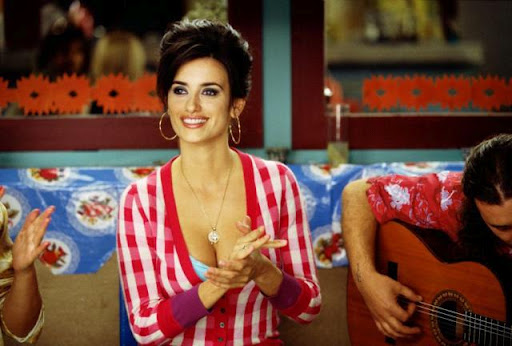
Volver

Following Pedro Almodovar’s usual routine of showing women discovering unknown strengths when put under extreme situations, Volver sees two sisters, Lola Duenas and Penelope Cruz, finding new leases on life after a number of unexpected deaths to people close to them.
The film is witty and intelligent, focusing largely on conversations rather than action, and showing that good things can happen if you believe and out your mind to them, and that tragedy can lead to becoming closer to others and a better person in yourself, but my main problem with the film – other than unsuccessfully attempting to make Cruz look frumpy with a prosthetic posterior rumoured to be the same one Dustin Hoffman wore in Tootsie– is that there are certain supernatural elements that take you out of the film completely, as the rest seems so grounded in a reality that is only a little exaggerated, and even then only in the amount of cheeks kissed on a daily basis.
Choose film 6/10

Babel

The first film to arrive from LoveFilm from the recent additions, Babel has seen my List update shoot me in the foot, as Babel is quite a long film that I’ve seen twice before, once just before starting the List, and that to be in honest doesn’t live up to its potential.
We follow the lives of four groups of people, as their existences are disrupted by a single bullet. First, there’s the poverty-stricken goat herder and his two young, competitive sons who purchase a rifle to protect their flock from jackals. We also have a wealthy American couple (Brad Pitt and Cate Blanchett, both excellent if trying a little too hard in largely thankless roles) as they bicker their way through a holiday in Morocco. An Hispanic maid is forced to take the two young children she cares for with her and her nephew (Gael Garcia Bernal) to Mexico for her son’s wedding, and the deaf/mute daughter of a successful Japanese businessman struggles to lose her virginity. The multicultural cast is good, especially Rinko Kikuchi as the Japanese girl, who carries most of her story arc single-handed, but there are several scenes that are very difficult to watch – the younger of the goat-herder’s sons masturbating within earshot of his brother, a disillusioned young boy witnesses the chicken he is about to eat slaughtered in front of him and a troubled teen coming on very strongly to her dentist.
The film is entirely humourless, with barely a smile to be seen either onscreen or off, and it lacks the finesse of director Alejandro González Iñárritu’s Amores Perros. That, and the entire thing is thoroughly depressing, with only some interesting scenes – a nightclub seen from a deaf perspective – to pique the interest.
Choose life 6/10

300

300thmovie! Yes! Nailed it! This has been a plan from the outset, that the 300thfilm just had to be 300, and lo it has been done. Finally I can stop checking the count every day of how many films I’ve watched and just get on with watching more and writing posts (I won’t).
Based on the incredibly stylish graphic novel by Frank Miller (Sin City), it could be argued that this two-hour fight scene suffers from a severe case of style over substance, with a small squadron of 300 Spartan warriors heading out to take on the thousands-strong army of Persians out to conquer their land, but whilst there is some accuracy to this, there is quite enough story behind the oceans of cool.
The Spartans, led by Gerard Butler’s King Leonidas in a role that remains his calling card after six years of mostly forgettable romcoms and mindless shooters, have been trained since birth to feel no pain or mercy – or cold, judging by how little they wear – and all live to fight, and die, honourably in battle. One soldier, when questioned as to why he has brought his adult son along to fight, replies that he has others to replace him.
It’s impossible for a man not to watch this and feel inferior. Some may see it as a rabble-rousing celebration of what it truly means to be a man – fighting and killing, safe in the knowledge your son will carry on your name – but personally I see it as a reminder of the garage-worth of spare tyres congregating about my torso, and how I’ve managed to survive almost 25 years without so much as throwing a punch. I can almost feel my ovaries forming.
The combat, and believe me there’s an awful lot of it, is wonderfully choreographed, and director Zack Snyder utilises a deft blend of colour, lighting, slow motion, shadows and speeding up to showcase its full glory. At times it feels more like a videogame, as the quantity and skill level of the foes to be vanquished steadily increases.
The occasionally flits back to Sparta, where Leonidas’ Queen (Lena Headey) tries to convince their council to send reinforcements, do a good job of breaking away from the otherwise incessant violence, but some touches – the giant troll, a bizarre goat-creature – take away from the experience, and overly-pierced big bad guy Xerxes has a voice comically mismatched to his appearance.
Look out too for an early appearance from LifeVsFilm favourite Michael Fassbender as one of 
the 300.
Choose film 8/10

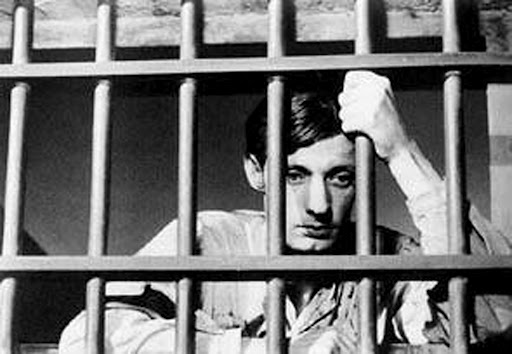
A Man Escaped

Francois Leterrier (father of director Louis Leterrier who, other than Unleashed, is really quite terrible, with a track record including The Transporter 1 & 2, The Incredible Hulk and the godawful Clash of the Titans) is Fontaine, an inmate at a Nazi execution prison. Left bloodied and beaten after an escape attempt en route, Fontaine doesn’t hang about before he tries to break out again.
This is an incredibly minimalistic film, with much of it taking place from the confines of Fontaine’s cell, tapping conversations to his neighbour or scraping away at his door with a spoon, and the camera is infatuated with the nuances of his face.
There are some glaring plot holes that could well be just a product of the time – cell checks seem to be very infrequent and less than thorough, and why exactly do the cells have a solid stone shelf, strong enough to support a grown man’s weight and accessible even to the elderly, positioned right next to the only window in the cell.
The film’s finale is at times almost unbearably tense, with no music but for the sound of trains rushing past and a mysterious creaking noise, and fans of the Shawshank Redemption – or any other prison movie for that matter – would do well to seek this out.
Choose film 7/10