 Apparently the concept of Inception began when director Chris Nolan, he of the Dark Knight, Batman Begins, Memento and the upcoming Dark Knight Rises, the most anticipated film of 2012 (tied with the Avengers and the Hobbit), wanted to make a film in which several climaxes are all occurring simultaneously. Most directors would then structure a plot in such a way as to have different characters in different locations, all partaking in various climactic events and cutting between them, but Nolan, in what I’m going to assume was an evening rife with alcohol, narcotics and some rare kinds of cheese, opted instead to make a film predominantly set within the world of dreams.
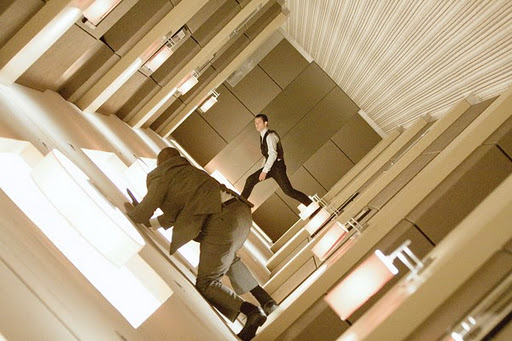
Taking an already interesting, fantastical premise – secrets can be obtained by stealing them from people’s dreams via extraction and spinning it on its head, as Leonardo DiCaprio’s master extractor Cobb and his team – Joseph Gordon Levitt, Ellen Page, Tom Hardy and Dileep Rao, are enlisted for one last job, to plant an idea in Cillian Murphy’s dream by business rival Ken Watanabe. By using this world of dreams, Nolan has released literally all limitations as to where the plot can go, and opened up the door for some thoroughly original set pieces, the standout of which is Gordon Levitt’s taciturn Arthur fighting armed goons in a corridor with an ever-changing, and disappearing, centre of gravity. This, combined with a rain-lashed chase through busy city streets and a Bond-inspired snowbound explosive finale adds up to one of the most thought provoking action movies in recent years.
 The plot is sometimes lost amid the spectacle of the dream worlds and the new logic required to understand it – in a dream, time travels 12 times slower with each level you go down, your subconscious can flare up against you but you can bend the environment around your will – so at times you forget just what they are fighting to achieve. Nolan also appears to have paid attention to the naysayer accusers who believe, not unfairly, that his films lack a required heart and emotional depth, as the addition of Cobb’s deceased wife Mal (Marion Cotillard) appears in his subconscious, eager to turn the dream worlds against him, and the entire plot takes place just so Cobb can be reunited with his kids. Both these points seem tacked on and superfluous to the overall plot, other than adding a motive and antagonist that, although not asked for, do not overly deter.
Under close scrutiny some of the dream logic is inconsistent and doesn’t quite hold up, with some questions remaining unanswered – how exactly does Tom Hardy’s scene-stealing Eames transform into other people as the teams forger? – but the performance, cast (also including Michael Caine, Tom Berenger and Pete Postlethwaite), effects and sheer scale of the project make this unmissable, and my best film of 2010, although it makes my dreams look utterly pathetic in comparison.
Choose film 9/10
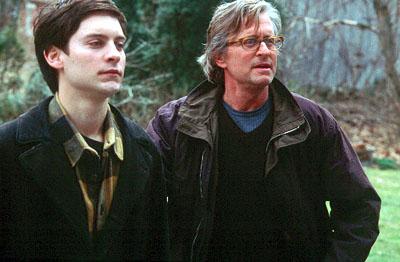 Always be wary when a DVD cover proclaims the feature it houses is an Oscar winner, yet follows this statement with an asterisk not revealed until the fineprint on the back of the box, for more than likely this will lead to a win for one of the lesser Oscars that, though probably well deserved and awarded to people who are very good at, and have worked very hard on what they do, does not make the associated film any good. And so it is with Wonder Boys, overly proud recipient of the Oscar for Best Original Song for Bob Dylan’s Things Have Changed, so worthy is it that I cannot even remember hearing it, when part of me was specifically listening out after discovering the win. Whilst Michael Douglas gives one of his best performances as the mild-mannered, scarf-wearing, adulterous English professor Grady Tripp, he is let down by a meandering plot involving a dead dog, a 7ft transvestite, a stolen dress and an epic manuscript, and a fairly average cast with Tobey Maguire it’s obvious weak link – impressive when Katie Holmes is also involved as a besotted student. Too much takes place without a reason – is Maguire’s James fascinated with celebrity deaths just because he is weird? – and the script is far from excellent (“I’m not gonna draw you a map, sometimes you need to do your own navigating.”)





 Life Vs Film