Iron Man

Iron Man was the superhero movie we were all waiting for, we just didn’t know it; discovering the missing ingredient from all those that came before it – comedy. Though many that came before it weren’t overly serious, dark or gritty, they still took themselves too seriously, but Iron Man ensures a thick vein of comedy runs right the way through it. Released over 2 months before the masked behemoth and current comic book movie touchstone The Dark Knight, Iron Mancame out of nowhere with an untested star and middling director in Robert Downy Jr, and Jon Favreau. RDJ was still making his comeback after years of exile from Hollywood due to substance abuse, and Favreau’s most mainstream work was Christmas classic Elf, but he wasn’t exactly known for blockbusters, but after the movie’s release both found themselves sitting pretty on the A list.
Stark is such a great creation. By his own admission a “genius billionaire playboy philanthropist,” yet Downey Jr. somehow makes such a character not only likable, but one you’d willingly like to go for a drink with, and not just because he’d not only pick up the tab, but probably already owns the bar. He ably assisted by Gwyneth Paltrow and Terrence Howard as his dependable assistant and best friend, and Jeff Bridges is on fine menacing-brow villain mode as Obediah Stane, the business partner of Stark’s deceased father.
Iron Man has an advantage over other superhero stories in that Stark’s story is actually interesting. A twist of fate doesn’t have him bitten by a spider, he isn’t an alien from a distant planet and he isn’t avenging his parent’s death. No, Stark had all of his superpowers before the film even starts. Wealth, intelligence, a sharp with and an immaculate goatee are goals he’s worked towards and achieved; he just needed the push to fit them all together in the form of a titanium-gold alloy flying suit with a rocket launcher and flamethrower, and what greater motivation than a terrorist attack against him, using the very weapons his company created? This means that the villains are also people every can be against – terrorists and the evil corporation heads who supply them.
The best scenes involve the subtle yet inspired gadgetry around Stark’s house, from the Paul Bettany-voiced quasi-butler Jarvis, to the robotic arms that are a little over zealous with the fire extinguisher. The flawless suiting up sequences and Downey Jr. interacting with nothing but a mechanical three clawed appendage aren’t too showy, yet set the film above its rivals.
The only possibly problems are that Howard’s Officer Rhodes is bland, but then who wouldn’t be compared to Stark, and the Stane-is-a-villain story arc is clearly signposted from the get-go, having been given the perfect set-up as the man who took on Stark Industries when it’s CEO passed away, only to be muscled out by some upstart genius, that and his full head with a thick, lustrous beard mean at some point in the near future he’ll be laughing with maniacal glee and threatening the hero’s love interest. Now that the Avengers (sorry, Avengers Assemble) is in place, this film does seem like a bit of a precursor to it, especially the scenes involving Clark Gregg’s Agent Coulson, which don’t really add anything here other than some fanboy cheers every time someone says Strategic Homeland Intervention, Enforcement and Logistics Division, but the scenes don’t detract too much, and can be forgiven as they tie everything up nicely.
Otherwise, the film is pretty much perfect, and remains enjoyable after many viewings.
Choose film 8/10
Chicago

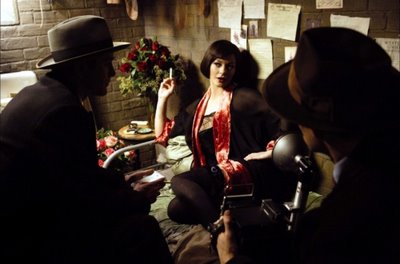
Last Monday I was not having a good day. I don’t remember having a particularly good day at work, and when I came home the LoveFilm disc of The Class (review coming soon) infected my PlayStation 3, my primary film-watching paraphernalia, with an incurable bout of Yellow Light of Death. Fortunately, after a quick 20-minutes of mucking around with SCART leads and speakers, the back-up DVD player was up and running, but alas The Class had no intentions of playing, and to be honest I was in no mood to read subtitles after that debacle, so instead we settled down for a much more easy to watch and far more enjoyable evening of Chicago.
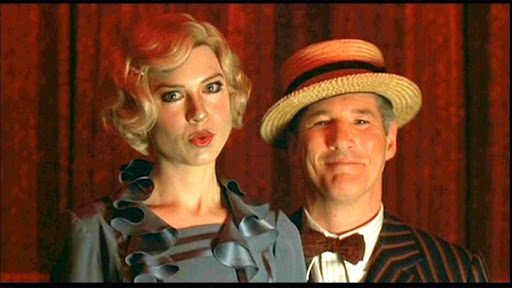
I’ve seen the story twice before, once on film and once on stage, and I think I preferred the small screen to the grand spectacle, though I think on second viewing it isn’t as good as I remembered. Renee Zellweger is as annoying as ever as the naive, waif-like Roxie Hart, incarcerated after killing the man she was sleeping around with (The Wire’s Dominic West). Whilst inside, she meets Catherine Zeta-Jones’ performer Velma Kelly, herself accused of murdering her sister and husband. The two compete for the favours of Matron Mama (Queen Latifah) and super smooth, silver-tongued lawyer Billy Flynn (Richard Gere).
Gere and Latifah seem to be the only ones enjoying themselves, and why Latifah was nominated for Best Supporting Actress I’ll never know, as her performance doesn’t compare to the award winning Zeta-Jones. There’s far too much of Zellweger simpering around the stage, and she seems to have forgotten to tell her face that she’s acting for much of her performance. Her singing is fine, but she is a thoroughly over-rated actress, who in this film is also far too skinny (but then so are all the girls in this film, Latifah aside). More of Gere’s incredibly entertaining Flynn would have gone a long way, as would more screen time for John C. Reilly as Roxie’s cuckolded husband Amos, who’s solo performance of Mr. Cellophane is my personal favourite, along with the wonderfully choreographed Cell Block Tango and Flynn’s marionette manipulation of a gaggle of reporters.
So, whilst it’s not perfect and a recasting of the lead would have been greatly appreciated (though to be honest, I’m not sure who I’d cast in her place) many of the musical numbers are still great fun. Six Oscars and thirteen nominations though? Seems a little excessive.
Choose film 7/10

Of Gods and Men

Based on the true story of Cistercian monks in Algeria in 1996 (stay with me) this film is the very definition of slow, but there is no other way it could be told. Had I watched it after a long day at work or a particularly stodgy meal (my favourite kind), then odds are I ‘d have drifted off into an unbroken slumber until the next morning at around twenty minutes in, but the elegiac pace, mostly following the monks everyday lives as they become gradually more effected by the increasing terrorist presence as their government deteriorates is beautiful and engrossing.
Long shots of prayer, studying, tending to the garden, cleaning the monastery, more prayer, ploughing the fields, singing hymns and praying again, largely showing little more than the backs of people’s heads doesn’t sound particularly enthralling, and it’s not, but the camera’s obsession with these monk’s defiance and dependency in the face of violence is just gripping, made all the more effective by the sheer lack of action preceding. The best scenes involve nought but dialogue – the monks refusing to allow their doctor and his medicine to be taken from them forcefully, monastery meetings discussing whether desertion is a viable option, or no dialogue whatsoever, with a piece of classical music and a glass of wine reducing the men to tears – and I previously wasn’t aware how fulfilling an experience could be achieved with so little happening on screen. 
This won’t appeal to the Friday night crowd after a little bang for their buck, a crowd I’ll admit to joining regularly, but for a thought-provoking watch with plenty of room to think and absorb the atmosphere, you could do a lot worse.
Choose film 8/10

Precious (based on the novel Push by Sapphire)

I knew what I was expecting when I sat down to watch Precious: being depressed, angered and infuriated by the action on screen, but doubtlessly impressed by the acting on display. Shockingly, I was correct, though thankfully most of the abuse was verbal.
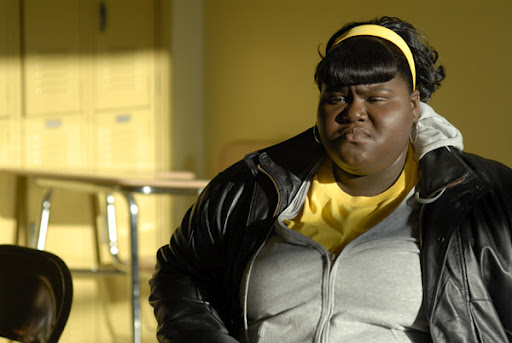
Gabourey Sidibe (more recently seen in Tower Heist and The Big C, where I’m guessing everyone else on set spends most of their time working out how to pronounce her name) is Clarice ‘Precious’ Jones, a severely obese sixteen year old, pregnant with her second child as a result of being raped by her father again. She lives in a cramped apartment with her volatile, welfare-abusing mother (Oscar-winning Mo’nique, a revelation from a woman exclusively known for comedy until this point) in Harlem in 1987. Oh, and her first child has been nicknamed Mongo for suffering Down’s Syndrome. See, told you it was depressing.
Precious’ mother is a monster of Hannibal Lecter proportions, with every word calculated to bring the most destruction to her child. We hear such gems as “School ain’t gonna help none, take your fat ass down to the welfare,” “You will never know shit, don’t nobody want you,” and “I should have aborted your fat fuckin’ ass.” Charming. Many scenes are beyond difficult to watch, from the furious tirade aimed at Precious when her headmistress (“white bitch”) drops round after school, to the fantasies of red carpets and photo shoots that make up the only escape Precious has from her unbearable existence.
It’s not all crushing depression. Mostly, but not all, for Precious seeks to improve her situation, enrolling in an alternative school for kids who’ve fallen through the cracks, so there is light at the end of the tunnel, shone from three supporting adults, her teacher Ms. Rain (Paula Patton), the nurse’s assistant who helps delivers her baby (Lenny Kravitz) and her social worker (Mariah Carey). These last two choices seem like some fairly risky stunt casting, but it pays off, as though the singers aren’t likely to be bothering the Academy any time soon, they perform ably and selflessly in places you wouldn’t normally expect them.
Though well made, directed and shot, the subject matter at times feels like a particularly sobering episode of Jerry Springer, interspersed with some truly shocking moments that generally involve potential harm to Precious baby. But it’s not as miserable as first thought, and the performances on display are worth watching.
Choose film 7/10

An American Werewolf in London

After being attacked on the Moors in rural northern England, a young backpacking American (David Naughton) awakes in a London hospital and falls for his nurse, Walkabout’s Jenny Agutter. This leads to some romcom hijinks, mostly involving Agutter’s Alex not being allowed to sleep with patients, and the vacationing David bored and alone in her apartment all day with no money and no where to go, trying to amuse himself. Oh, one last thing, David’s a werewolf being stalked by the ever-decaying remains of his zombie best friend. Sorry, forgot that bit.
This film is great, mostly memorable for Rick Baker’s stunning effects, featuring a transformation entirely CGI free that looks and feels unbearably painful and has yet to be equalled over thirty years later. There are some good jump scares and creative cinematography, with even a stationery phone box call shot seemingly on a circling bicycle. The subway sequence is particularly exhilarating, and the film is a lot funnier than you might remember, especially the scene in the porn theatre, with various undead suggesting the best ways for David to kill himself (we finally get to see director John Landis’ in-joke movie See You Next Wednesday, referenced in all his films, that turns out to not be that recommendable).
Unfortunately Landis doesn’t follow Spielberg’s rule of not showing too much monster, as the later scenes, before an overly abrupt ending, reveal the creature too clearly, gnawing away at some of the mystery. Frank Oz’s cameo as an American embassy official is also offputting, as I can’t take him seriously when he’s doing a voice that sounds exactly like the one he uses for Fozzie Bear in the Muppets. The most unbelievable part though? It’s possible to get a taxi far in London for £1.50. Ridiculous.
Still, thoroughly enjoyable and worth watching for Baker’s Oscar-winning make-up and effects.
Choose film 7/10

Four Weddings and a Funeral

Richard Curtis and Hugh Grant seem to be a match made in heaven. So far they’ve collaborated on three features (Notting Hill and Love, Actually being the other, equally enjoyable films that, for some reason or another, aren’t on the List), and Grant’s lovably foppish dithering perfectly fits into Curtis’ skill with a subtle put-down or throwaway comment.
Here, Grant plays Charles, terminally lost amidst a sea of acquaintances tying the knot, swinging from one wedding to the next seemingly every weekend. Perpetually late, lost and underprepared, Charles is a creation that, if you don’t know someone just like him, it’s probably you in your circle of friends. And it is this circle, just like in Notting Hill, that makes the film what it is. The supporting characters in any film have the potential to be more layered and interesting than the audience ciphers required as the leads. If need be they can even be people you don’t overly like or agree with, but fortunately here they’re a wonderful bunch, from Kristin Scott Thomas’ heartbreakingly brittle Fiona, John Hannah’s dependable Matthew, Simon Callow’s enigmatic, irascible Gareth and of course James Fleet’s hopelessly wealthy Tom, who trumps Charles for the worst best man come wedding number 3 (sample speech quote: “When Bernard told me he was getting engaged to Lydia, I congratulated him because all his other girlfriends were such complete dogs. Although may I say how delighted we are to have so many of them here today”).
Often hilarious and at times genuinely touching, not the least in Matthew’s moving elegy at the titular funeral, the script is also so much swearier than you remember (“fuck fuckety-fuck”), and deals with all the problems one might encounter at a wedding – drunken bride, boorish guests, horrendous dresses, improbable hats and inappropriate songs (I Will Survive, at a wedding?) as well as the more unusual scenarios, like being sat at a table full of your former partners, or being trapped in the room the happy couple are consummating their vows in.
The only problems occur are the horrendously cliché rain-soaked finale (“Is it still raining? I hadn’t noticed”) and the casting of Andie MacDowell as Charles’ American dream girl, who is only actually desirable the less he gets to know her in my opinion.
Choose film 7/10

Volver

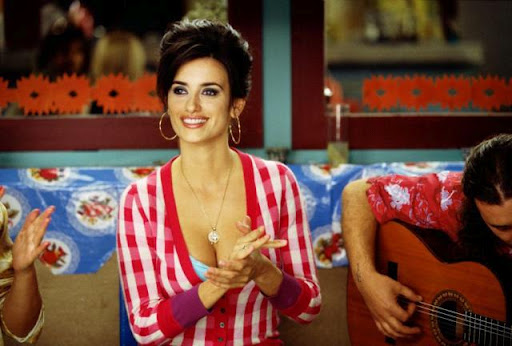
Following Pedro Almodovar’s usual routine of showing women discovering unknown strengths when put under extreme situations, Volver sees two sisters, Lola Duenas and Penelope Cruz, finding new leases on life after a number of unexpected deaths to people close to them.
The film is witty and intelligent, focusing largely on conversations rather than action, and showing that good things can happen if you believe and out your mind to them, and that tragedy can lead to becoming closer to others and a better person in yourself, but my main problem with the film – other than unsuccessfully attempting to make Cruz look frumpy with a prosthetic posterior rumoured to be the same one Dustin Hoffman wore in Tootsie– is that there are certain supernatural elements that take you out of the film completely, as the rest seems so grounded in a reality that is only a little exaggerated, and even then only in the amount of cheeks kissed on a daily basis.
Choose film 6/10

300

300thmovie! Yes! Nailed it! This has been a plan from the outset, that the 300thfilm just had to be 300, and lo it has been done. Finally I can stop checking the count every day of how many films I’ve watched and just get on with watching more and writing posts (I won’t).
Based on the incredibly stylish graphic novel by Frank Miller (Sin City), it could be argued that this two-hour fight scene suffers from a severe case of style over substance, with a small squadron of 300 Spartan warriors heading out to take on the thousands-strong army of Persians out to conquer their land, but whilst there is some accuracy to this, there is quite enough story behind the oceans of cool.
The Spartans, led by Gerard Butler’s King Leonidas in a role that remains his calling card after six years of mostly forgettable romcoms and mindless shooters, have been trained since birth to feel no pain or mercy – or cold, judging by how little they wear – and all live to fight, and die, honourably in battle. One soldier, when questioned as to why he has brought his adult son along to fight, replies that he has others to replace him.
It’s impossible for a man not to watch this and feel inferior. Some may see it as a rabble-rousing celebration of what it truly means to be a man – fighting and killing, safe in the knowledge your son will carry on your name – but personally I see it as a reminder of the garage-worth of spare tyres congregating about my torso, and how I’ve managed to survive almost 25 years without so much as throwing a punch. I can almost feel my ovaries forming.
The combat, and believe me there’s an awful lot of it, is wonderfully choreographed, and director Zack Snyder utilises a deft blend of colour, lighting, slow motion, shadows and speeding up to showcase its full glory. At times it feels more like a videogame, as the quantity and skill level of the foes to be vanquished steadily increases.
The occasionally flits back to Sparta, where Leonidas’ Queen (Lena Headey) tries to convince their council to send reinforcements, do a good job of breaking away from the otherwise incessant violence, but some touches – the giant troll, a bizarre goat-creature – take away from the experience, and overly-pierced big bad guy Xerxes has a voice comically mismatched to his appearance.
Look out too for an early appearance from LifeVsFilm favourite Michael Fassbender as one of 
the 300.
Choose film 8/10

A Man Escaped

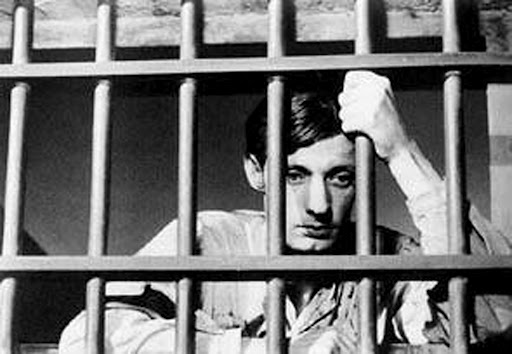
Francois Leterrier (father of director Louis Leterrier who, other than Unleashed, is really quite terrible, with a track record including The Transporter 1 & 2, The Incredible Hulk and the godawful Clash of the Titans) is Fontaine, an inmate at a Nazi execution prison. Left bloodied and beaten after an escape attempt en route, Fontaine doesn’t hang about before he tries to break out again.
This is an incredibly minimalistic film, with much of it taking place from the confines of Fontaine’s cell, tapping conversations to his neighbour or scraping away at his door with a spoon, and the camera is infatuated with the nuances of his face.
There are some glaring plot holes that could well be just a product of the time – cell checks seem to be very infrequent and less than thorough, and why exactly do the cells have a solid stone shelf, strong enough to support a grown man’s weight and accessible even to the elderly, positioned right next to the only window in the cell.
The film’s finale is at times almost unbearably tense, with no music but for the sound of trains rushing past and a mysterious creaking noise, and fans of the Shawshank Redemption – or any other prison movie for that matter – would do well to seek this out.
Choose film 7/10

Unlisted: Pirates! In an Adventure with Scientists

The closest the UK will ever have to a Pixar, and to be honest not that far off really, Bristol-based Aardman Animations have spent years toiling away at another masterpiece, this time based on the first in a series of ridiculous yet thoroughly entertaining books by British author Gideon Defoe. Just like Wallace and Gromit, Chicken Run and everything else Aardman has ever left a plasticine thumbprint on, Pirates is imbued with a timeless sense of humour in a world that almost – almost – makes sense, but is always hilarious.
We follow the Pirate Captain (Hugh Grant on the finest form he’s been in years) and his rag-tag band of misfits (including Martin Freeman, Brendan Gleeson and Ashley Jensen) along with their definitely-not-a-parrot mascot Polly as they set out to win the much coveted Pirate of the Year award, against rivals Lenny Henry, Salma Hayek and Jeremy Piven (whose voice really annoyed me as I couldn’t place it for the entire film). The only problem is… the Pirate Captain is a pretty useless pirate, with every plundering attempt ending in failure. Fortunately, a chance encounter with a repressed, desperate Charles Darwin (David Tennant) leads to all manner of escapades, including entering a scientific competition and a run-in with a furious Queen Victoria (Imelda Staunton, half the cast are Harry Potter actors).
If I have to find a flaw, it’s that everything moves by so damn quickly. Every character is a brilliant creation, yet few are on screen long enough to fully appreciate them, and often the rapid progression of the plot gives a feeling that some jokes are left by the wayside, 88 minutes long is nowhere near enough, but one feels the animators are happier their wrists were not strained further. The one character who really should have more screen time is the scene-stealing, self-subtitling monkey.
Choose film 8/10