Aladdin

What better way to kick off a lazy Bank Holiday Monday than with a Disney classic? With a Pixar one of course, but I’ve watched most of those, so Disney it is. Notable in the Disney archives for being the first to use big name actors to voice its characters (Robin Williams steals the show as the Genie, even though he isn’t in the first third of the film) , Aladdin doesn’t have a lot else going for it to set it apart from the more renowned Disney pictures such as Beauty and the Beast, the Lion King or the Jungle Book. Yes, the devious royal advisor Jafar is a masterclass in how to draw an evil character (acute angles, lots of acute angles, think a dehydrated Peter Cushing), Gilbert Gottfried is excellent as the cantankerous parrot Iago and there is some of the studios greatest comedy from Williams’ improv and one liners (“10,000 years will give you such a crick in the neck!”), but the plot is thin, the Arabian stereotypes broad (and at times a little racist, a wink to Uncle Walt maybe?) and most of the songs are forgotten before the credits roll, with only A Whole New World and Genie’s Never Had a Friend Like Me leaving any kind of impression.
The animation is largely flawless, although touches of CGI sap the warmth from the otherwise hand-rendered imagery, and it is hugely impressive just how much characterisation has been given to a tasselled rug, but the plot is too thin and predictable, the morals daubed too thickly, even for a Disney, to make this a must-see.
Choose life 6/10

Dangerous Liaisons

John Malkovich: object of desire? Talk about playing against type. As the Vicomte Sebastien de Valmont in 18th Century France, he is challenged by the Marquise Isabelle de Merteuil (Glenn Close) to deflower Uma Thurman’s virginal bride-to-be Cecile. Deeming the task too easy, he instead chooses to bed Michelle Pfeiffer’s Madame de Tourvel, a virtuous, devout, happily married woman staying with the Vicomte’s aunt. The Marquise then drafts in Keanu Reeves’ Danceny to woo Cecile instead. If the plot sounds familiar, it’s because it was adapted more recently (and poorly) in the modern-set Cruel Intentions, which succeeded in dumbing down the many deceits and allegiances in the plot, but retains the deeply unlikable protagonists, too rich for their own good and revelling in destroying the lives of those around them.
More erotic than most period dramas, with necklines set to plunging and cleavages set to stun, this sees more bedhopping than a season of Desperate Housewives. Malkovich is on excellent form as the callous, vain and calculating lothario, deemed “conspicuously charming” and Close walks the line between on/off romance and hardnosed bitch, but every time Keanu opens his mouth you get the feeling Bill and Ted got their time travelling phone booth stuck in the reign of Louis XV, so thick and distracting is the slacker dude lilt he so desperately tries to hide.
Choose life 5/10

Bad Lieutenant Port of Call

This is not a remake, nor is it a sequel or prequel to Abel Ferrara’s Harvey Keitel-starring 1992 Bad Lieutenant, although there is one key similarity, in that the titular law enforcement officer is a corrupt drug addict attempting to solve a crime, in ’92 the rape of a nun, in Port of Call, the murder of a drug dealer, using their own, unconventional methods.
In this film, the drug-fuelled lead role is not so much played as inhabited, snorted, smoked and injected by a wired, tense and almost hunched Nicolas Cage, giving his best performance since Leaving Las Vegas, alongside a cast of largely unknowns or non-actors (including Xzibit as the drug kingpin lead subject of the investigation). As is traditional with maverick cop movies, there is more than just the case plaguing Cage’s Lt. Terence McDonagh, and at one point he must also juggle looking after his father’s dog, protecting a witness to the case, his friendship/relationship with Eva Mendes’ high class hooker/partner in narcotics and an investigation into his unorthodox interrogation of the witness’ grandmother, jeopardising the life of an elderly woman in her care. The very fact that McDonagh faces the repercussions of his actions sets this aside from other films in the genre, that so usually see their protagonists commit crimes in the name of justice with no consequences.
As amazingly intense as Cage’s performance is, the film itself never quite grips the attention. There is little here that hasn’t been seen before (other than hallucinations of iguanas and the break-dancing of a recently deceased hoodlum), but director Werner Herzog should be commended for rewriting the script to set the action in New Orleans in the aftermath of hurricane Katrina in order to provide the city with jobs and income.
Choose life 5/10

Capote

Philip Seymour Hoffman is a great actor, this cannot be questioned. Whether leading a small film in the likes of Synecdoche New York, Before the Devil Knows You’re Dead and the Savages, outshining the rest of an ensemble cast in Magnolia, Boogie Nights, the Boat that Rocked and the Talented Mr. Ripley or chewing the scenery as the bad guy in a big screen blockbuster like Mission Impossible 3, he always sinks completely into his characters, be they good-natured yet uncouth storm chasers, an intimidating phone-sex supervisor/mattress salesman or an outspoken rock journalist. With Hoffman’s acting ability in little doubt, it’s a wonder this film was made, as other than showcasing his talent for inhabiting the persona of another individual, there is little to recommend for this drab, largely plot-less offering .
Hoffman plays acclaimed writer Truman Capote (Breakfast at Tiffany’s), visiting a small town to document the aftermath of a murder for a magazine. Fascinated with the case, and even more so by one of the convicted killers, he expands his piece to become the last book he ever finished, In Cold Blood. The only real narrative drive is that of the court proceedings and Truman writing his book, interspersed with various parties and conversations with his friend Harper Lee (Catherine Keener) as she herself achieves publication and film adaptation of her own seminal novel To Kill A Mockingbird, but what the film lacks in purpose it makes up for in performances.
Choose life 5/10

L’Atalante/Zero de Conduite

French director Jean Vigo died at the age of 29, having made just four films (these two, A Propos de Nice and Taris). Undoubtedly Vigo’s untimely demise is a tragedy, but I disagree with the level of promise and potential he apparently showed, as these two films are dull, uninspiring and possessing of paper thin plots.
L’Atalante sees a young couple, Jean and Juliette, get married and set sail on a boat with their captain, Pere Jules, his cats and his cabin boy. After time, Juliette wants to settle down in the city and Jean wants to keep sailing, so he abandons her in port, leaving without her. There is little characterisation of any of the main players, so there is little to care about as to whether the couple resolve their differences or not, other than it will hopefully bring about the end of the film. Only the games of draughts between a desperately cheating Jules and a depressed Jean adding a dash of fun to the proceedings.
Zero de Conduite is even worse plot-wise, following a group of school children planning a rebellion during their school’s upcoming commemoration day. The film is interesting for showing an outdated education system – the house master sleeps in the same room as the students in his charge, making them stand at the foot of his bed for the night as punishment, but it’s hard to feel any sense of joy at the successful rebellion when the full extent of it is flying a Jolly Roger and instigating a pillow fight.
L’Atalante Choose life 3/10
Zero de Conduite Choose life 2/10

Dances with Wolves

After unintentionally becoming a hero when his suicide attempt becomes a mass charge against the enemy, Lt. John J. Dunbar (a be-whiskered Kevin Costner) is given his choice of location in the Union army, opting for a small, broken down post miles from anywhere, in order to “see the frontier before it’s gone.” When he saves a white woman adopted by their tribe as a girl, the local Native Americans take a shine to him, as he attempts to educate them of a civilised world, whilst they in turn teach him of their ways.
The plotting is formulaic and the pace is stodgy. There are some good performances (Graham Greene and Rodney A. Grant as the two most forthcoming members of the Sioux tribe), but this feels too bogged down in a history and culture more important to the American people than anyone else. Unforgivably, Costner beat Scorsese to the Best Director Oscar for Goodfellas, and it is extremely difficult to understand why.
Choose life 4/10

The Bird with the Crystal Plumage

With my pre-existing knowledge of Italian horror auteur Dario Argento – admittedly mostly garnered from watching Juno – I watched this apprehensively, ensuring the girlfriend – who scares easily – was out of the flat, and a sick bucket and towels were close to hand, lest the television begin leaking the copious flow of blood that would soon inevitably be filling up the screen. It is with a relieved sense of disappointment that I can confirm this is not a horror, more a suspense thriller, following a down on his luck American writer seeking inspiration in Italy, who witnesses an attempted murder whilst he is trapped between two sheets of glass. Discovering the attack was the handiwork of an active serial killer, he becomes obsessed with the case, up to the point where he is hunted by those who’d rather the killer remain unknown. Mostly following the standard crime whodunit formula, this effectively cranks up the suspense, but the goriness and brutality of the occasional murder jars with the largely sedate tone of the rest of the film. There are nice comedic touches – tracking down the man in the yellow jacket – and a collection of memorable oddball supporting characters including a stuttering pimp and a reclusive cat eating art collector, but this is little more than a sporadically bloodier version of A Touch of Frost.
Choose life 5/10

All That Jazz

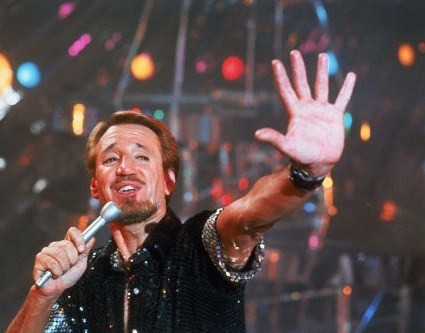
Anyone seeking a straightforward musical, like Grease or Chicago, as was expected by this reviewer, would do well to seek elsewhere. A semi-autobiographical tale from director/writer/choreographer Bob Fosse, this shows musical director/writer/choreographer/everything else Joe Gideon (Roy Scheider) as he discusses his life with angel of death Jessica Lange. There are occasional songs and dance numbers, and parts of his life are exaggerated and dramatised on stage. To use the description given to one of Gideon’s own performances (a very surprising sequence referred to as Erotic-Air), this film is “interesting, very interesting…unusual, very unusual.” It is difficult to decipher which parts are really from Gideon’s life and which are distorted and rewritten via his own limitless, unburdened imagination, from his own growing up in a burlesque house, being teased by barely clad women from an early age, to becoming a pill-popping, heavy smoking, heavy drinking perfectionist self-proclaimed liar who is “generous with his cock,” through to ruthlessly directing himself on his death bed. This ambitious, and possibly achieves what it set out to do, yet you leave the film unsatisfied, unsure of what you’ve seen and what to make of it.
Choose life 4/10

Spiderman 1 & 2

Never has a film been more squarely aimed at the nerds and outsiders of the world (OK, maybe Revenge of the Nerds), the guys with the smarts but not the brawn, good looks, athletic bodies and hot girlfriends. Fortunately, this description neatly encapsulates the majority of the superhero genre’s existing fanbase.
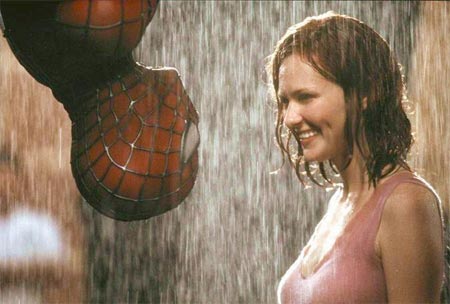
Tobey Maguire is Peter Parker, the afore-mentioned science nerd with a prolonged crush on Kirsten Dunst’s girl-next-door MJ, but lacking the confidence, wealth, strength and social standing required to do anything about it. After being bitten by a radioactive spider during a class field trip, he acquires some of the spider’s abilities, including wall crawling, mild precognition, shooting webs from his wrists, a vastly improved body and the ability to dangle from the ceiling into your mouth while you sleep. In real life, spider’s shoot the webs from an aperture closer to their posterior. This would have made for a much stranger film, I feel.  Unfortunately, Parker’s transformation occurs around the same time as Parker’s lazy rich kid best friend Harry’s businessman father trials a new super serum on himself, with predictably disastrous results, transforming him into a suped-up madman, terrorising the city in the form of fan favourite villain the Green Goblin.

Speed

100th film! Although really I’d have preferred it to have been the 50th, seeing as it’s about a bus, rigged with a bomb that activates once the bus reaches 50 miles per hour, detonating should the buses speed drop below 50. The planter of the bomb is Dennis Hopper’s vengeful psychotic ex-cop Howard Payne, angry at Keanu Reeves and Jeff Daniels’ foiling of his first elevator-based hostage situation and eager for a paycheck he feels he’s been cheated. But you don’t care about the motive or who’s behind it, as Payne tells Reeves’ Jack Traven, “Your concern is the bus.” Whenever the film detracts from this central conceit, be it following the non bus bound cops trying to track down Payne or Hopper himself watching the action unfold on the ever present media, the pacing immediately slackens, so enticing is the central plot.