Iron Man

Iron Man was the superhero movie we were all waiting for, we just didn’t know it; discovering the missing ingredient from all those that came before it – comedy. Though many that came before it weren’t overly serious, dark or gritty, they still took themselves too seriously, but Iron Man ensures a thick vein of comedy runs right the way through it. Released over 2 months before the masked behemoth and current comic book movie touchstone The Dark Knight, Iron Mancame out of nowhere with an untested star and middling director in Robert Downy Jr, and Jon Favreau. RDJ was still making his comeback after years of exile from Hollywood due to substance abuse, and Favreau’s most mainstream work was Christmas classic Elf, but he wasn’t exactly known for blockbusters, but after the movie’s release both found themselves sitting pretty on the A list.
Stark is such a great creation. By his own admission a “genius billionaire playboy philanthropist,” yet Downey Jr. somehow makes such a character not only likable, but one you’d willingly like to go for a drink with, and not just because he’d not only pick up the tab, but probably already owns the bar. He ably assisted by Gwyneth Paltrow and Terrence Howard as his dependable assistant and best friend, and Jeff Bridges is on fine menacing-brow villain mode as Obediah Stane, the business partner of Stark’s deceased father.
Iron Man has an advantage over other superhero stories in that Stark’s story is actually interesting. A twist of fate doesn’t have him bitten by a spider, he isn’t an alien from a distant planet and he isn’t avenging his parent’s death. No, Stark had all of his superpowers before the film even starts. Wealth, intelligence, a sharp with and an immaculate goatee are goals he’s worked towards and achieved; he just needed the push to fit them all together in the form of a titanium-gold alloy flying suit with a rocket launcher and flamethrower, and what greater motivation than a terrorist attack against him, using the very weapons his company created? This means that the villains are also people every can be against – terrorists and the evil corporation heads who supply them.
The best scenes involve the subtle yet inspired gadgetry around Stark’s house, from the Paul Bettany-voiced quasi-butler Jarvis, to the robotic arms that are a little over zealous with the fire extinguisher. The flawless suiting up sequences and Downey Jr. interacting with nothing but a mechanical three clawed appendage aren’t too showy, yet set the film above its rivals.
The only possibly problems are that Howard’s Officer Rhodes is bland, but then who wouldn’t be compared to Stark, and the Stane-is-a-villain story arc is clearly signposted from the get-go, having been given the perfect set-up as the man who took on Stark Industries when it’s CEO passed away, only to be muscled out by some upstart genius, that and his full head with a thick, lustrous beard mean at some point in the near future he’ll be laughing with maniacal glee and threatening the hero’s love interest. Now that the Avengers (sorry, Avengers Assemble) is in place, this film does seem like a bit of a precursor to it, especially the scenes involving Clark Gregg’s Agent Coulson, which don’t really add anything here other than some fanboy cheers every time someone says Strategic Homeland Intervention, Enforcement and Logistics Division, but the scenes don’t detract too much, and can be forgiven as they tie everything up nicely.
Otherwise, the film is pretty much perfect, and remains enjoyable after many viewings.
Choose film 8/10
Chicago

Last Monday I was not having a good day. I don’t remember having a particularly good day at work, and when I came home the LoveFilm disc of The Class (review coming soon) infected my PlayStation 3, my primary film-watching paraphernalia, with an incurable bout of Yellow Light of Death. Fortunately, after a quick 20-minutes of mucking around with SCART leads and speakers, the back-up DVD player was up and running, but alas The Class had no intentions of playing, and to be honest I was in no mood to read subtitles after that debacle, so instead we settled down for a much more easy to watch and far more enjoyable evening of Chicago.
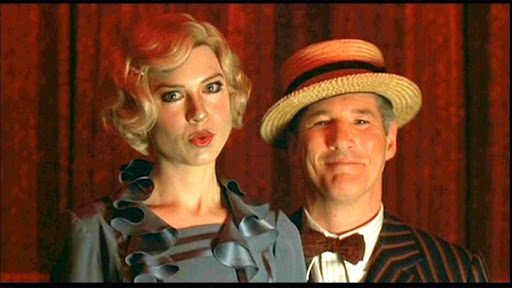
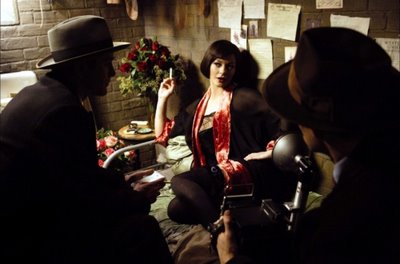
I’ve seen the story twice before, once on film and once on stage, and I think I preferred the small screen to the grand spectacle, though I think on second viewing it isn’t as good as I remembered. Renee Zellweger is as annoying as ever as the naive, waif-like Roxie Hart, incarcerated after killing the man she was sleeping around with (The Wire’s Dominic West). Whilst inside, she meets Catherine Zeta-Jones’ performer Velma Kelly, herself accused of murdering her sister and husband. The two compete for the favours of Matron Mama (Queen Latifah) and super smooth, silver-tongued lawyer Billy Flynn (Richard Gere).
Gere and Latifah seem to be the only ones enjoying themselves, and why Latifah was nominated for Best Supporting Actress I’ll never know, as her performance doesn’t compare to the award winning Zeta-Jones. There’s far too much of Zellweger simpering around the stage, and she seems to have forgotten to tell her face that she’s acting for much of her performance. Her singing is fine, but she is a thoroughly over-rated actress, who in this film is also far too skinny (but then so are all the girls in this film, Latifah aside). More of Gere’s incredibly entertaining Flynn would have gone a long way, as would more screen time for John C. Reilly as Roxie’s cuckolded husband Amos, who’s solo performance of Mr. Cellophane is my personal favourite, along with the wonderfully choreographed Cell Block Tango and Flynn’s marionette manipulation of a gaggle of reporters.
So, whilst it’s not perfect and a recasting of the lead would have been greatly appreciated (though to be honest, I’m not sure who I’d cast in her place) many of the musical numbers are still great fun. Six Oscars and thirteen nominations though? Seems a little excessive.
Choose film 7/10

Good Morning, Vietnam

Barry Levinson can’t work out whether he’s Oliver Stone or Jerry Zucker in this Vietnam-based Robin Williams vehicle. Heavy handed politics and imagery of riots, fire and explosions doesn’t tend to gel with zany antics and improv riffing from one of the world’s leading fast-talking funnymen, but fortunately Williams is on fine enough form to just about rescue the material from an uneven mess, as his radio DJ Adrian Cronauer is brought in to perk up the on-air talent of 1965 Saigon. The troops love him, but his superiors, including the late, great Bruno Kirby’s put upon aggressive peon Lt. Steve, are less keen on his refusal to play approved material and pre-programmed songs, opting for rock and roll over Perry Como. Some storylines seem forced and contrived – Cronauer repeatedly infiltrating an English class just to meet a girl, her entire family accompanying them on a date – and you get the feeling that this is only loosely based on a true story.
Where it shines though is the comedy. Though some of the references are now very dated and probably worked a lot better back in the States (Ethel Merman, Walter Cronkite, Mr. Ed), Williams knack for voices and repartee with a crowd is unparalleled, though a young Forest Whittaker as station lackey Edward Garlick gets his share of decent lines too: “A man does not refer to Pat Boone as a beautiful genius if things are alright.”
The film tries too hard to make a political statement where none is wanted, and the failed attempts at poignancy leave a bad taste in the mouth. Had the serious side been toned down – difficult, I know, given that it’s about war – and the directionless plot been reined in a little this could have been a classic.
Choose life 6/10

Of Gods and Men

Based on the true story of Cistercian monks in Algeria in 1996 (stay with me) this film is the very definition of slow, but there is no other way it could be told. Had I watched it after a long day at work or a particularly stodgy meal (my favourite kind), then odds are I ‘d have drifted off into an unbroken slumber until the next morning at around twenty minutes in, but the elegiac pace, mostly following the monks everyday lives as they become gradually more effected by the increasing terrorist presence as their government deteriorates is beautiful and engrossing.
Long shots of prayer, studying, tending to the garden, cleaning the monastery, more prayer, ploughing the fields, singing hymns and praying again, largely showing little more than the backs of people’s heads doesn’t sound particularly enthralling, and it’s not, but the camera’s obsession with these monk’s defiance and dependency in the face of violence is just gripping, made all the more effective by the sheer lack of action preceding. The best scenes involve nought but dialogue – the monks refusing to allow their doctor and his medicine to be taken from them forcefully, monastery meetings discussing whether desertion is a viable option, or no dialogue whatsoever, with a piece of classical music and a glass of wine reducing the men to tears – and I previously wasn’t aware how fulfilling an experience could be achieved with so little happening on screen. 
This won’t appeal to the Friday night crowd after a little bang for their buck, a crowd I’ll admit to joining regularly, but for a thought-provoking watch with plenty of room to think and absorb the atmosphere, you could do a lot worse.
Choose film 8/10

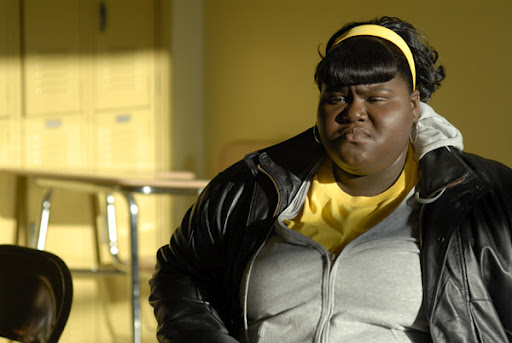
Precious (based on the novel Push by Sapphire)

I knew what I was expecting when I sat down to watch Precious: being depressed, angered and infuriated by the action on screen, but doubtlessly impressed by the acting on display. Shockingly, I was correct, though thankfully most of the abuse was verbal.
Gabourey Sidibe (more recently seen in Tower Heist and The Big C, where I’m guessing everyone else on set spends most of their time working out how to pronounce her name) is Clarice ‘Precious’ Jones, a severely obese sixteen year old, pregnant with her second child as a result of being raped by her father again. She lives in a cramped apartment with her volatile, welfare-abusing mother (Oscar-winning Mo’nique, a revelation from a woman exclusively known for comedy until this point) in Harlem in 1987. Oh, and her first child has been nicknamed Mongo for suffering Down’s Syndrome. See, told you it was depressing.
Precious’ mother is a monster of Hannibal Lecter proportions, with every word calculated to bring the most destruction to her child. We hear such gems as “School ain’t gonna help none, take your fat ass down to the welfare,” “You will never know shit, don’t nobody want you,” and “I should have aborted your fat fuckin’ ass.” Charming. Many scenes are beyond difficult to watch, from the furious tirade aimed at Precious when her headmistress (“white bitch”) drops round after school, to the fantasies of red carpets and photo shoots that make up the only escape Precious has from her unbearable existence.
It’s not all crushing depression. Mostly, but not all, for Precious seeks to improve her situation, enrolling in an alternative school for kids who’ve fallen through the cracks, so there is light at the end of the tunnel, shone from three supporting adults, her teacher Ms. Rain (Paula Patton), the nurse’s assistant who helps delivers her baby (Lenny Kravitz) and her social worker (Mariah Carey). These last two choices seem like some fairly risky stunt casting, but it pays off, as though the singers aren’t likely to be bothering the Academy any time soon, they perform ably and selflessly in places you wouldn’t normally expect them.
Though well made, directed and shot, the subject matter at times feels like a particularly sobering episode of Jerry Springer, interspersed with some truly shocking moments that generally involve potential harm to Precious baby. But it’s not as miserable as first thought, and the performances on display are worth watching.
Choose film 7/10

An American Werewolf in London

After being attacked on the Moors in rural northern England, a young backpacking American (David Naughton) awakes in a London hospital and falls for his nurse, Walkabout’s Jenny Agutter. This leads to some romcom hijinks, mostly involving Agutter’s Alex not being allowed to sleep with patients, and the vacationing David bored and alone in her apartment all day with no money and no where to go, trying to amuse himself. Oh, one last thing, David’s a werewolf being stalked by the ever-decaying remains of his zombie best friend. Sorry, forgot that bit.
This film is great, mostly memorable for Rick Baker’s stunning effects, featuring a transformation entirely CGI free that looks and feels unbearably painful and has yet to be equalled over thirty years later. There are some good jump scares and creative cinematography, with even a stationery phone box call shot seemingly on a circling bicycle. The subway sequence is particularly exhilarating, and the film is a lot funnier than you might remember, especially the scene in the porn theatre, with various undead suggesting the best ways for David to kill himself (we finally get to see director John Landis’ in-joke movie See You Next Wednesday, referenced in all his films, that turns out to not be that recommendable).
Unfortunately Landis doesn’t follow Spielberg’s rule of not showing too much monster, as the later scenes, before an overly abrupt ending, reveal the creature too clearly, gnawing away at some of the mystery. Frank Oz’s cameo as an American embassy official is also offputting, as I can’t take him seriously when he’s doing a voice that sounds exactly like the one he uses for Fozzie Bear in the Muppets. The most unbelievable part though? It’s possible to get a taxi far in London for £1.50. Ridiculous.
Still, thoroughly enjoyable and worth watching for Baker’s Oscar-winning make-up and effects.
Choose film 7/10

Collateral

Michael Mann takes a break from shootouts and dogged cops hunting master criminals in favour of a more laidback, narrative-driven movie about Jamie Foxx’s ambitious yet stunted taxi driver Max carries his fares around the neon-lit streets of L.A. That is, until he picks up Tom Cruise’s hitman Vincent, and Max’s night, and his dreams, are thrown into turmoil as the body count rises.
Cruise seems like an odd choice to play a fairly villainous guys, but he proves spot-on, retaining his usual casual charm but with a steely glint and wolfish menace to go with his salt and pepper hair, leaving Foxx to submit lie in his shadow.
The script relies too much on luck and coincidence, and leaves some pretty gaping plot holes you could drive a cab through, plus those paying attention should see that there’s really only one way the film can end, with a last act twist clearly signposted in seemingly throwaway lines. The writer even resorts to a low cell phone signal and battery as a means of moving the plot along; generally the laziest idea anyone could use.
The film evokes memories of much better films – Leon’s hitman, Taxi Driver, The French Connection’s subway stand-off, every buddy movie ever made – reminding you that there’s little original here. So whilst it’s watchable, it’s by no means worthy of a place on the list, and was wisely cut from the 1001 book some years ago.
Choose life 5/10

Dirty Dancing: The Musical

Those who’ve been following my Twitter feed this evening (@LifeVsFilm follow me for a sporadic burst of tweets roughly once a month) will know that I went to see Dirty Dancing at the Mayflower in Southampton, and have since lived to regret it. It was so bad that I’d really rather have watched the film, for several reasons including Patrick Swayze and Wayne Knight, and because hoardes of drunken hen parties wouldn’t have yelled and jeered for their lives when Johnny Castle lifted Baby up in the air after winking at the audience.
The show made a point of hitting all the main beats from the film, even referencing the Fountainhead, but skipped merrily past some of the key scenes, thankfully including the atrocious miming of Loverboy, mercifully cut short, but also knocked out some of the more dramatic moments in favour of another mediocre dance number. Disappointingly, there were too few live songs, with only the finale’s Time of My Life of any real worth.
The leads (I won’t mention their names, partly because I don’t know them, and partly because I’m never going to need to remember them as I doubt they’ll do anything again) seem to have been cast purely for their physical similarities to Swayze and Jennifer Grey, for though they can dance a great deal better than me, I was less than impressed. They also couldn’t act terribly well, and neither even tried to sing.
If I hadn’t seen the film, I think I’d have had some difficulty understanding the plot, and why some discussions on race and politics were clumsily shoe-horned in, and I certainly would have been thoroughly confused as to why everyone got to their feet and cheered when Castle proclaimed that no-one puts Baby in a corner, though she quite obviously was not sat in a corner at all, something which has yet to stop annoying me.
Now I’m not just writing this off because it’s a musical. When I saw The Lion King and Chicago in recent years I was impressed, though they still didn’t live up to the film versions, but I enjoyed myself a great deal. Granted, it helped that I liked the films they were based on and had consumed at least one alcoholic beverage beforehand, neither of which was the case tonight. In fact I’d downed a couple of caffeine tablets, so sure was I that I’d be snoring softly before the interval. Miraculously this didn’t happen, but without the little tablets of joy that are Pro-Plus, I’d surely have had myself a lovely nap.
Another quick note (last one, I promise), one of the singers performed a song that featured the lyric “I’m 6 foot 4,” yet the performer in question was easily amongst the shorter members of the cast, topping out at an optimistic 5′ 8″, exacerbated by positioning him next to the gangly Castle, who spent most of the show in heels far too high for a man.
Anyway, if you’ve recently performed a drunken lobotomy on yourself, you’re sure to like this. If not, either watch the film (don’t), go see a different musical (Avenue Q looks good, or War Horse) or go to the cinema. It’s cheaper, and you can see much better things. I for one intend to go and see the Cabin in the Woods next week, so look out for an impending review heading your way soon.

Top 5… Movies that should be musicals

Today I’m going to see Dirty Dancing at the Mayflower in Southampton. Not my idea, long story. The previous musicals I’ve seen have all either been of films I either love (The Lion King) or at least enjoy (Chicago, film review will be along shortly), or heavily feature music by an artist I’m a big fan of (We Will Rock You), but Dirty Dancing ticks none of these boxes, in fact it’s based on a fairly terrible movie. So I got to thinking, what movies should be made into musicals? The other adaptations out there do not interest me at all (Sister Act, Billy Elliot, Shrek, Ghost, Legally Fucking Blonde). There’s a couple I probably should have seen by now (Spamalot) but for one reason or another haven’t gotten around to, but I think if any of these came to my local theatre, I’d be a little more tempted.
Continue reading

Synecdoche, New York

Charlie Kaufman has often been described as a breath of fresh air in Hollywood. The legend goes that there are twelve different stories in every film in Hollywood, and with his debut script Being John Malkovich, Kaufman wrote the thirteenth, and there’re so many ideas in Adaptation and Eternal Sunshine of the Spotless Mind that they probably count for numbers fourteen through twenty, and fortunately they’re all on the List. So after working on so many inspiring and imaginative modern classics, Kaufman’s directorial debut is a disappointingly convoluted tangle, as Philip Seymour Hoffman’s theatre director Caden Cotard struggles to create a play based on his own life, whilst struggling with a myriad of relationships and a mystery illness.

Whilst the entirety of the plot – also written by Kaufman – is positively brimming with ideas and ingenuity, from Caden seeing himself in cartoons and commercials, to a character living in a perpetually burning house, the lack of clarity between how much takes place in the real world, how much is in the obsessive director’s head and how much is part of the play is at best frustrating and at times infuriating. It doesn’t help that many of the actors look alike, possibly on purpose, with Michelle Williams, Samantha Morton and Emily Watson all used to play the same character in different levels of life, with the play being featured in the play, requiring Caden to cast himself, casting himself in the play of his own life. Time skips in the blink of an eye for us and for him – his four year old daughter with Catherine Keener’s bohemian artist ages seven years in a matter of days.

You get the feeling that the end result of the film is exactly what Kaufman set out to achieve, with every layer of obsession and confusion being carefully planned and perfectly executed, but when I tried to make some sense of it all, my brain started to run out of my ear.

Choose Life
6/10