Something to look forward to

So I was checking my LoveFilm today to see what the next titles being sent to me were, and I spied a title I didn’t immediately recognise. Normally, I don’t look into such things, other than perhaps the language and the runtime, but today my curiosity was peaked by the title Night and Fog. In the description, the film is described as being “an unsettling view of life inside the Nazi concentration camps of World War II” and various reviews use terms like “horrendous”, “unimaginable horror” and “extremely traumatic images”, whilst still giving the film 5 stars. This film, along with two by my most decidedly not favourite filmmaker Luis Bunuel, the surrealist visionary/whack-job crackpot behind L’Age d’Or, and Un Chien Andalou, should arrive tomorrow, and will undoubtedly make for a most entertaining and not at all suicide-inducing Friday night in. Sometimes I do love this list.

Man Bites Dog

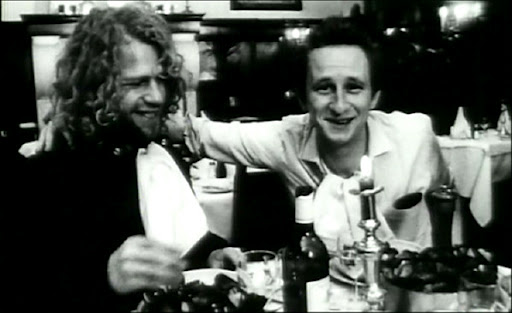
This sublime pitch blackly-comic mock documentary shows an amateur film crew creating a documentary on Ben (Benoit Poelvoorde, Coco Before Chanel), a man who lives day to day by killing people and stealing their money. Beginning with watching him kill a woman on a train with piano wire, we see several cold-blooded murders throughout the film, and hear Ben discuss the best way to dispose of the bodies – sinking them in a lake – and how much ballast should be used for a body, and how the ratio changes when sinking a woman, a child, an old person or a midget. Once you look past the absurdity of creating such a documentation this is at times hysterical – the film crew being used to distract victims to allow an easier murder – and elsewhere truly disturbing (upon interrupting a couple having sex, Ben and the crew take turns to rape the woman before killing them). The execution of the film is perfect in regard to amateur film-making techniques; dialogue gradually becomes more audible as the mic operator approaches, the cameraman bumps into things in poor lighting conditions. This rigorous maintaining of the method is also the film’s biggest downfall though, as some scenes that would have been interesting to see are left out as the crew would not have had access.
Choose film 8/10

Heavenly Creatures

A true story told via the diary entries of the young Pauline (Melanie Lynskey), Peter Jackson’s Heavenly Creatures is one part coming-of-age story, as the introverted outsider Pauline meets and bonds with Kate Winslet’s rich but sickly Juliet, and part exploration on the journey that ends with possible mental disorder. The two girls give great performances in their first film roles (though Winslet shows the greater potential to go on to win an Oscar rather than a regular role on Two and a Half Men), as the girls become closer whilst their parents become increasingly more worried. The film moved slowly, with a sense that the central relationship will not end well for anyone involved, and some scenes seem contrived – the fourteen-year old girls spontaneously stripping to their underwear as they run through the wood – but maybe that’s just a New Zealand thing. The brutal ending is shocking and abrupt, in stark contrast with the lands of make-believe and daydreams the girls have previously been living in, and the imagery sticks with you for a long time.
Choose film 6/10

High Noon

Some time ago, town marshal Will Kane (Gary Cooper, whose appearance in the credits alongside Grace Kelly should set Die Hard alarm bells ringing) sent a man named Frank Miller to prison. Now he’s being released and is on his way into town, set to arrive on the noon train, where he’ll meet up with his posse and have his vengeance upon the lawman that sent him down. Playing out in almost real time (as shown on the myriad of clocks shown in nearly every damn scene) this film builds the slow tension up to a dramatic climax as the marshal sets about gathering up a posse of his own to face the varmints when they arrive, but finds volunteers in short supply. Cooper is the epitome of the all American hero, out to protect his wife, his town and justice for all, regardless of whether anyone stands beside him. The ending is expected and almost spot-on but makes a mockery of the rest of the film, going against almost everything told before, but this otherwise perfect picture is a fine example of a classic western.
Choose film 7/10

The Umbrellas of Cherbourg

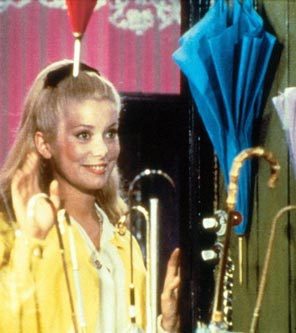
So you’ve written a fairly standard, almost boring script about a young man and woman in love, with many obstacles in their way in the likes of a failing umbrella shop, a disapproving mother, an ill aunt, a rival rich suitor and a war, hired two capable but not great leads, utilised a sickeningly candy-coloured colour scheme and obtained a soundtrack that sounds like someone is randomly sitting on a piano, but don’t know how to make it stand out from the slew of identical dramadies? Well why not make the cast sing every line of dialogue? Every. Damn. Line. My God this is intolerable. I’m all for musicals occasionally breaking into song in ways that are integral to the plot, well written or just entertaining, but please stop for the occasional conversation. It may have worked on paper, but as soon as someone sings a response of “Yeeeeeeeeeeeeees” I wanted to throw a slipper at the screen.
Choose life 3/10

Witchfinder General

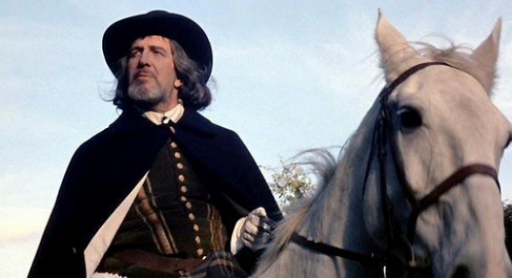
Can a poor accent really spoil a film? Vincent Price, here playing England’s witchfinder general during the English Civil War, doesn’t even attempt a Limey tone, an oversight so distracting it mars the rest of the film. Other than this detail his performance is spot-on as the man bought in to rid villages of accused witches for a princely sum, owning every scene he’s in as he accuses all those in his way of being in league with the devil. When he confronts the accused Satanist uncle of a soldier’s wife, brutally torturing, half-drowning and hanging the poor priest, the soldier sets out to wreck vengeance upon him. The film is at times maddening at what is hoped to be fictionalised accounts of what was gotten up to back then – see the look of mirth upon the face of a torturer when he spies a colleague raping the soldier’s wife, and methods of proving witchcraft include continually stabbing a person until finding a spot that neither bleeds or causes pain, so this isn’t always the easiest film to watch. But get past the gore and inaccurate inflections and what lies beneath is a gripping look at 17th Century brutality.

Choose film 6/10

The Big Lebowski

I’ve made the point before that the list contains films of three varieties; great, popular and important. The greats arrive via the Empire 5-star 500 list, the popular from the two lists voted by the general public, and the important ones are provided by the 1001 Films to See Before You Die. Many films, though arguably important, aren’t actually very good, so one could argue that they should be remembered and acknowledged for their gifts to cinema, but not necessarily watched, as was the case with the Jazz Singer, marking the introduction of spoken dialogue to the big screen, which nowadays is dull, racist and features too many unnecessary songs. The Big Lebowski, on the other hand, is also an important film, spawning a cult following so vast there is a fan club (the Little Lebowski Urban Achievers), several books and an annual festival (creatively named Lebowski-Fest, I hope to attend one day). And yet, it does not appear among the important list, appearing here after being awarded a 5-star review and obtaining positions on both nominated lists. This is less a crime and more a cultural injustice, as the impact this film has had on society is measurable from space. Hell, they even played clips of it recently on Something for the Weekend.

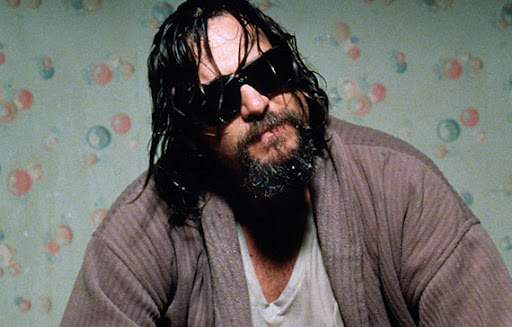
So just what is it that resonates so much with the public? Maybe it’s the snappy, endlessly quotable dialogue (“Obviously you’re not a golfer), particularly everything said in the bowling alley. Or perhaps it’s the borderline caricature roster of characters on display, from John Turtorro’s lilac-hued pederast Jesus (whom nobody fucks with) to Julianne Moore’s naked yet cultured Pollock-esque artist Maud and of course John Goodman’s psychotic ‘Nam vet Walter. It’s probably got something to do with the extremely crowded plot that bears little effect upon the characters it happens to. But mainly, it has to be Jeff Bridges turn as The Dude, a man shambling and smoking his way through life, following the flow it leads him on via nihilists, urinating Chinamen, porn moguls and private detectives. That, and it’s the first great film to feature a pot-smoking lead since Cheech and Chong, and one must conclude that many of those attending Lebowski-Fest, drinking white Russians in their dressing gowns and sunglasses have similar feeling towards the weed as his Dudeness.


Me? I love it because it’s a quintessential Coen Brothers movie. It features everything you need to make a great film – a twisting plot, stellar cast (I haven’t even mentioned Steve Buscemi, Peter Stormare, Philip Seymour Hoffman, Tara Reid, Sam Elliot, David Thewlis, Aimee Mann or the Red Hot Chilli Peppers’ Flea), terrific performances all round and a cracking soundtrack. The film introduced me to my cocktail of choice – Vodka, Kahlua and milk, easy on the Kahlua and heavy on the ice – and every time I watch it I either see something new or am reminded of a moment of pure gold I’d previously forgotten.
Choose film 9/10

1 Year Anniversary

Happy Birthday to the list! One year down, four to go, so far I’ve crossed off 260 films and spent a total of 21.21 solid days watching films (and that’s just the list ones), yet I’m still 7 films and 4 minutes behind where I should be, plus there’s 31 posts I haven’t written yet, but all being well by the end of this month (thankfully extended by a day just for this purpose) this should all be sorted, and I’ll be struggling manfully to write posts on either the day, or the day after I watch them, or maybe before I watch the next film, whichever is easier.

So, thanks to everyone who’s been watching films with me (especially Aisha, I’m very sorry for putting you through such atrocious oddities as All That Jazz and Videodrome, but you should thank me for introducing you to the joys of Fargo, Monsters and Annie Hall) and to everyone who’s been reading these posts, I hope you agree that they’ve gotten better, but fear not, I know I’ve still got a way to go before I actually get any good at doing this.

Here’s to the next 4 years!

Eraserhead

I think this is David Lynch’s idea of a romantic comedy. Shot in stark black and white and sounding like it was filmed underwater or near a busy factory, we follow the bizarrely coiffed Henry Spencer (Jack Nance) through the trials and tribulations of an average young man – meeting his girlfriends parents for dinner, encountering a beautiful woman living in the same apartment building, watching a woman with hideously deformed cheeks dancing deliriously on stage, you know, the usual.

Coming across like a 90-minute montage of nightmares I would not advise watching this before bed. Henry and his partner’s baby has the appearance of a mechanised cow foetus (possibly because undenied rumours suggest this was what was used), the aforementioned dinner sequence involves a tiny roast chicken still moving, bubbling and bleeding on the plate, and a scene where Henry cuts open the deformed baby has it becoming a bile volcano, one of the most horrific images I’ve ever seen. I’m not sure what happened to Lynch growing up, but I damn well hope it doesn’t happen to me.
Choose life 2/10

Peeping Tom

After making this film, director Michael Powell, here working without regular co-director Emeric Pressburger, had to move to Australia, for no-one else would employ him. This is a somewhat extreme reaction, especially by today’s standards, as through the eyes of a 21st century film viewer there is nothing here to shock or frighten anyone, but back then the tale of a socially awkward young man filming women’s last moments as he kills them with a specially designed camera with a blade attached probably pushed boundaries beyond what the public was used to, though it was released the same year as Hitchcock’s Psycho.

Like his lead Mark, Powell focuses more on the reactions of the characters than on what they are experiencing, and the film is at times cold and passionless, yet Mark (Karlheinz Bohm) is a chilling, disturbing protagonist; an influence to fan Scorsese’s Travis Bickle, as well as Sex, Lies & Videotapes’ Graham, making this an adequate, if not necessarily exceptional, character thriller.
Choose film 7/10