Second Chance: The Bodyguard

Previously, I only knew of The Bodyguard as the Kevin Costner-Whitney Houston film, one of my Dad’s guilty pleasures that he can almost quote word for word. I’d never had much desire to see it, as I’m not a huge fan of either of the stars, and thought that the plot seemed incredibly straightforward and obvious. Man-with-a-past (Costner) is forced by circumstances to guard woman-with-a-diva-complex (Houston). Initially, the pair hate one another, until he saves her life and she shows him who she is inside. Eventually, they fall in love, possibly after someone dies. I was not disappointed.

The film mostly annoyed me for how blatantly it is trying to set up an acting career for Houston. Her character, Rachel Marron, is a famous actress, trying to launch a music career by singing in a film, just as Houston is trying to launch an acting career by appearing in a film in which she performs most of the soundtrack. The main drawback to the launching of Houston’s film career though, is that in the Bodyguard she does no acting, whatsoever, as the ‘character’ she plays is herself, the diva with the overstuffed ego, blissfully unaware of anyone but herself.
Choose life 3/10

Pirates of the Caribbean: Dead Man’s Chest

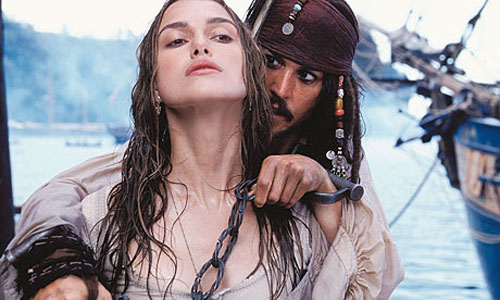
The second pirates film is not as good as the first, but is still thoroughly entertaining, and features several enjoyable set pieces, not least of which is the three-way swordfight between Johnny Depp, Orlando Bloom and Jack Davenport (who really should be in more films). This is probably my highlight of the trilogy, especially once the giant wheel comes into play.
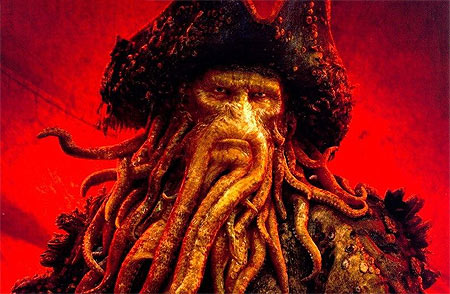
The special effects are stepped up from the first film, with Davy Jones and his crew looking exceptional, with the many hours of work involved being well worth the effort. Still, the cliffhanger endings do make this seem more of a set-up for the trilogy closer.Choose life 6/10

Scarface (1932)

I’ve seen Brian De Palma’s 1983 Scarface a couple of times, and have never fully understood why it is as revered as it is. I’m not saying it’s a bad film, I just don’t think it’s that great, but more on this another day, for that too is on the list. No, today I’m here to discuss the 1932 original, in my opinion somewhat superior to its remake. The story tells the tale of a young gangster rising up through the mob ranks, and the effect it has on those closest to him. There is far more comedy in this version than the remake, mostly from the dialogue (“I was kissin’” “I don’t like it” “You’re missin’ lots of fun”) and from the bumbling, illiterate secretary and his endeavours to use a telephone.
Technically, there are some creative shots, such as a machine gun shooting away the calendar pages to show both the course of time and the violent acts that take place during it, and the scene of a mass execution being shown only in silhouette. I very much enjoyed this film, and hope to find many more like it as I journey through the list.
Choose film 8/10

Pirates of the Caribbean: the Curse of the Black Pearl

The original Pirates of the Caribbean film, the greatest ever made best on a theme park ride, is tremendous family-friendly fun, especially in its first half. It loses its way towards the end of the second reel, as the plot becomes inundated with various bluffs and double crosses, although in a film about pirates this is only to be expected. The CGI is excellent and well used, as is the comic relief, mainly provided by Lee Arenberg and Mackenzie Crook, surely the closest any human being can get to being a scarecrow without an awful lot of hay. Geoffrey Rush could well have been cast as villain Barbossa on the strength of his piratical laugh alone, and for that deserves at least a mention.Choose film 7/10

Juno

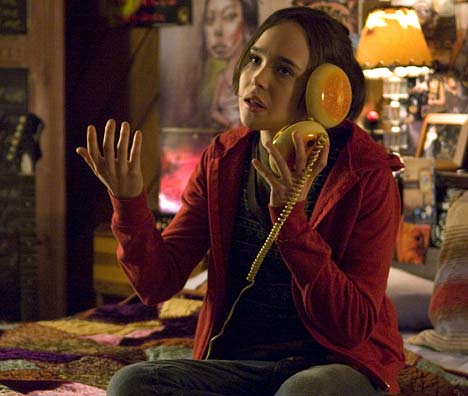
I live my life by a predetermined set of rules. These rules are not written down, and they are frequently adapted to however I fancy, but one rule that remains is that a film cannot be added to a list of favourites until at least 6 months after its release, and at least two viewings. Upon its release many people of a relevant age, including several acquaintances of mine against my frequently versed opinions, elected Juno to the hallowed status of their favourite films, thereby explaining it’s presence upon the list.
Ah, Juno, yes, you won the Oscar for best original screenplay, but really, did you deserve it? Although witty and endlessly quotable (“Honest to blog”, “Your eggo is preggo”), the main character is very unlikable and rude. Yes, she’s supposed to be a teenager, so these characteristics are entirely suitable, but I find her to be very annoying, although I’m sure she wouldn’t mind that at all.Choose life 5/10

Au Hasard Balthazar

Au Hasard Balthazar is the kind of film that just couldn’t be made today, at least not with the same result. Today, it would most likely be made by Dreamworks, telling the tale of a morose animated donkey, voiced by Christopher Plummer, as he sets out an epic journey to be reunited with the family he’s worked for his entire life. Along the way, he learns lessons about friendship not judging by appearances, with the help of a lazy squirrel (Kathy Bates) a know-it-all platypus (Jemaine Clement) and a wise-cracking raccoon (Cuba Gooding Jr.).
As it is, Balthazar is a tale of the life of a donkey, from children’s plaything, through toiling away for various family’s, finding fame in a circus and finally, tragically, used for drug trafficking. It took me two attempts to watch this film, as after the first viewing I did not fully comprehend the cause of the mass adulation poured upon the picture, although I was quite tired and may have drifted off a couple of times, as it’s not necessarily the most captivating of films. That said, on the second viewing I more greatly understood the reasons for the various plot jumps, as for the most part the film is shot from the viewpoint, and therefore the understanding, of Balthazar himself, thereby it would not always be clear as to why some characters behave the way they do.Choose life 4/10

L’Avventura

L’Avventura reminded me a lot of Hitchcock’s Psycho, released the same year, in that the first segment set’s the plot up to follow the female lead, only to have her disappear from the screen, never to be seen again before the halfway mark. In this instance, the plot concerns a young woman who, whilst holidaying on an island with her friends, goes missing, causing her best friend and her lover to search for her. When compared to more modern day missing-person films, such as Ben Affleck’s excellent Gone Baby Gone, the plot tends to meander a bit, with the supporting characters not seeming to care about the fate of the missing girl.
I was also reminded slightly of Polanski’s the Tenant, in which a man moves into a new apartment, only to slowly turn into the apartment’s previous occupant, as the missing girl’s best friend seems to inhabit the life of her missing mate, becoming closer with her former lover during the search. It almost seems like this was the plan of the missing girl, setting up the transformation by giving the friend some of her clothes before she goes missing. This all seems an improvement for the friend, and indeed for the life she inhabits, as she seems much happier within it than her predecessor. This is most clearly seen by comparing the almost identical shots of the original girl kissing her lover, and how little emotion she shows during this, contrasting with her friend kissing him much more passionately later in the film. There are other parallels between the two ends of the film, such as the friend being initially concerned at the girl’s disappearance, only to end up more concerned that she has returned to claim her life back.Choose film 7/10

Toy Story Trilogy

Today’s volatile weather conditions allowed for a productive afternoon film-wise, as a planned bike ride along the beaches of Bournemouth was cut short by sporadic torrential downpours, meaning I crossed a trilogy off the list; Toy Story 1-3.

Watching the original Toy Story, the first feature-length motion picture created entirely using computer animation, always send me back to my childhood, aged 8 years old, sat in the cinema watching in wide-eyed wonder as the pixels were brought to life before me, with my Dad sound asleep in the next seat. It’s one of my earliest film-related memories (my earliest cinema experience that I know of was the Lion King, but that’s another post).
Continue reading

Giant

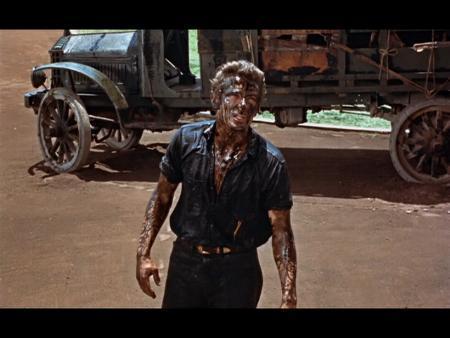
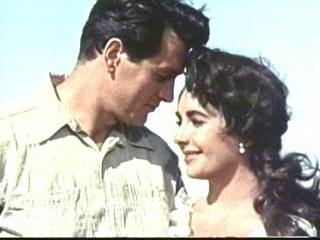
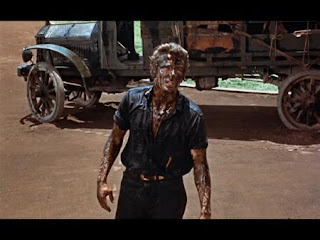
Before watching it, I only knew of Giant as being the last James Dean film. I’d seen Rebel Without a Cause recently, and been thoroughly underwhelmed, so had high hopes for Giant, as surely this, or perhaps East of Eden, were the reason that Dean is now such a cult icon, a supposedly defining character for a generation. Also, by looking at the cover for this film, I expected Dean to be the star of the film, his image appearing no less than five times on the cover, with Elizabeth Taylor appearing just once, and Rock Hudson not at all. It was with some surprise then that I found the stars to be Hudson and Taylor, with Dean a supporting character (granted, the most important supporting character, but supporting no less).


Having now watched the film, it shall be filed alongside the previously reviewed the Jazz Singer as an important film, just not a great one, though this time for being the last film of James Dean, rather than the first feature length to include audible dialogue. Giant documents the life of a young couple, Hudson and Taylor, from the day they meet and through the next 25 years of their lives. Even with an epic run time of almost three and a half hours, the plotting is generally fast, with major events such as their marriage and the birth of their children skipped over, pausing to show the more landmark occasions, for example the dismay of Hudson’s Jordan Benedict as Jordy, his son, cries when set upon his first horse. Along the way, Jordan’s life is besieged at every turn by Dean’s Jett Rink, a ranchhand who, upon inheriting a small patch of land, becomes a billionaire when he strikes oil. Dean overacts to his heart’s content, failing to draw any compassion within his rags-to-riches arc.


There are two main points that I took from the tale. Firstly, that some things never change, and some things do. This seems a fairly pointless ethos, but shown in the films context takes some form, as the menfolk gather to discuss business as the times change around them, but Benedict’s initial negative feelings towards his Mexican ranchhands are subdued when his son, an excellent young Dennis Hopper, marries and produces a son, both Mexican and Benedict. Secondly, the film shows the dramatic effect a small act, in this case purchasing a horse, can have on the rest of your life. So, essentially, Giant is the Butterfly Effect without the nosebleeds.


Choose film 6/10
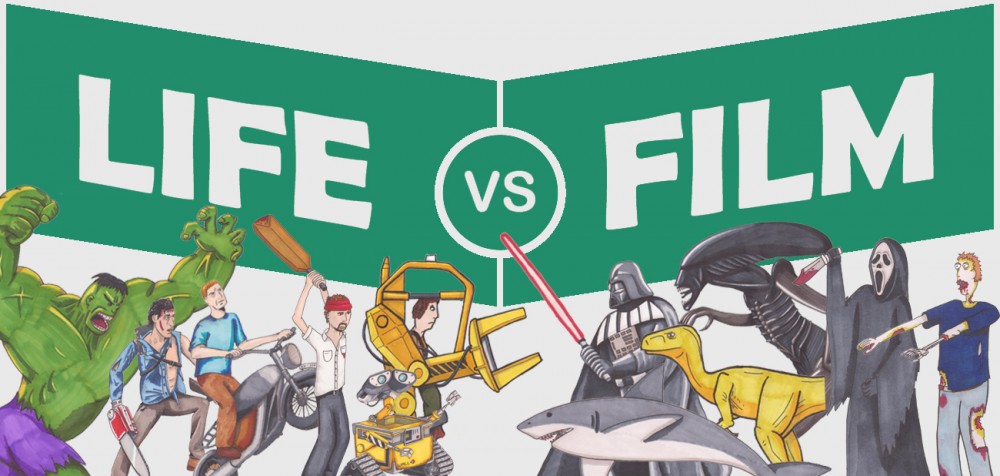
The Jazz Singer

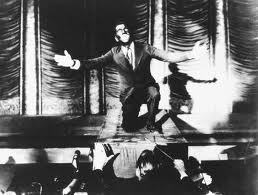
Today I watched the Jazz Singer, infamous for being the first film to use dialogue, or more accurately, singing, as this is a semi-musical, presumably to showcase the new sound technology of 1927, as I felt that the inclusion of full-length song performances detracted from the plot, of a young Jewish boy who runs away from home to become a jazz singer. I feel that this film was included in the 1001 Films to Watch Before You Die purely due to its significance in cinema history, of being the first ‘Talkie’, not because it is one of the ‘great’ films.

Choose life 4/10