The Brothers Bloom

There is one benefit to my passing out during Looper last weekend, I’ve now managed to see director Rian Johnson’s second feature before seeing all of his third. It’s streaming on LoveFilm at the moment, so if you’re a member, go forth and watch it now, post haste. All being well, I’ll be seeing Looper before this time next week, and next Sunday should see my review.

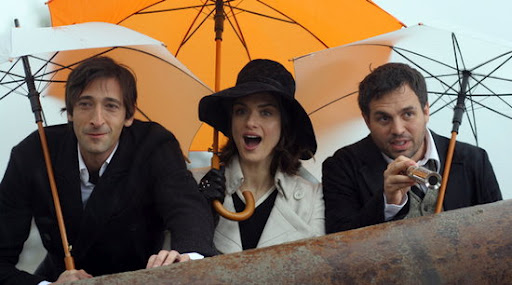
The Brothers Bloom seems on the surface to be far more straightforward than the high-school-noir Brick and time-travel-brain-twister Looper, but in reality its just as subversive as those two. Mark Ruffalo and Adrien Brody are brothers Stephen and Bloom, two con men who have been running scams since their early teens. Stephen (Ruffalo) is the brains of the outfit, and Bloom (Brody) always takes the leading role in the con. Roughly twenty five years after their first con, Bloom wants to quit, but Stephen ropes him in to one last job, conning Rachel Weisz’s ludicrously wealthy yet decidedly eccentric heiress Penelope from some money she’d probably never miss. Along with their near-mute accomplice Bang Bang (Rinko Kikuchi), the brothers set out to dupe Penelope from her riches, but who exactly is the victim in this game?
Continue reading

Red Surf

Well, we’re still in George Clooney’s pre-E.R. days, so even if this film has a few more recognisable faces in some of the main roles, the fact that a then-no-name Clooney headlines this film should be some clue of how terrible it is. There’s still a few films to go before I get to From Dusk Til Dawn, the first film on his list that I know I like, so my hopes aren’t high for the films inbetween, but hopefully they’ll be better than this one.

Clooney plays Remar, a surfer/drug smuggler who, along with his small gang of friends, including Doug Savant, attempt to set up one last deal before heading their separate ways and going clean. The problem is, Remar is getting too hooked on the drugs, and his girlfriend Rebecca (Dedee Pfeiffer, Michelle’s younger sister) is pregnant, and doesn’t want him to do anymore deals. Also, one of Remar’s cohorts, True Blue (Philip McKeon, I swear it’s really Stephen Baldwin) has got himself arrested for dealing, and gives the cops the details of the guys they’re doing the deal with, who understandably want Blue dead. 
This film is a mess. There is little to no explanation for most of what happens, characters appear and disappear within the same scene and we’re never really introduced to any of our characters or their lives. The opening sees Remar and Savant’s Attila (also, the names are stupid) involved in a prank that doesn’t really go anywhere, but requires their car to be launched off a cliff and ultimately destroyed, for no real purpose. The supply of cocaine that Remar and the gang sell from appears to be stored in a buoy in the middle of the ocean – though where it comes from we never know. Characters behave stupidly and irrationally, generally at their own risks and with no regard for either themselves or their friends. After his arrest, Blue willingly gives up the names of the dealers, despite knowing that anyone who crosses the guy they are dealing with usually gets fed to the pit of wolves he keeps under a trapdoor in his house.

The dialogue is terrible (“You’re pregnant? That’s bitchin’!”) and the police behave in a manner completely unfitting to the situation, presumably in order to make them appear to be the bad guys over Clooney and his band of miscreants. There was a chuckle when the arresting officer told some criminals that they “have the right to do whatever I damn well tell you to do,” but it was only a small chuckle. I think most of the film’s budget went on skintight dressed (apparently, drugs and pretty girls go together, according to the script), sleeveless t-shirts, leather jackets and a seemingly endless supply of denim, as that’s all anyone wears in this film. Were loose leather waistcoats really ever in fashion? Also, for a film supposedly about surfers, there is only one, very short, scene featuring anyone even in the vicinity of a surfboard, and that’s not until 45 minutes in. 

Clooney has never been less likable than here, where is Remar is a selfish, pig-headed addict who wants to do right by his girl and unborn child, but in the worst way possible. He goes surfing instead of taking Rebecca to a doctor’s appointment, and he doesn’t really have any redeeming qualities, other than not wanting to kill the friend who got him into all this trouble in the first place. When he’s given a way out of this mess by his friends, with no risk and no responsibility put on him, he decides to go ahead and get himself in deep anyway.This results in one of the most poorly shot chases I’ve ever witnessed, involving a speedboat and jet skis in the middle of the night. It’s impossible to make anything or anyone out, and generally sees people spinning around in circles until someone explodes. 

The finale at the dealer’s house is clumsily staged and poorly choreographed, and his wolf pit seems to have magnetic powers, with people being drawn in despite being nowhere near it. If you really need a reason to seek this film out, it’s only passable blessing is that I’ve now seen Gene Simmons kill a man with his bare hands. There is literally no other reason to watch this film.

Choose life 2/10

Hamlet

There are some films on the List that I’ve no idea when I’ll get to them. These films fall into three categories – the ones I absolutely adore but have no clue how I’ll even start writing about them, the ones I desperately do not want to watch (but am too much of an anal completist to ignore) and the really long ones. This four-hour-plus cut of Hamlet obviously falls into the latter, but fortunately for me, my girlfriend opted for Kate Winslet as her Film-Maker of choice, and seeing as I’ve reached that point in Winslet’s career in which she appeared in Hamlet as Ophelia, I can cross off Kenneth Branagh’s opus from the Empire 5-Star 500. As for the unspeakable films I don’t want to see, whenever LoveFilm drop Salo through my letterbox it shall not be a good day, though I could pull an In The Realm Of The Senses and bottle it when I’ve taken as much as I can stand.
Continue reading

Casino Royale

With the imminent release of Daniel Craig’s third outing as James Bond, Sam Mendes’ Skyfall (UK release October 26th), it seems like the perfect time to cross the film ranked 56th greatest film of all time by Empire readers a few years ago, Craig’s first Bond outing, Casino Royale.

Now, if you ask me, #56 is pretty high up, especially when you consider that Goldfinger, my favourite Bond movie, is 110 places lower at #166, and no other Bond movies made it onto that list (You Only Live Twice appears in the Empire 5-star 500). Even if you take into account Casino Royale’s proximity to the release of the list, made just two years later, it’s still pretty damn high. Apparently, it’s better than Lawrence of Arabia, Annie Hall, 12 Angry Men, The Great Escape and literally hundreds of other films that, in my opinion, are far superior. But then I didn’t compile the list (though I did vote on it, and not for this film), so who am I to voice the opinions of others?

Before I continue my now-trademark tirade of negative comments, I should probably point out that this is a very good film. It served as a much needed shot in the arm for a franchise left face down and drowning on a CGI-wave of Pierce Brosnan’s swarm and Madonna’s atrocious Die Another Day theme song. In a post-Bourne world it established itself as a gritty reboot, taking Bond away from the ludicrous gadgets and back to the basics of hand-to-hand scrapping in a public bathroom, whilst still retaining the sheer spectacle of fighting on top of not one crane but two. Every aspect of classic Bond is present, from the impossibly slinky and easily-bedded women to a nefarious villain with a silly name and mild physical deformity (Mads Mikkelsen’s Le Chiffre, with a scarred eye that weeps bloody, and asthma to boot). Yet everything feels a bit more real, a bit dirtier and scuffed around the edges. And this description is none more fitting than of Craig’s Bond himself. Yes, he looks impeccable whether wearing an immaculately tailored dinner jacket or a pair of swimming trunks that apparently make my girlfriend’s mother go all weak at every possible joint, and he’s always got a quip ready in his back pocket, but this is a Bond with flaws and imperfections, all to aware that the men he is up against may be more than his match.

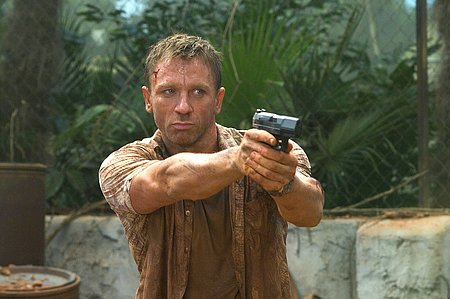
Take the early scene in Uganda, for example. Here, Bond must chase down and apprehend a suspect to obtain the passcode on his mobile phone, yet unfortunately said miscreant (Sebastien Foucan) is rather adept at long-distance sprinting, free-running and jumping off things that are ridiculously high up. Whilst he bounds around without a care in the world, remaining relatively scratch free, Bond is always a fair way behind, getting progressively beaten up and always opting for the easier route – hopping into a JCB digger or shoulder-barging through a wall rather than leaping through an uncomfortably small window. Here is a Bond who doesn’t need to show off when no-one is looking, he just wants to get the job done, and at whatever cost.

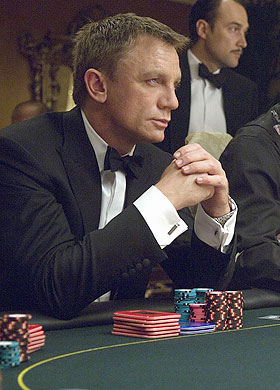
I’ve always had a bit of an issue with Bond films. I’ll gladly watch any of them, even Quantum of Solace if there’s nothing else on, but the plots are usually a bit labyrinthine for me, which is only to be expected if they want to make each film different. I’m not quite sure of the main motivations in Casino Royale, but I’m fairly sure it’s got something to do with the stock market, although the basic point is that Bond infiltrates an extremely high stakes poker game with a $150,000,000 pot, in order to prevent Le Chiffre from winning it and doing something bad with the proceeds. Everything else is fairly superfluous. I’ve read elsewhere that setting most of a Bond film around a poker table is nothing short of sacrilege, but I found those parts to be fraught with tension and often interspersed with enough action to suffice, even if the film made poker out to be a game that only deals in the most improbable card hands ever. There’s a nice running commentary provided by Bond’s accomplices, Vesper Lynd and Mathis (Eva Green & Giancarlo Giannini), but I didn’t think it was that necessary to have so much exposition, considering how dumbed-down the game was.

There were some very memorable set pieces, with the cold open of Bond achieving his double-0 status and the parkour escapade being particular high-lights, though I also enjoyed the stairway scuffle later in the film, showing how Bond had improved his jumping-and-punching skills from earlier. The testicular-torture scene may have gone a little too far, but it was well-handled and didn’t make me feel as squeamish as it could have done, and it’s more than compensated for by the various little moments of humour, and the record number of car rolls a little earlier. 

I approved of the expansion upon the relationship between Bond and M (Judi Dench), whose involvement in this franchise has cemented her presence as something of a British icon, and the rumours that this repartee has been increased ever further in Skyfall excites me no end. Bond is always at his best when bouncing off a superior – best seen with Desmond Llewelyn’s Q, and his utter, barefaced cheek clashes perfectly with Dench’s no-nonsense style. 

Though the last act may drag a little – the film clocks in at 138 minutes – the pace is fairly consistent throughout. There’s a lot here for Bond fans – more in-jokes than I remembered – and plenty for newcomers too. It may not be my favourite Bond film, but it definitely breaks the top 10, and maybe even the top 5.

Choose film 7/10
The Manxman

Pete Quillam (Carl Brisson from The Ring) is a penniless fisherman. His best friend, Philip Christian (Malcolm Keen), is a hot-shot lawyer. The two have been inseparable since birth, being raised as essentially brothers despite their wildly different lifestyles. They’ve even found a way to combine their various career paths, with Philip pushing through a petition that will prevent steam trawlers from encroaching on the fishermen’s haul, but when they meet Kate Cregeen (Anny Ondra), the barmaid daughter of the local pub The Manx Fairy, they both instantly fall for her. Pete, the more headstrong and forward of the pair, is the first to make a move, so the loyal Philip hides his feelings for the sake of his pal. But when Pete heads to Africa to make his fortune to win over Kate’s father (Randle Ayrton), things get complicated when Philip is asked to look after Kate in his absence. 

You cannot imagine how shocked I was to discover that this film has an almost identical central plot to Michael Bay’s Pearl Harbor. I was in no way expecting any similarities between a film made by Alfred Hitchcock and what many believe to be the worst film made by one of the worst blockbuster makers working today, but plot-wise they are pretty much spot on, so I managed to guess almost every element that happened within the first hour of the story. It’s interesting that the love story in Pearl Harbor – a triangle between Ben Affleck and Josh Hartnett’s Army Air Corps pilots and Kate Beckinsale’s nurse – was widely regarded to be the most superfluous and tedious aspect of that film, but here it is the primary – and often sole – focus, and it is handled far more deftly and in depth in Hitchcock’s 80 minutes than Bay’s 3 hours. This is probably because no-one goes to see a Michael Bay film for a tepid, mopey love story, especially when said film is about one of the most momentous events in the history of international warfare that’s literally made from explosions, so those of us who found ourselves having to wade through the hours of treacle to find nowhere near enough shiny fireworks to keep us entertained for even half the film’s length were of course disappointed – a feeling I’ve since become familiar with from Bay’s output. How exactly did this review of a 1929 Hitchcock silent film become me slandering Bay’s 2001 nadir? The two weren’t even made in the same century!

Anyway, The Manxman. The most interesting thing I found about this film was that at the start, the story seemed to be entirely about Philip, and the woes he would endure withholding his unrequited love for the promised bride of his best mate. The story is mostly told from his point of view, which is generally the case of the hero, yet as the plot progresses and the three points of the love triangle become further entangled with one another, it becomes clear that he is not the hero of his own story, but the villain, or at least the antagonist, of Pete’s. Though Philip and Kate never intend to do anything untoward against Pete, they still effectively destroy his life by doing what they believe is right at the time. Pete, meanwhile, is nothing but a lovable, earnest oaf, whose only crimes are an obliviousness to his friends clear affections for a girl, and his shame at believing himself not wealthy enough to be an acceptable husband or son-in-law.

There are no decisions made throughout that can really be judged against, as everyone always acted with the best possible intentions – initially at least – which makes it very easy to empathise with and feel sorry for almost everyone involved, and at times it’s all a bit of a downer. There’s some elements of Cyrano de Bergerac in there as well – Pete asks Philip to put in a good word for him with Kate and her father, because he has a way of making things sound better.

In terms of Hitchcock-ness, there wasn’t anything that stood out thematically or cinematically, although I did like the use of Kate’s diary entries and the way she referred to Philip – Mr. Christian, Phillip and finally Phil – to indicate her growing affection for him and the increasing closeness between the two. That was a nice touch. Also, the climax was delectably tangled, even if it was clear how everything was going to unravel.

Choose film 7/10

Return of the Killer Tomatoes

There are some films where it’s impossible to go in with a completely open mind. Whether it’s because it’s a sequel to a film you’ve seen a hundred times, it’s the work of a director or actor you’re very familiar with or you’ve been bombarded with a relentless marketing campaign, there are many factors that can influence your opinion of a film before you go and see it. And, of course, there’s the title. The one inescapable truth about this film is that it’s called Return of the Killer Tomatoes, and is therefore not going to be anything even close to highbrow or arthouse, and might just about scrape the underbelly of being entertaining.


Now, unlike the last no-budget comedy-horror flick featuring George Clooney and starting with the word ‘Return,’ this one is actually a sequel, to 1978’s Attack of the Killer Tomatoes, which I’m fairly sure doesn’t star anyone of note, so I’ve no intention of ever watching it. The 4.4/10 rating on IMDb doesn’t help either. Without doing any extra research (I’m on a deadline here, I need to go to sleep in an hour) I can tell from Return, in which they recap most of the plot and actually make a point of a viewer complaining about them recaping the original plot, that there was some kind of mysterious science plot in which monster tomatoes were created and vanquished using music. Something similar takes place in Return, but here the scientist (John Astin, I knew I recognised him, only just realised it’s from The Addams Family), Dr. Putrid T. Gangreen, is creating tomatoes that take on human form, any form, and he plans to take over the world by creating a tomato version of the president.

Since the first film’s plot, a whole new generation has grown up without knowing the glories of tomatoes, as they were outlawed by the government. There is a fairly healthy tomato racket on the black (or red) market, but the pizzeria in which our hero Chad Finletter (Anthony Starke) works makes pizzas by substituting the tomato sauce with raspberry jam or boysenberry, and accompany it with toppings ranging from gummy bears and peanut butter to something called the famous deep fried fish pizza, which sounds disgusting. Chad works as the delivery boy, and has the hots for Tara, the beautiful assistant/lover of Dr. Gangreen, but has never really been able to strike up the courage to talk to her. Also, she’s a tomato. That’s pretty clear from the start, seeing as she’s been created as the ‘perfect woman’ in every respect, apart from she hates music and bathes in fertiliser. Chad’s uncle Wilbur (J. Stephen Peace) owns the pizzeria (he’s the hero of the first film), and Chad’s room mate Matt (George Clooney) works there too, inbetween scams to have sex with every woman he comes across. 

In case you haven’t guessed, this film is pretty ridiculous. The plot is insane, the production value is non-existent and the acting equally scarce. There’s a creature called F. T. (which stands for either Furry Tomato or Freak Tomato) who is quite clearly a cuddly toy being wiggled by a stick or strings. But this all adds to the home-made feel, and in fact attention is brought to how terrible the film is by more meta than I can really handle. The film even begins by being shown in someone’s lounge (they initially start showing a film called Big Breasted Girls Go To The Beach And Take Their Tops Off, but thankfully this is stopped early on), and there are phone calls from viewers peppered through the film, and halfway through the camera pans out to find the director telling everyone they have to stop filming because they’ve run out of money. Ridiculously, there’s two more films in the Killer Tomatoes franchise; Killer Tomatoes Strike Back and Killer Tomatoes Eat France, both also directed by John de Bello and who appears as himself in at least Return, but I can safely say I won’t be seeing either of those films ever.

There were quite a few moments in the film that I can recommend though. Gangreen assistant, Igor (Steve Lundquist) is an aspiring news anchor who keeps on turning to the screen and saying things like “We’ll be right back, after this…” which I found to be consistently ridiculous enough to be entertaining, and the script contains such straight-faced gems as “I thought you were ketchup!” and “The girl of my dreams is a vegetable!” (at no point is the tomato correctly identified as a fruit). Some bits go a bit far into the stupid though – when Wilbur comes to the rescue, it’s dressed as a paratrooper with a deployed parachute that drags along the ground, along with a man permanently dressed in scuba gear who communicates with title cards even over the phone, and a severely overweight man in a Lone Ranger costume. 

It’s a very immature film that I would have doubtlessly enjoyed 10-15 years ago, but I’m proud to say I’m now too mature for it (when sober, at least). On a drunken Friday night with a group of mates it might be worth a punt, but seeing as I watched it at 7:00 am on Saturday morning it didn’t really hit the spot.

Choose life 4/10

Clueless

Is this the most 90s movie ever? If not, it must certainly crack the top 10, for though it is based on a novel written 180 years earlier, everything about Clueless, from the slang, the opinions and most vehemently the fashions positively scream 1990s. Upon release, this may have been topical and timely, but now it severely dates the film, and is mostly comical. Although saying that, there is a chance that it may have been funny at the time (I can’t remember, I was 8 in 1995), as I can’t imagine any time period in which a two-piece yellow plaid suit jacket and skirt were ever in fashion, even amongst teenage girls.

Clueless sees Cher (Alicia Silverstone) as one of the most popular girls in her high school, who seems to have no problems of her own so sets about fixing those of everyone around her, focusing primarily on matchmaking her friends. When new girl Tai (Brittany Murphy) arrives, Cher sees the uncoordinated outcast as a project, and decides to transform Tai into a clone of herself. Meanwhile, Cher’ philosophical environmentalist step-brother Josh (Paul Rudd, effortlessly likable) is helping out Cher’s widowed father (Dan Hedaya) at his law firm.

It’s becoming almost a tradition for me to be reviewing films based on famous literature without ever really knowing much about the source material, and this is no exception, for I’m still yet to read any of Jane Austen’s work, including Emma. That being said, apparently it is only a loose adaptation (I can’t imagine Austen pre-empting Cher’s computerised wardrobe selector), so not having read Emma shouldn’t have affected my viewing anyway, especially seeing as it took so long for people to realise the connection when the film came out anyway.

Silverstone is a delight in this film, playing someone who could so easily be almost detestable, living a life of luxury she’s done nothing to deserve but still feeling the need to whine incessantly in a piercing, nasally tone, yet in Silverstone’s hands you can not only empathise, but occasionally pity her poor-little-rish-girl ways. The film is led by her narration, and contains some of the least self-aware yet funniest lines of the film: “Getting off the freeway makes you realise how important love is.” For Cher is just that kind of person, oblivious. As an 18-year old she assumes she knows everything about everything, there is no problem she cannot solve and no situation that cannot be argued out of, but her journey through this film causes her to re-evaluate her opinions of not only herself, but her friends and family too.

The slang and colloquialisms are brilliant too. Good looking guys are ‘Baldwins’, women are ‘Bettys’ and Cher’s house, built in 1972, is somehow deemed ‘classic.’ Every offhand comment or snide remark is so topical that I found the film to be educational by googling what they said – apparently there was a guy called Paulie Shore who made terrible films, and Mark Wahlberg used to be in a band. Who knew?

I can’t help thinking there’s something missing from Clueless. Although it has the morals and meanings of traditional rom-coms, and has enough rom and com to keep most people entertained, including me, I’m left empty and wanting more. It’s a perfectly serviceable slice of light entertainment, but there are better examples, both prior and since, so I’m not entirely sure why it’s on the 1001 List. It’s one of the few films that I genuinely challenge it’s presence – as far as I can tell it’s of no significant cultural importance, isn’t phenomenally good and didn’t win any awards, generally the three criteria for a List position. As mentioned, the acting is good, the story and characters are engaging and the soundtrack is phenomenal, but there’s an endless number of films you could say that about that aren’t present.

As modern day high school set classic adaptations go, I still prefer 10 Things I Hate About You, If only for the one-two combo of Joseph ‘Joggle’ Gordon-Levitt and Heath Ledger, along with the adults featuring Alison Janney, Daryl Mitchell and Larry Miller (although Clueless does have Wallace Shawn, which goes a long way too). Clueless isn’t bad, and at times it’s funny, poignant and captivating, but afterwards I didn’t feel like my life had been improved in any way, so make of that what you will.

Choose film 6/10

Never So Few

A Steve McQueen film set during World War 2 where at one point he talks about brewing his own alcohol? No, sadly I’ve not yet reached The Great Escape (one of my consistently top 5 films of all time), I’m onto Never So Few, the Frank Sinatra-starring final obstacle before I get to watch The Magnificent Seven again, when I’ll actually start to enjoy going through all of Steve McQueen’s films.

Never So Few sees Sinatra as Captain Tom Reynolds in North Burma during the Second World War. He and his band of highly trained men, including Peter Lawford’s be-monocled Captain Grey Travis and Charles Bronson’s Seargeant Danforth, are training the native Kachins to defend their land against their attackers, but the hardships of jungle warfare and the difficulties posed by his commanding officers – particularly the lack of an assigned doctor in his troop – begin to weigh on Reynolds.

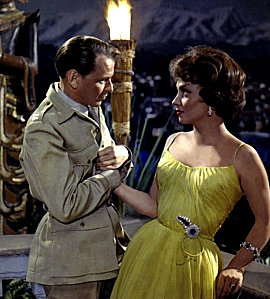
Whilst on a short trip back to headquarters, followed by a two week adjourn for the two captains, Reynolds falls in love with Carla (Gina Lollobrigida), a voluptuously alluring partner to a foreign dignitary, and he also uncovers the beginnings of a plot that may or may not involve his superiors being in cahoots with their Chinese enemies. They also meet Bill Ringa (Steve McQueen), the resourceful driver for their Colonel, and soon recruit him to join their squad.

This film has some serious tone issues. Director John Sturges, yes of The Great Escape and The Magnificent Seven, cannot seem to decide whether he is making a war film – as I initially expected – a romance or a political thriller, as all three elements share roughly equal screen time, and the transition from one to another is often jarring. Styles change when Reynolds walks into a room, leaving the government corruption plot as the music swells to a bad daytime soap opera sweeping score as Carla rushes into his arms for a longing embrace. The three different elements seem only loosely tied together too – it could be justified as to having the war and conspiracy themes, as the subjects are at least related, but the romance could quite easily be lifted without affecting the other two, so tacked on is the feel. This was clearly added just to try and entice female viewers – or possibly more men with Lollobrigida’s Jessica Rabbit-like curves – but it always feels awkward and out of place with the rest of the film, just like Carla’s Spock-like eyebrows.

Speaking of tagged on, McQueen’s character is fairly superfluous too, other than adding someone engaging to watch and a mildly interesting character – plus a somewhat inventive fighting technique early on. I got the feeling that Sturges wanted to include McQueen in the film somewhere, and who can blame him? By this point McQueen had perfected the art of ‘doing something in the background’ when he wasn’t overly important in a scene, hence why he always managed to retain your focus by swatting a mosquito on his neck or playing with his gun, regardless of whether you should be looking at him or not. Sinatra’s Reynolds also has an amusing if distracting penchant for pithy one-liners that don’t necessarily make much sense (“He speaks English like he hates it.” “Inside my mouth tastes like the outside of a crocodile.”) or bizarrely successful seduction techniques in which he discusses the correct use of the word ‘hanker’. Some of the lines are great (“I’ll miss you; where I’m going nobody smells of soap”) whereas others raised a chuckle but would be worthy of a slap in real life (“I’ll be back; learn to cook.”). He also wears a cowboy hat whilst parachuting, which is only something Slim Pickens is allowed to do.

I loved Charles Bronson in the film, though his role is far too short. When his gun runs out of bullets during a Chinese attack on the camp, without hesitating he picks up a table and takes out three men with that instead. Genius. Look out for a young George Takei as a head-bandaged hospital patient complaining about the food and James Hong as a diplomat fairly late on. You may be as astounded as me to learn that Hong currently has 371 acting credits to his name, as diverse as Blade Runner to Kung Fu Panda, Airplane! to Chinatown. The guy’s been in everything.

The plot involves far too many talky scenes for a war film, with not enough actual fighting, despite a not-bad mid-film set piece involving the attack of a Chinese air base using hundreds on cans of gasoline, and a third act counterattack over the Chinese border. In spite of these, the film comes off as boring and overlong – 125 minutes – and the actual backbone of the conspiracy plot is almost impossible to fully comprehend. I’m still not entirely sure what was going on for most of it.

Choose life 5/10

Battle Royale

There are some films where you hear about the concept and think “Yes, this will be a truly amazing film.” Battle Royale is such a film, with the premise being a class of 42 schoolkids are kidnapped, dropped onto an island and given weaponry and basic provisions. They are told that they have three days to kill all of their fellow classmates until only one survives, and if they fail, they’ll all be killed. Sounds pretty awesome, right? Well that’s what I thought the first time I watched it too, about 5 years ago, and since then I’d kind of forgotten a lot of it, and thought to myself that surely that film but have been amazing, because how can you go wrong with a concept like that? There’s endless possibility for inventive deaths and character drama, what with these kids now having to kill their best friends or even their boyfriends and girlfriends, but unfortunately there were perhaps some reasons as to why I’d forgotten it.

For you see, Battle Royale is nowhere near as much fun as it should be. No, wait, that’s an unfair statement. The premise is excellent, far better than most other films, and it is handled well, but it fails to deliver on the promise of a gruesome kill-fest that I’d not necessarily been hoping for, but had at least thought I’d be delivered. So basically my problem is that though I didn’t want an incredibly gory film, I thought I was going to get one, but didn’t. I think the problem here may well lie within me, and not the film. Oh, and don’t expect many comparisons to The Hunger Games – a film with a similar yet far from identical conceit – as I’ve neither seen the film nor read the book.
The film’s scope is very ambitious, especially when you consider there are essentially 44 ‘main’ characters – the 42 school children (including two ‘exchange students’ – we’ll get to them later), their teacher and the man in charge of running the program. Obviously, quite a few of these people don’t make it very far into the film, and even fewer are left at the end, but even so I felt there was possibly too much going on than could be comfortably contained within a 2-hour film. I understand that the book goes into far more detail – as books tend to do – so I’ve added it to my Amazon wishlist, and if someone were to get it for me for Christmas, that would be fine. I felt that an adaptation may have been better suited to a television series, or by cutting down the cast considerably – as I understand it, The Hunger Games only has 24 participants – as that would have allowed far greater depth for most of the characters. As it stands, only a handful are given much in the way of any history, and only perhaps three or four could have something generously described as a character.The film is peppered with flashbacks to the kids’ lives before being selected for the battle, but rarely did this add very much, especially when said flashback consists almost entirely of a slow motion basketball game, presumably the only time when all of the characters were ever in the same room, considering the amount of truancy apparently on display. The only person who benefits from a little history is Mitsuko (Ko Shibasaki), a ruthless, determined killer whose hatred for people – and a certain area of men in particular – pays off in a particularly brutal and wince-inducing scene late on.Too many subplots with great potential fizzled out without really going anywhere, in particular those regarding the tech-nerds attempting to bring the system down, the inclusion of never-used death zones and the motivation behind one of the ‘exchange students’, the deranged, suit-wearing Kazuo (Masanobu Ando). Kazuo appears to be something of an interesting character – I don’t think he utters a word throughout the film – yet no reasons are provided for even why he volunteered to take part. I can understand this though, as he is one of the three predominant ‘bad guys’ (along with Mitsuko and Kitano (Takeshi Kitano), the former teacher running the game), and sometimes not providing an antagonist’s back story can make them a more powerful presence in a film. For example, Hannibal Lecter was far more imposing when his past was only hinted at in The Silence of the Lambs etc, but less so after everything was more or less explained in Hannibal Rising.

The ending felt in parts rushed and glossed over – some areas aren’t really explained – and drawn out in others. There’s also a moment of farce and ridiculousness when a character just gets up and walks around after being shot which is never even partially explained, and as to the reasoning behind the inclusion of several flashback sequences after the film has ended, most of which had already been seen anyway, is beyond me. The two main leads, Shuya and Noriko (Tatsuya Fujiwara and Aki Maeda) felt bland and underdeveloped, especially in the case of Noriko, who doesn’t really get to do anything in the film other than be protected by those around her.

There were some great moments, especially the lighthouse scene, showing the real consequences of friends turning on one another in an environment of complete guilt and paranoia, and the initial briefing scene, in which the over enthusiastic instructional video offers some brilliant comedy, but overall this felt far too rushed, which is a real shame, as this could have been truly amazing.

Choose life 6/10

Jude

I had a discussion with my girlfriend recently about The Texas Chain Saw Massacre, instigated by my viewing of the unimpressive trailer for the new remake (in 3D, of course). When I explained the basic premise – a group of kids run into a family of skin-wearing cannibals – she was appalled at A) why someone would watch such a film, B) why someone would make it, and C) what kind of depraved soul would own such a monstrosity. I then answered questions A and C (she wouldn’t have cared that Tobe Hooper made it) by pointing to the copy of the film on my DVD shelf. Why do I bring this up? Well, though I’m not a massive fan of horror (I haven’t seen The Texas Chain Saw Massacre since I bought it), I will occasionally watch a film for the same reasons I go on rollercoasters; they add a certain element of thrill and excitement – and terror – otherwise missing from my humdrum existence on this Earth. My question is, who would watch, make or own a film like Jude?
Continue reading